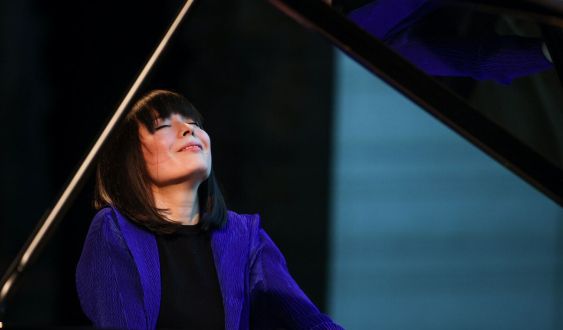
Alice Sara Ott (Munich, 1988) has gone from being a child prodigy to a prodigious woman. Having passed thirty, she is one of the great pianists on the current scene who is not afraid to take risks. In fact, every time she does, the success of her proposal to be a musician in tune with her own time is confirmed. In her own words, "my role as an interpreter of classical music is to move forward with the spirit that inspired these authors to redefine music and not just to reproduce past traditions and limitations."
In 2019, after much speculation, she announced that she had been diagnosed with multiple sclerosis, an act of courage and fortitude. Resurfacing like a phoenix, her performances have served to demonstrate the incredible gift that inhabits her fingers, and she has used her voice to focus on the lack of knowledge that still exists today about this neurological disease.
With more than ten albums under her belt and thanks to her virtuosity, she has managed to maintain exclusivity with the Deutsche Grammophon label, while also releasing interesting projects such as her latest work, or her collaborations with, shall we say, less classical musicians, which bring her closer to a more diverse audience. Echoes of Life is not only a new interpretation of Chopin's 24 Preludes, interspersed with pieces by contemporary composers, but, when performed live, it investigates new ways of experiencing a classical music concert, inviting the spectator to rethink their role.
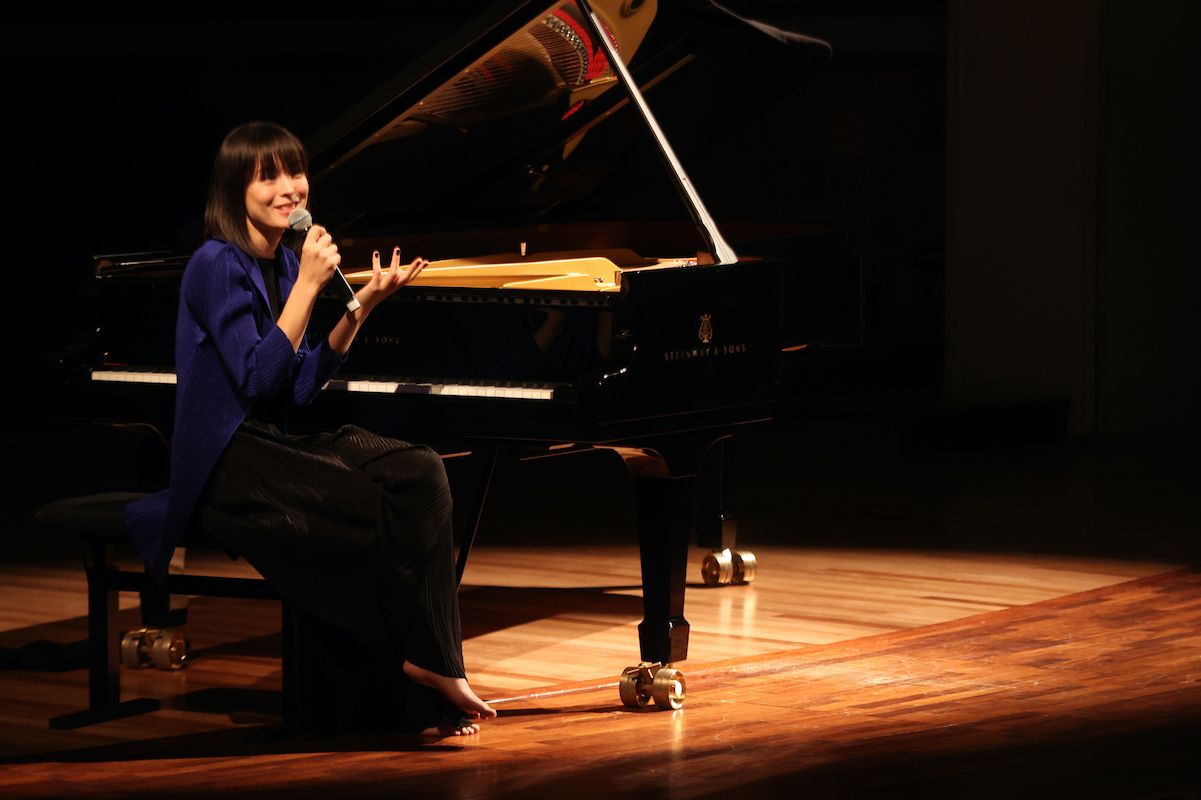
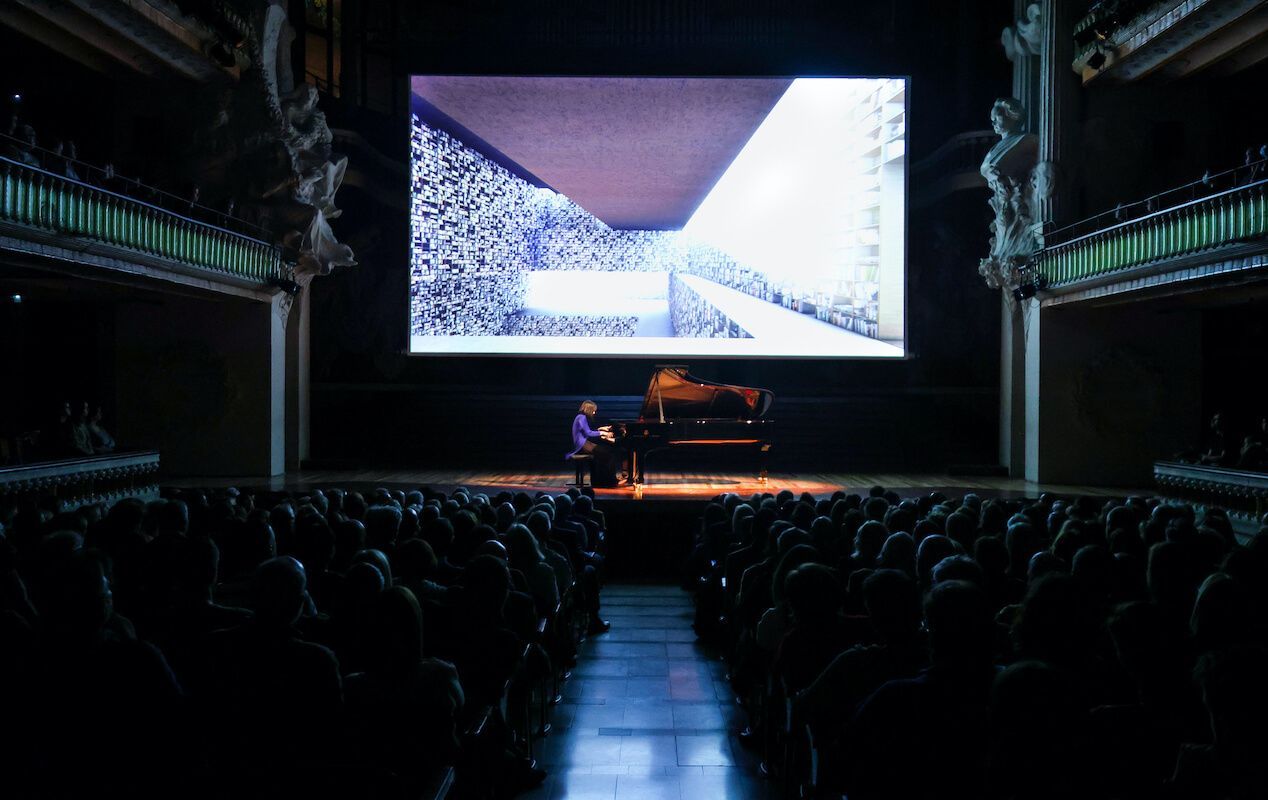
The concert she offered last week to the audience at the Palau de la Música, barefoot, close and intimate, was an intense experience, one of those that make us hold our breath and travel, along with the projections of her collaborator, the Turkish architect Hakan Demirel, to those echoes of our own lives. And the encore, with Erik Satie's Gnossienne No. 1, was the icing on a perfect cake. The audience gave her a long standing ovation, and I, your humble servant, cried with emotion at such beauty.
--- You come to Barcelona to present live your latest work Echoes of Life, a vital musical journey inspired, perhaps, by your own memories. How did you conceive this album?
--- It all started with my desire to record Chopin's 24 Preludes. With them, Chopin composed a collection of 24 pieces of individual character, which are very different from each other and yet are all connected in some way. And that makes me think of life. I believe that our lives are also made up of many small moments, which are all connected through us and through our own experiences.
--- This is your tenth studio album with Deutsche Grammophon. How does it feel to be part of such an important and relevant label in classical music?
--- I have been part of the Deutsche Grammophon family since I was 19 years old. We have grown a lot together and I feel proud and grateful to be able to work with a team that gives me the freedom and confidence to develop my own ideas and concepts.
--- With this project and staging, you have toured some of the great capitals of Europe and traveled through Japan. Now, you return to Barcelona. How is the experience of playing in such a magical and mystical place as the Palau de la Música?
--- I played once at the Palau, some time ago, and I remember being absolutely impressed by the beauty of the place. This time, with the projection of Hakan Demirel's digital work on screen, the hall undoubtedly transforms into another world.
"My role as a classical music performer is to carry forward the spirit that inspired these authors to redefine music and not just to reproduce past traditions and limitations"--- And how did you come up with the idea of collaborating with Hakan Demirel?
--- While I was thinking about how I could translate the emotions of this project to the public, without interrupting the musical flow of the entire ensemble, I was introduced to Hakan Demirel, an architect from Istanbul. When we met a year ago via video conference, neither of us knew where we were going to end up and how it would be possible to combine the worlds of music and architecture, especially in a live concert, when music breathes differently depending on the place. But inspired by our imagination and our long conversations, Hakan and his team have spent a year creating and designing an entire digital world from scratch.
--- So, tell us, what does the audience discover and enjoy during your recital?
--- The video that accompanies the entire musical journey is not a film. There are no people in it, no action, no written story. They are just architectural spaces that reflect the music and evoke emotions and subtle references, inviting the audience to find their own story, memories and echoes within those spaces. This is a unique project that has never before been presented in this format. Although I am very grateful for the positive response we have received so far, I am sure that there will always be those who disagree with the proposal. And that is also fine and an important part for me. If the audience leaves the hall reflecting and debating on what a classical concert should be like today and what they identify with most, I will have already achieved a large part of what I want to do as an artist.
--- A few years ago, you made public that you had been diagnosed with multiple sclerosis, a step forward that we received with surprise and admiration for your courage. How are you?
--- I am very well. I was very lucky to be diagnosed at a very early stage and to have a wonderful team of doctors who helped me find the right treatment for me. I have not had any new episodes since my diagnosis and I also have no symptoms.
--- What responses have you received?
--- Both people in the industry and the public have been very supportive and have given me a lot of strength and transmitted their energy. But I have had to deal with the reaction from some media in recent years. The reason I chose to make my diagnosis public was to protect my environment and myself from random speculation and to shed a little more light on this condition, still very misunderstood and with an outdated public perception. Although there are also serious cases, there are many people currently living with it who have no limitations of any kind. The more we know and share, the more we can help those who face this diagnosis. At no time did I make it public to be undervalued, belittled, or sensationalized. So when they started calling me "the pianist with multiple sclerosis" in some headlines, I needed some time to process it.
"If the audience leaves the hall reflecting and debating on what a classical concert should be like today and what they identify with most, I will have already achieved a large part of what I want to do as an artist"--- In addition to his solo projects, he has collaborated with other musicians, such as Ólafur Arnals or Francesco Tristano, on albums that have been successful among an audience that is not typical of classical music. Are you aware that your generation is eliminating borders to open new paths in the current classical landscape?
--- Isn't it wonderful? This is what I find most interesting about how we currently listen to music on streaming platforms. From a playlist, they present you with music you would never have discovered on your own.
--- I feel that your work Echoes of Life is an example of the idea presented earlier: Chopin is the common thread, but Nino Rota or Chilly Gonzales also appear, and everything works perfectly. Do you agree?
--- I have chosen seven contemporary compositions interspersed among Chopin's preludes that have been composed over the last 60 years. Some of their composers are still alive and all of them represent very different styles of composition. Combining them with the Préludes, written during the 19th century, I realized that, in reality, they are the ones who confirm how modern, provocative, and timeless Chopin's music is. And that our perception of music depends a lot on its context.
"The more we know and share about multiple sclerosis, the more we can help those facing this diagnosis"--- What are you going to do after this tour?
--- I will return home to rest before continuing with my agenda for next year.
--- Finally, I would like to ask you if, after the publication of your piece Lullaby to Eternity, you have been encouraged to compose more? Would you not like to record an album of your own works?
--- Lullaby happened unexpectedly. I was looking for a certain structure and sound to finish the album, and since the piano reduction of Mozart's Lacrimosa didn't quite fit what I was looking for, I decided to make my own arrangement. But I am not a composer.
Add The New Barcelona Post as your preferred Google source for free
Stay informed with the latest news.
