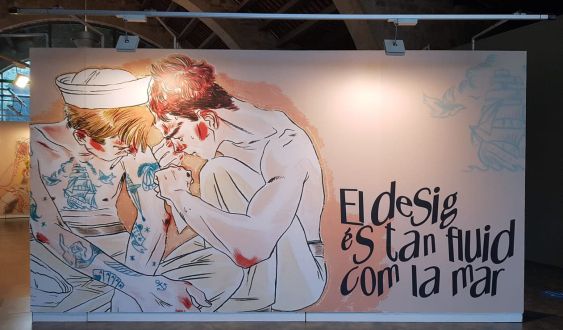
The Maritime Museum of Barcelona has decided to join the process of visualization and conquest of the rights of LGTBI collectives. And it has done so with the exhibition Desire flows as much as the sea. The exhibition delves into homosexuality in navigation, a matter long silenced and for centuries even harshly punished. Thus, the narrative emphasizes that sexual relations between sailors occurred in a context of long periods aboard a ship, isolated from the world, without women, and where men of different social strata, ages, and beliefs coexisted. These circumstances led to needs and encounters among the crew members themselves.
The exhibition, in addition to contributing to the recognition of the LGTBI world, also aims to take steps in the evolution of the museum's discourse, adopting an inclusive and sexually diverse language, in line with current times.
In different panels, the exhibition starts from the dominant Judeo-Christian morality, in which sexuality was contemplated only for reproductive purposes within a heterosexual marriage. Anything outside this dogma was a sin against nature and harshly punished by the courts. The exhibition narrates many of the criminal proceedings for sodomy, which merited torture and death by garrote, hanging, and burning at the stake.
The judicial records preserved in the General Archive of the Indies describe the homoerotic experiences recorded on Spain's trade routes with the colonies. In many cases, sexual relations between sailors were consensual, but there were also cases where they were provoked by harassment and abuse of power. In fact, what happened aboard a ship was a mirror of society, and the most vulnerable crew members, due to their defenselessness, were the minors who embarked as pages and cabin boys.
Desire flows as much as the sea also investigates phenomena unknown to the general public related to homosexual practices among sailors. Thus, the so-called matelotage is explained, a jurisprudence typical of piracy on the Haitian island of Tortuga. It was a legal framework in the 16th and 17th centuries that allowed for a formal contract of union between two men that guaranteed inheritance in case of the death of one of them. It was a kind of marriage between two men who loved each other freely.
It is also true that pirates were repeatedly accused of sodomy as a means to discredit them. Authors such as Jean Genet, Rainer Werner Fassbinder, Benjamin Britten, and Kenneth Anger are pointed out in the exhibition as promoters of an archetype of the gay sailor as a dangerous criminal from port areas, assimilated to spaces of promiscuity and vice.
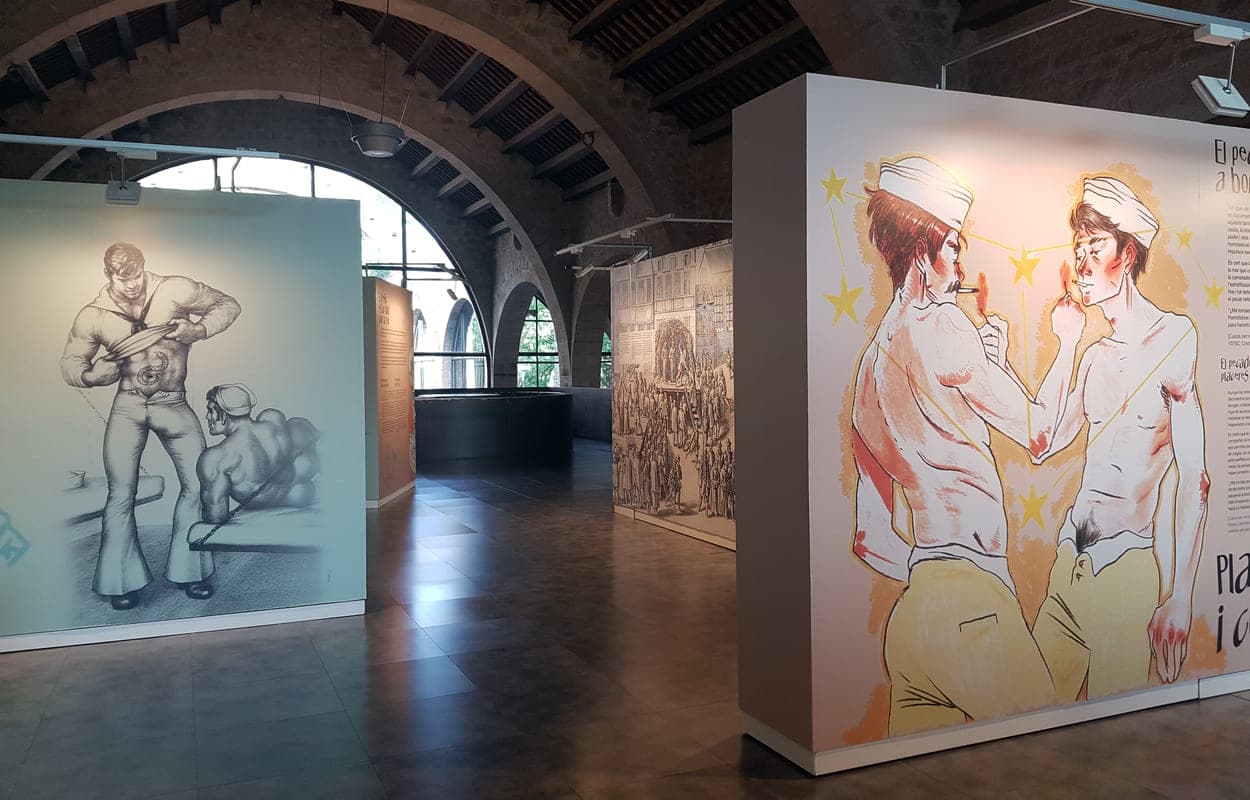
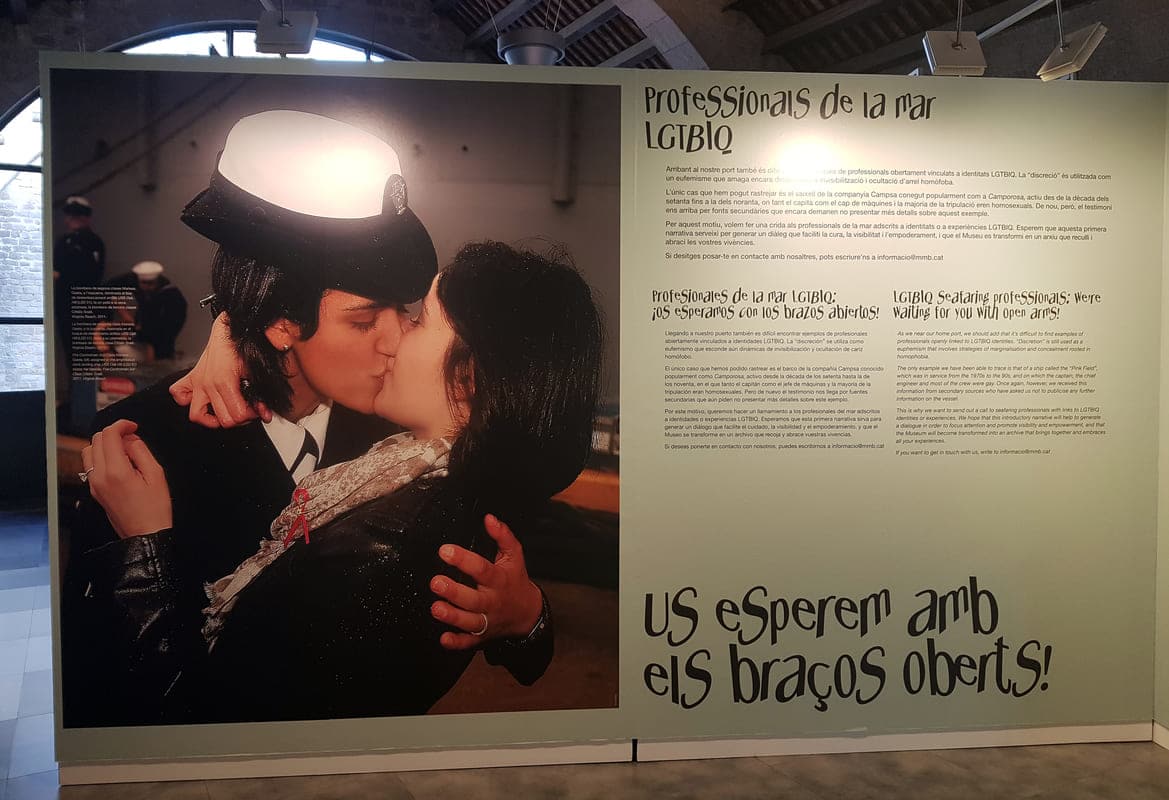
The panels include erotic illustrations featuring sailors, but also some photographs, such as one from 2011 in which two military women openly kiss, which serves to illustrate the abolition by the American administration of Barack Obama, precisely that year, of the so-called DADT (Don't ask / Don't tell) law. This regulation, enacted under the Bill Clinton administration in 1994, banned openly homosexual or bisexual crew members from belonging to the navy. The law spoke of "non-normative" sexual orientations or identities that violated "high moral standards, good order and discipline," as well as the cohesion of "the unit proper to military capability."
The Marítim exhibition has undoubtedly been brave, but in line with a trend in a large part of society to normalize LGTBI collectives, until recently a taboo that had to be kept hidden. Homosexuality in navigation is a clear example of this. Fortunately, although there is still a long way to go, society is changing and, today, the LGTBI world is increasingly showing itself without complexes despite the fact that prejudices still exist in a large part of the population.
Add The New Barcelona Post as your preferred Google source for free
Stay informed with the latest news.
