There is much to see in Les Corts beyond Camp Nou. That is the premise pursued by the Barcelona City Council and the Gremi d'Hotels with the tourist map they are distributing among tourists who stay overnight in one of the district's establishments. "We don't want everyone to take the same photograph of Barcelona," says Joan Ramon Riera, councilor for Les Corts. The socialist believes that the vein that the great blaugrana emblem located in the district has must be exploited to redirect visitors to other destinations and enrich their tourist experience. "We should ensure that someone who visits the Barça museum then also becomes interested in the Pedralbes Palace and Monastery, and the memorial of the Fourteen Roses in Cervantes Park," he argues.
For this reason, the city council has published a tourist map together with the Gremi d'Hotels, with the aim of highlighting the district's other tourist attractions. Financed with the tourist tax, it is a special adaptation for Les Corts of the Barcelona City Map, the tourist map that the business association publishes every year and distributes in the city's hotels, with one million copies.
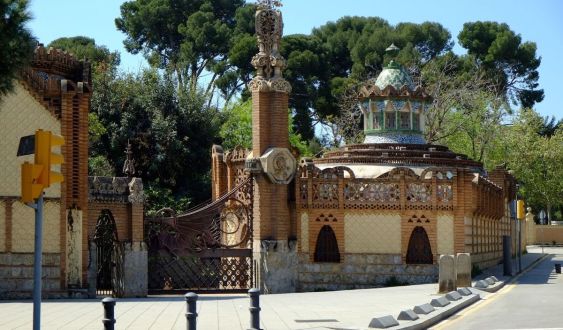
The new Les Corts guide includes a brief history of the district and points of interest, such as the Women's Prison memory space, the aforementioned memorial of the Fourteen Roses, and the Geological Patio of the Faculty of Geology of the University of Barcelona (UB). As expected, it marks essential spaces, such as the Güell Pavilions, the Pedralbes Monastery, Camp Nou, the Maternitat enclosure, and the Les Corts Cemetery.
A total of 20,000 copies will be distributed, mainly in the hotels in the district. Also designed for locals, the guide can be found in the district's municipal facilities and at the Citizen Service Office. Likewise, the information can be consulted online.
For those who are encouraged by this proposal, the city council has also created various routes to explore its streets, with routes ranging from two kilometers to thirteen kilometers. There are options for all tastes. You can discover the heart of the district or isolate yourself in the middle of nature.
For those looking for art, you should know that Avenida Diagonal holds surprises. One of them: the sculpture by Andreu Alfaro, at the entrance of the Atalaya building, by architects Alfons Milà Sagnier, Federico Correa Ruiz and José Luis Sanz Magallón.
The council has also created various routes to explore its streets and discover its history and artThose who want to learn about the history of the district can go to Pasaje Tubella, a testament to the urbanization process the area experienced at the beginning of the 20th century. The past can be felt in the two-story houses occupied by workers from the companies that settled there. You can also follow a route that vindicates the often-invisibilized role of women, highlighting Queen Elisenda de Moncada, who promoted the Monastery of Pedralbes.
The routes sometimes stray from the main tourist attractions and converge with the district's community. The neighbors, the shops, the markets, the playgrounds, or the public buildings are always an essential stop to introduce the visitor to the daily life of any city. And the City Council's initiative should not only serve to highlight spaces that usually go unnoticed on tourist routes and decongest the city center, but it will also provide a breath of fresh air for local commerce and restaurants.

Add The New Barcelona Post as your preferred Google source for free
Stay informed with the latest news.