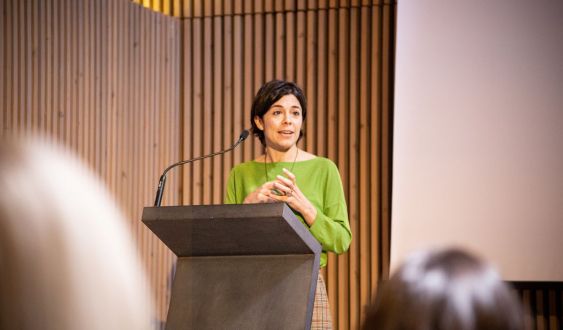
The Barcelona+B initiative celebrates three years with an ambitious goal: to make the city a benchmark in sustainability, social justice, and inclusion. The initiative, promoted by the B Lab Spain Foundation, EADA Business School, and Ferrer, adds the Catalan capital to the change communities of the B Corp movement, a global network designed to mobilize companies, educational centers, social organizations, and citizens worldwide to advance towards a more sustainable society.
One of the primary objectives of this global initiative is to bring sustainability into the classrooms. With this purpose, Barcelona+B has promoted the Be Ready for Now test, within the Eduquem+B project, to analyze what knowledge young people in Barcelona have about sustainability. An ambitious study —in which more than 2,000 young people participated— that aims to plant the first seed to promote, in a coordinated manner among schools, companies, and citizens, global solutions to increasingly complex challenges. How do we train tomorrow's leaders today? The answer to this question will mark not only the future but even the most immediate present, as warned by Federica Massa-Saluzzo, Director of Sustainability at EADA Business School, with whom we reflect on these global challenges.
— Why is it essential to involve companies, schools, and citizens in sustainability?
— Because they are the three fundamental pillars of any profound transformation. Companies are an economic engine; citizens, agents of change; and education is key to preparing future generations. But these generations cannot wait to act tomorrow: they must start now, today.
— How do we convey this message to young people from the classrooms?
— From Eduquem+B, we realized that to change the way it is taught, we should first study it in depth. We needed a global x-ray that would allow us to understand what young people in Barcelona know about sustainability. For this reason, we developed the Be Ready for Now test, following the European framework GreenComp, and we obtained a massive response: more than 2,000 responses from students between 16 and 24 years old.
"Leading means understanding that sustainability and profitability are not opposing concepts"— And the test has concluded that if a grade had to be given to young people's knowledge and skills regarding sustainability, it would be a 5.5. A bare pass….
— This note shows that, although students have certain notions about sustainability, significant gaps still exist. Students usually have a general idea of the concept, but often only grasp one part: climate change, waste management, or environmental impact. However, sustainability is much broader and encompasses social, economic, and ethical dimensions that young people have not yet sufficiently internalized.
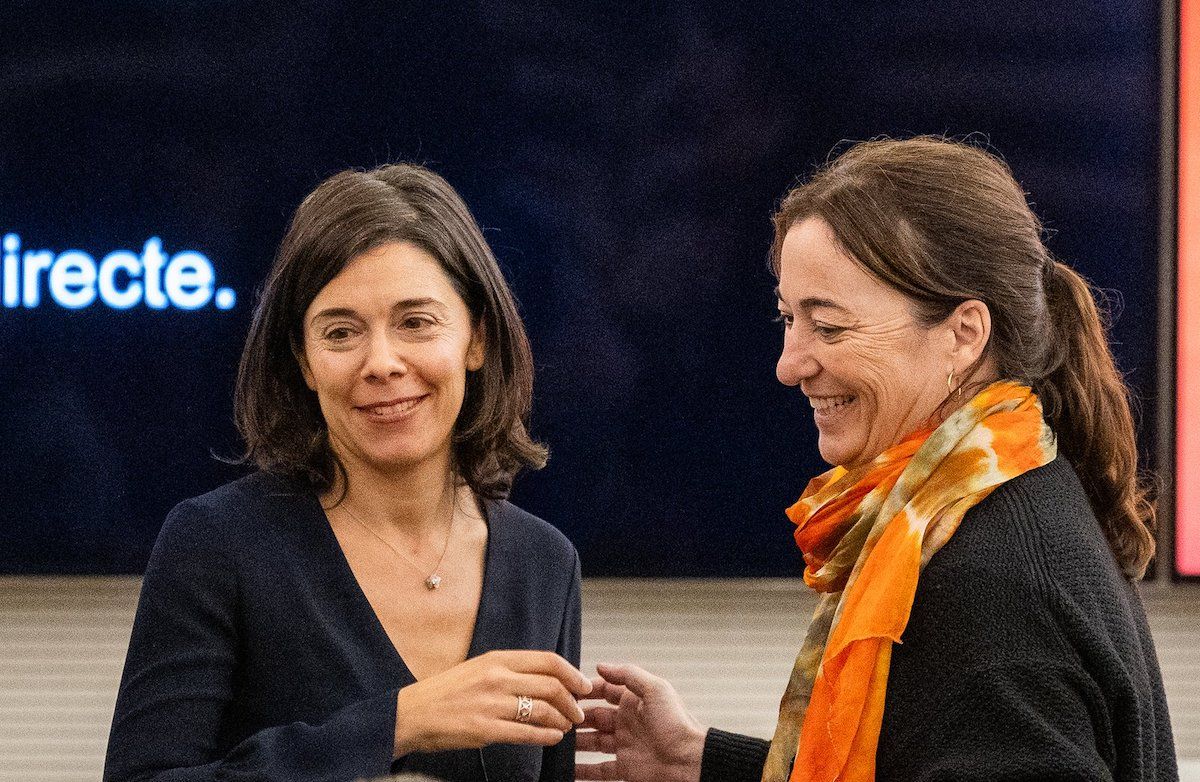
— Sustainability, in fact, is a very broad concept.
— Especially because we must understand sustainability not only by its environmental impact, but also its social impact. For example, in the fashion sector, sustainability is not just how much we pollute in the manufacturing process, but also what consumption and cultural models we promote with fast-fashion. Because large fashion companies focus mainly on environmental impact, because it is easier to measure and account for, but we must develop critical thinking and see the other side of this model: workers in precarious conditions or overconsumption.
— And the study indicates that young people only focus on that environmental impact, they don't go further. Why?
— It seems that thanks to social media we are hyper-informed, but, at the same time, we are misinformed: we have access to a lot of information, but it is personalized, based on our algorithm and interactions and, therefore, serves to reinforce our preconceived ideas. It seems that young people stick with the information that reaches them through networks, but they don't explore, they don't look further. What many telecommunications companies call "personalization" I see as stigmatization. Individuals are not allowed to explore: they are pigeonholed and pushed to think like others.
— Another result of the test is the lack of collective action among young people.
— And it's a shame because the most valuable weapon of young people was precisely this: collective struggle, mobilizing for common causes. But the results show us that now this feeling of collectivity has weakened. Although we have not analyzed the causes with the test, we can assume them: the irruption of the pandemic, the lack of confidence in the system, lack of information about the power of collectivity, isolation…
"Thanks to social media, it seems we are hyperconnected, but, at the same time, isolated: because the relationships established are more superficial"— There was a moment of great youth mobilization, with Greta Thunberg as the spokesperson for a generation and all the Fridays for Future movements. Has this collective energy been lost?
— It seems so, that this collective force has diminished, perhaps as an effect of the pandemic, but also due to social media. Thanks to these, it seems we are hyperconnected, but, at the same time, isolated: because the relationships established through social media are superficial. But we have the hope that, with the right tools and pedagogy, we can reawaken this collective spirit. Barcelona, in fact, must play a fundamental role, being an incubator for these sustainable and collective initiatives.
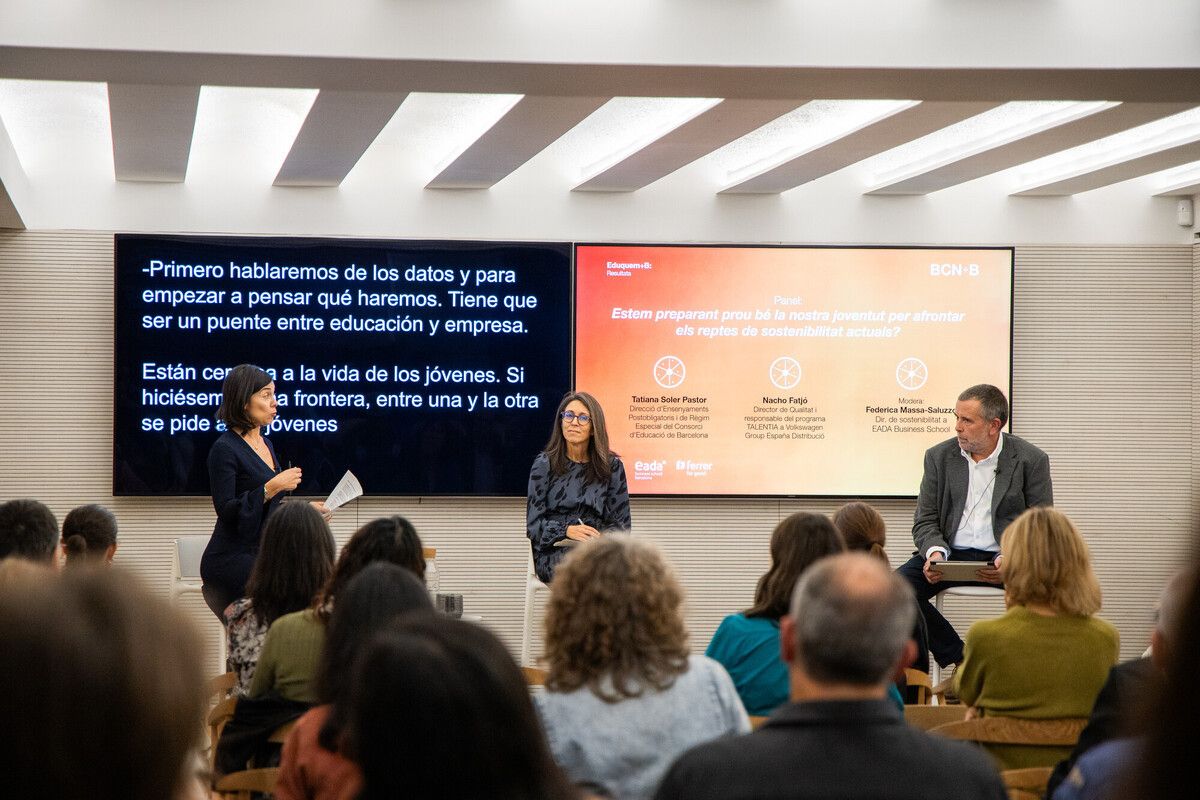
— The study is a radiography of the current situation. Is it time to act now?
— Yes, the results of the Be Ready for Now test are just the starting point. Now we must act, and we want to do so by involving citizens, educational centers, but also companies. To collectively reflect on how we educate young people today so that in the future, when they enter the working world, they know how to lead companies aware of sustainability.
"At the beginning of their career, it is evident that they cannot change all the practices of a company, but they can sow the seed, seek internal allies, spread the message"— In the study, you detect a lack of tools and training not only among students, but also among the teachers themselves. How does EADA Business School address a concept as broad as sustainability?
— We defend that a good leader is one who understands that we live in an interconnected system, where caring for people and the environment is not optional. Leading today means understanding that sustainability and profitability are not opposing concepts, and that true leadership implies protecting both those around us and the world we inhabit. With that purpose, we started with an exclusive master's degree in sustainability, and today we have extended this training to all our programs, training all our students to be translators of the concept of sustainability, understanding that it goes far beyond environmental care and also includes other fundamental values.
— And how do you transmit these values in the classrooms?
— For example, we push them so that when they design inclusive models, they don't do it because "it's good" to include disadvantaged groups, but because we believe that this group has a value that is not a cost, but an added value.
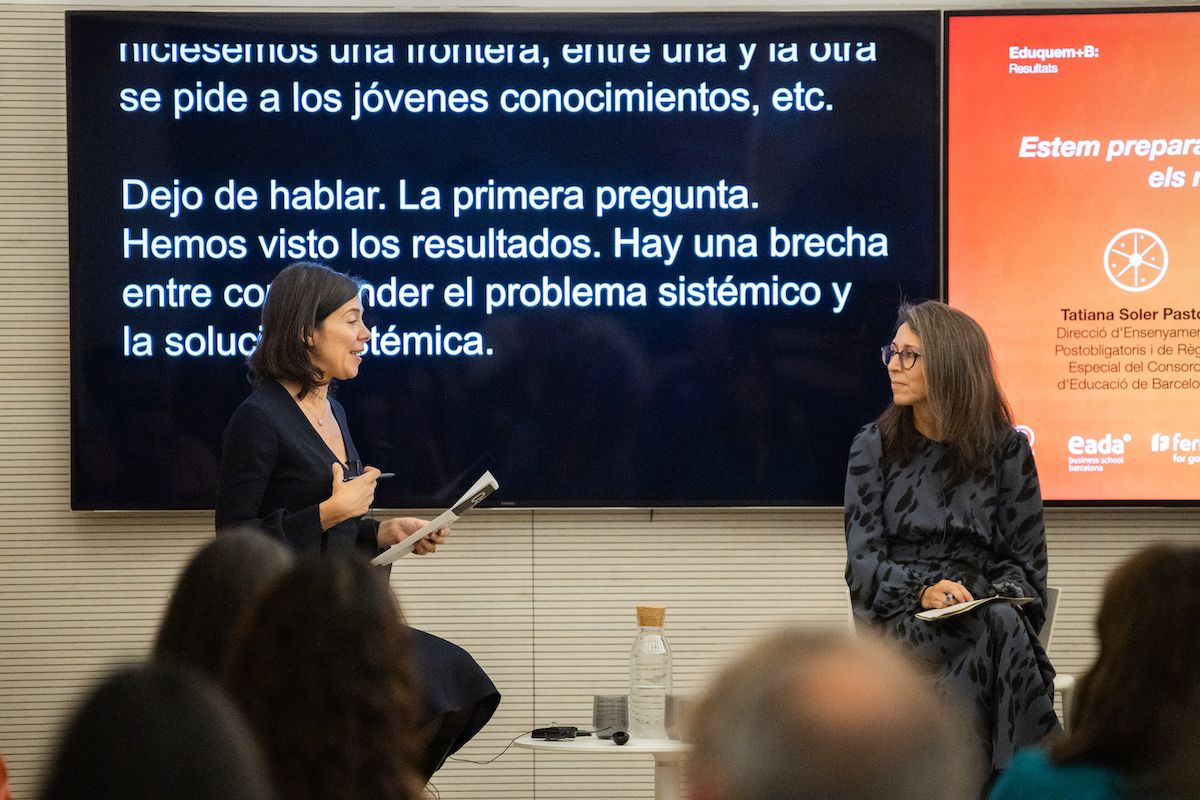
— And does this sustainability training really end up impacting their career path?
— We teach them to be translators and transmitters of the message they have learned. In fact, the first thing I do is remind them that the diploma is just an output, but what really matters is the impact in five, seven, or ten years. At the beginning of their career, it is evident that they cannot change all the practices of a company, but they can plant the seed, seek internal allies, spread the message, and start with small actions that make a difference.
"Taking action can be as simple as mobilizing their close circles, such as family or friends, and becoming a reference for them"— How to train them in sustainability without them falling into what is known as 'eco-anxiety'?
— Anxiety arises from what we cannot control. But we are living through a historical moment in which we are beginning to better understand climate change and the tools we have at our disposal. Focusing on these solutions gives us security. I tell my students: what we can control, we do (from small actions like recycling to spreading the message), and what we cannot control, it's better not to overthink it, because we need all our energy for the fronts where we can make an impact.
— Any final advice for a young person who wants to start acting for a more sustainable future but doesn't yet know how to do it?
— First: inform yourself, read, and discover. Explore what community initiatives exist in your neighborhood, or even use artificial intelligence to obtain several reliable and distinct sources. It's useful to start with a topic that is close to you or of interest, such as fashion, food, or transportation. Then, taking action can be as simple as mobilizing your close circles, such as family or friends, and becoming a reference for them. The key is to research a topic and explain it to others. It's a small step, but one that opens the way to real change.
Add The New Barcelona Post as your preferred Google source for free
Stay informed with the latest news.