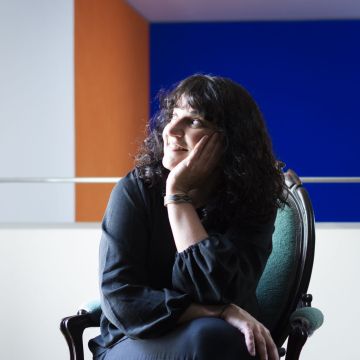
"When I was a kid, I was the one at home who read the most, and I suppose writing was tied to that love of reading." Sitting on the terrace, savoring the momentary evening quiet with a broad smile, Laura Manzanera takes a sip of Ribera del Duero. "I'm more of a listener and a reader than a talker," she reflects aloud. A clear trait of an unmistakably vocational journalist and writer.
As a child she was already writing stories, weaving a world of fiction she never fully set aside, but when it came time to study, she chose journalism, "and that pushed the stories into a corner a bit, though never entirely." She started working almost immediately, contributing to various magazines. But it was at the historic outlet Clío where she forged her expertise in reading history through women's eyes. "When I joined, in 2001, the newsroom was made up almost entirely of men. And articles about great historical women were generally scarce, rarely going beyond more or less conventional biographies of very familiar figures, like Joanna the Mad or Mata Hari."
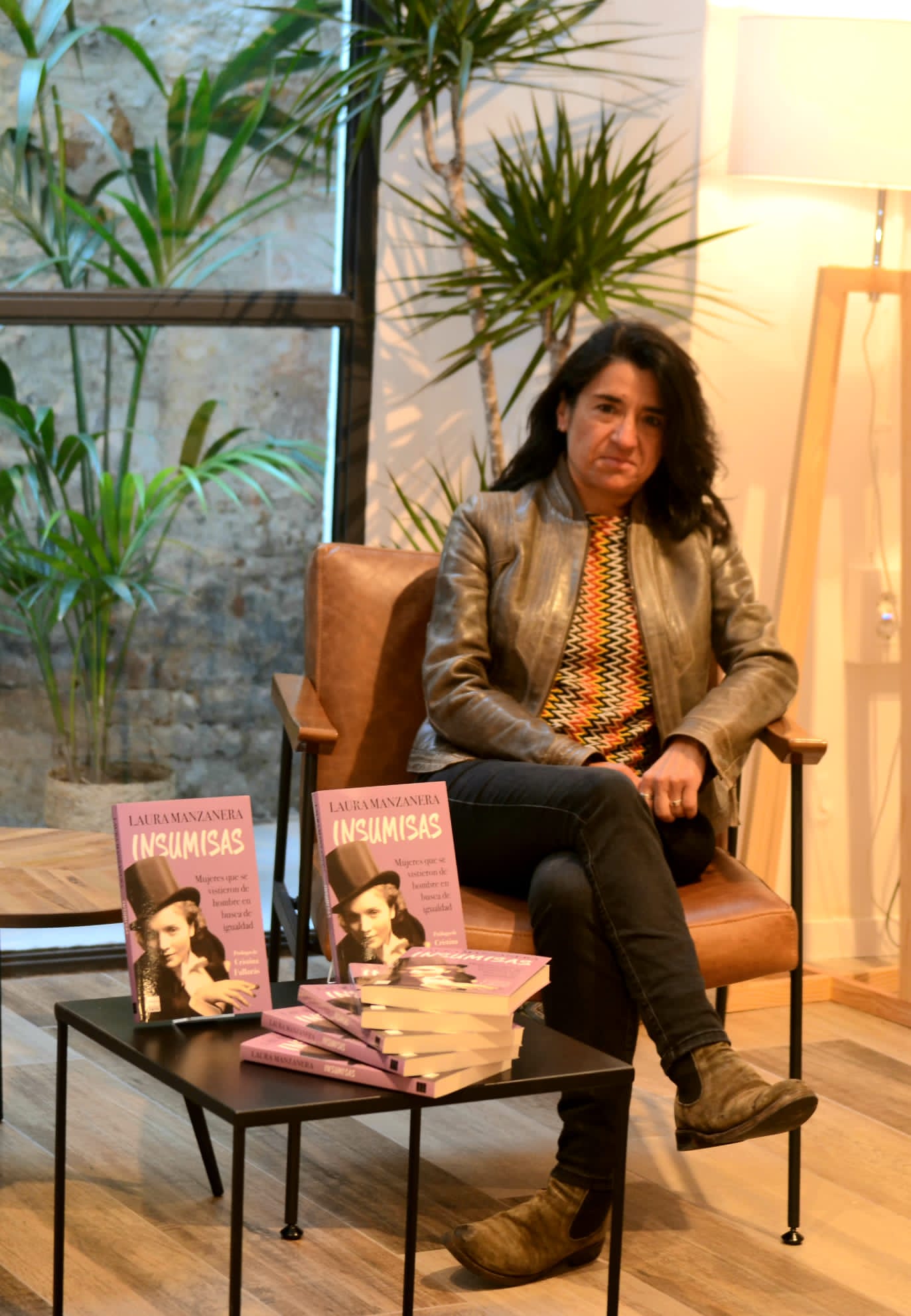
Laura realized there was much more to contribute and explain there. "So, I started writing about lesser-known subjects and women," digging up overlooked facts and facets and establishing herself as one of the pioneers in giving women their due in this country's historical-investigative press. She went on to shape articles, features, and journalistic books covering figures like Olympe de Gouges, the "cursed" chronicler of the French Revolution, and Jane Austen, as well as volumes such as From the Corset to the Thong, a journey through a century of fashion in Spain; Insumisas, a study of women who adopted masculine aesthetics in search of freedom and equality; and the acclaimed Women Spies, which recounts the history and struggles of women who worked as spies, such as Josephine Baker, Virginia di Castiglione, and Belle Boyd.
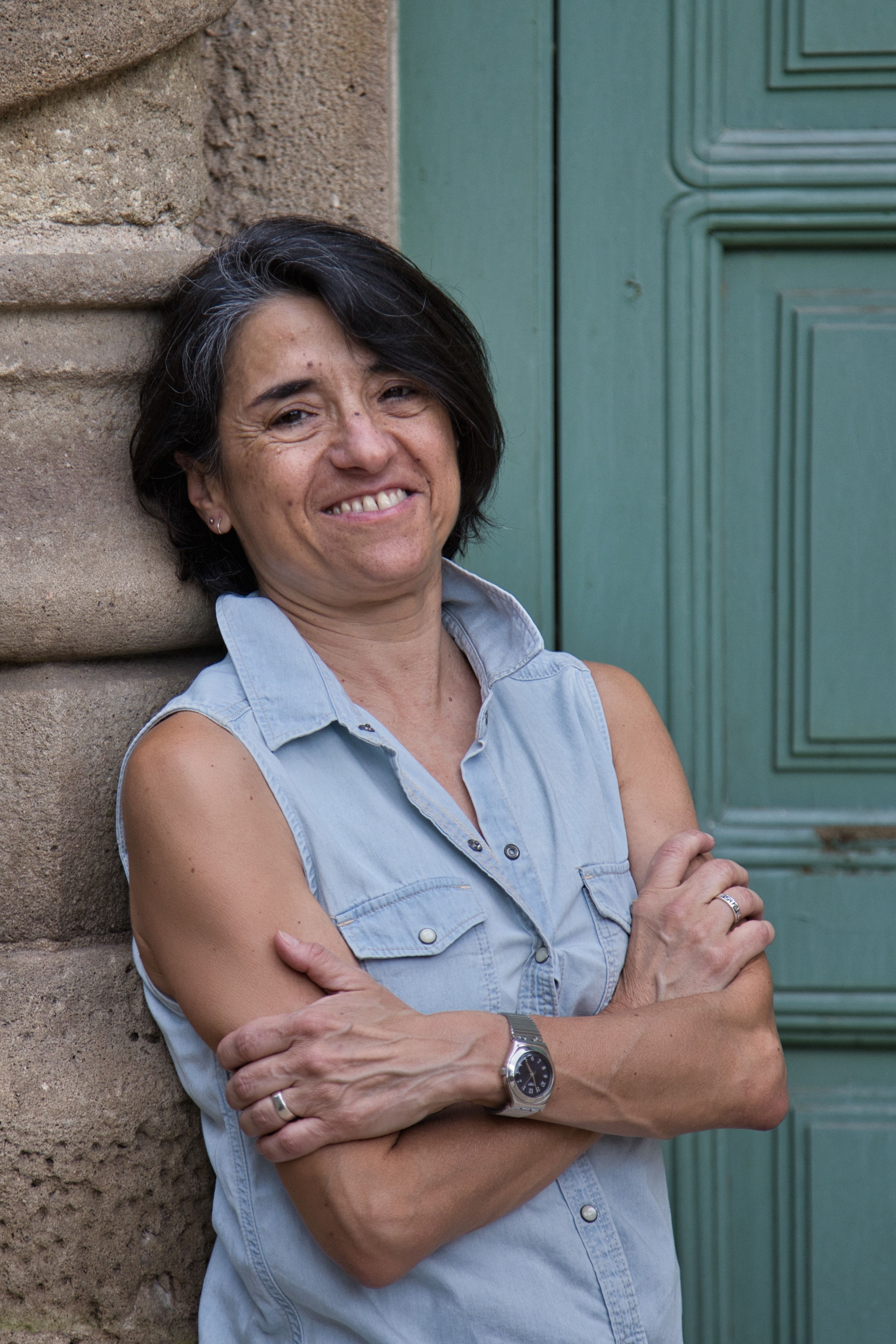
Over the years, she has weathered every economic crisis that has shaken — and dismantled — the world of journalism. "I think I've stayed true to myself, and I've stuck with writing." Through it all.
Answering the call of fiction
Four years ago, Laura Manzanera took a job at a digital marketing agency, a fairly common symptom of journalism's increasingly precarious landscape. "It was a huge change for me." New routines, new ways of communicating, new vocabulary. And even so, she found time to work on her debut novel, Who Killed Agatha Christie? (Versátil).
"I have a lot of stories written," she explains, "but only a few have won prizes or been finalists and gotten published in anthologies — the truth is the rest remain unpublished."
"History remains that warm refuge that lets Laura be herself and love her work, however hard and uncertain the times may be professionally."
– So, how did the idea for a novel come about?
"I have a lot of stories written," she explains, "but only a few have won prizes or been finalists and gotten published in anthologies — the truth is the rest remain unpublished."
History remains that warm refuge that lets Laura be herself and love her work, however hard and uncertain the times may be professionally.
— So how did the idea for a novel come about?
The journalist and writer smiles. "A publisher commissioned me to write a biography of Agatha Christie for a collection that ultimately fell through. The biography itself never saw the light of day, but while researching her life, I discovered that for ten days in 1926, she disappeared and no one ever found out what happened to her. When she came home, she claimed she had amnesia and remembered nothing." That historical gap was simply too tempting. "I built a fictional murder plot tied to that year's mining strikes, and wove a story in which Scotland Yard asks Agatha Christie for help, with her stepping away during those ten days to put her talent and sharp instincts at the service of the investigation." That's what the novel is about, and writing it, she admits, was a blast — "mixing real elements with fictional, invented ones, though very plausible ones."
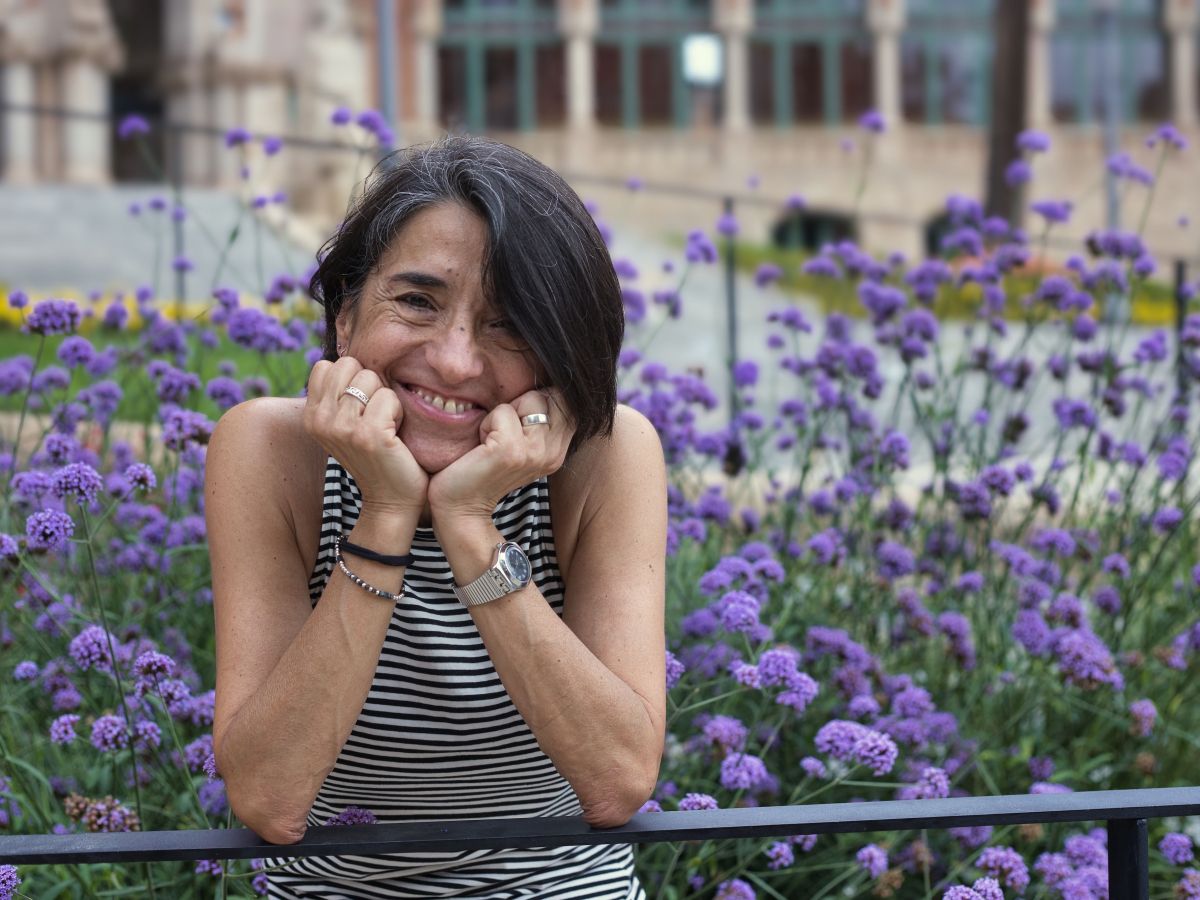
Aside from presenting the book here and there, the author has also found time to put together a series of Instagram videos which, under the title ¿Y ellas? ("And What About Them?"), dig into lesser-known aspects of great women in history — from Cleopatra and Joan of Arc to lesser-known figures like Alice Guy or Sofonisba Anguissola. It seems history remains that warm refuge that lets Laura be herself and love her work, however hard and uncertain the times may be professionally.
Memory of that old Barceloneta
"Our father worked in a factory in the Barceloneta, so maybe what I love most about Barcelona is the memory of my siblings and me tearing out of school and running off to the neighborhood swim club's pool, or to the beach, to swim and play with the kids who lived nearby," recalls the writer, who has lived in the city her whole life, moving through various neighborhoods, and doesn't rule out that real-estate speculation's voracious appetite will eventually push her out too, sooner or later.
"I've watched everything change, and how it all ends up as a backdrop serving tourists. Like those terraces where they tell you that you can't sit down unless you're going to order food," she laments, finishing off her wine. "I hope this isn't one of those!"
– Of course, no obligation here. But it's about time for dinner, and maybe we can tempt you with another glass of red wine and something to nibble on.
Laura Manzanera can't help but smile (one of the many she has brandished throughout the conversation). She thinks it over for a moment, and finally decides:
— A slice of Spanish tortilla, and maybe I'll have something for dessert — I have a real sweet tooth.
And she clarifies that the tortilla has to have onion in it. Obviously.
Add The New Barcelona Post as your preferred Google source for free
Stay informed with the latest news.