
Covid-19 has been hitting us for months with an unprecedented social and economic crisis. And tourism has been one of the most affected sectors. This year, the center of Barcelona has not been its usual self, full of tourists and suitcases. Neither have our vacations, which have been characterized by proximity, for those who have been able to have them.
Given this panorama, emerging companies such as Byhours, Waynabox, Tiqets, and Exoticca have decided to seek new lines of business, trying to attract local tourists and betting on closer products, with the aim of providing security to their clients.
[subscribe_newsletter_esp]
Surprise trips with campers around Spain
Waynabox's proposal consists of booking a trip without knowing the destination until a few days before the plane's departure. Spain and the main European cities are its usual markets. With the pandemic, however, airports seem too distant a reality for many of us. That's why this startup decided to promote an idea they had in mind for a long time: road trips in Spain, by car or camper. And the surprise this time is the route, visiting towns, nature, or vineyards.
The CEO of Waynabox, Jordi Agustí, explains that they wanted to avoid the typical national trip that everyone would offer this season and opted to give it a twist. "It has gone very well for us, even though we are far from normal billing," between 15% and 20% below compared to last year, Agustí indicates. The emerging company is now focused on the Christmas campaign, considering that Waynabox trips, above all, are given as gifts. Europe remains its star product and, just in case, Waynabox trips are valid for two years, considering the constant last-minute changes that always occur with Covid-19. "We know that all this is temporary. In 2021 we will be able to move again and a trip will be a good gift," Agustí remarks.
Registering records in temporary hotel room rentals
Byhours, a company dedicated to renting hotel rooms for periods of three, six, or twelve hours, has exceptionally improved its results with the coronavirus. After months with hotels closed, the startup recorded its historical record in transactions and billing in September, surpassing the figures it had obtained during its eight years of activity. And in October, they have been surpassed again, with about 14,000 transactions and 650,000 euros in revenue, and they expect this year's global results to be higher than last year's. "It's crazy," explains its co-founder and CEO, Guillermo Gaspart, who is aware that they are an exception within the tourism sector.
Byhours is dedicated to renting hotel rooms for periods of three, six, or twelve hours. Now, with the rise of teleworking and video conferences, they also offer meeting rooms.The company, located in Barcelona Tech City and with 3,500 hotels worldwide in its portfolio, is taking advantage of the crisis to promote a new type of user: those who want to have "micro-vacations" where they live. "An increasingly local demand has awakened, wanting to live experiences and relax in their own city. It's working very well," says Gaspart. But not only this.Byhours has encountered many people and companies that needed places where they could telework ---and hold many videoconferences--- better than at home, in addition to being able to meet, taking into account the new safety and hygiene measuresdue to Covid-19. For this reason, they have started to offer a new product for temporary rental: hotel meeting rooms, spacious areas where social distancing can be maintained.
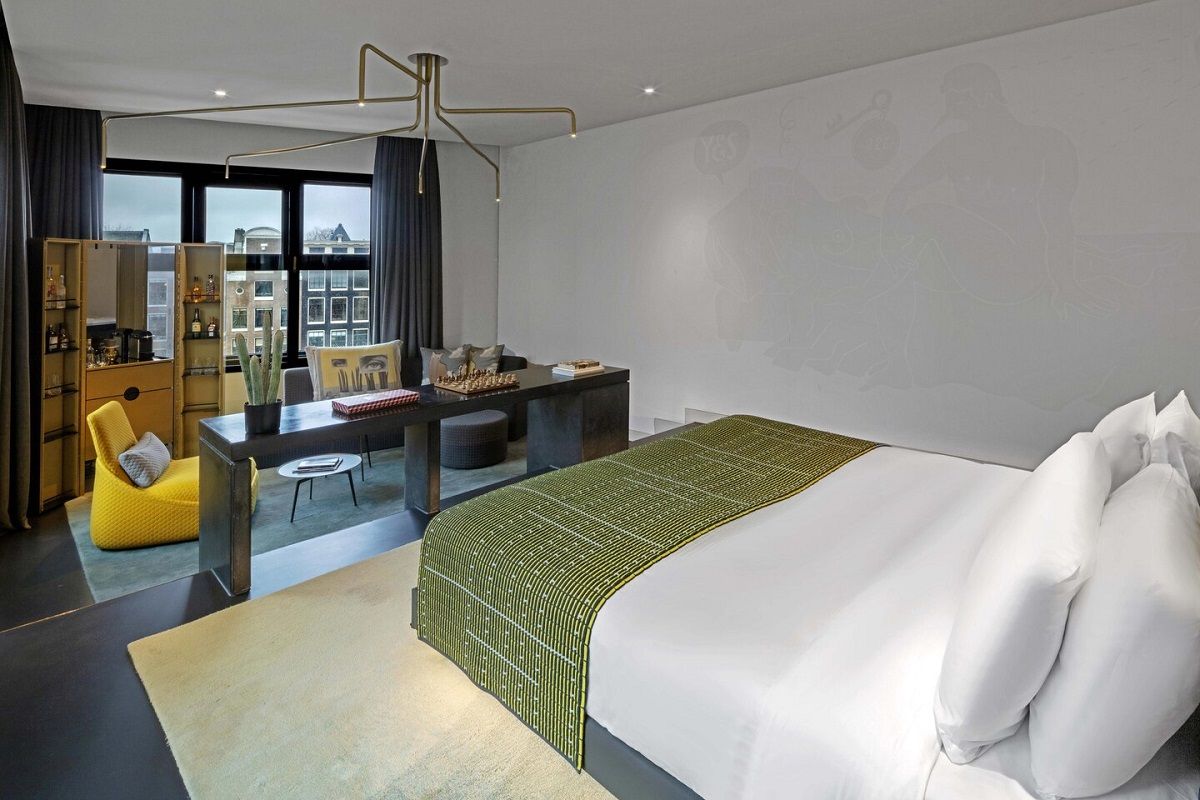
Gaspart points out that hotel establishments have also adapted to the crisis, opting more than before for the temporary rental of their assets, with the aim of generating income, however little. "The hotelier now has a lot of idle inventory, they have spare rooms and are more open to offering them for a few hours. And, furthermore, demand is heading in this direction," he indicates. Given this situation, Byhours has made available to hotel establishments the necessary technology so that they themselves can temporarily market their rooms and meeting rooms from their own website. Byhours Direct allows them to sell their rooms in packages of three, six, and twelve hours ---as Gaspart's company has always done--- and meeting rooms by the hour, without any time limitation.
Exoticca, saved by the United States
The virtual travel agency Exoticca saw everything stop in March. Specialized in selling trips with international flights and tours to distant countries, the Barcelona startup saw the six markets where it operates ---Spain, France, Germany, the United Kingdom, the United States, and Canada--- come to a halt and decided to face it by reducing its marketing costs as much as possible and resorting to the temporary employment regulation file (ERTE) for most of its staff. Afterwards, the company analyzed how they could reactivate sales in the new environment caused by the coronavirus, according to its CEO, Pere Vallès. They decided to negotiate with their suppliers "unprecedented prices to generate demand"; establish a free cancellation policy up to 60 days before departure, and offer the purchase of trips until 2022, unlike the usual product of agencies, which do so one year in advance. "The combination has been very good," emphasizes Vallès. They have also opted to vary the destinations they offer, adding European and nearby destinations, with routes through Spain, France, and Italy.

But it has not worked equally well in all markets. In the United States and Canada it has done very well, with sales higher than they had before the pandemic, but in Europe not so much, especially in Spain. Vallès believes this is because Spain is one of the countries most affected by Covid-19, both by the incidence of the disease and by the economic crisis it has caused. In this sense, he emphasizes that their competitors who only operate in Spain "are suffering a lot" and is grateful that, in their case, they had already opted to diversify and be present in the United States, a market that before the pandemic represented 30% of their sales and now accounts for 70%.
Exoticca's competitors who only operate in Spain "are suffering a lot" and the company is grateful that, in their case, they had already opted to diversify and be present in the United States.All this has allowed Exoticca to recover sales and be 30% below the figure it had before the coronavirus crisis, in addition to reincorporating workers from the ERTE. Furthermore, the startup has recently been able to close a funding round for five million euros, resources that expand the eleven-million-euro round it made last year."It is very exceptional because the sector is quite punished," says Vallès, who does not rule out acquiring a company both in Spain and abroad. Regarding 2020 turnover, the CEO expects it to be slightly below last year's, when they earned 48 million euros. Everything depends on how the campaign evolves.Black Fridayin the United States, one of the big dates in this market. They also plan to finish recovering the entire staff, made up of 150 employees, with the goal of hiring 30 more people next year.
Tiqets for Barcelona residents
The virtual museum ticket booking platform Tiqets also wants to reactivate the tourism sector in Barcelona and has opted to readapt its traditional offer, more designed for international tourists, and focus it on Barcelona residents, so they can discover their city. The cable car, Casa Vicens or temporary exhibitions at Ideal and Espacio Trafalgar are some of the proposals the company makes for these new local tourists. This is explained by the head of Tiqets in Spain and Portugal, Jaume Vidal, who encourages people to continue traveling, even if it's at home. And, if they prefer to go a little further, Tiqets also invites them to visit the Delta de l'Ebre and all the museums dedicated to Dalí in Figueres.
The head of Tiqets in Spain and Portugal, Jaume Vidal, encourages people to continue traveling, even if it's at home. And, if Barcelona residents prefer to go a little further, he also invites them to visit the Delta de l'EbreThe new bet of Tiqets has managed to sell more than 20,000 tickets to enjoy Barcelona and its surroundings since the beginning of the pandemic.Despite everything, the forecasts for this year are not very optimistic, expecting to reach 30% of the turnover recorded a year ago. But Vidal assures that they will continue looking for new destinations for Barcelona residents and attracting them to get to know their city better, until everything passes.
Add The New Barcelona Post as your preferred Google source for free
Stay informed with the latest news.
