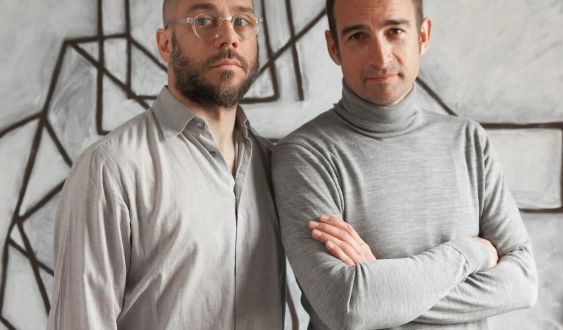
From their studio in Barcelona's Poblenou neighborhood, a rehabilitated old cookie factory, the Lagranja Design team has been creating multidisciplinary design projects for almost 20 years, taking unique ideas as a starting point that develop down to the smallest detail in a spontaneous, fresh, and innovative way. Its founders, Gerard Sanmartí and Gabriele Schiavon, lead a dynamic, transversal team with experience in multiple fields, always open to new challenges. "We have never sought to specialize in something specific because we have always been attracted to doing what we like, and that has led us to discover very different things. We believe that there are no closed drawers, but that knowledge moves from one place to another," says one of its co-founders, Gabriele Schiavon. Hence, in their project archive, one can find everything from stores to offices or hotels, including artisanal pieces from their own furniture brand, Lagranja Collection, or other more technological proposals.
Their footprint, more than in their creations, is glimpsed in their way of carrying out projects. "We have always worked with companies and we know how to understand each other. An important part of Lagranja Design is knowing how to listen. The important thing is to understand what the client needs, both from a practical and functional sense and from a representation perspective, what image they want to project. In this sense, we have mechanics and ways of working that incorporate the vision of whoever asks us for a project into our daily lives. We call it co-creation because, after all, those who know most about their project are themselves."
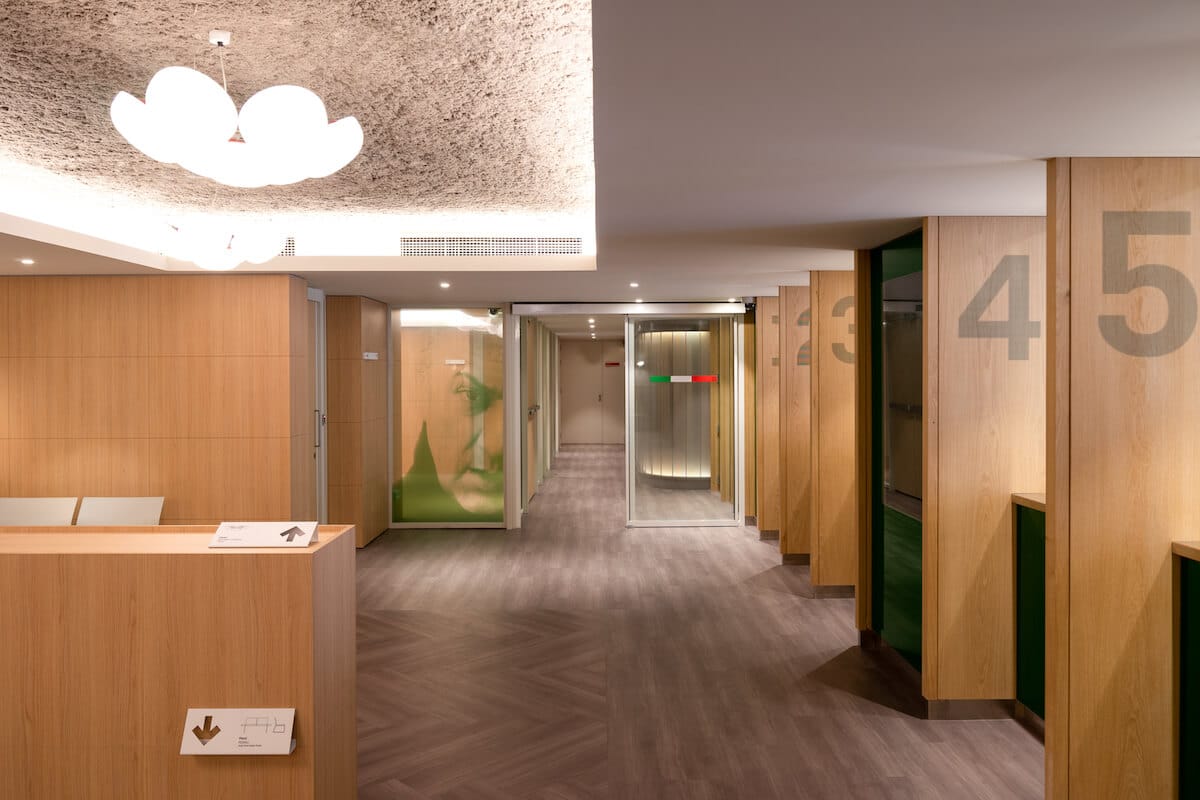
Among their most recent works in the Catalan capital is the Italian Consulate in Barcelona. With the aim of creating a welcoming and domesticated made in Italy space, Lagranja Design manages to accommodate a complete program of offices, reception areas, public service areas, meeting rooms, and a kitchen along with the strict security protocols that characterize these institutions. For this, a series of security glass screens separate the areas and create a gallery of pixelated portraits with Italian references ranging from Dante to Sophia Loren. Touches of red, white, and green from the Italian flag dominate the chromatic palette. And all this with a careful selection of furniture and lighting that pay homage to Italian design masters and manufacturers.
With offices in Singapore and Turkey, the international legacy of Lagranja Design is constantly adding more projects. "We are currently living an interesting moment because after a year and a half of pandemic, the situation has made us rethink many things. Now we are working more abroad and we are greatly enhancing our know-how and the things we know how to do, based on an integrating and young team that brings a different sensibility when facing new challenges," points out Schiavon. "Furthermore, working abroad is very interesting. Singapore is a place where absolutely nothing is manufactured and everything has to be imported. A lot of work is done and you have to get used to this way of doing things. Turkey, on the other hand, is the complete opposite. Nothing is imported there because they have tariffs, the currency is devalued, and anything can be manufactured, but you have to put in a lot of effort and be very hands-on," he adds.
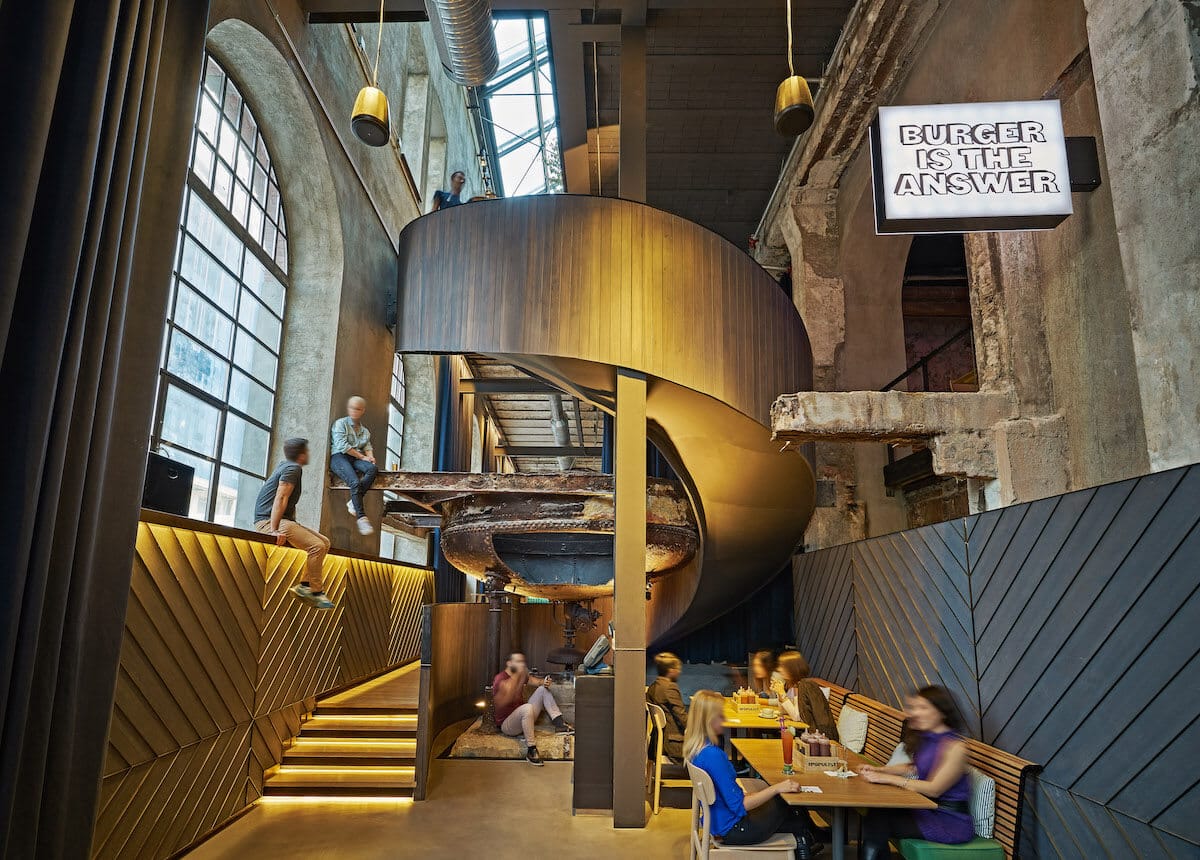
Projects such as the FOC Sentosa restaurant, on the shores of Palawan beach, on Sentosa island, or The Populist brewery, in Istanbul, are two examples of the work of the Barcelona studio in their respective international locations. While the first responds to the reinterpretation of a Mediterranean beach bar combined with the Singaporean lifestyle, the second structures the three floors of an old factory from the late 19th century into six spaces with a common denominator: craft beer. In the latter, from photography to design, including custom-made furniture and sculptures, they represent the sum of small sub-projects that shape a unique space inspired by the Prohibition era of the 1920s.
Such headquarters have served as a springboard to expand into other countries like Japan or the Asian giant itself and spread their creativity there. Something that translates into projects that combine more technological conceptions with more abstract ones, such as Matera Garden, based on creating a green space as a vertical garden within the population density of the Mong Kok neighborhood in Hong Kong.
Opening up to let ideas flow
"We try to stay up-to-date and we like to have very different contributions and work with external people, with artists, graphic designers, and design teams specialized in lighting or landscaping who provide us with knowledge. Rather than closing ourselves off, what we do is open up projects. The important thing for Lagranja Design is that there is a general vision that is shared, and then the path the project takes will depend on how it interacts with the client and who is leading it," points out Schiavon himself. The use and work of materials and techniques also respond to this idea of letting each project flow.
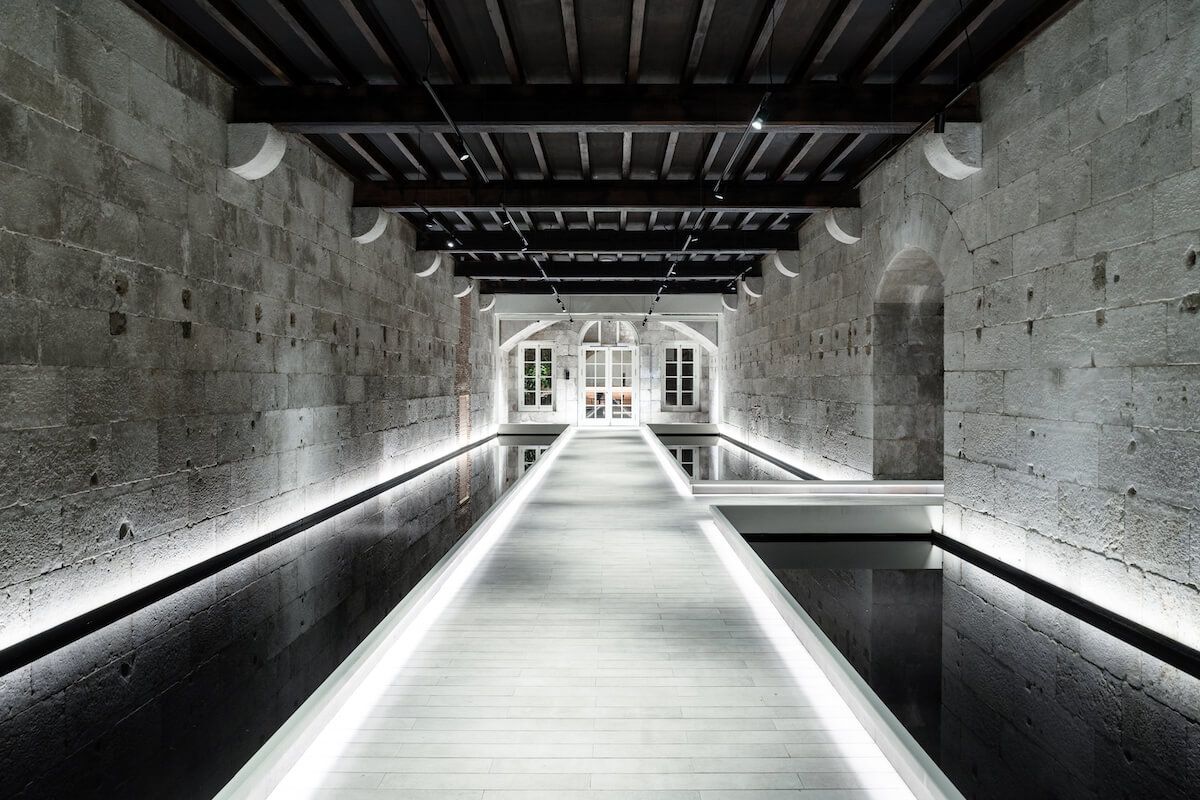
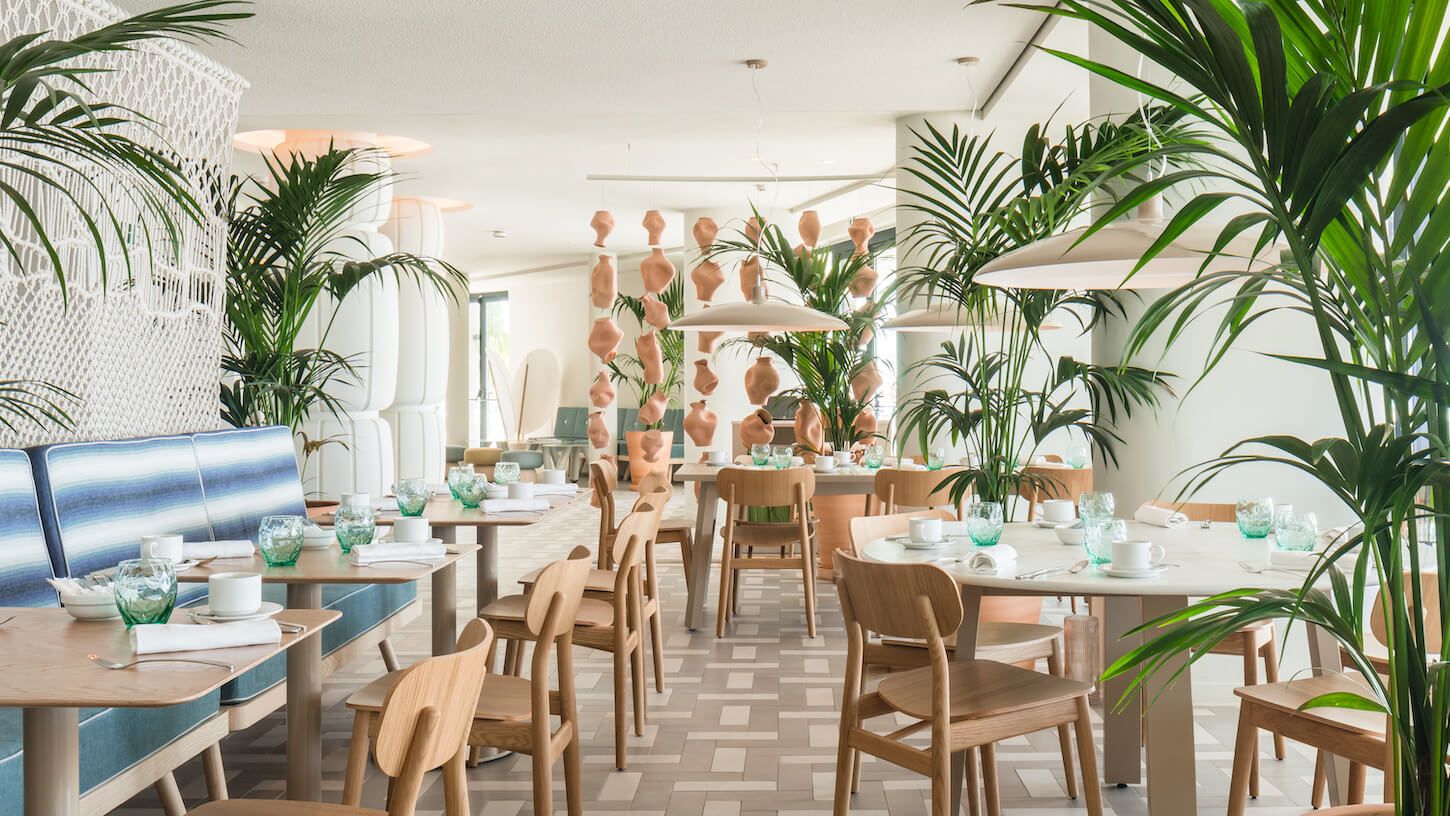
In this sense, at the ME Sitges Terramar hotel, artisanal techniques were used to create unique pieces of contemporary style, made from materials and processes typical of Mediterranean tradition. In contrast, for the project in Gibraltar for Xapo bank, the first physical headquarters of a banking entity operating in the digital realm, the choice was for furniture and decoration manufacturing carried out using digital processes; a metaphor in itself for the rapid transformation driven by banking and currency technology. In this sense, most of the custom-made furniture was 3D printed in Barcelona using a corn-based biological plastic.
Virtual interconnections and the dynamics introduced in recent times as a result of the pandemic have made needs change significantly when designing spaces. While remote work was a common practice for the Lagranja Design team in the pre-covid19 era, the desire to promote hybrid work (between in-person and virtual) by clients is an increasingly generalized demand. "Large companies tend to reduce spaces, and these must adapt to these new realities. This means that offices tend to become more meeting points and less workstations, and we work in this direction," he explains.
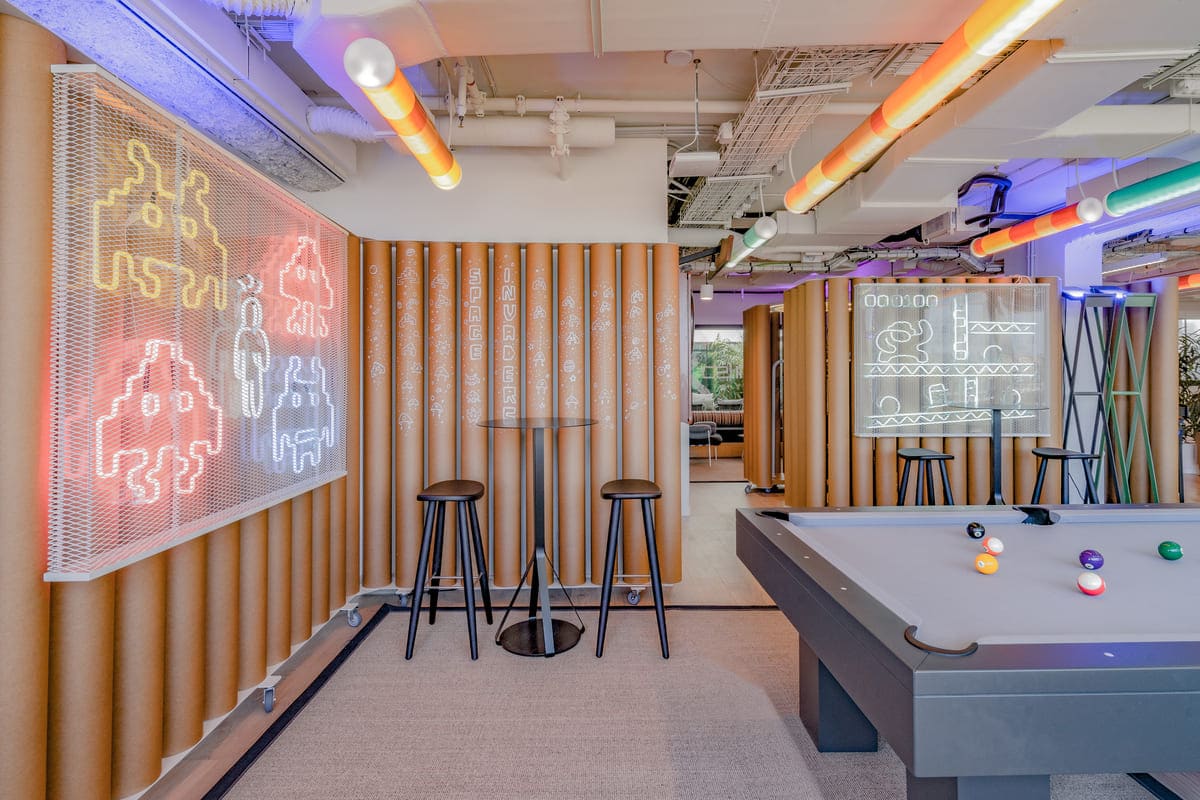
The important thing for Lagranja Design is to find a shared general vision with the client to be able to develop the project interactivelyAn example of this are the officesXcelirate in Barcelona, a digital entertainment content provider where team members work away from the offices. With the will to attract talented young programmers, the decision was made to adapt the existing workplace into a unique and fun environment that would bring out the best in their profession. Themed meeting rooms and shared workspaces follow one another with clear nods to popular culture. The round-lined furniture, designed by Lagranja Design's creative team and inspired by video game arcades, as well as the collaboration of Barcelona illustrator Javier Royo add a plus to this vibrant project, a hallmark of the company's philosophy.
Along with more technological challenges and aspirations, the Barcelona studio is now taking a step forward with public projects such as the one it has in hand with the possible transformation of Gibraltar's main square. "We would be very excited if it could be carried out because it would be a space for everyone. In this way, we ensure that many people enjoy our work and that it is the most inclusive design possible," says Schiavon. In addition to this more public aspect, the studio's recent association with BOD Arquitectura e Ingenieria, under the name Logran, responds to a clear commitment to expand future challenges on a more architectural scale.
Add The New Barcelona Post as your preferred Google source for free
Stay informed with the latest news.