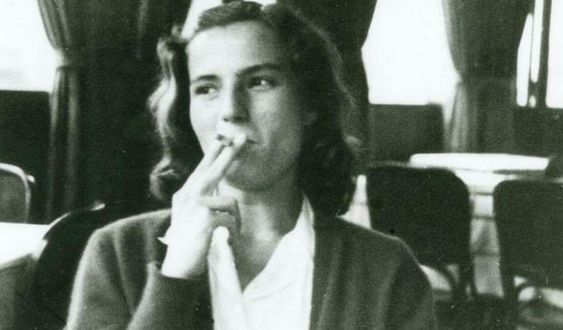
On Three Kings' Night in 1945, the winning novel of the first Nadal Prize was announced in Barcelona. A new award conceived by the masterminds behind Destino magazine, to, in the words of Ignacio Agustí, "awaken dozens of novelists sleeping in anonymous corners of the country." César González Ruano, an obscure pro-Nazi correspondent, visa trafficker in Vichy Paris, and resident of Sitges, was neither asleep nor living in an anonymous corner. But he believed he had secured the five thousand coveted pesetas of the award due to his popularity and influence. When that night, the jury gathered at the Café Suizo proclaimed a 23-year-old woman named Carmen Laforet as the winner, Ruano erupted in rage and misogyny. And with him, part of the literary establishment of the time. Even Codorniz magazine—known for its absurd and "manly" humor—ended up baptizing the Nadal as "Thimble Prize," for its propensity to award female writers: Quiroga, Forrellad, Matute, Martín Gaite.
[subscribe_newsletter_esp]
"Who is that Mrs. Pastoret or Mistinguet or Espinet?" exclaimed Ruano when the editorial managers came to his house to try to calm him down. They explained that at the last minute an urgent mail envelope arrived. That Ignacio Agustí was so impressed with the beginning of the novel that he read it aloud in front of everyone: "Due to last-minute difficulties in acquiring tickets, I arrived in Barcelona at midnight, on a different train than the one I had announced, and no one was waiting for me". It was titled Nada, in reference to a poem by Juan Ramón Jiménez, and it turned out to be an almost miraculous work for its time, without parallel. Furthermore, the votes were clean. Then Ruano exploded. They had not won a war against democracy for them to now come to him with a matter of votes. And he concluded with the classic aphorism of terrible relevance: "Everyone knows that in Spain, prizes are for giving to friends."
Ruano's question, about Laforet's true identity, was not easy to answer in 1945, nor is it now. The young author of that opera prima fled the spotlight with vampiric agility. She sparingly answered journalists with manifest annoyance and—like the truly ambitious—lied about the period of the work's creation, lied by hiding the autobiographical key.
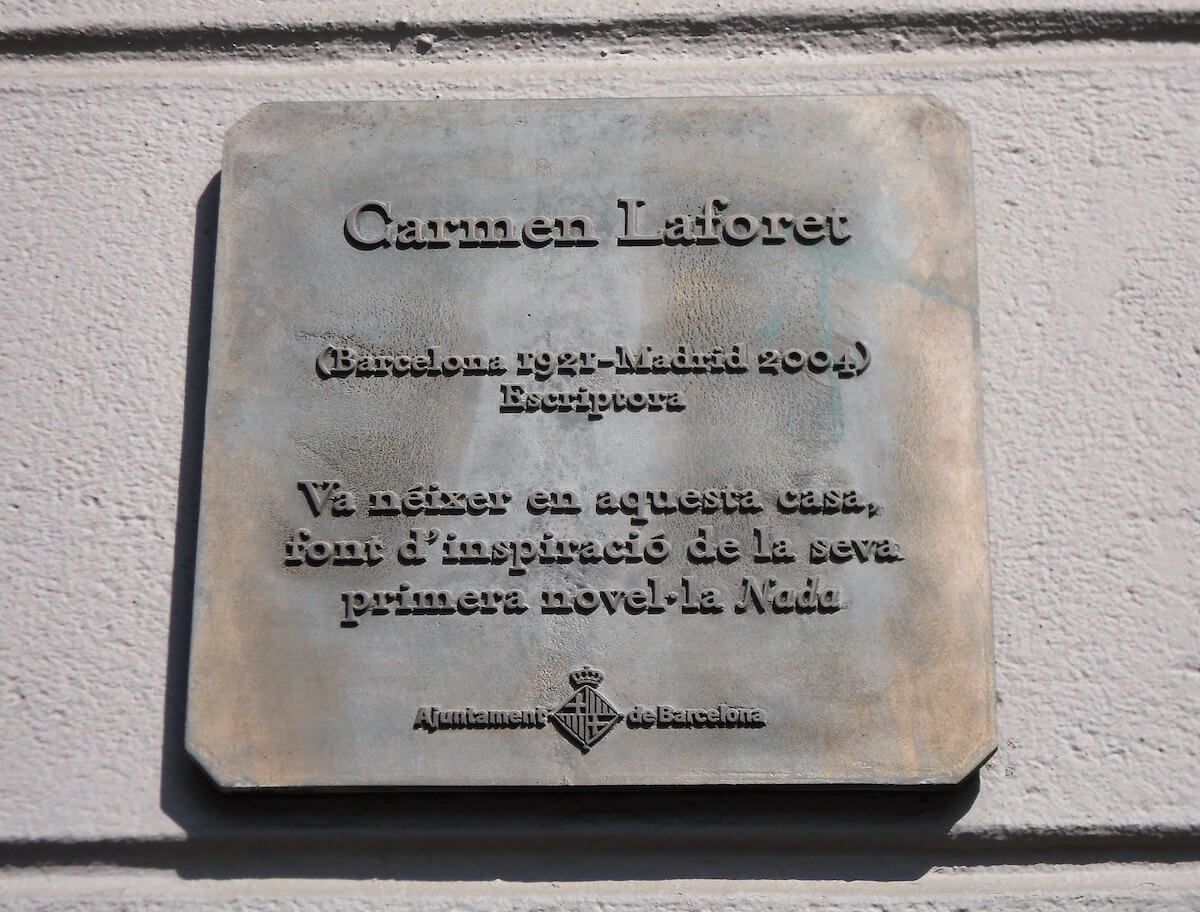
The city night, the new life, open before them like a promise of liberation. A promise, they will not take too long to discover, that is stillbornIn short, we know that she was born in Barcelona, at number 36 Aribau Street, to emigrate shortly after with her family to the Canary Islands. There, her life turns into a fairy tale that ends like one of monsters. She lacks neither the death of her sick mother, nor the wicked stepmother, nor the fervent desire to escape. They say that sometimes she plays hooky to go to the beach and swim until her strength abandons her. Something of that truncated childhood fantasy, of future nostalgia for a better time that will not return, remains embedded in Laforet forever.
The ship that brings her back to Barcelona in 1939 to study Literature at the University arrives late. Andrea, the protagonist of her novel, also arrives late to face similar challenges. Both have just turned 18, but neither of them seems scared or lost in such circumstances. The city night, the new life, open before them like a promise of liberation. A promise, they will not take too long to discover, that is stillborn. Protagonists of one of those nightmares from which one happily believes to have woken up, only to realize after a while that in reality one has only fallen into a deeper one.
Barcelona is Comala. Barcelona is AtlantisNothingnarrates the first year of a young woman who had just arrived in the city in 1939. Things in the house on Aribau Street ---miniature of an entire bruised country, House of Usher in the Grid of Evil, Bernarda Alba's house located in the Eixamplethey are not what they seem. The old mansion, like all of Barcelona, is in ruins. The protagonist,voyeurat once terrified and morbid, discovers that its inhabitants are not in better condition either. They live shadows of lives. They are almostzombies, frustrated in their artistic and sexual desires. It is chilling to observe with contemporary eyes the repressed lesbian desire in the pages of the novel. The streets and spaces described are apparently realistic, but the gothic atmosphere, where the real violence of the beginning of the post-war period is intuited with a hallucinated sobriety, manages to create a ghost city. Barcelona is Comala. Barcelona is Atlantis.
It seems that it was the post-war environment itself that poisoned all those who breathed it, turning them into petty and resentful beings, lacking greatness. Andrea ---also Laforet--- tries to escape the curse by changing her residence to Madrid. We do not know if Andrea succeeded, the novel ends there. Laforet struggles with determination against the certainty of the impossibility of living with the fullness of her adolescent longing. As if she were one of her characters, her life also becomes a slow crumbling of dreams and expectations. A difficulty in breathing as an unconventional woman in an impossible context. Thus, she dissolves between motherhood and marriage. Between expectation and reality. With the unsettling feeling of always feeling like an upstart. She seems to flounder ---bohemian in Algiers with the Bowles, exile in Rome, an attempt at friendship with Barral in Calafell that ends badly--- without ever finding her place.
They say that, towards the end of her life, already very ill, Laforet took a notebook from her granddaughter and began to draw strokes to try to learn to write againIn each move, she seems to leave a piece of work behind, suitcases full of papers that she would end up tearing up, published works that do not quite demonstrate her undeniable talent and projection and that immerse her even more in uncertainty and helplessness. Laforet writes four more novels and a valuable collection of short stories. Apart from Nothing, perhaps her best works, undoubtedly the most interesting in current eyes, is the private correspondence she maintained with Lili Álvarez, Elena Fortún, or Ramón J. Sender.
Over the years, the situation of graphophobia ---Bartleby despite herself, unable to write even if she wished--- worsens. A neurodegenerative disease eventually plunges her into absolute silence. She finds it impossible to sign a check. She even loses her speech. In the beautiful TVE documentary, Carmen Laforet, a strange girl, her daughter explains that many times, upon being recognized, her mother denied being the famous writer. That, sometimes, as a child, when asked if her mother was the author of Nada, she would reply that her mother was an extraordinary swimmer.
They say that, towards the end of her life, already very ill, Laforet took her granddaughter's notebook and began to draw strokes to try to learn to write again. Ready to dive once more into the depths of her deep sea. Even in defeat, persevering in the search for the euphoria of living.
Add The New Barcelona Post as your preferred Google source for free
Stay informed with the latest news.