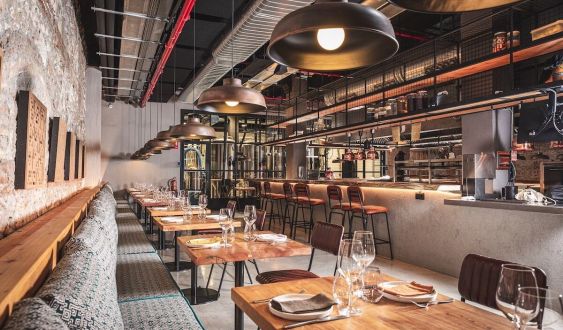
On Casp street, in that stretch that remains in no man's land, far from the center but still close to the hustle and bustle, Brian Blazek decided to give shape to one of his many hobbies. In the heart of the Eixample, La Textil Collective emerges as a bar with an extensive menu of craft beers and DJ sessions accompanied by a restaurant run by chef Pablo Lagrange, formerly at Tickets, Pakta, and Noma. Craft beer was the origin of everything, as seen at the back of the premises, from where Blazek has created more than 120 recipes; but he has ended up incorporating new elements, more informal in the bar and more elaborate in the restaurant, where fire becomes the central element from which everything is configured, the space and the gastronomic proposals.
It all started when Blazek got into making craft beer. Born in the United States and an English Literature teacher for 20 years in private schools around the world, passing through Japan, Ecuador, Nigeria, and Riyadh, he became interested in becoming a master brewer, after trying photography and working with wood. "I've always been very curious and I've liked to do things myself," he admits, "but with beer I wasn't just satisfying my curiosity, I was creating a product that I could share with other people and make them happy." To which, he assures, his university career in Physiology and Biochemistry, his first training before he switched to teaching, helps.
At that time, he was living in Arabia, where alcohol is illegal. "I was making a lot of beer and decided I wanted to open a brewery, even though I had no idea how to do business," he continues, "I guess I've always been a bit naive." He decided that the beer was going to be accompanied by food and music, like at festivals. From when he had lived in Nigeria, he met the partners with whom he would promote La Textil. Coincidentally, one of them was from Sant Feliu de Guíxols, which ended up positioning Barcelona as the chosen location for Blazek's brewery. Lisbon was also in the running, but the Catalan capital convinced them due to its greater traffic of passers-by, whether locals or tourists, and the expansion that craft beer is experiencing, with events such as the Barcelona Beer Festival, held in L'Hospitalet de Llobregat in mid-October.
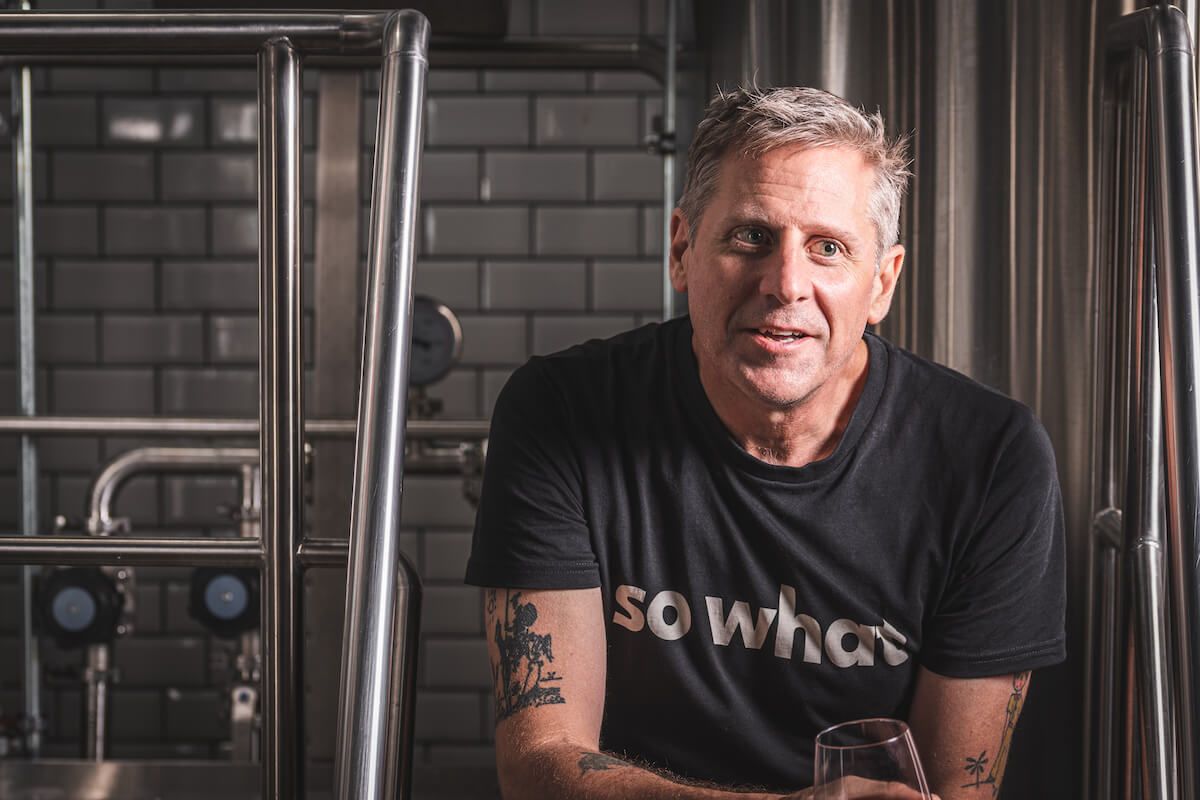
The project started in August 2017, when Blazek began looking for a location in Barcelona, where he traveled once a month while still living in Saudi Arabia. He found it in December 2017, but the license took time to be approved due to objections presented by neighbors, all of which were rejected. The approval finally arrived in October 2019, at which point construction began. They finished on time, in May 2020, but the pandemic made opening difficult, so they started with small trials until it officially opened in August 2021, with chef Pablo Lagrange and sous chef Lucía Aguilar, formerly at Enigma.
Since then, La Textil, with a capacity for 180 diners, has been evolving. It is no longer just a place to brew craft beer, with a bar included to try it, but has also become a restaurant, with DJ sessions and even a concert hall, totaling a staff of about 25 employees. Through trial and error, Blazek and his team have matured the original concept. "I decided I wanted to make beer, but I had no idea I was going to end up making La Textil," emphasizes its founder. What he was very clear about was that "he didn't want to be the typical American who knows everything," which is why he has always been accompanied by a local team, nodding to the city's industrial past in the name of the space and opting for local products. In this constant change in which La Textil is immersed, this year, as a novelty, there are black curtains with which they have separated the bar from the restaurant, with very differentiated menus, after some customers during the first year were confused by not being able to order what they saw at other tables.
Behind the black curtains
When one goes behind the black, velvet curtains, one discovers a room with an industrial feel taken over by the kitchen, in the center, equipped with a wood-fired oven, a grill, and a central fire. The smoke and flames concentrate the efforts of the kitchen team, always in plain sight, even more so for those who sit at the bar to eat. From that privileged position, one can follow in detail each step in the preparation of the dishes that make up the varied menu, separated by recipes for products that come from the sea, the mountains, or the garden, with a special section for those in which fire is the central element. All of them, products made from scratch ---without frozen ingredients---, seasonal, and from small local suppliers.
The smoke and flames concentrate the efforts of the kitchen team, always in plain sight, even more so for those who sit at the bar to eatFor those who find it hard to decide, they can start to open their stomach with the crackersmade from barley remnants from the brewery, discovering from the very beginningone of the core characteristics of La Textil: everything is reusedThe crackers pair very well with some of the beers created by Blazek, enhancing the flavor, but also with a homemade butter that also starts from barley remnants.
If you start with the raw dishes, the cured bonito with green apple water, herbs, and aji oil stands out, with a very acidic flavor achieved by reusing the remnants of the chimichurri for the oil. There is also grilled scallop with pajaritos yogurt and wild fennel juice, with a powerful maritime flavor that lingers in the mouth for a while, even more so if accompanied by white wine with saline notes. Beer, obviously, is important at La Textil, but an extensive wine list has also been designed to enhance the flavors of the recipes.
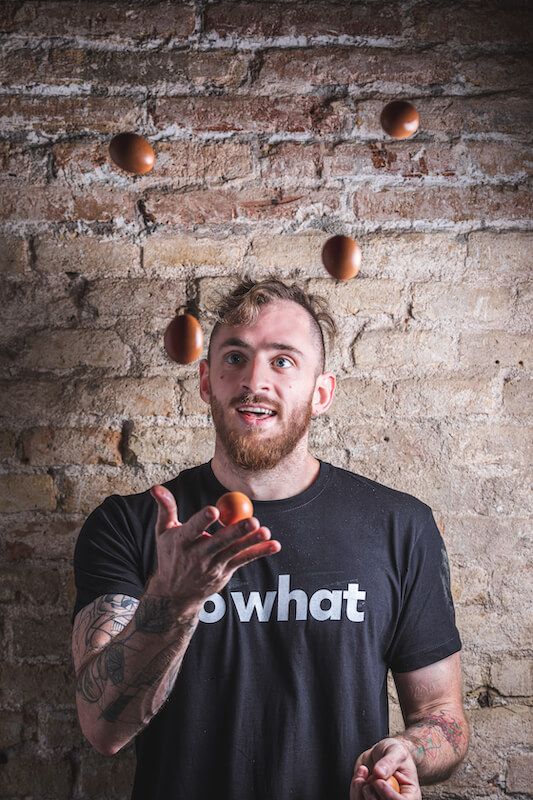
While waiting for the meat, one can taste the grilled country bread made in the wood-fired oven, with sourdough and whole wheat flours, in which the fat waste from the meats cooked in the restaurant is also reused, a dish in itself. That special ingredient is noticeable in the smell, also in the taste, enhanced by the accompanying ashes, which also come from remnants of vegetables or other products that pass through La Textil's kitchen. Grabbing it still warm and breaking it, the best way to feel what chef Pablo Lagrange wants to convey.
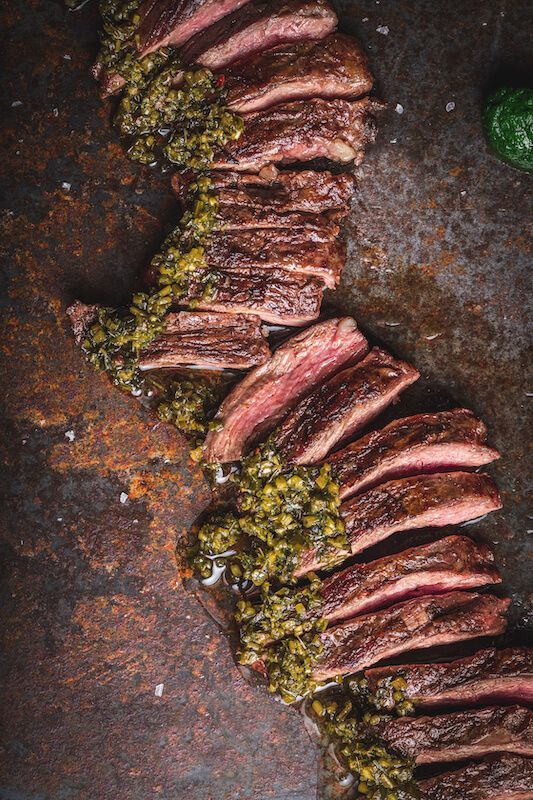
Moving on to the meat, there are veal sweetbreads with roasted eggplant water, currant powder, and red cabbage, very tender and at the same time crispy thanks to the grilling they receive. In this case, one of the ingredients used takes a week to be ready and that can be seen in La Textil's kitchen at the foot of the restaurant, where various tuppers macerate waiting to be used. To avoid getting lost, the kitchen team follows complex and colorful diagrams, in which they see what phase each of the ingredients is in and what addition needs to be incorporated each day or week. For those who are neither meat nor fish eaters, there is also the option of delighting in the grilled mushrooms, accompanied by burnt sunchoke juice, katsuobushi cream, yeast salt, and fermented mushroom water.
If there's still room, for desserts, there are typical ones, although at La Textil nothing is typical. From a Madagascar vanilla flan, fino gelée and seasonal fruit to pine or Jerusalem artichoke ice cream, both completely different from anything one has tasted before. In the case of the pine ice cream, the kitchen team goes on an excursion once a month to Collserola to collect the base and see if they find any other ingredient that can be used in the kitchen. They have also gone to Solsona to see where the chickens they cook grow.
The dishes that make up La Textil's menu change and are tried for lunch or dinner, to finish defining when they work best. The average ticket is between 35 and 40 euros in the restaurant, with the option of group menus, while in the bar, with a menu that allows combining beer with hamburgers and fries, the price is 20 euros. Since the launch of the new differentiated proposal for bar and restaurant in September, Blazek points out that they are filling the tables they need to be sustainable, doubling those they had before the summer and consolidating repeat customers. "We lost a lot of money in 2021, but now we are close to break-even. Even so, we still have a way to go to make a profit," details the manager, with a Don Quixote tattoo, feeling a bit like him, "with a crazy and unrealistic project," but which, in his case, "is starting to happen."
Add The New Barcelona Post as your preferred Google source for free
Stay informed with the latest news.
