Commercial aviation has only two annual seasons. Sunday the 29th marked the beginning of winter, and this very Monday the 30th, Barcelona inaugurates a new intercontinental route: Kuwait City. The state airline of Kuwait, a country in the Arabian Gulf, has chosen Barcelona Airport as part of an expansion plan that in Europe includes, starting this winter, the capitals of Germany and Catalonia.
With the landing of flight KU135, Kuwait Airways begins regular operations at El Prat. Its arrival makes it the fourth airline from the region to fly to this airport after Emirates, Qatar Airways, and Etihad. With their flights, these companies allow connections through their hubs in Dubai, Doha, and Abu Dhabi, not only to their own countries but also to a good number of destinations in Asia, Oceania, and even Africa. The intention of the company making its debut today in the Catalan capital is similar.
With the link from Barcelona to Kuwait International Airport, this airline not only wants to connect the two cities, which in itself is interesting, as Kuwaitis are among the most frequent travelers from Arab countries, but also wants to leverage connectivity and feed its own flights. The company itself has already studied and clearly defined that one of the most important demands in Barcelona are connections to and from India and Pakistan, as well as Thailand, the Philippines, and Malaysia.

Barcelona becomes today the third destination that Kuwait Airways operates in Spain, and this in turn makes Spain the European state with the most presence of the airline. In 2022, the company began flying to Madrid after several decades of absence, and summer flights between Malaga and Kuwait City have been a tradition for years due to the significant presence of tourism and other Arab interests in the Costa del Sol area. Barcelona has long been in the company's focus, and finally, in 2023, it was decided to open this destination, the twentieth in Europe, practically at the same time as in the capital of Germany.
Three weekly frequencies
Operations at El Prat start cautiously. Initially, there will be three weekly frequencies and the aircraft used for the route will be an A320neo, the latest generation of Airbus single-aisle aircraft. This model is a twin to those flown by Lufthansa, Iberia, or Vueling on their services to Barcelona, although in the case of the Arab airline, the difference lies in the interior configuration of the aircraft. To establish a comparison, if the A320neo aircraft of European airlines carry between 180 and 186 seats, the Airbus aircraft of this type operated by Kuwait have 134 seats, twelve of which are true business class, with the first three rows in a 2-2 configuration and the remaining 20 with six seats per row and more than reasonable legroom, something to be appreciated on flights that will be between six and seven hours, depending on whether one flies east or west.

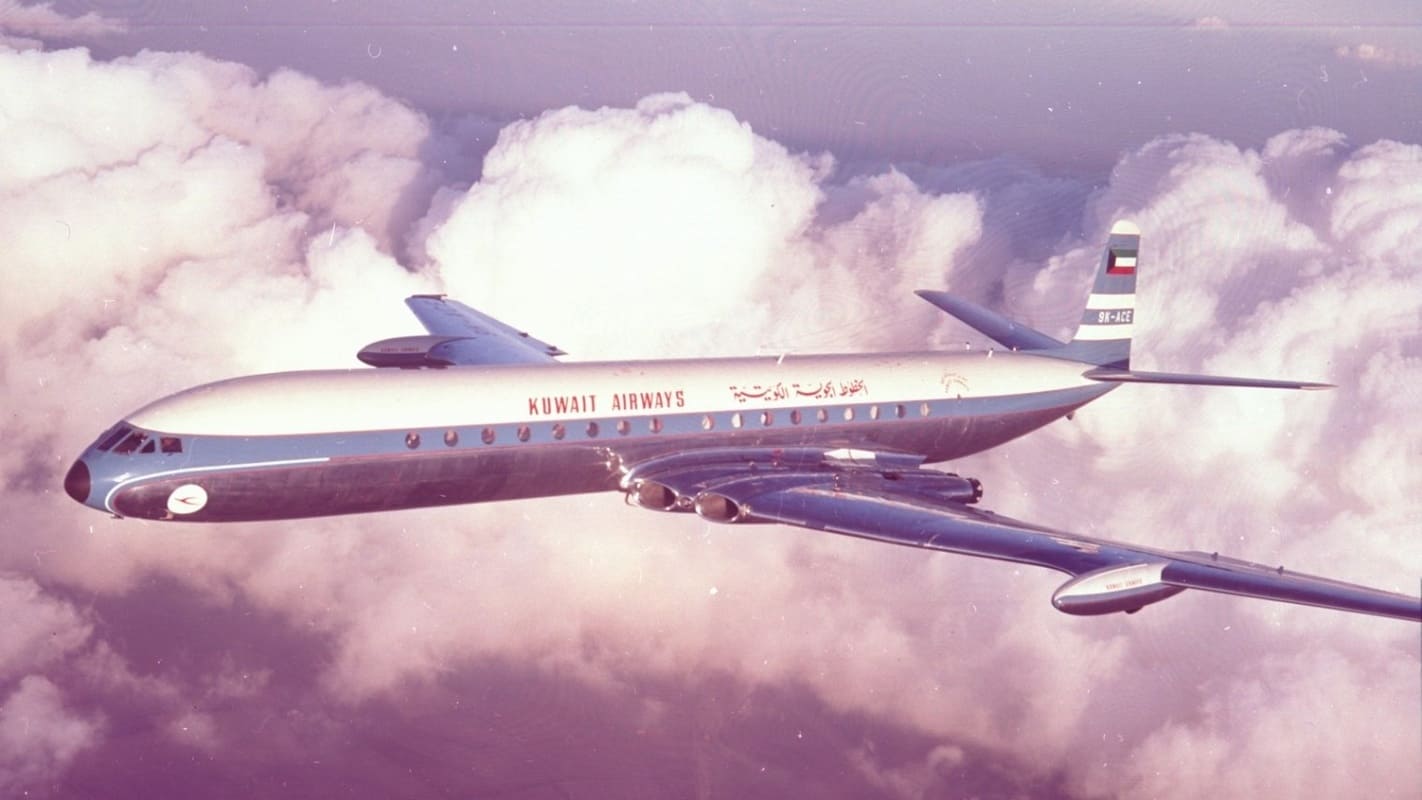
In the spring of 2024, the company al-Khuṭūṭ al-Jawiyyah al-Kuwaītiyyah will celebrate 70 years. Like so many businesses of the early and mid-20th century in Asia and the Middle East, this one had a significant British presence in its capital and in fact a subsidiary of BOAC, the English company predecessor of the current British Airways, was key to the start of aviation in the country of the Al Sabah, the dynasty that has governed Kuwait since the mid-18th century. After a decade of operating, the company became completely state-owned and began flying with jet aircraft such as the British Comet 4, the first commercial jet in history, although it later opted to operate Boeings, such as the 707, 727, and 747, later also becoming a customer of the European Airbus with its first models. With that fleet, it became an important player in aviation in the region and managed to have a considerable flight network.
Kuwait wants to maximize non-oil activities, involve the private sector more, and identify airports as catalysts for overall economic growth.The invasion of Kuwait by the Iraqi army, led by Saddam Hussein Abdulmajid al Tikriti in the summer of 1990, directly affected this airline: it lost 15 aircraft and its operations center was destroyed by various bombings and attacks. The annexation of this country to Iraq created a very brief state that lasted only a few weeks: the Republic of Kuwait, later transformed into the Governorate of Kuwait, which in this case lasted a few months. The end of the already distant first Gulf War restored the government prior to the invasion, and from 1991 onwards, the structures of that state began to be rebuilt in a long process, including the airline that is debuting in Barcelona today.
Currently, Kuwait Airways has 32 aircraft: a dozen Boeing 777s, seven Airbus A330s, and 15 Airbus A320s. In recent years, the average age of the fleet has been reduced to 5.7 years. All of this has gone hand in hand with a substantial improvement in onboard and ground services, changes undertaken to face the strong competition from other companies operating in the same markets and to live up to an airport that wants to once again be one of the most important in the region. Last year, 14.5 million passengers used Kuwait International; this year, the aim is to reach one million more, and the expansion works for runways and new terminals are on track for generalized growth. As in the case of Bahrain, the Kuwaiti government shares an economic vision with that Gulf country: maximizing non-oil-related activities, involving the private sector more, and identifying airports as catalysts for overall economic growth. And having even a direct link with Barcelona has become part of this important state plan.

A little-remembered history
The arrival of Kuwait Airways in Barcelona does not mean that it is the first time there have been direct flights between El Prat and Kuwait City. Almost 45 years ago, Iberia began a campaign towards the east very focused on flying to oil-producing countries. It was a plan designed at a time when diplomat Manuel Prado y Colón de Carvajal presided over the Spanish airline and was executed by the team of his successor, aeronautical engineer Enrique de Guzmán Ozámiz. Between 1979 and the early 80s, Iberia flew to Tripoli, Abu Dhabi, Jeddah, and even Kuwait. At that time, flights originated in Madrid, although they always made a stopover in Barcelona, both on the outbound and return journeys.
As of today, Barcelona and Kuwait once again have a direct flight.

Add The New Barcelona Post as your preferred Google source for free
Stay informed with the latest news.