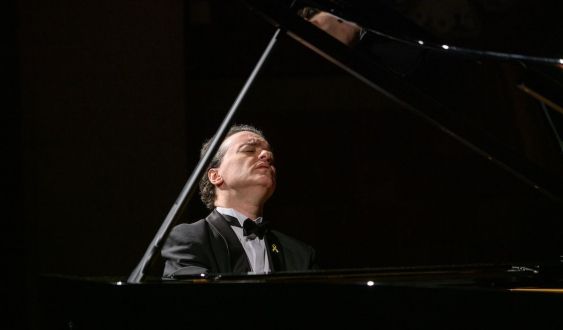
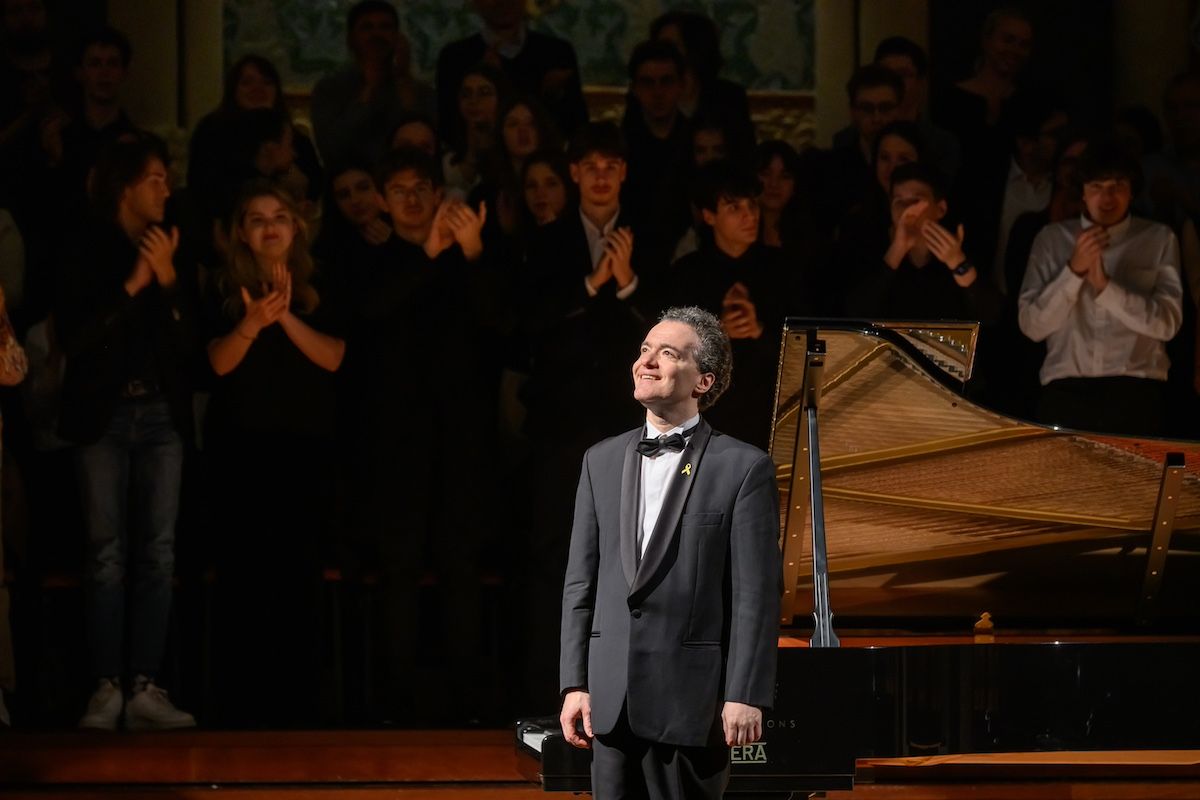
At the Palau de la Música, tickets were so sold out that they had to arrange seats on the stage. Normally, solo piano concerts cost a bit more; people are more inclined to see strings and brass filling the stage space until overflowing into the aisles, but Evgeni Kissin is a kind of interpretive superstar who even drastically reduced the usual average age in the hall: behind him, and erupting with fervent applause like true hooligans, five rows of young spectators who told me they came from a music school in Brussels. Kissin is one of the greatest, or perhaps the greatest, but above all, he is one of those who make themselves most loved. And I spent the concert asking myself, and answering myself, why.
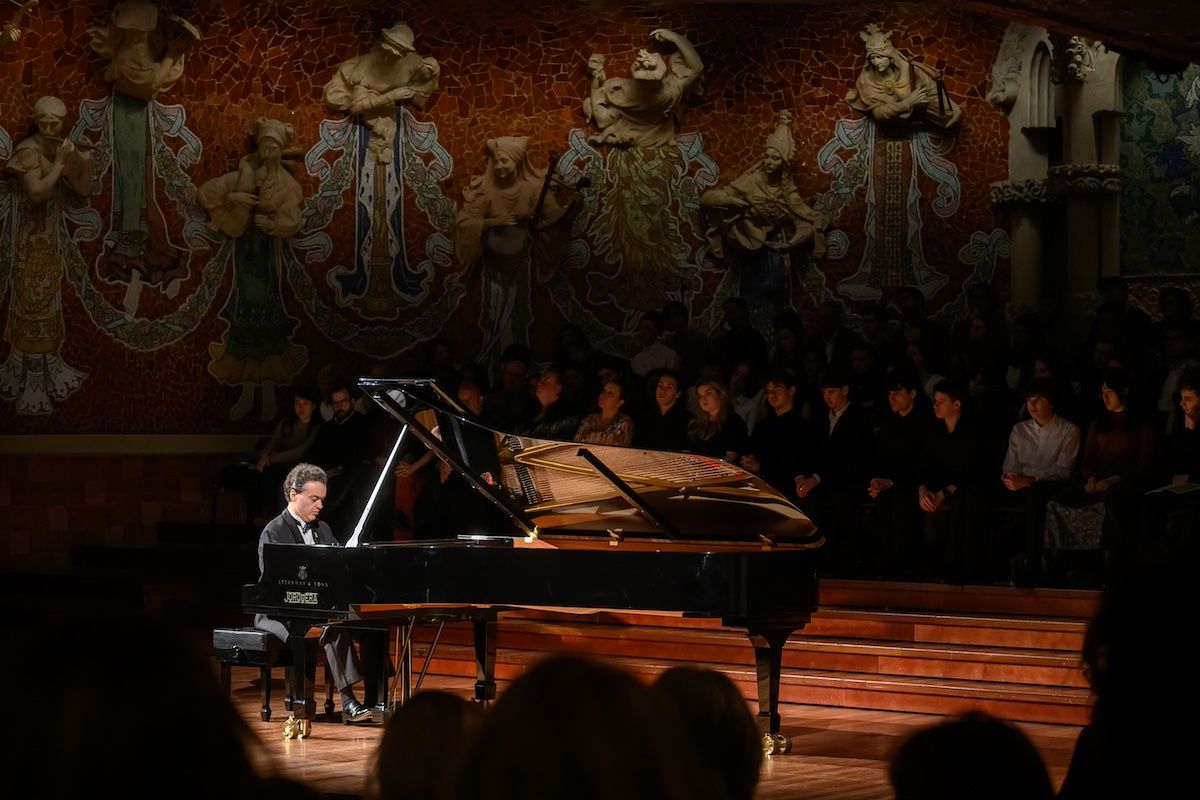
The idea of the repertoire was Bach. Without a doubt. Even though he gave us two nocturnes and a Chopin scherzo (a less romantic Chopin than we are accustomed to), the Shostakovich in the second part was overtly (and unusually) Bachian, as it consisted of preludes and fugues. So, if we start the concert with that musical (and ergonomic) disposition that Bach's work has (Partita No. 2 in C minor), which makes the interpretation resemble a typing lesson, we end the concert with a similar tone, albeit filtered through the always surprising Russophone abstraction of the 1950s.
After these harpsichord-like, classicist, and wigged airs, Chopin's nocturnes were a new acupuncture lesson: Kissin seems to relax, like the entire Universe, when he takes off his corset and moves through the forms of nocturnes or impromptus and rhapsodies. Everything is more valuable, but also, we are going to squeeze all the possibilities of this new instrument called pianoforte. And the Russian musician and composer who silenced the Palau (not a single ill-timed cough, at most a brief distracted mobile phone) seems to merge into the keyboard without a map, without a score, without limitations or doubts. For some reason, in English, they call it by heart (and in French par coeur), to know something by memory: there are things that do not pass through memory, and that are only possible if they pass through somewhere else.
Kissin does not juggle or display virtuosity: he exposes with crystalline clarity, yet full of creativityThe 1 and 2 are not in fact the most popular of the nocturnes, but they approach the ballad form with domesticated emotionality (except for the second, more stormy). They are dedicated to a countess and a baroness, respectively, while thescherzothat follows invites us to take on the night with a more playful and almost obsessively spiritBeethovenian(orbeethovenianlyobsessive).A first-half ending, now yes, romantic and full of emotional colors, from joy in melancholy and from anguish to fear in a kind of 19th-century Inside Out masterfully executed in twelve minutes.Standing ovation, the fans frenzied, long pause.
Shostakovich has me intrigued, amazed, eternally surprised. Whenever I encounter him in the program, I am wary, due to his dangerous tendency towards abstraction, but he always ends up convincing me and opening my eyes. The Sonata No. 2 in B minor (1943) is of an overflowing, seductive, and hypnotic imagination, with spaces for a spasmodic bitonality that is always interesting for a Beethovenian like me. I clearly prefer it over the later preludes and fugues, no matter how relevant they may be for experts or for the general public. It must be because of its neo-baroque language, which I have already said puts a wig on the atmosphere to extremes I try to avoid, but in the hands of Kissin (now, yes, reading the score) and especially Shostakovich, the stamp is one of modernity and magic. Kissin, in fact, does not juggle or display virtuosity: he exposes with crystalline clarity, but full of creativity, which is what deserves the Palau to collapse in applause and expressions of infinite gratitude.

However, I would say that he knows that the greatest magic occurred in the encore. Specifically, in Chopin's scherzo No. 2 that he gave us as a kind of last-minute urgency, a great main idea left unsaid, and which confirmed to me the unrepeatable exceptionality of the moment, of those hands and of that reincarnation. Tonight, more than an interpreter, we have been witnessing a composer live. A creative act. Ephemeral and eternal, like a rose, like an embrace, like a brilliant speech while raising a glass and inviting to say "long live!".
Add The New Barcelona Post as your preferred Google source for free
Stay informed with the latest news.
