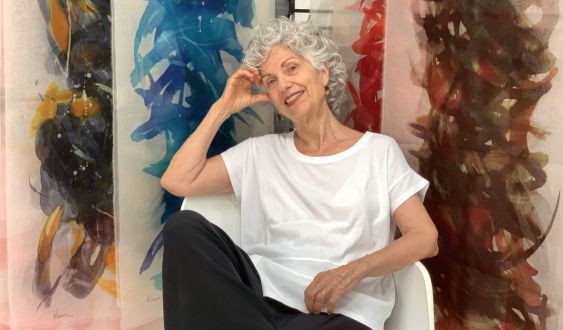
“I have always been somewhat of an outsider”. I consider myself a textile artist, designer, and artisan, but I have never quite fit into any of these categories. This has allowed me to carve out a space of freedom where I have always done things my own way, regardless of fads and trends.” As evening falls, Kima Guitart takes advantage of a quiet moment at the Bar to approach the counter and order an iced tea. “Above all, I have always sought my own voice, and for it to be recognisable, regardless of whether I was working on a dress, a scarf, a rug, or an installation.”
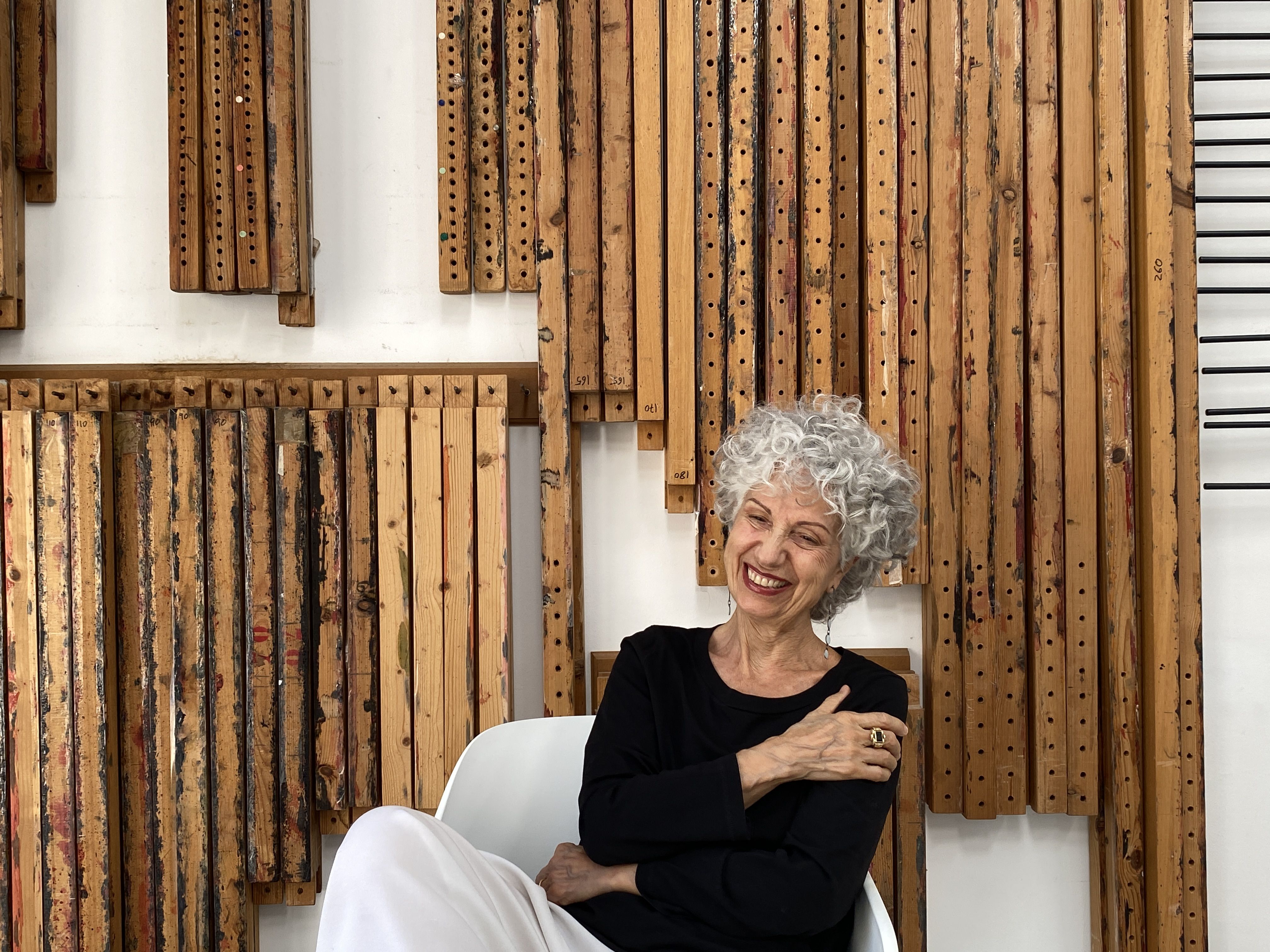
She grew up in her mother’s sewing workshop, “where, without realizing it, I learned many things about fabrics, their shapes and how they fall”. She learned at La Llotja and at Montserrat Xicola’s workshop, working with enamel on copper, but a scholarship in Florence made her realize that what she really wanted was to paint on silk. “I went to Paris to learn oriental techniques and then perfected them in Menorca, painting landscapes on fabrics.” Sunsets, reflections on the sea, sunlight and shadows. “That island taught me to look.” She returned to Barcelona and here it was just a matter of time. “At first I alternated copper with textile art, but soon after, silk took over.” There was no turning back.
With Blai Puig, they created a company, Plec, which was literally flooded with commissions of all kinds, “and each one taught me something new”. That could have lasted forever, but there were desires that could only be satisfied by changing course. “I thought that, wherever I went, I would always have my hands to work with. So I sold my share of the company and went to New York, and spent the next four years travelling back and forth between the two cities".
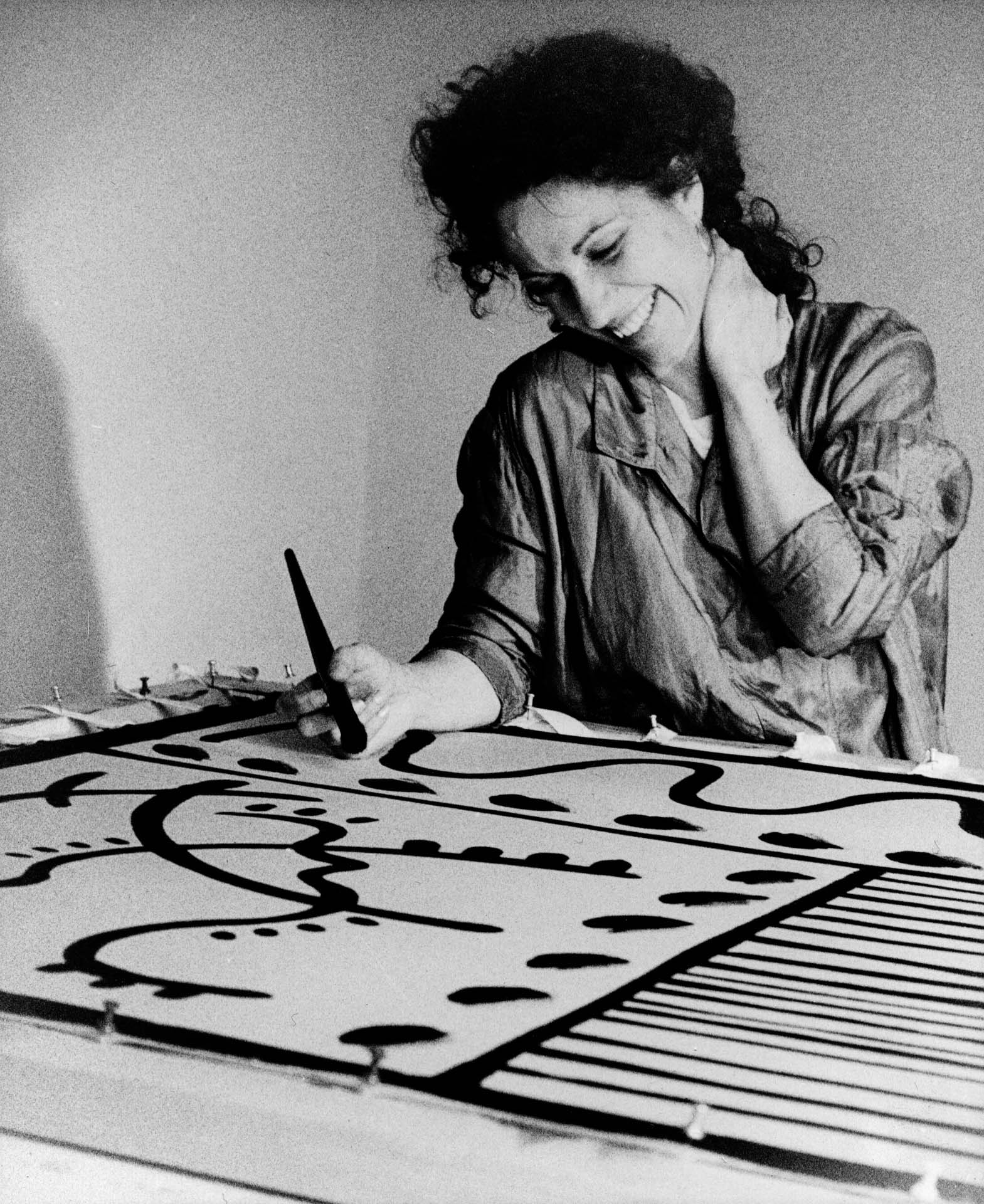
The Kima who returned from New York was a different person. “That experience broadened my horizons enormously, at all levels.” In 1984, she was the first to exhibit clothing in an art gallery. Another barrier she broke the following year, at ARCO. Exhibitions began, and so did fashion shows. “My creations appeared on the runways of Gaudí and Cibeles, although I soon stopped using professional models.” Art is for everyone and should not be subject to absurd canons of beauty. And, above all, art is in everything one does. “I don’t distinguish between types of works. I give the same value to a scarf, to an exhibited fabric, or to a dress which, for me, is a silk mural that goes out into the street, goes to the theater, to the restaurant and becomes part of the personality of the person wearing it”.
Another turning point
In the late 80s, Kima Guitart moved to Madrid, “where I spent five eventful years.” More remarkable commissions followed like the upholstery of the Rojas theater in Toledo or a series of fans for the New York MoMA. She began working with a team and entered the world of textile printing. Getting into the world of prints. “I returned to Barcelona for the Olympics, an emotionally overwhelming time, when my parents died, I got married, I became a mother…” Meanwhile, more work: commissions and personal projects “to which I dedicate, equally, my affection and effort.” Exhibitions in the United States and Japan… And, suddenly, in 2015, everything stopped again. The second turning point of her life arrived.
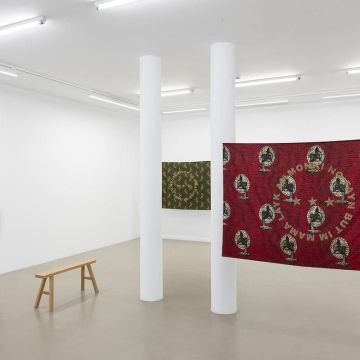
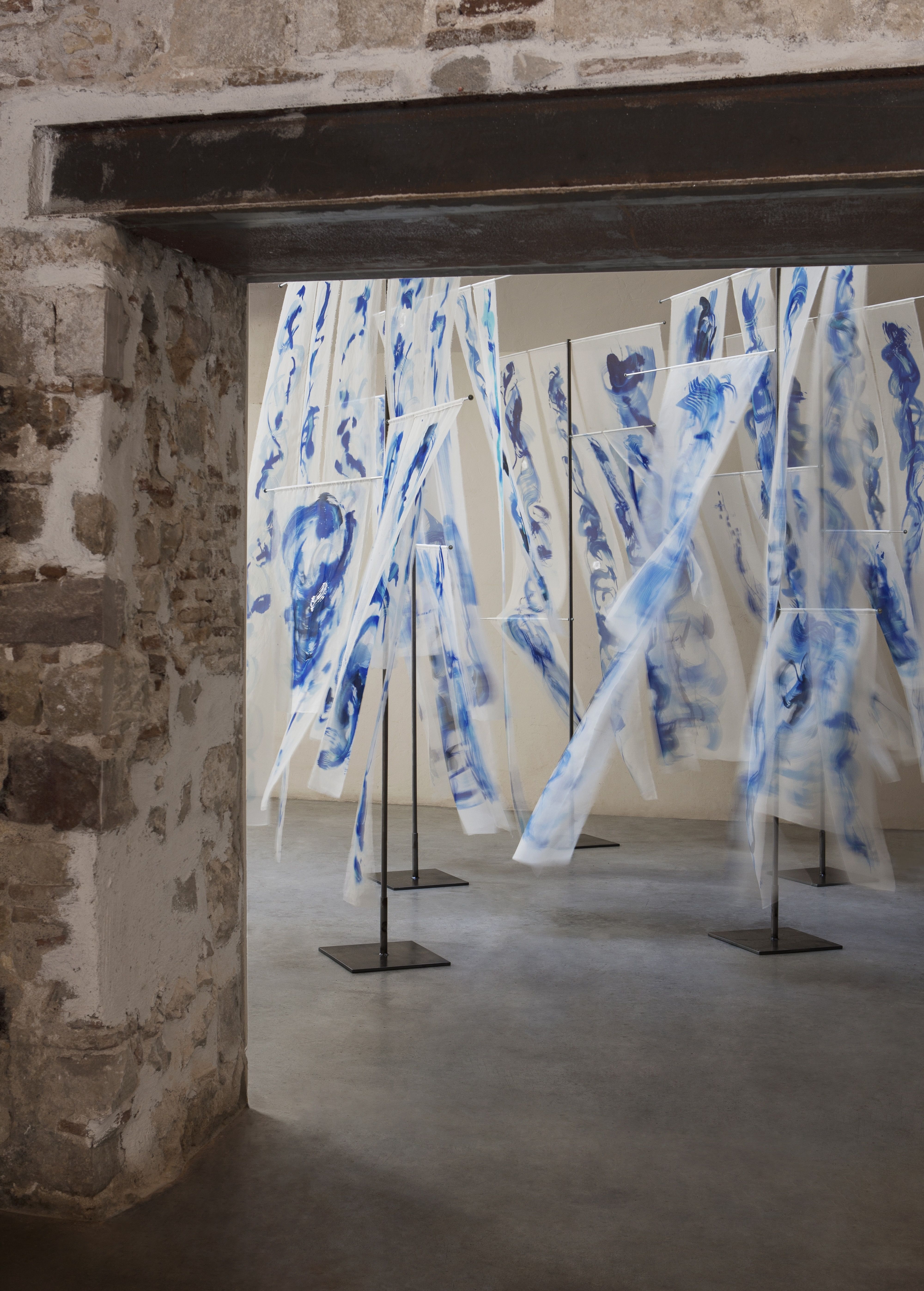
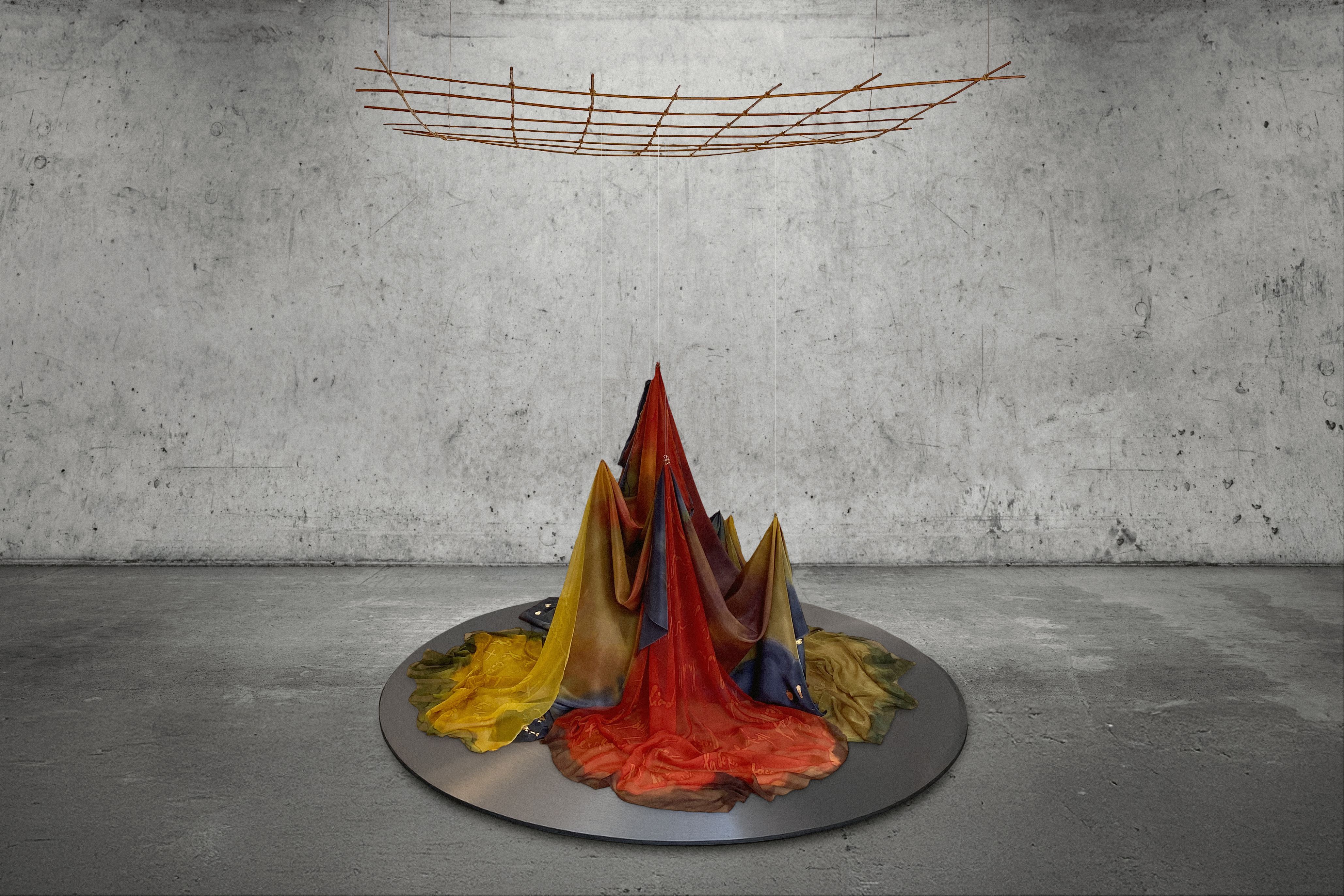
“I closed my studio and was alone again, with the idea of taking a sabbatical year.” But staying still was not an option and, in 2017, she made her first foray into sculpture and installation art with her work Plouen pregàries 1 (Prayers Rain 1). Since then, she has worked on ambitious installations and sculptures based on the reading of great female figures from mythology such as Cassandra, Daphne, or Medea, seen through the prism of Christa Wolf. Her way of influencing a present “in which many women continue to be murdered or silenced.”
Proud to have "forged a path that in my youth seemed utopian," in recent years she has worked to shape –together with art historian Pilar Parcerisas– the book Pintar la seda (Textile Museum of Terrassa) which compiles the extensive career of a Kima who, as a good artist, continues to resist easy labels.
Anger with the present
"I am originally from Esparreguera and I came to Barcelona at seventeen to study. Now it has been my city for many years, and what I love most is the sea. I have enjoyed it enormously at different times in my life, but I am glad to have lived in other places, because that gives you a much deeper perspective." The artist finishes her tea.
"If I tell you the truth –she continues–, right now I am angry with Barcelona, because of all this overcrowding, this homogenisation and loss of character". Like so many other Barcelonians, she finds it hard to recognize a city that increasingly looks like a set and through which it is difficult to walk due to so much overcrowding.
– Perhaps our food scene could help win you over again. Dinner time is approaching and in this kitchen, authentic magic is made. Would you be tempted?
Kima Guitart smiles. She enjoys the rare quiet and her mood lifts.
"If you have a menu, I'll take a look," she replies, who knows if thinking that the colors, aromas, and textures of the food might somehow end up reflected in one of her creations.
Add The New Barcelona Post as your preferred Google source for free
Stay informed with the latest news.