
The old Museu Martorell de Geologia, now converted into an exhibition center, reopened its doors in the Ciutadella just before Christmas after years closed and under renovation. And it has done so with part of the collection of the Museu de Ciències Naturals de Barcelona, which has integrated the Geology and Zoology museums, the latter having been located in the neighboring Castell dels Tres Dragons, also within the park grounds, and from which some of the pieces now exhibited in the Martorell also come.
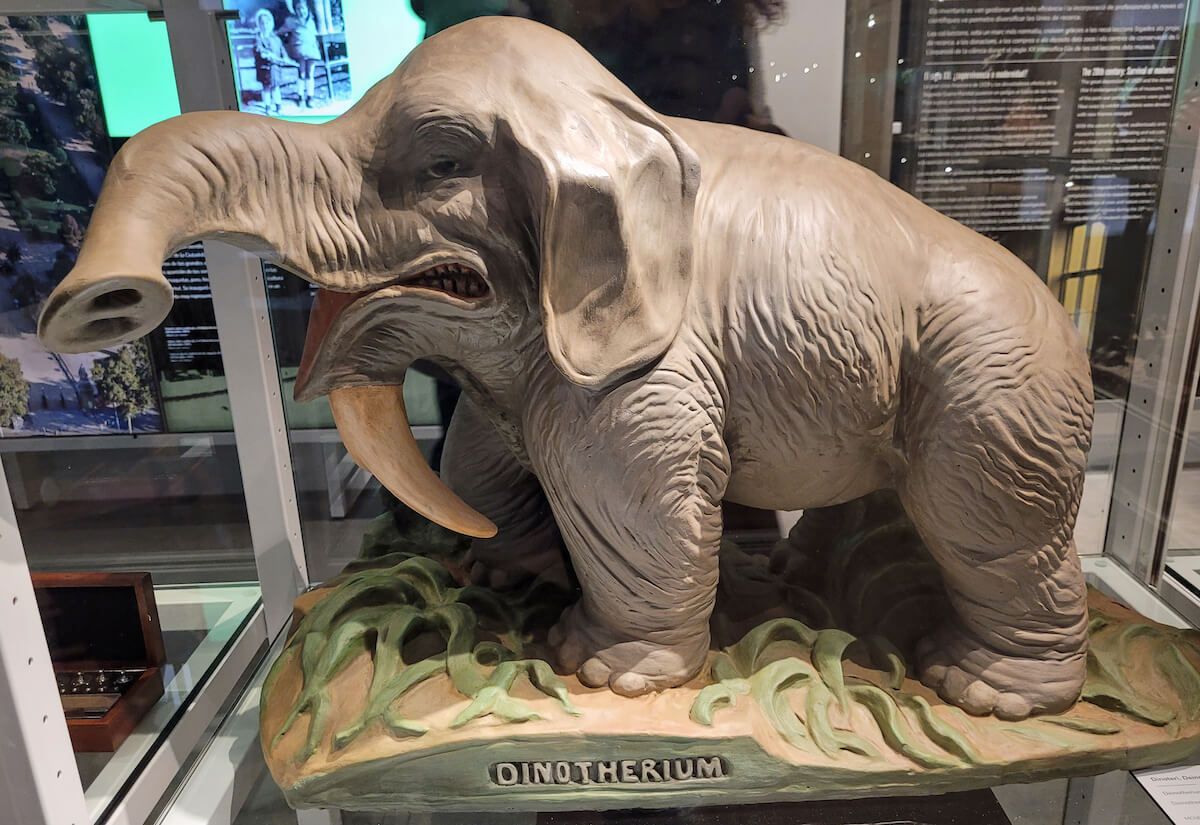
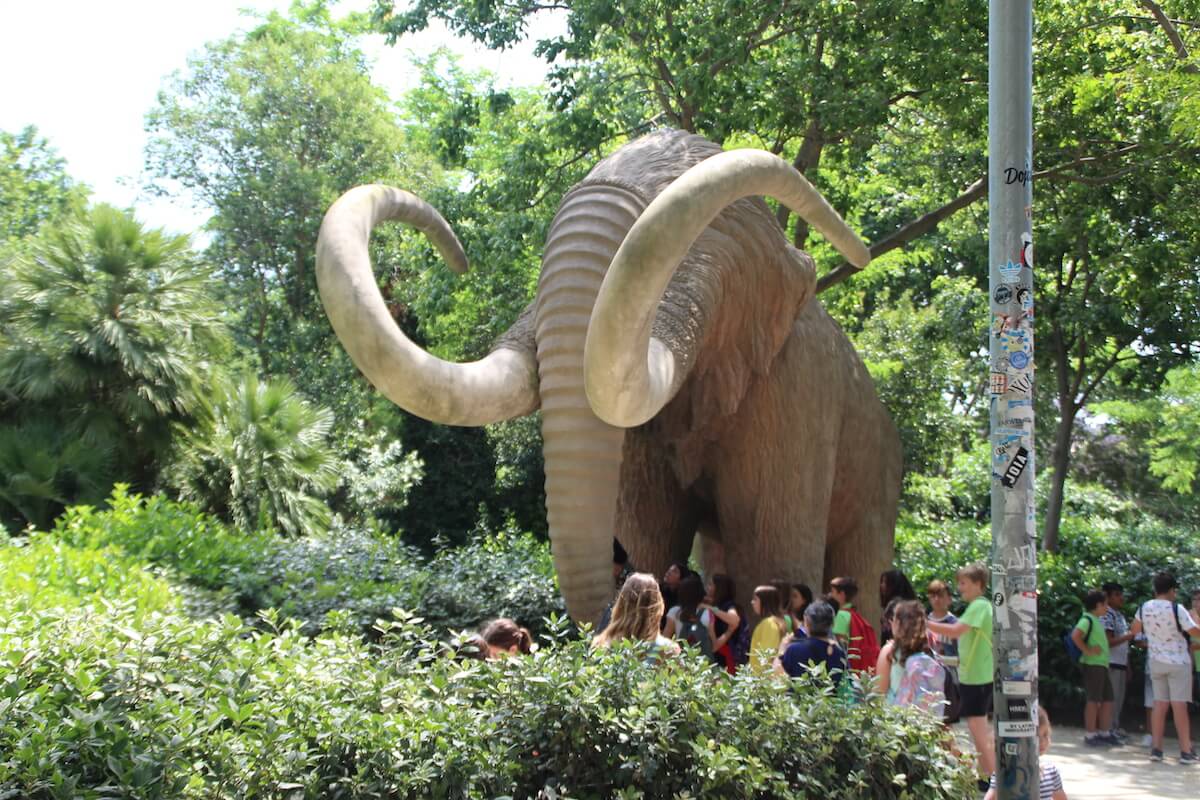
Among the elements that are part of the exhibition, the set of a dozen plaster models of extinct prehistoric animals that were supposed to populate the Ciutadella park in natural size stands out, of which only the reinforced concrete mammoth finally prospered, which is the most popular sculpture in the enclosure. It is common to see the mammoth with a child climbing on its enormous trunk.
In the absence of that kind of Barcelona Jurassic Park ---technically, the term Jurassic would not be correct, but you will allow me the cinematic license---, now, and after years accumulating dust, the models can be contemplated and one can get an idea of how the Ciutadella would have looked if this ambitious project had been completed.
The idea originated in 1906 with naturalists Jaume Almera, Artur Bofill, and, mainly, Norbert Font. The initiative pleased the then mayor, Domènec Sanllehy, so it was approved and it was decided to start with the mammoth, a species of which fossil remains had been found in Sant Vicenç dels Horts, in the current district of Les Corts and in the vicinity of Olot. It was decided to build it with reinforced concrete on a metal mesh structure. It was ruled out that the sculpture would include the colors with which the models were painted. The concrete mammoth was inaugurated in December 1908, cost almost 9,000 pesetas of the time, and was located near the waterfall, in an area that reproduces the forested habitat of this large Quaternary mammal.
The death of Norbert Font, the main promoter of the project, caused the plan to populate the Ciutadella with more extinct species to fall into oblivion. Only the models remained, which were preserved in the old Museum of Geology. In addition to the mammoth, a very similar animal, the dinotherium, was planned; a diplodocus; a pareiasaur; a stegosaurus; a tyrannosaurus; a brontosaurus; a clyptodon; a uintatherium; a triceratops, and the giant bird aepyornes. All of them lived in different geological eras in Catalonia.
The Martorell Museum is one of the buildings that are part of the side of the park facing Paseo Picasso and that have spent years in a worrying state of deterioration. Once the renovation works are finished, the museum, now converted into an exhibition hall, has reopened its doors together with the Hivernacle. Soon, the works on the Castell dels Tres Dragons, a work by Lluís Domènech Montaner that was the restaurant of the 1888 Universal Exhibition before becoming a zoology museum, are expected to be completed. Now pending on this side of the park are the Umbracle and the so-called Racó de la Ciència, which feature two elements that were a great attraction during the Universal Exhibition. These are a meteorological column, which today survives stripped of the elements with which it was intended to disseminate the science of weather forecasting, and a distance table where citizens could consult the kilometers separating Barcelona from the great cities of the world. Today, this marble table is broken and the distances and cities are almost unreadable.
When the park replaced the Bourbon military fortress of Ciutadella in the second half of the 19th century, it was born with a vocation for scientific dissemination and progress. In addition to the aforementioned elements concentrated in the Paseo Picasso wing, there was an aquarium of native species from Catalan rivers in the upper part of the waterfall, as well as the reproduction of a now-disappeared cave with its stalactites and stalagmites, in whose design a young Antoni Gaudí had collaborated under the orders of master builder Josep Fontseré. Later, the Zoo and the frustrated project of dinosaurs and other extinct species would arrive.
At least we have the mammoth and, now, the spectacular models exhibited again in the reborn Martorell center. Don't miss it.
Add The New Barcelona Post as your preferred Google source for free
Stay informed with the latest news.
