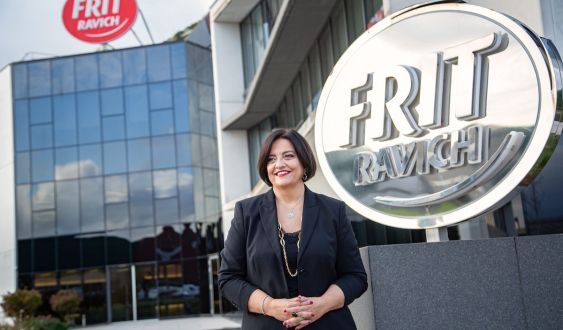
Frit Ravich sounds like a foreign brand, but it is actually inspired by a farmhouse in the region, a name that appealed to the four friends who started frying potatoes at home so that one of them, convalescing from a long illness, would have something to do. Shortly after, Josep Viader re-purchased all the shares from the other partners, and the new stage began: he has been accompanied by his wife and his two children; the eldest, Judith (1968), has been the CEO since 1997.
"Like Scarlet O'Hara, when I was young I had said: I will never work with my father." But she decided to study Business Administration at Esade, instead of Medicine, and topped it off with a thesis on the concentration of retail in mass consumption. Her mentor visited them in Maçanet, got along very well with her father, and convinced him to professionalize the company. It was 1991. "We hired a general manager, and he proposed that I set up the marketing department."
At that time, Frit Ravich already competed with large companies, foreign multinationals like Pepsico, or national ones like Borges. "We did battle marketing. On a trip to New York, I bought a book on guerrilla marketing, it was my mantra! I came back super excited, and my grandmother asks me: 'What you're reading, what's it about?' I say: 'When big competitors deploy big strategies and you are a small company, you have to do something different.' And she replies: 'All my life, fire has been put out with water. We must never lose common sense!".
In those early years, what Judith did was act as an intermediary between the long-standing management team and the new general manager. "The language of Esade and the language of the street are not the same!" Until one day the general manager was called back to his family business. The first reaction of the management team was: "While we look for a new one, let Judith coordinate us," but naturally they proposed her. Then, "my father told me: 'There are a thousand people (300 employees, about three people per family) who now depend on you: do it well!' and so the transition began." Judith was 29 years old, "and my father was the age I am now: he was very generous!".
Judith then explored and defined what has become her leadership style: "I am very much a team player, focused on building, on a vision for the future. One of Frit Ravich's competitive advantages has always been thinking four or five years ahead. Thinking about what our dream is, beyond the strategic plan. Vision and ambition mark the path." And she adds that "one of the things that has also distinguished us is thinking big: when we were invoicing 60 million, we made a 12 million investment in the new factory. You have to believe in it, with humility: at the point of sale, competition is a man-to-man fight! We have always worked with the best consultants, when we could afford it and when we couldn't! It is very important that we can learn, travel, go to forums. Over the years, I have been asked to mentor new generations of family businesses, and this is one of the things that makes a difference: those who are hungry for food for thought, the restlessness, the networking."
"I have never felt the so-called loneliness of the leader. I have always felt very well accompanied"She was already acting as general manager when she was the director ofmarketingWhen you enter, you are thedaughter of,but when you are, you have to work a lot from the bottom up so that your colleagues see you as a leader." And the day came when her father truly left the management. "There is an evolution of the working relationship, but also of the father-daughter relationship: emancipating yourself and making decisions. My mother also always had her role:I thank you for never letting us talk about work at home.And I believe that in the world of family business, this is not respected too much. But home was neutral territory, and it is important to respect these spaces, where you are an employee and where you are a daughter, and the roles should not be confused." This means that, for example, "at work, my father is Mr. Viader: that's what all my co-workers called him. If I didn't want to be calledbaby, I couldn't call himdad". They never held a family council to decide that Judith would be the successor and, in the same way, her brother wanted to work in the company, but in other roles: he has been many years in purchasing, also managing the patrimonial: "We have always gotten along very well".
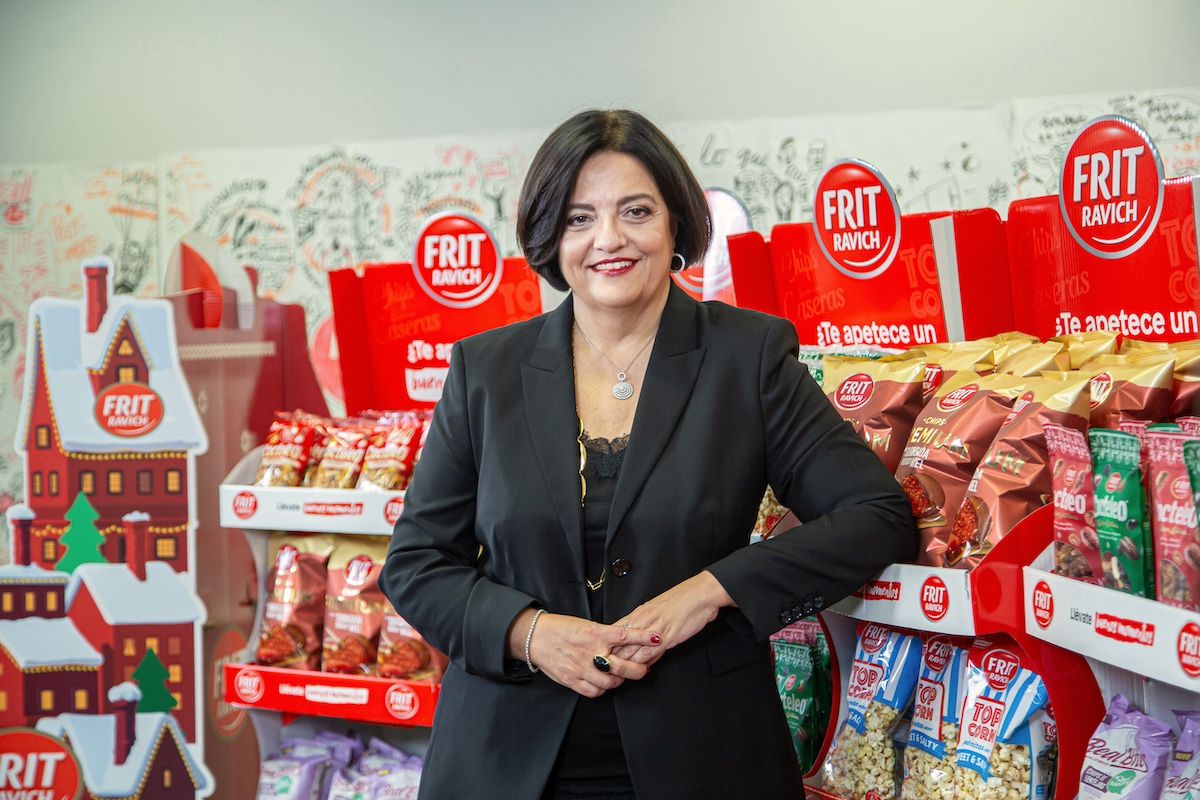
"My father is an entrepreneur turned salesman and he inoculated all of us with the DNA of customer orientation, the will to serve. I remember as a child that we were about to go to the beach, with the car loaded, that if a client called needing potatoes, my father would drop everything to take them to them." This vision has conditioned Frit Ravich's own business model. "With this service orientation, when everyone was getting rid of their sales networks, we didn't. We have a manufacturing and distribution side, but distribution has pushed the factory, and not the factory to distribution." This is how they created the figure of the supplier-partner with Ferrero, Mondelez, Mars or Nestlé: "We do the business plan together, we are their people on the street. This also allowed me to learn from multinationals!"
And how does a company from Maçanet de la Selva with this ambition for growth evolve and transform internally? "Defining the company's values ---how we want Frit Ravich to be in the future, from top to bottom and from bottom to top---, and creating a new management committee was the magic formula," says Judith Viader. "You have to make sure it's scalable: that what you do with effort and passion is sustainable over time and for the team. That you don't collapse with your own decisions." Viader explains that ten years ago, with the HR director, Maria Saló, "we decided to remodel the entire management committee: there were very honest and generous people who stepped aside, and have continued normally in the company: it's a very nice exercise to be able to say 'I've had a great time up to here, but the project that's coming is not mine'."
"No matter how healthy the trend is, sharing a good vermouth with family and friends is good, at least, for mental health."Judith does not attribute this transformation to herself, at least, not alone: "We have always had a management committee, we are very consensual in making decisions, my father was already like that. And now I'm in love with my team! In the committee we are eleven people ---seven women and four men---. It gives me a lot of peace of mind.Collaborative leadership, of growing people, is one of the things that gives me the most satisfaction.I remember during COVID talking to fellow executives who felt very alone making decisions. I have never felt the so-called loneliness of the leader. I have always felt very well accompanied." She has her formula: "You have to accompany people, have a vision for the future, healthy ambition. And work as one piece." And she keeps many examples: "With the pandemic, I started going down to the warehouse every day, and on the third day, the operators told me: 'Boss, don't worry, we'll get through this.' The team spirit is really cool."
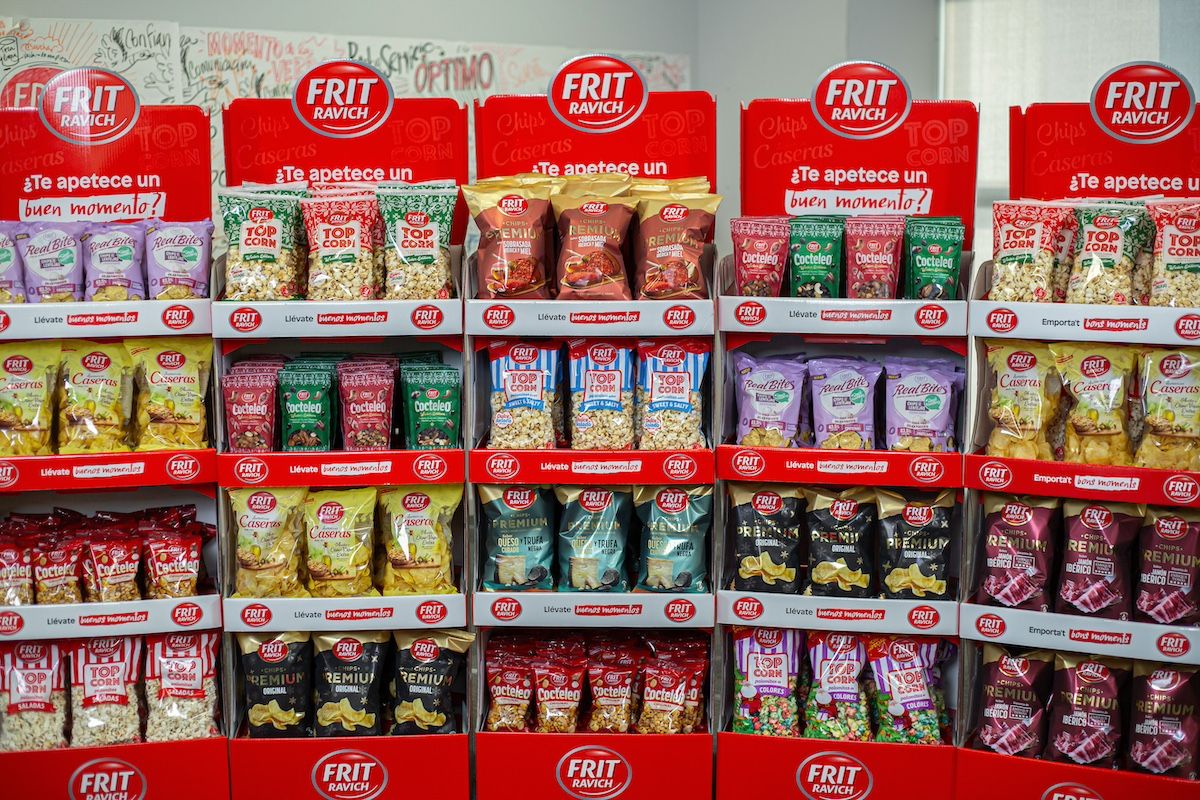
For all these reasons, to reach 600 million in sales, the company has focused on growing with people. They had been driving change through digital transformation. And now "we have developed our way of working with our own methodology to identify and practice the FritWay; suddenly, you have the whole company conspiring to achieve the same thing. It's forever, but it's not easy to make the change: we are now in the second year, and it's still hard for us!"
Being a food company like Frit Ravich is not an easy challenge today, and Judith experiences it twofold, as vice-president of the Federation of Food and Beverage Industries, and in her own company: "Ours are indulgent products: we don't propose that you feed yourself with all our products. The key is in the right measure. And no matter how healthy the trend is, sharing a good vermouth with family and friends is good, at least, for mental health." However, they also invest a lot in product innovation, such as new lentil-based chips. From this angle, they have built an interesting exercise to explain the company's purpose: "We nourish life moments, that is the purpose, and it is very important for us: we want to accompany people on their life journey, creating moments of pleasure for the consumer, helping clients boost their business, developing the professional growth of our employees."
The third generation is still very young: "Let everyone do what they like. One thing is to be a shareholder of the company, and another, to work in it." Meanwhile, even now, at 83 years old, Josep Viader gives advice to whoever wants to listen to him: "The worst thing that can happen in life is to wake up every day and have to go to work unwillingly." It has never happened to him, and to Judith, either: "The key is to have fun, and I have a lot of fun".
Add The New Barcelona Post as your preferred Google source for free
Stay informed with the latest news.