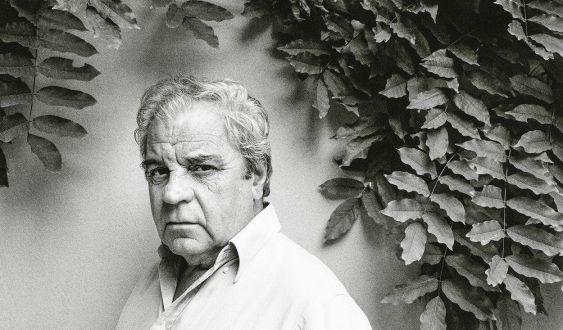
On January 8, 1933, Juan Faneca was born in Barcelona. His mother's death after childbirth led his father, a taxi driver, to offer him for adoption to an unfortunate couple, whom he picked up fresh from the hospital after the loss of their unborn child. Little Juan then became Marsé, and thus began the story of who would become the writer of the real and imaginary city, the narrator of Barcelona.
He spent his childhood in the Guinardó neighborhood, in the post-war era, and made it the backdrop for many of his novels, along with the neighboring neighborhoods of Carmel or Gràcia. He also fed his imagination with a passion for American cinema and, although he started as a jeweler, he eventually realized that his true vocation was writing.
In his literature, we find the Barcelona that was made up for the '92 Olympics; that of the clashes between workers and university bourgeois and lost childhood; that of class difference. He managed to unite two worlds that could only coexist in his fictional stories, in a realism as social as it was critical, weaving unforgettable, recognizable, and close characters, and bearing witness to the great inventor of characters he was.
He managed to unite two worlds that could only coexist in his fictional stories, in a realism as social as it was criticalA year ago, the writer left forever, in the same neighborhood where he was born, and left behind the legendary trail of being the most influential narrator of the 50s generation, that of the war children, a movement to which he belonged alongside his friends Jaime Gil de Biedma, Carlos Barral, José María Castellet, Gabriel Ferrater, José Agustín Goytisolo, and Manuel Vázquez Montalbán, with whom he met at the famous gathering at the Cristal bar in Barcelona.
Despite his love for cinema, he never felt comfortable with any of the film adaptations made of his books, nor with the tribute film about his great friend Gil de Biedma ---they were known as the inseparables due to their friendship--, El cónsul de Sodoma, which he went so far as to brand as little less than infamous and an offense to the poet's memory. Therefore, after his passing, paying tribute to his work and the man he was, was not only necessary, but it had to take on an intimate tone, full of truth and touches of fable that we find in his books.
In mid-July, the well-deserved tribute that the pandemic silenced after his death was finally held, and in the Carmel library that bears his name, among family, friends, and admirers, some of his most emblematic characters gathered, such as Pijoaparte or cousin Montse with her hidden story. "He had a tremendous ear that allowed him to write in a very careful and astutely incorrect language. He wrote in Barcelonese Castilian," said Eduardo Mendoza about his way of writing.
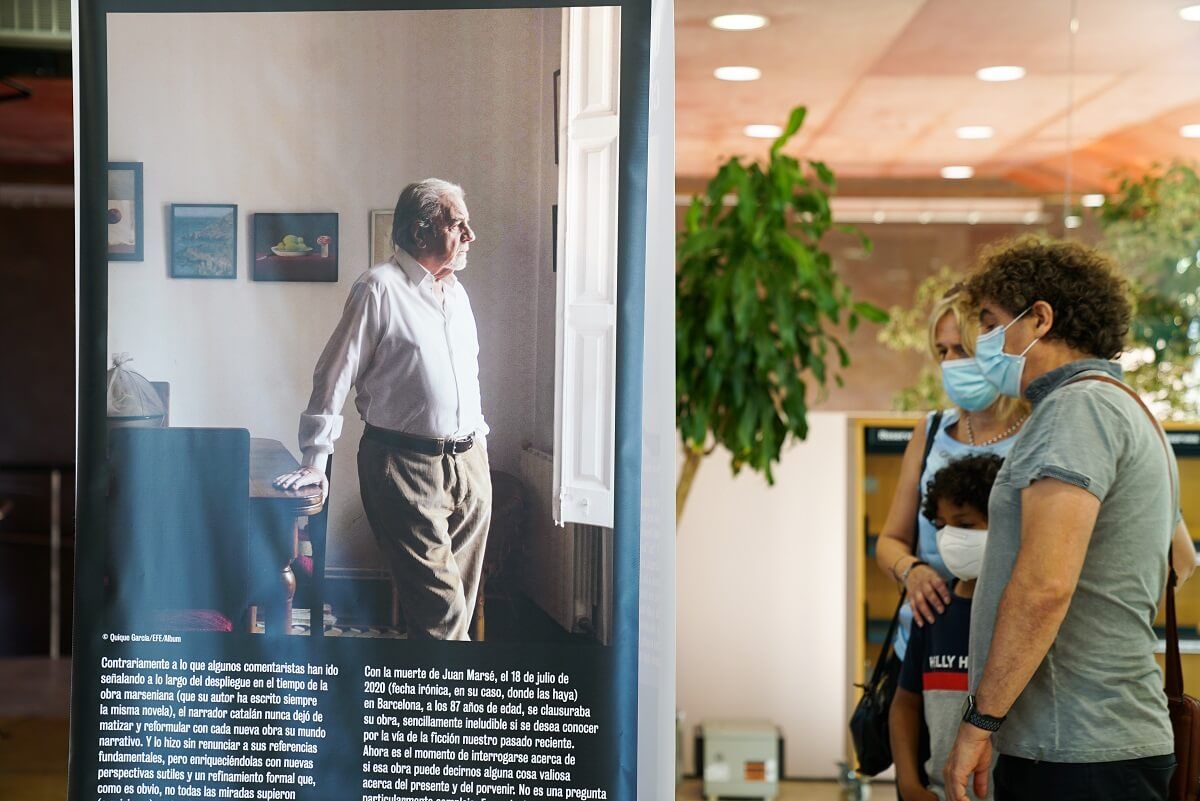
Coinciding with the memorial, an exhibition on the author's life has been inaugurated in the same library, which specializes in contemporary Barcelonese novels and has an exhaustive collection of novels and narrative from the city from the beginning of the 20th century to the present day, an exhibition on the author's life, organized by Libraries of Barcelona with the collaboration of the Sinatrahem Culture Circle. The exhibition combines photographs from the writer's family archive with texts by his biographer Josep Maria Cuenca, in addition to emphasizing Marsé's relationship with Carmel.
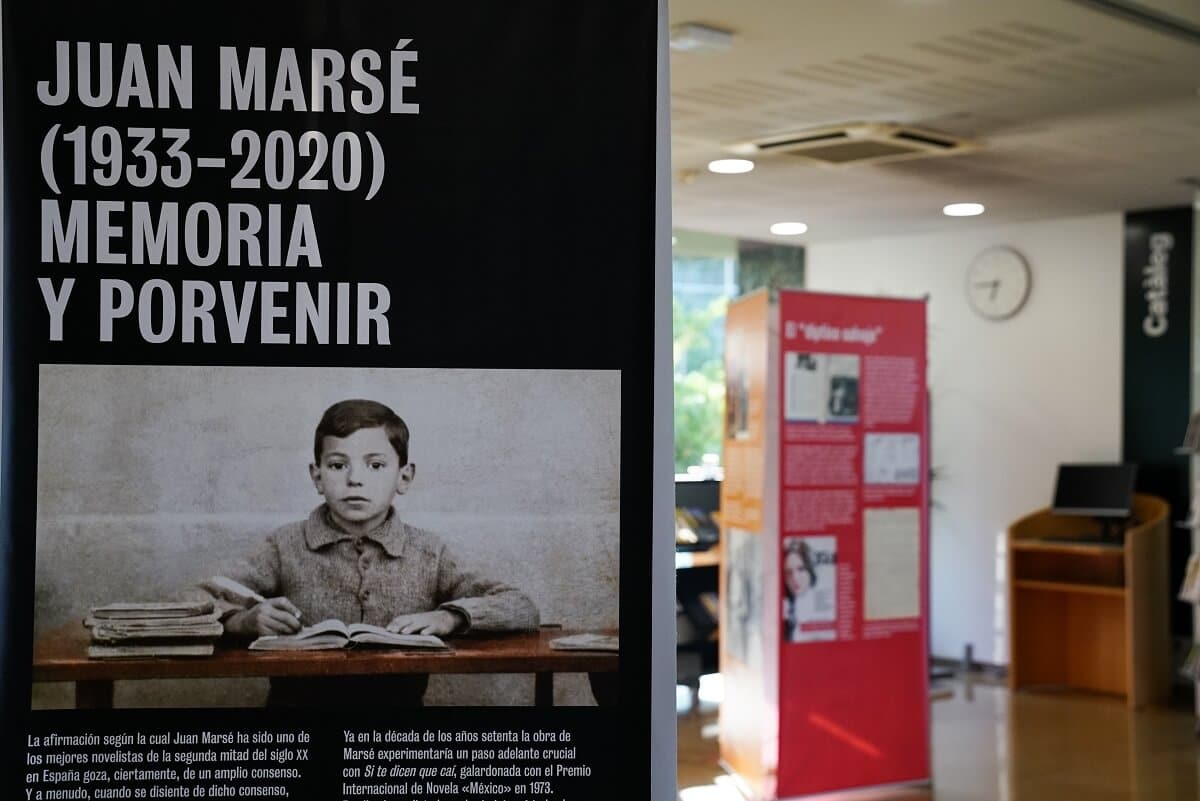
They say he avoided interviews, but he was a great conversationalist. As in his literature, Juan Marsé openly distrusted nostalgia and did not vampirize himself with the past. They also say that accolades made him nervous, although he liked awards but only for his family. And as his daughter Berta, also a writer ---and a very good one, by the way--- says, "he liked to read them, more than listen to them." Of the various awards he received in life, it is worth noting that in 2008 he was awarded the Cervantes Prize for Spanish Letters.
As in his literature, he openly distrusted nostalgia and did not vampirize himself with the pastThe boy who played on Mount Carmel, who dreamed of Western movies, and who lived through the tumultuous post-war years in Barcelona, managed to go from being a working-class writer to being the great portraitist of the soul of the city where he was born. He had a great capacity for observation and fabulation, and an innate talent for telling stories from theaventiswith which he entertained himself as a child until the 17 works he has bequeathed to us. And in the same way, the story of his adoption was a beautiful fable to tell.
He left a year ago, but he left us Viaje al sur (2020), a text that Marsé himself delivered in 1963 and that had been given up for lost, and which Lumen has published posthumously. And in this 2021, Notas para unas memorias que nunca escribiré, the book of his non-memoirs that he left to be published shortly before his death, has been published.
He left a year ago, but he left us Viaje al sur (2020), a text that Marsé himself delivered in 1963 and that had been given up for lost"In a world as inflamed with vanity as the literary one, Juan Marsé was always severe, humble and extraordinarily demanding with himself and with others," commented Andreu Jaume, the person behind the edition ofJourney to the Southand with whom the writer shared many moments in his last months.
Like those he shared with Berta, his daughter, while in the hospital. She read a fragment of a text she found a few days after her father's death, in a notebook Marsé used to carry with him. And it says: "If you have loved, if you have been loved, you will know in old age that this was the true and powerful bond that tied you to life, the only one worth remembering."
Add The New Barcelona Post as your preferred Google source for free
Stay informed with the latest news.
