
"I know my profession should have been that of a journalist. I come from a humble family and they didn't trust that one of their children could go to university, so I did a vocational training despite having obtained an average of notable in EGB. After the military service, which broke my most fun moment, I chained together subsistence jobs until very recently." And, despite that, Juan Carlos Benítez never stopped writing. As a child, he drafted his own homemade publications. As a young man and later as an adult, through fanzines like Al filo de la cuchilla (On the Edge of the Blade), the mythical Crónicas desde el Café Portobello (Chronicles from Café Portobello) or collaborating with greats like Flandis Mandis.
Today, tirelessly writing about bizarre, strange, terrifying, unknown cinema, from B-movies to sub-zeta, through many media including books, collaborations in magazines or the film news portal that he and Montse Rovira, his wife, partner and soulmate, have been feeding since 2009: Proyecto Naschy (Naschy Project). "Which in fact is still like a fanzine, but on another medium."
Driven by this passion for celluloid, Juan Carlos and Montse attend press screenings, write reviews of premieres, visit festivals and have published five books, in addition to collaborating in many more, with a clear specialization in Spanish horror and fantasy. "We also collaborate with the label El 79, creating booklets, presentations and interviews for their DVD and blu-ray collection dedicated to Spanish horror cinema. We do what we like, we have many friends and colleagues. It doesn't provide us a living nor have we ever intended it to, but it gives us happiness."
He arrived in the morning, faithful to that early-rising spirit that accompanied him in his childhood on so many Sundays at the Mercat de Sant Antoni and that he later put aside in his night-owl youth in the Barcelona mondo mod. "Now I like to get up early and go to bed early. I've definitely gotten older," he laughs, as he orders a non-alcoholic toasted beer and says that if anything has to play in the background, it should be the Beatles. "Something very strange has happened to me: from being the engine of my existence, music has moved to a secondary plane where only, almost exclusively, the Fab Four have a place." Otherwise, he's fine if the news, a talk show or a humor program is on.
From those dusts, these muds
Juan Carlos Benítez already liked horror movies since he was little. "My parents let me watch everything that was on TV and took me to the movies without a problem. My father was a fan of reading and cinema. He bought comics and pocket books". He devoured them and then gave them to Juan Carlos, who treasured them with delight, especially the horror ones "Corben, Frazetta, Alex Toth, Bernie Wrighston… and Spirit, by Will Eisner" and Spiderman, his Marvel love. "That was my breeding ground."
The regular already liked horror movies since he was little: "My parents let me watch everything that was on TV and took me to the movies without a problem"In adolescence came, in this order, the Beatles, through the Sargent Pepper's and The Who, in a black and white video with the band performing with the My generation. "It was the bomb, it was a Beatles-type group, but with punk energy, they destroyed all the instruments!". The Jam, caught on the show Applause interpreting the Going underground, they finished the job and with Brighton 64 he realized that he had the party next to his house, with travel companions like Fernando Muñiz or the beloved Juanjo Herreros. Friends forever with whom he would dance northern soul until the early hours of the morning, with eyes closed, Levi's 501 and sweating the paramecium shirt.
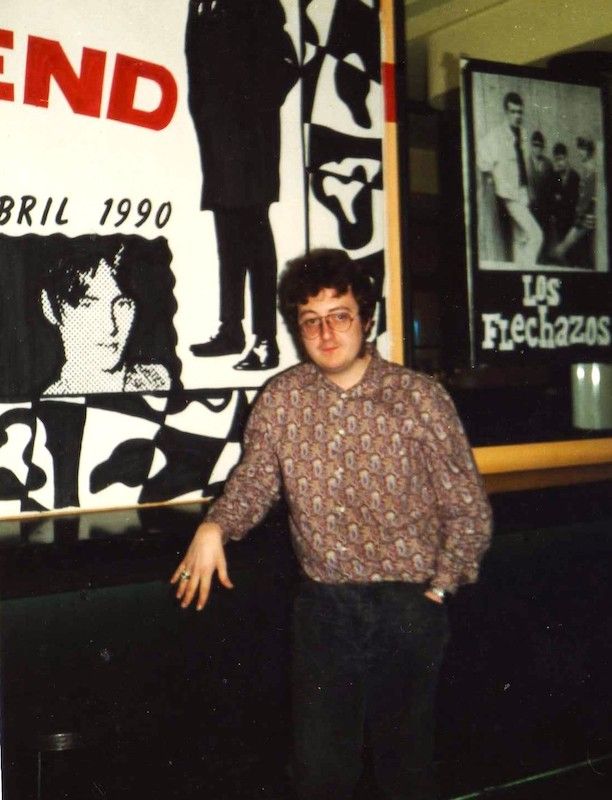
"I had a youth outside of trends and was part of a culture full of creativity and individualism. Those who didn't make fanzines had a band. Everyone seemed to be doing something. Parties and concerts were organized by ourselves, self-managed, and, in almost all cases, losing money. But it didn't matter, enthusiasm and constant discovery ruled. The bad thing is that there weren't many girls!", he laughs. One very good day, the most recent key moment of his life arrived: "When I met my wife Montse, who is the partner I love, with whom I live and work and is, also, my best friend."
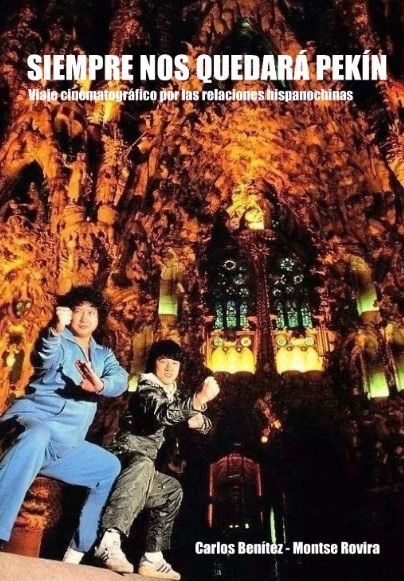
Together they have sublimated all that baggage of research, individualism, taste for the unknown, for finding the hidden and unimaginable pop gem, in the field of cinema. An example of this is the volume they have just presented, We'll Always Have Beijing, which explains, through cinema and with a great profusion of photos, the historical relations between China and Spain. 400 pages full of data, anecdotes and curiosities that include kung fu and pelota players, Chinese brigadistas in the Civil War or screenings of oriental cinema with recitals of Lorca's poems. In fact, what was supposed to be just one book will end up becoming two. "I am a very methodical and completist person, so in these four years of research, we have ended up with two works, with a total of almost 900 pages. And I assure you that both in the one about China and in the next one, very, very curious things come out."
The Barcelona that forgets its popular culture
A lover of a Barcelona lived to the fullest since childhood, whose old coat of arms he kept sewn on his parka, Juan Carlos Benítez remembers peak moments that he reviews with affection, though without nostalgia. "I saw Leño in the front row in Montjuïc; I went to the first Comic Convention and got Richard Corben's signature; I sold collectibles with my father in els Encants, the Sant Antoni Market and Plaza Reial, when they really existed. I saw Brighton 64 in Zeleste and the original Los Negativos playing on a deserted stage with their backs to the sea. I was a proletarian mod who was never in London, but I was in the Fantástico del Gòtic and in front of Las Rías, where Decibelios played, surrounded by Punks," he enumerates, finishing his beer and ordering a second.
"But I am surprised at how poorly Barcelona preserves its past when it comes to its popular culture. Whether it's ignoring many groups that filled the 80s and late 70s with color. Forgetting the Catalan comics and illustrators from Bruguera publishing house and the Selecciones Ilustradas agency. The many authors of bolsilibros. Even cinema! The short films from the 70s by the homosexual collective Els 5 QK's, which were rejected by the Filmoteca and ended up in a dumpster. Or the work of Juan Carlos Olaria, whose feature films and short films were also rejected, although later received with open arms by the Filmoteca de Madrid. And so many things, like finding out that all the wardrobe and sets of El Molino ended up in the trash. Or that all the material in Carmen de Mairena's dilapidated house, from a Barcelona that no longer exists, went straight to the container," he asserts, taking another beer.
"But I am surprised at how poorly Barcelona preserves its past when it comes to its popular culture, whether it's ignoring many groups that filled the 80s and late 70s with color, or forgetting the Catalan comics and illustrators from Bruguera publishing house"--- What cannot end up in the trash is the food we have here today, in case you want to have some lunch after those two beers.
Juan Carlos Benítez smiles and carefully reviews the gastronomic offer.
--- Later, when Montse joins me, we will have a good menu, relaxed and orderly. For now, give me a third beer.
--- Coming right up, and this one's on me.
--- Alcohol-free, though, right? I already drank everything I was supposed to for this life in advance.
Add The New Barcelona Post as your preferred Google source for free
Stay informed with the latest news.
