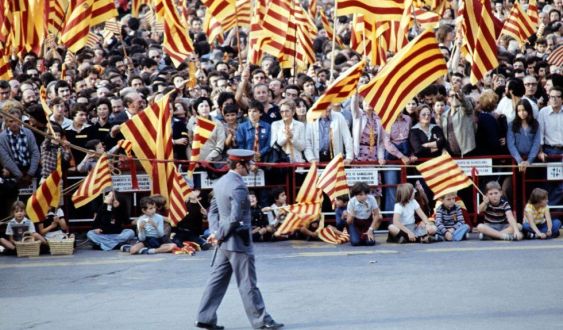
In 1977, president Josep Tarradellas, until then exiled in Saint-Martin-le-Beau (France), returned to Catalonia as part of an operation aimed at re-establishing the Generalitat, abolished in 1938 by General Franco. The context of that maneuver was as follows: the dictator had died and had left his legacy in the hands of the Spanish monarch. Spain was preparing for a transition process that was to lead it to democracy. In 1977, the first general elections since 1936 were held, elections, those of '36, in which the Front d'Esquerres had won in Catalonia and which, among other consequences, led to the liberation of president Companys and the other political prisoners who, two years earlier, had been imprisoned by the Government of the Spanish Republic.
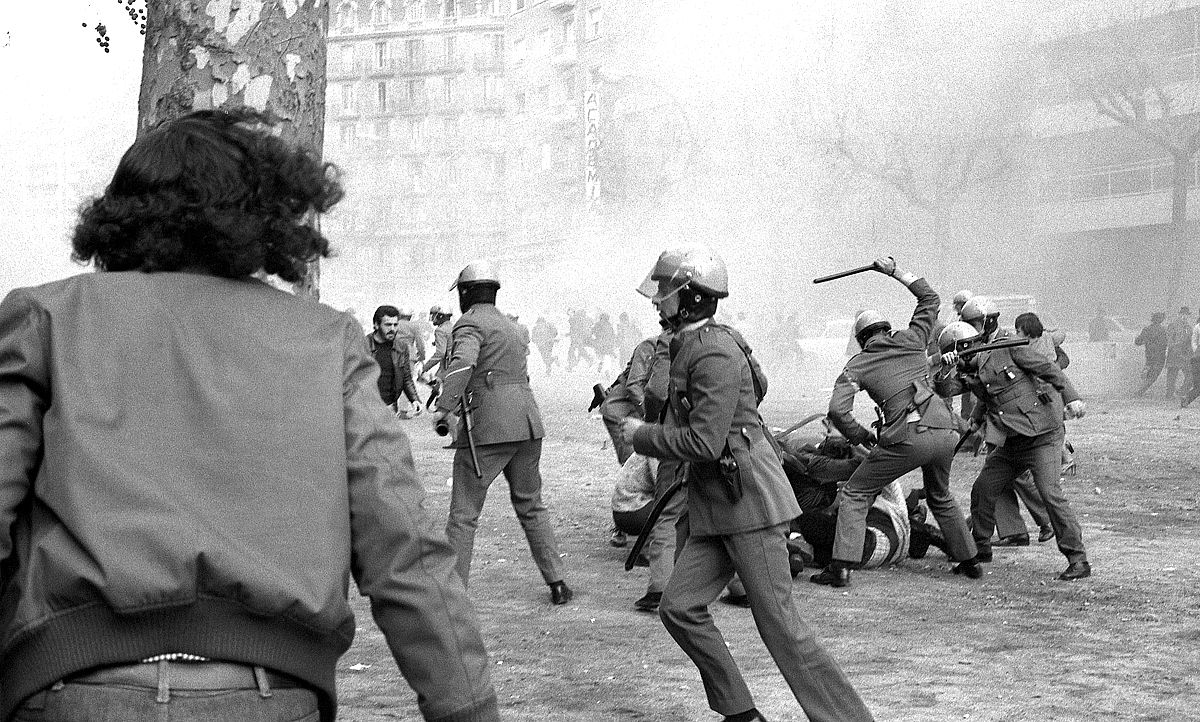
In those of 1977, forty years later, Joan Raventós won in Catalonia, followed by the PSUC. In this way, Catalans ---and Euskadi--- confirmed that they were not going in the same direction as the rest of Spain, where Adolfo Suárez's UCD topped the results. Despite these differences, negotiations for the re-establishment of the Generalitat took place and began in Madrid. Everyone adapted to the situation. The trauma, however, was latent. And president Tarradellas and his men ---or subordinates--- convinced themselves that the key was to instill optimism.
As an example: in a 2002 document produced by Televisió de Catalunya, Josep Tarradellas could be seen asserting that at a moment of tension during the first of the meetings in Moncloa, he had stood up to Suárez. According to Tarradellas' own testimony, the sequence was as follows: [Suárez] "Do not forget that I am the head of government of a country of thirty-six million and that you were the head of a Generalitat Government that lost the Civil War." Again, according to Tarradellas' own testimony, the response was: [Tarradellas] "Do not forget that a head of government who does not know how to solve the problem of Catalonia endangers the monarchy."
Had that been the case, in the first intervention Suárez would have admitted a State level for Catalonia and that the Civil War took place to, among other issues, bury Catalanism. In contrast, in the response, Tarradellas accepts that the Catalan government is an integral part of the future State of autonomies (at that time it was not yet) and that Catalonia was subordinated to the monarchy. The versions, therefore, do not add up and only seek to instill optimism. This is just one example of the wide catalog of biased truths that Tarradellas and his men made the Catalan people believe. Why did they do it? Surely, far from bad faith, they sought for oblivion to bury the trauma. Meanwhile, history, stubborn, has made its parallel path and, today, Barcelona's containers burn in flames.
In 2020, Josep Tarradellas Barcelona-El Prat Airport experienced a 76% drop in travelers compared to the previous year. Translated into absolute figures, this means 40 million fewer users. An extraordinary impact, unprecedented and, of course, not foreseen in the business plans of the shops and restaurants in the area. Since mobility restrictions began, T1 is an inhospitable place. You can advance dozens of meters reflected in the unique black tiles without practically crossing paths with anyone, as if at any moment you had to run into Saint Peter's white tunic guarding the great gate of heaven.
Just a while ago, a friend and I were talking about death. Months ago, his mother passed away as a result of cancer. My friend told me that for her, knowing the diagnosis of the disease was an awakening. As Jeff Foster explains in the book The deepest acceptance, my friend's mother had opened her eyes when the curtain was about to fall. This phenomenon is due to the fact that, faced with the perception of imminent death, the clock does not allow one to continue living on hopes and dreams because time no longer exists. From that moment on, her mother relaxed tensions and began a process of liberation that led her to face the end of her days immersed in absolute serenity. Her mother's death, we concluded, was like a comforting flight to an unknown destination ---spiritually speaking, of course---.
In fact, every day we take off and land a few times. We do so moved by the emotions that the act of relating brings us, more affectively before the outbreak of the pandemic ---given the possibility of spontaneous contact--- and, less effusively, and in some cases through virtual systems, from then on. But be careful because in the field of emotions the impact of the pandemic is not being free. In an article from late June 2020 published on the BBC website, Elke Van Hoof, professor of psychology at Vrije University, Brussels, and specialist in stress and trauma, pointed out that one third of the world's population has been subjected to some type of restriction of movement or behavior. Positively, Van Hoof highlights that the pandemic has reinforced collective resilience ---the ability to adapt to unfavorable contexts--- as has been demonstrated in other relatively recent periods such as the two world wars.
[subscribe_newsletter_esp]
Professor Van Hoof's conclusions also argue that, in cases of emotional collapse, if Western society sets its mind to it, it is capable of bringing out the best version of itself and, at the same time, also finding the necessary impulse to generate hope. However, the same professor from Vrije warns that during the pandemic, the triggers of toxic stress are being neglected, which should be learned to detect and try to mitigate. Especially because it is possible that, in certain cases, symptoms may appear after a few months and, then, the effort needed to reverse them will be much greater.
The factors that can trigger toxic stress are anguish, irritability, insomnia, feelings of loneliness, and the abuse of substances harmful to the body. Also being subjected to abuses of power, sexual abuse, and episodes of violence. Well, the numbers are striking: the increase in these behaviors is between 40% and 50% compared to pre-pandemic stages. The panorama is similar to that of terminal illness, but there is a crucial difference: with a terminal illness, time flees and, therefore, so does the horizon. In the case of toxic stress, there is no horizon either, but there is time. All the time in the world.
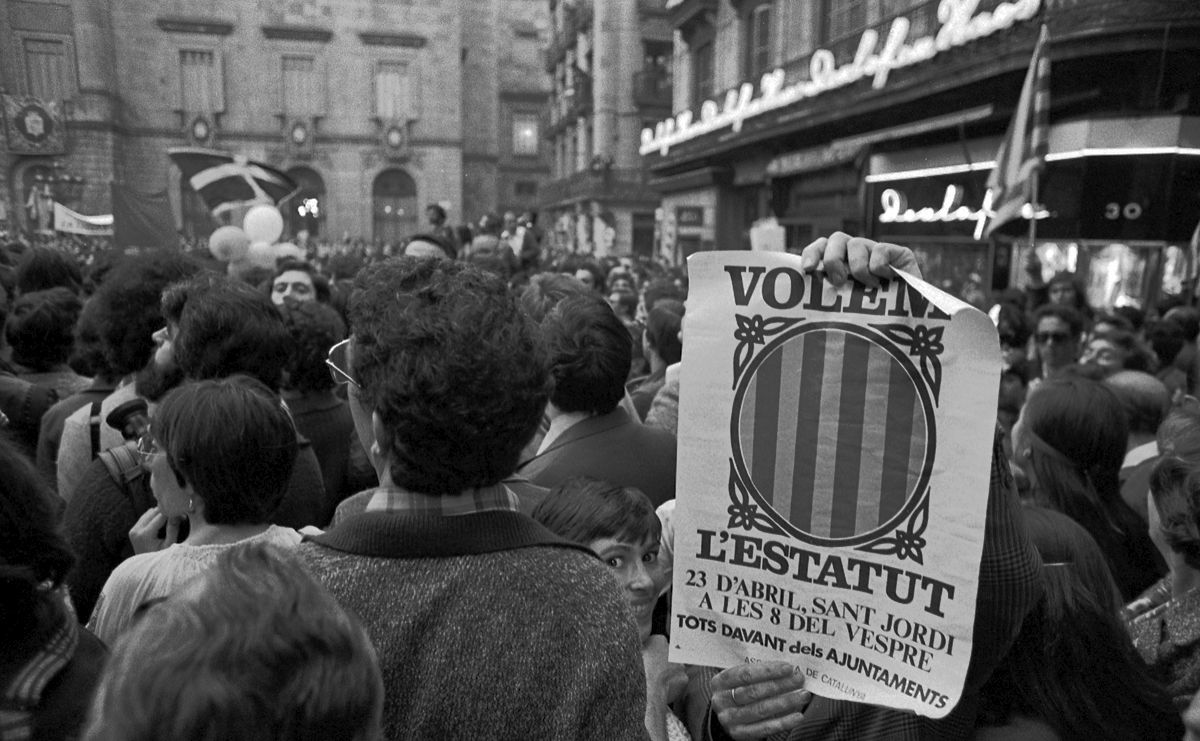
As I am about to finish this article, the electoral result of the February 14 elections in Catalonia is already known. As is usual in recent calls, hegemony was not disputed by any specific party but by two ways of understanding the country that converge in two blocs of parties with antagonistic approaches. We have been swimming in the same puddle for forty years. Without horizon. It is the result of having tried to overcome the trauma of the fascist coup by imposing oblivion, trying to instill optimism. And in this sense, the operation for the reestablishment of the Generalitat, the landing of President Tarradellas at the then plain Prat, was a missed opportunity. Soon it will be forty-four years since that day. Antònia Macià and Josep Tarradellas stepped onto the runway of El Prat Airport in the third act of the story.
Parked at the gates of the same airport and surrounded by the crowd, a convertible car would drive them along a performance through Barcelona's streets packed to the brim. The performance was designed by film director Pere Portabella who, incidentally, unlike Tarradellas himself and his men, was the only one with enough fortitude to understand that an act commensurate with a collective trauma was necessary. On October 23, 1977, when the president addressed the Catalans of Plaça Sant Jaume from the balcony of the Palau de la Generalitat, evening had already fallen: "Ciutadans de Catalunya, ja sóc aquí!" (Citizens of Catalonia, I am already here!). It was the last mistake of a very sad air bridge.
Add The New Barcelona Post as your preferred Google source for free
Stay informed with the latest news.