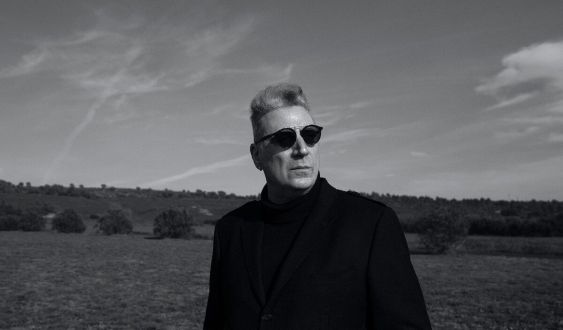
"I am an individual, both artistically and socially. This phrase is not mine, but Rubén Darío, hero of Modernism, nailed it." José María Sanz, Loquillo, is leaning on the bar, elegantly dressed in a navy blue blazer and an impeccably white tab collar shirt.
He arrived in the morning ---"I left the night with the implementation of the smoking ban and the appearance of camera phones. Since then, I only frequent private clubs where privacy is guaranteed"--- and sips with delight a freshly poured Mahou.
--- If you're going to put the radio on in the background, make it Rock FM, if you don't mind. They're colleagues.
Defined in a thousand and one ways and, by his own confession, trapped in his own character until he gets on stage where, finally, he can be himself (and not the other way around), to explain himself Loquillo is clear: "I am an urban legend." Perhaps, referring people to corroborate it (or not) by reading the recent Biografía oficial (Ediciones B) that Felipe Cabrerizo has written about him and which, in the artist's words, explains almost all his truth.
"Once, perhaps in V.O. magazine published in the early 80s in Barcelona, or in some fanzine at the beginning of my career, I happened to state that I was my own hero. The writer Sabino Méndez once told me that this sentence was decisive for writing the scripts of the songs that today form the soundtrack of the city of Barcelona and of Spanish popular culture," he adds.
An untrodden path
It has been said that in this country we barely had 60s in a pop key, or that these were atypical compared to the 60s experienced in Europe or the United States. Here things were different and, for that reason, our prodigious pop decade arrived with the 80s, already without dictatorships in between. Again, in Spain things happened years late. It is a theory, of course, and even more so for an artist whose emotional soundtrack is nourished by indigenous sixties anthems such as Mi calle by Lone Star, Soy así by Los Salvajes, El tren de la costa by Los Sírex or He perdido este juego by Los Cheyenes. But it may be a key to explain, for example, why a figure like Johnny Hallyday emerged in 60s France and here there was no character with the same characteristics until the parishioner's ascent to musical stardom, a quarter of a century later.
"I chose a path not traveled by others, full of characters on the edge, dangers, and adventures. It's that place I always head to and never manage to arrive at," he explains, before confessing that the most important decisions of his life have been made "in fingers, boarding gates, airport VIP lounges, or in the solitude of my suite". An obvious boutade for anyone who has delved into any of his three autobiographical books, especially the first, Barcelona ciudad, where he explains his adolescent self, stripped of the armor that has shaped the character.
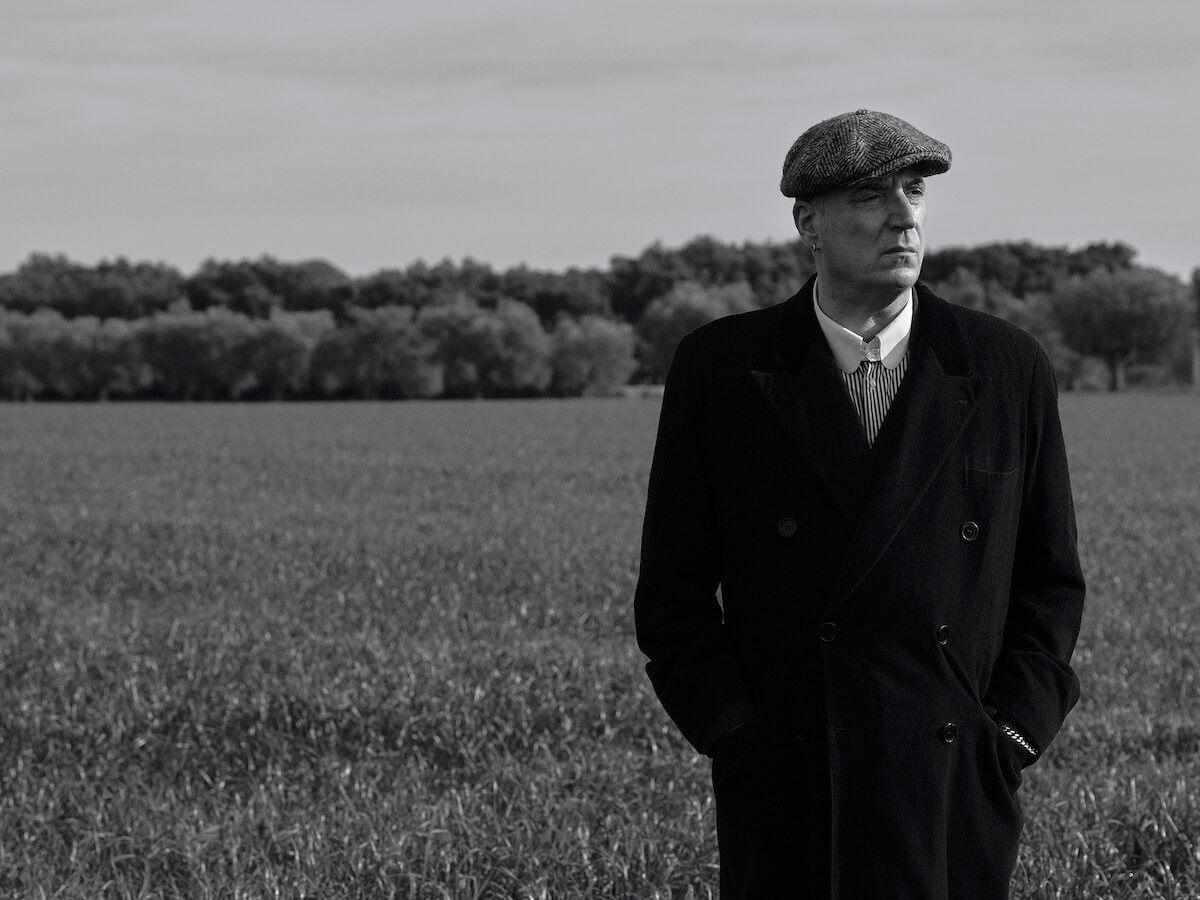
--- Hey, and what are you up to lately?
"Up to? Don't tell me that term is being used again!" he laughs. "To be 'up to something' (tener una movida), in my adolescence, meant to deal drugs. And I stopped selling to the rich kids of Turó Parc about 45 years ago, more or less." Mental note: perhaps, from now on, it's better to refer to "matters." And regarding those that concern the parishioner, the latest is the double live album with Gabriel Sopeña, La vida es de los que arriesgan (Life Belongs to Those Who Take Risks), recorded in 2020 and which has just been released.
At this point, the artist Loquillo warns that he doesn't tell his life story to just anyone. "If you ask me, I'm going to manipulate you without hesitation and end up telling you whatever I feel like."
And, well, that's what interviews are a bit about. Not to mention conversations at the bar.
Packaging the roots
"Barcelona was my first love, to which one always returns, as Gardel's tango well tells," explains Loquillo, a native of the Clot neighborhood, who has resided in Donosti for years, although he feels "part and protagonist of the most brilliant generation that emerged here after the death of the dictator Francisco Franco, the one that illuminated the city of Barcelona at the dawn of the '92 Olympics."
And he speaks of a generation "proud of its Barcelonian DNA. The one that boasted of having a white gorilla as a symbol of the city. The one that is proud of writers like Marsé, Rabinad, Candel, Fonollosa, Mendoza, González Ledesma, Montalbán, Terenci Moix or Gil de Biedma, to give a few examples, or filmmakers like Rovira Beleta and all the rock and pop of the 60s. The Barcelona that grew with the subcultures that emerged after the punk explosion of '77 of the last century."
"Barcelona was my first love, to which one always returns, as Gardel's tango well tells"And here Loquillo frowns, in the heat of all "that background forgotten or canceled by a council plagued by ignoramuses whose sole objective is to erase the cosmopolitan and worldly past of this city, a benchmark of world culture." With the old coat of arms of the city tattooed on his arm along with his blood type, he quotes Monserrat Roig: "As she well said, our roots serve to package them and carry them with us. And I listened to her."
And, while he quotes the beloved Barcelona writer and journalist, by a coincidence of coincidences, Barcelona ciudad, the anthem that he and Sabino Méndez dedicated to that city of 1983 where "there is not a single place - where you can hang yourself," plays on the radio.
Then, José María Sanz, Loquillo, falls silent, smiles sideways and nods, while finishing his beer, perhaps wondering whether to have another and continue indulging in the pleasure of "manipulating without contemplation" his fellow man, at the bar.
Add The New Barcelona Post as your preferred Google source for free
Stay informed with the latest news.
