
In La Palma de Bellafila, Jordi Parramon does not cook to follow trends or to impress with artifices. He cooks to ask questions. Questions that not only arise from the dish, but that directly challenge us: what do we eat? Why do we eat it? What have we forgotten along the way? A philosophy that translates into a cuisine that does not seek trends, but truth.
The restaurant, managed by Albert Rial and Judit Giménez, with Parramon as gastronomic advisor, is much more than a space to enjoy food. It is a place where the stories of the territory become dishes. Dishes like potatoes with cod broth, born in a time when nothing was wasted, or marinated sardine, which revisits herring with grapes. These recipes are a declaration of intent: to claim that food can be simple, humble, and profoundly meaningful.
This cuisine is an exercise in culinary archaeology. Recipes are collected orally, kept in notebooks, and transformed into dishes that connect past and future. But not everything is nostalgia: there is also a desire to reflect on what it means to cook today. "You have to look for contradictions, not be dogmatic," he says. For him, proximity is not a trendy label, but an act of coherence.
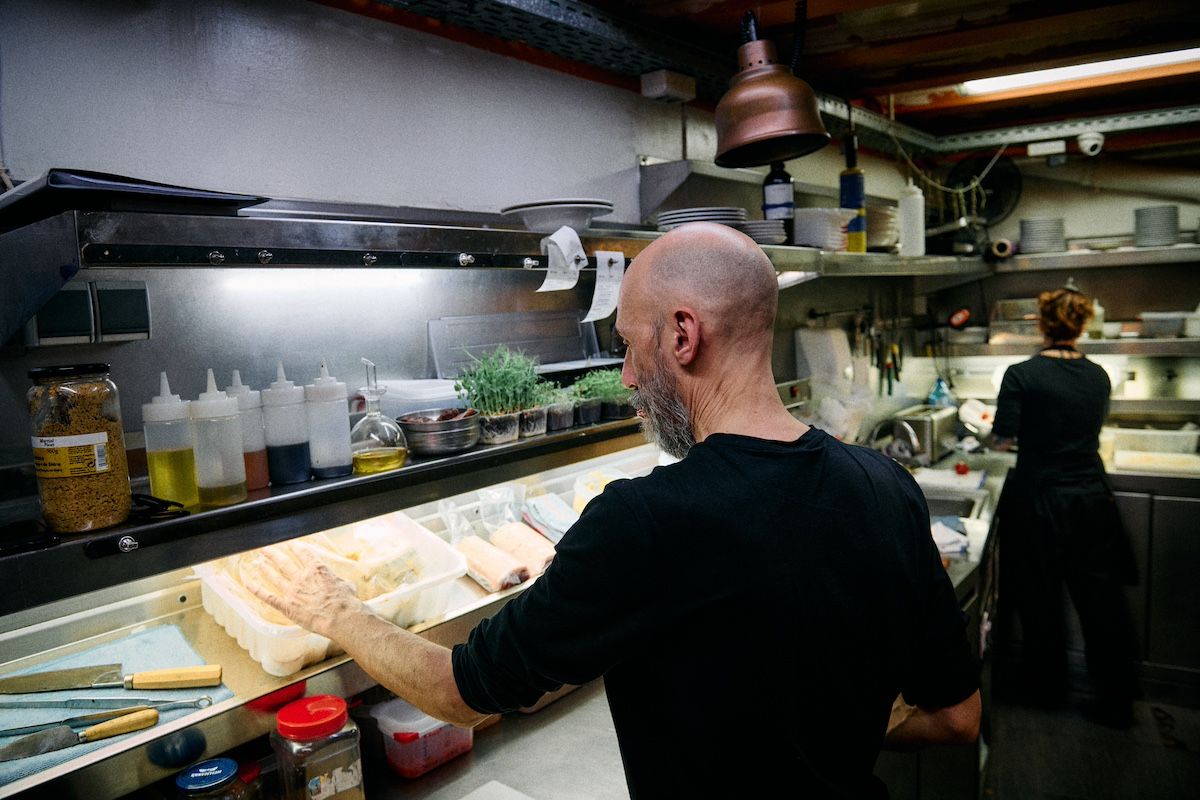
Parramon not only cooks; he also thinks. He does so by re-reading authors like Byung-Chul Han, the South Korean philosopher who criticizes the "society of fatigue" and warns about the dangers of disconnecting from others. He transfers this reflection to the kitchen: "Cooks have an obligation to take care of people's bodies, people's health." It is not just a discourse: he left behind a Michelin-orbit restaurant to cook for people with cancer.
Over time, however, he understood that pleasure is also essential. "Pleasure must be there... but it cannot exceed everything," he says. That's why he began to advise restaurants with a more balanced vision, in which enjoyment and health share space. This search for the essential has led him to create recipes with no more than three flavors, short cooking times, and simple techniques, such as knife cutting (no Thermomix). The essential needs no adornments.
Betting on simplicity is not giving up. On the contrary. Jordi Parramon recovers techniques such as fermented foods or pickles, drawing inspiration from cultures around the world, but always adapting them to the territory. "Instead of importing soy, what can we do here that is similar?" This is not just a gastronomic question; it is a way of reclaiming the local pantry.
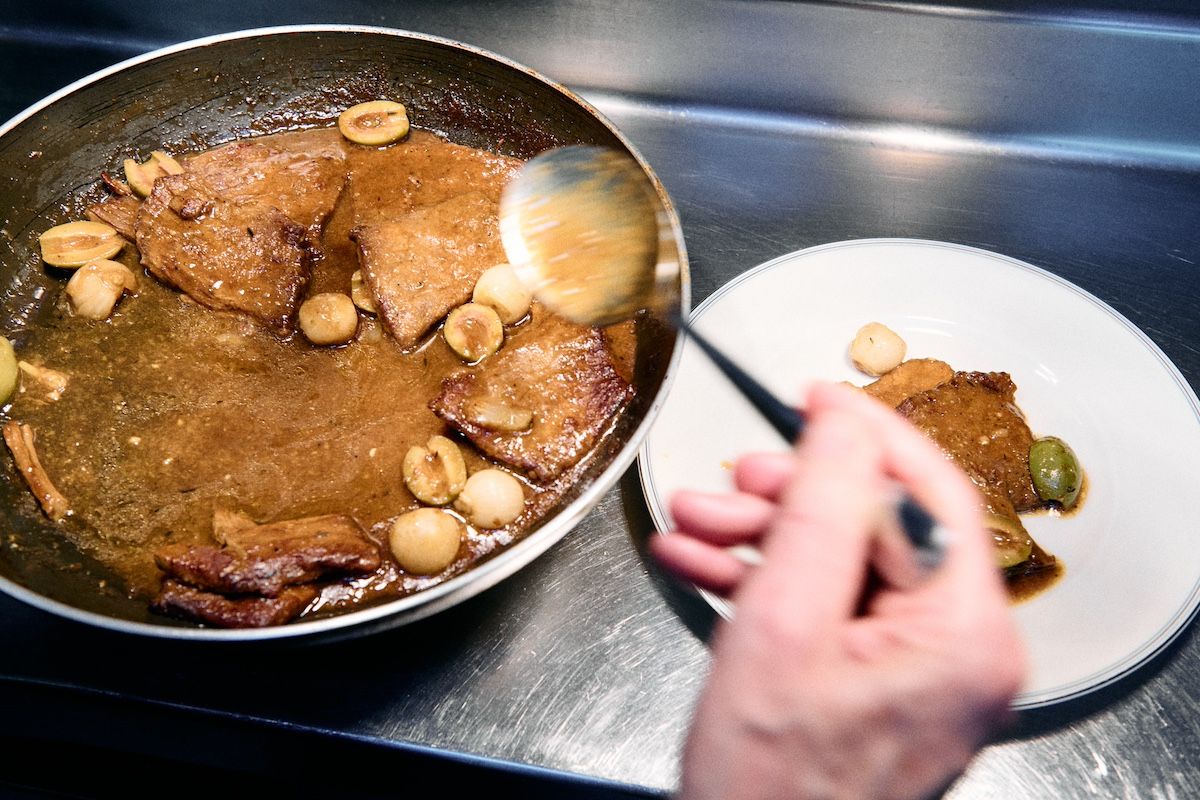
For this philosopher in an apron, we live in a fragmented society, and cuisine does not escape this. "Look at the world of cinema: there are the big Hollywood productions and then auteur cinema, which has almost disappeared. The same thing happens with cuisine: on the one hand, leisure cuisine; on the other, gastronomic cuisine." And he, without a doubt, aligns himself with the latter. Not out of elitism, but to defend a space for conscious eating.
Visiting La Palma de Bellafila is not just eating; it is, if the diner so wishes, joining a ritual where the soul weighs more than the transaction, where each spoonful is an opportunity to stop, look back, and understand where we come from. Jordi Parramon invites us to reconnect with the territory, with time, and with ourselves. In a world that often moves too fast, this is not just important. It is essential.
Add The New Barcelona Post as your preferred Google source for free
Stay informed with the latest news.