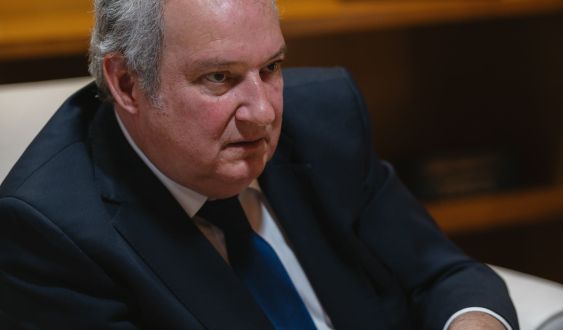
Jordi Hereu is today Minister of Industry and Tourism of the government of Pedro Sánchez, a position he has held since November 2023. Before that, however, he was mayor of Barcelona (2006–2011), a period often remembered for having promoted the green parking area or Bicing, as well as the construction of a hundred nursery schools —although it is unfair to summarize a political career only by the "trophies in the display cabinet"—. Hereu is part of a generation of politicians with a long institutional career who have also worked in private companies —and it shows. Between the public and private sectors, he has been involved in initiatives such as Fledge Barcelona, Barcelona Plataforma Empresarial, Barcelona Centre Logístic (BCL) or Hispasat.
I suppose that whoever has been mayor of a city never completely leaves their city, even if they have traveled a lot since then. Hereu, however, admits that he does not look back at that time with nostalgia, to which he would not return. He is not like the former Barcelona mayor Narcís Serra, who was also a minister and vice president of Spain, and who explained that the period he missed the most was that of mayor. Hereu says he remembers it fondly, but not with nostalgia. Of course, he takes with him a way of doing things: "bringing local politics to the Ministry." It is part of his philosophy: "Proximity politics is capital-P politics; the most authentic."
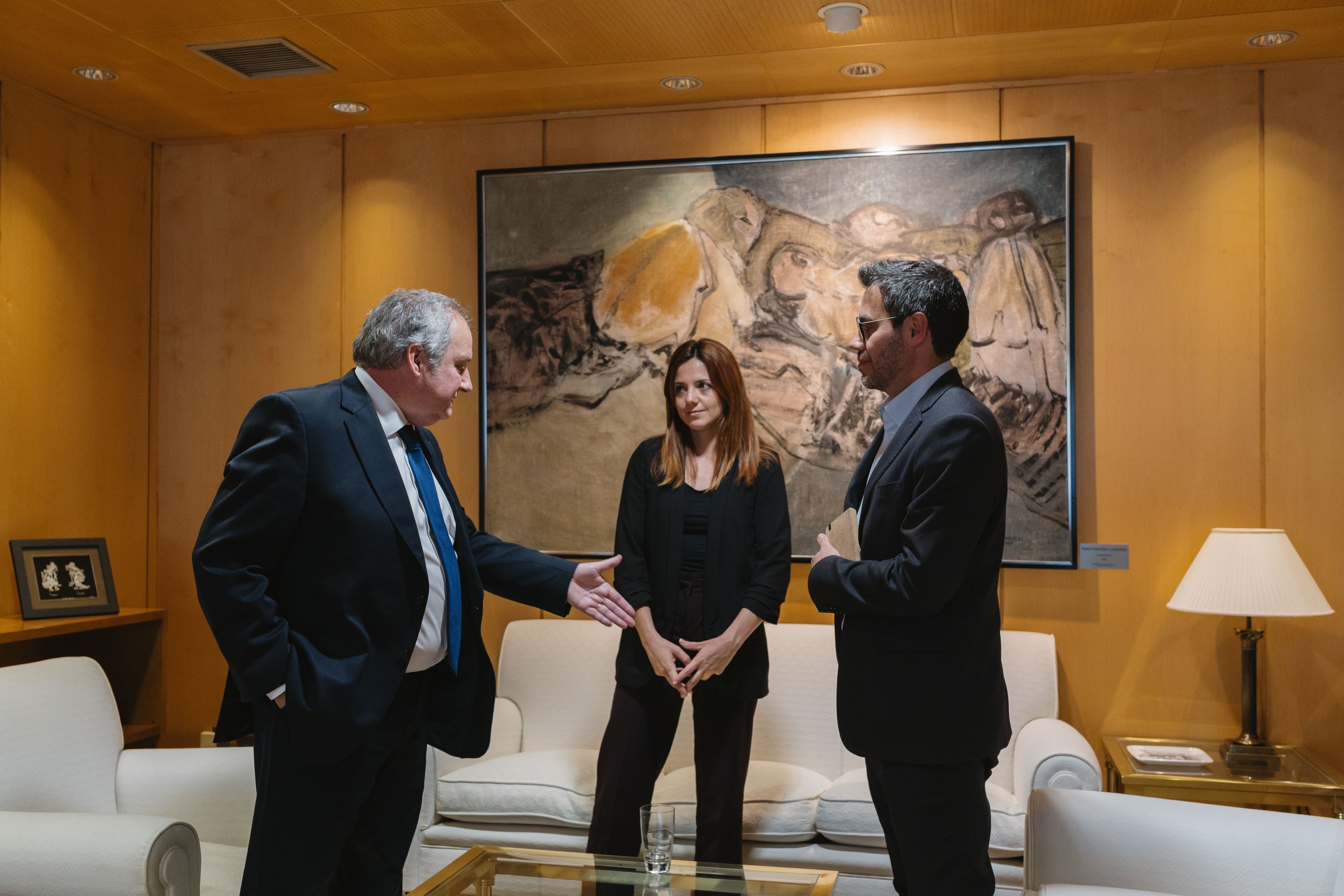
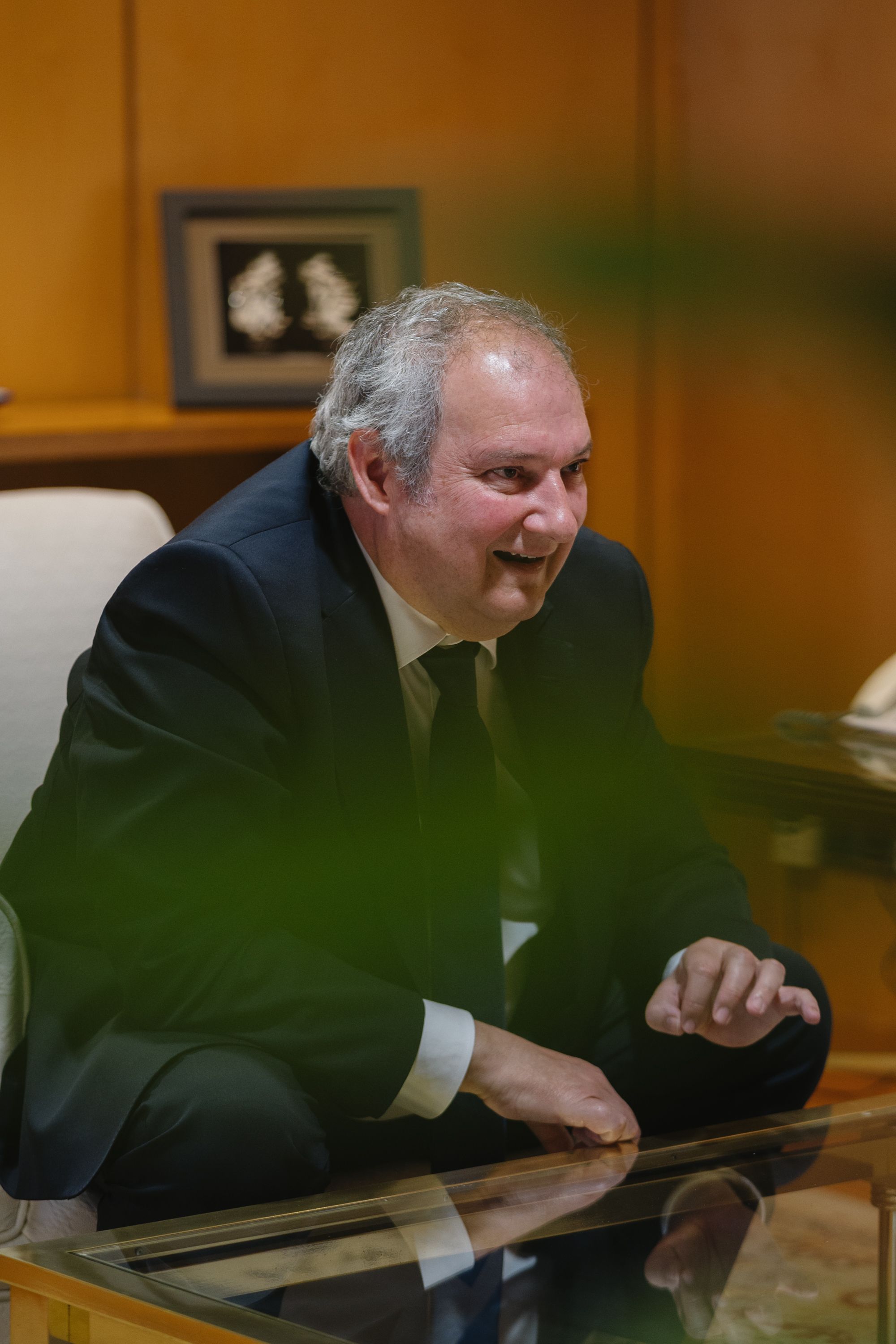
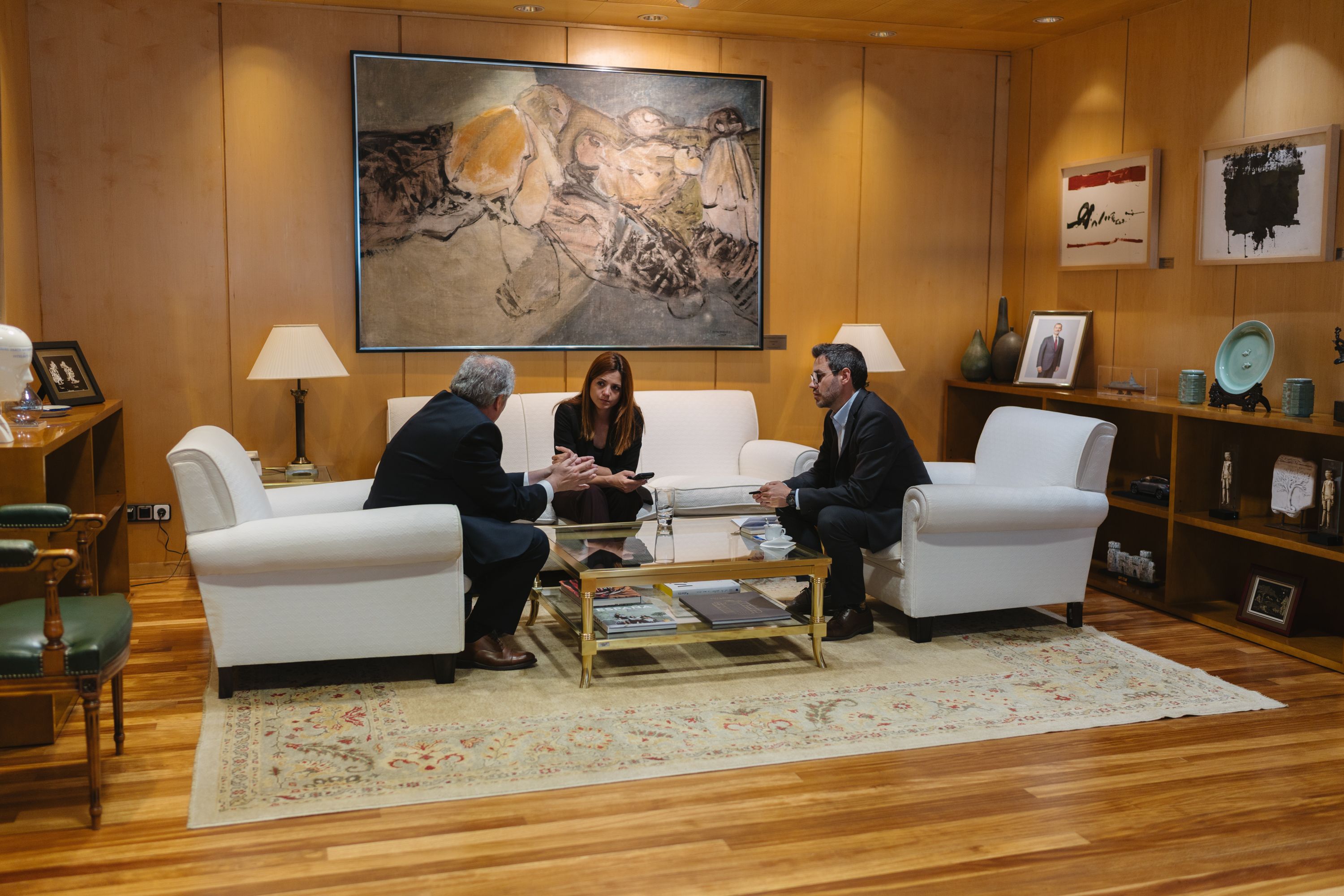
He receives me and the editor of this magazine, Guillem Carol, within the framework of Tourism Week, in his office at Paseo de la Castellana 160, in Madrid.
— E.B.: How is Barcelona seen from the Ministry?
— J. Hereu.: In clear recovery, after a complex decade.
— E.B.: And in terms of tourism?
— J. Hereu.: As a great opportunity, as one of Spain's strong points. It is, first, objectively: if last year we received 96 million international tourists in Spain, of these, 20 million went to Catalonia. And in spending, the same: of the 134,000 million euros in tourist spending in 2025, 24,800 correspond to Catalonia. And it not only provides figures and quality tourism —in one of the aspects that interests us most, MICE tourism— but also functions as an advanced indicator of trends and challenges to come.
— E.B.: In what sense?
— J. Hereu.: It is one of those cities that have anticipated the challenges of tourism and the debates it has generated. Now, in current Spain, I see debates in cities and autonomous communities that I had already witnessed many years ago in Barcelona. Both Barcelona and Madrid or Palma experienced the explosion of a certain type of tourism years ago and, therefore, the current challenges.
Being attentive to the debates generated in Barcelona helps you to get ahead, because you know that they will later reach other territories, and that they are already part of the international agenda of tourism policies.
— E.B.: Are we talking about this complex decade?
— J. Hereu.: Barcelona lost time and energy in debates and attitudes that did not help its attractiveness. But now it is at another moment, in clear reactivation.
"Being attentive to the debates generated in Barcelona helps you to get ahead, because you know that they will later reach other territories"
— G. C.: This explosion has also caused a certain citizen reaction: problems in public space, housing…
— J. Hereu.: It is one of the challenges of touristification. The accumulation of people can conflict with the quality of life of residents. And this requires governance.
The first time I heard the concept of "governing tourism" was in Barcelona, with the Strategic Plan of 2010. We came from a successful stage based on promotion, and we had to move to a new phase: managing externalities.

— E.B.: Almost two decades of pure promotion since the Olympic Games.
— J. Hereu.: I worked at the Port of Barcelona. We even set up floating hotels. At that time, we also discovered the world of cruises, which would later turn Barcelona into one of the great ports of the world.
— E.B.: When you joined the City Council in 1997, how was tourism perceived?
— J. Hereu.: That explosion was still being enjoyed: a city that was discovering itself to the world. We were also beginning to experience social changes, due to immigration, and we spoke with pride about multiculturalism.
With the turn of the millennium, the debate matured: positive and negative impacts were analyzed. And that led us to 2010, when it became clear that tourism had to be governed.
— G. C.: Governing also from prohibition?
— J. Hereu.: From a more segmented promotion and, yes, sometimes saying no: setting limits, setting prices, talking about taxation.
— E.B.: Putting a price on things… like the tourist tax.
— J. Hereu.: Exactly. It's surprising that there are still territories that reject it. We have already seen that it does not reduce demand.
Furthermore, the Constitution very rightly establishes that this must be decided by the territorial authorities. And from here we only provide support and instruments.
— G. C.: What role should this tourist tax play?
— J. Hereu.: To modulate demand and reinvest in the citizenry. Not only to compensate for externalities, but to improve the quality of life for the people of that territory. That means, for example, investing in housing, but also perfectly installing air conditioners in schools.
— E.B.: Are tourist apartments the easy villain of the movie or are they a real problem?
— J. Hereu.: It depends on the territory. It makes sense in some places and not in others. And that is up to the local authorities to decide. And we, as the government of Spain, must provide instruments to manage it better.
— E.B.: Instruments like?
— J. Hereu.: The registration of tourist apartments: so that they can know the reality of their territory, so that they have traceability and capacity to govern.
"Tourism projects the country, generates a culture of peace, opens up societies, creates employment and added value"
— G. C.: Barcelona's goal is to have no tourist apartments by 2028. Do you support this measure?
— J. Hereu.: It is a legitimate decision in strained areas. Therefore, it seems to me an absolutely respectable decision and, in fact, surrounding municipalities are already beginning to join this decision.
— G. C.: Would you have made the same decision?
— J. Hereu.: I don't know. The context is different from when I was in the City Council. Housing is today the main social challenge and, therefore, it is a legitimate measure, control must be put in place. However, it cannot be the only measure in terms of housing nor in terms of tourism policy.
And this is not tourism-phobia: people demand better tourism, tourism more aligned with the challenges of the society in which it develops.
— E.B.: What should this quality tourism have?
— J. Hereu.: Social sustainability, environmental sustainability and, only from these, economic sustainability.
— E.B.: What measures are you taking to guarantee it?
— J. Hereu.: We are at a historic moment: with Next Generation funds we have invested 3.4 billion euros in tourism policy, 340 million of which in Catalonia. We have watered the entire Spanish geography, because we believe that it is at this moment of success that we must transform ourselves.
The objective is to deconcentrate destinations, deseasonalize, diversify products, and better redistribute benefits, also in the form of better wages.
"The objective should not be to reach a certain number of visitors, but to implement policies that ensure a real return to society"
— E.B.: How does tourism help?
— J. Hereu.: It projects the country, generates a culture of peace, opens societies, creates employment and added value, and has effects on the entire economy. It also acts as a cushion in times of crisis.
— G. C.: Will demand increase or decrease?
— J. Hereu.: It will increase. The world will move more. In Europe, we have been traveling for many years, but there are other parts of the world that started later. And this will increase. We assume, therefore, that tourism will continue to grow: the key is how we govern it.
— G. C.: Have we reached a ceiling?
— J. Hereu.: No. There is room if we do our homework well: deseasonalize, decentralize, and segment, through the offer.
— G. C.: An example of this segmentation?
— J. Hereu.: Salou. It had problems with party tourism, with Salou Fest, and today it is a benchmark in sports tourism. That is governing tourism.
— G. C.: The party, however, continues…
— J. Hereu.: But sport is the base. And that is governing tourism.
Our tourism success is undeniable. Let's not forget that we are the second country in the world in arrivals and also in tourism revenue. We have a great opportunity.
"With the airport expansion, we are playing for whether Barcelona will be a first-division city or not"
— E.B.: How is the sector's reputation recovered?
— J. Hereu.: With policies and with results. For citizens to perceive the social and economic return of tourism. The objective should not be to reach a certain number of visitors, but to implement policies that ensure a real return to society or the environment.

— G. C.: This recalls the debate on the expansion of El Prat Airport.
— J. Hereu.: With the airport expansion, we have the opportunity, the need, and the demand to undertake a great project, with environmental guarantees and compensations. And we must understand that it is not just vacation tourism: we are playing for the economy and future economic engines.
We are playing for whether Barcelona will be a first-division city or not. And it has all the capabilities to be one, but it needs infrastructures to accompany it.
— E.B.: We close with a phrase: without tourism, today Barcelona would not be…
— J. Hereu.: Tourism is a consequence of its enormous attractiveness. Without tourism, it would mean that it is not a global city. That it is not known. That it is not Barcelona.
Add The New Barcelona Post as your preferred Google source for free
Stay informed with the latest news.