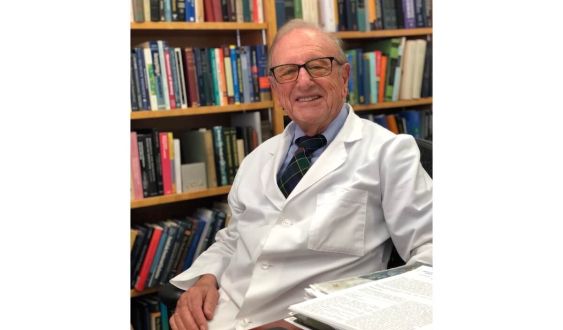
A "scientific biography." In these terms, with a hybrid characterization, the author refers to his work in the epilogue. And yet, The Magical Loom of the Mind. My Life in Neuroscience (Editorial Ariel) is much more: Joaquín M. Fuster (Barcelona, 1930) delves into what makes us human, into the relevance of emotions and the fullness of meaning enabled by the experience of art or dedication to an altruistic cause. For this book, whose exceptionality José Antonio Marina highlights in the prologue, is at least three: a wonderful exercise in reminiscence and biographical composition, excellently written; an account of the concerns, training, and research developed in the field of mind science, from psychiatry to neuroscience, passing through psychoanalysis; and, finally, a compilation of the main contributions of thinkers and scientists —in the form of entries written by Fuster himself, in separately laid out boxes— that complement the autobiographical narrative.
[subscribe_newsletter_esp]
"It started before dawn with a distant purr. It woke me like a sob wakes a mother or a stopping engine wakes a sailor. I sprang out of bed and hurried, barefoot, to open my attic window (…) suddenly, the fireworks began." The child's gaze at a spectacle impossible to gauge in its calamitous dimension —the Civil War— inaugurates the narrative. One of the most powerful ideas of his book is already visible at this point: the ability to precisely recall and construct narratives faithful to lived reality, to the extent that it leaves a mark. But this is not an extraordinary operation; it concerns every sapiens sapiens. What has been experienced in the past and the unfolding of memory in the form of expectation —projected forward here, as a writing exercise— continuously feed back into our brain, whether we are conscious of it or not.
Different eras converge in the present, where the master lines of one's own existence materialize in a scarcely random way.Perhaps to illustrate this characteristic phenomenon of our nervous system, along with thea priorilogical (chronological) disposition of every biography, several deliciously premeditated prolepses ---anticipations of what is to come--- intrude, implying that the reconstruction of vital meaning from Saint Augustine entails the disruption of temporal unidirectionality. Different eras converge in the present, where the master lines of one's own existence materialize in a scarcely random way. Along with the memory that Fuster calls "phyletic," acquired with the passing of generations,the individual memory in turn reverts to the perception of the world: far from being passive, the very act of perceiving already implies a way of understanding it("Every perception is an interpretation of the world according to the memory of it)." Fuster himself would allude to this, in the maturity of his scientific career, with the relationship of reciprocity expressed by the "perception-action" binomial.
In the pages of his book appear the names of contemporary researchers, such as Hayek or Chomsky, but the author also refers to Locke or Kant, who offered valuable speculations about the phenomenon of perception and the role of memory. Especially interesting, however, is the chapter he dedicates to Juan Luis Vives (1492-1540), a humanist who greatly preceded, and who could have had a capital incidence in the future formation of Joaquín M. Fuster. Going back to his primary education, with the Jesuits, he recalls a Latin quote uttered by the professor, which in its translation reads: "If two things have been apprehended simultaneously, the appearance of one of them generally evokes the representation of the other." Of course, beyond psychological associationism, largely empirical, the prominence of the statement would be granted by scientific demonstration, centuries later; when Fuster and other researchers show that the nerve cells responsible for transmitting information relate to each other in the form of networks both for the achievement of a meaning of what is perceived ---Kant spoke of external or internal phenomena, that is, feelings--- and for the active enabling of future perceptions.
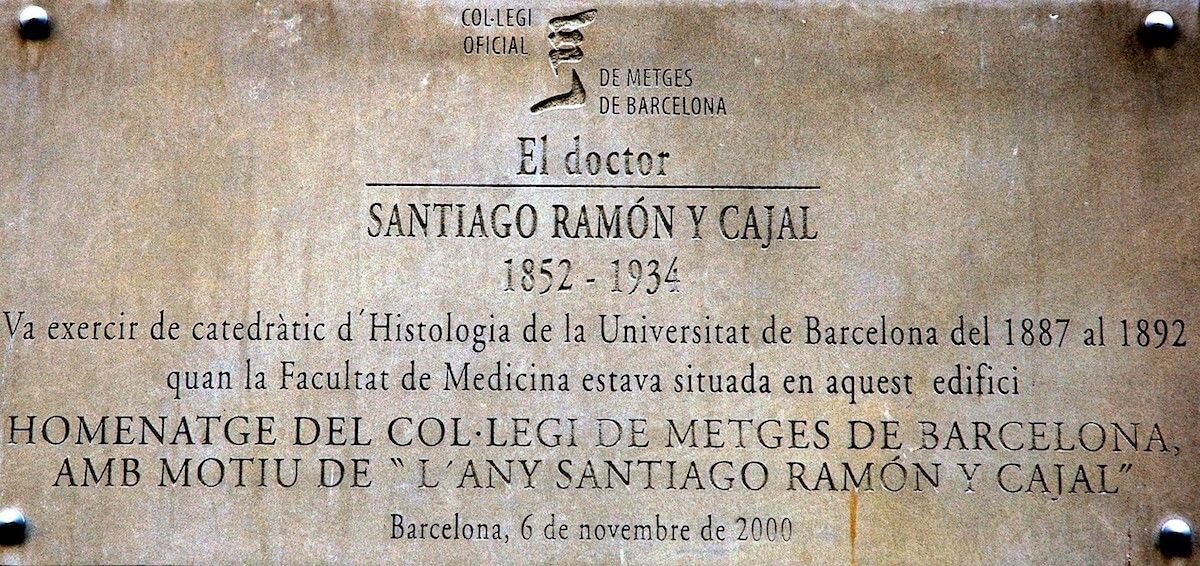
The first chapters of this biography, enriched with contributions from modern thought, also present ---it could not be otherwise--- some of the references in neuroscience, starting with Santiago Ramón y Cajal. Fuster explains how the Aragonese scientist made his main discoveries during his years in Barcelona, from where he made numerous trips to share them, thus beginning the path of a discipline ---cognitive neuroscience--- that would become Joaquín M. Fuster's passion and profession, probably encouraged by family tradition. Not only was his father a doctor (psychiatrist), but his father-in-law ---who gave him a precious copy of Ramón y Cajal as a wedding gift--- and his grandparents were also doctors. The mention of his maternal grandfather, Valentín Carulla, rector of the University of Barcelona, reappears in the chapter dedicated to primary education, where it is recalled how on his days off he could get on the back of a mule to inaugurate schools in villages in the Pyrenees.
The emotional involvement of the student impacts their capacity to project, enabled by a greater development of the prefrontal cortex, which at the same time fosters significant confidenceA separate chapter, in fact, is dedicated to the issue of learning, which Joaquín M. Fuster addresses after having unfolded the bulk of his biographical explanations: the move to the U.S., the fruitful stay in Bavaria, and the definitive return to California. In one of the sections dedicated to education, Fuster recalls a saying attributed to Socrates ("Education is lighting a flame, not filling a vessel") and a provocatively aporetic quote from Ramon y Cajal ("To manufacture original brains: this is the great triumph of the pedagogue") to reaffirm the importance of "active learning." A teaching methodology in which children they do not behave reactively, waiting for the teacher's requirements, but rather become co-responsible and creators of the subject along with their classmatesEmotionally involved in the task, a virtuous circle is fostered that impacts the ability to project—with the greater development of the prefrontal cortex—and the confidence of being able to significantly influence reality.
Even if some of the pages of The Magical Loom of the Mind. My Life in Neuroscience may seem complex, with allusions to authors and works worth delving into—the case, never sufficiently valued, of Juan Rof Carballo—the tone of most of them is relaxed and their contents accessible, sometimes amusing. They include, in fact, a well-nourished series of anecdotes that show the author's affable character and his sense of humor ("Joaquín," Phillip May once asked me seriously, but with a twinkle of British irony, "how is it that the woodpecker doesn't get headaches?"). In Joaquín M. Fuster's intellectual autobiography, his humanistic and ecological sensibility inevitably comes to light, both in terms of the treatment of the species with which he experiments ("Only happy animals give good data") and in properly human artistic disciplines, those in which the capacity for projection and creative freedom reach unusual levels of excellence, in turn fostering emotional experiences.
In a very notable way, it is appreciated in the course of musical interpretation and listening, to which Joaquín M. Fuster became fond of since childhood, and which occupies two sections, towards the beginning and end of his "scientific biography". There he reflects on the task of the composer from the perspective of neuroscience, also highlighting the never entirely passive disposition of the listener, which perfectly illustrates his theory of perception-action: "It is common experience, at the end of a movement, to "hear" in our mind the beginning of the next. In this predictive element resides much of musical pleasure, and there precisely is the reason why we enjoy more listening to a known melody than one we hear for the first time."
Add The New Barcelona Post as your preferred Google source for free
Stay informed with the latest news.
