Around 5,000 pieces of art inhabit the more than 20 establishments of Derby Hotels Collection. With a presence in Barcelona, Madrid, and London, the hotels of the family business play with art and central, historic properties as the hallmark of the house.
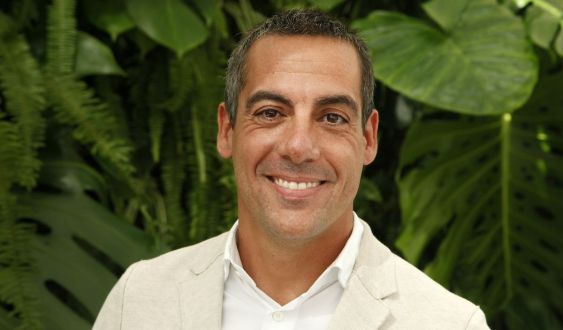
As general director, Joaquim Clos addresses the chain's future projects, in a Barcelona with great tourism muscle where some figures are entering more stable phases. Clos receives us amidst Claris Christmas proposals and year-end closing meetings.
— How does Derby Hotels Collection end 2025?
— We will close the year maintaining the average price and perhaps lowering occupancy by a couple of points, but always within very good parameters. I suppose there are different readings, and mine is positive. We come from very good years, and despite the figures not moving much or even decreasing slightly, we come from good dynamics. In Barcelona, we have experienced crises, and now that is not the case, it is something else: we always want more, we always want to grow. After many positive years, you have to end up stabilizing.
— Do you see warning signs in the evolution of tourism in Barcelona?
— Some data is decreasing, but not sharply. I think it's a curve we are beginning to glimpse, but not to alarm us.
— Is it in line with Barcelona's strategy of attracting less but better tourism?
— Everything is symptomatic of this strategy. When you have a high price, you have a client with more purchasing power. And when it's time to close, if the figures have fallen a bit, you have to remember that commitment.
— What are the chain's plans in Barcelona?
— We have a new apartment building on the table in L'Hospitalet de Llobregat. Two years ago we opened the first one in Plaza Europa, and the result has been so good that we are building another one in the adjacent development. We were clear that the apartments would work for Fira, but it has also worked very well for leisure clients, and that's why we are strengthening our presence there.
— Do you have more growth projects in Barcelona?
— We are planning a significant investment in the Claris, focused on updating rooms. In Madrid, we are finishing an investment in the Villa Real, and next year it will be the Urban's turn.
— And internationally?
— The most relevant operation is the renovation of The Caesar in London. We did a first phase that we closed with 13 million pounds, and now we will close a second, smaller one, but no less complex for that. There are fewer rooms, but in the noble areas, and it has the inconvenience that you have to bother the client a bit more. We will start in January, with an investment that will range between six and seven million pounds.
— In the end, it's close to 20 million.
— Yes, it is a comprehensive renovation. Our aspiration is to become the best boutique hotel in the area, between Bayswater and Notting Hill. The neighborhood has evolved brutally, and is now focusing on leisure. New competitors are arriving, and this makes the neighborhood grow in offer and positioning.
— In this sense, do competitors become allies?
— In a way, yes. Now, the area is becoming a very good alternative to Mayfair.
— And at the same time, you compete. Do you target different audiences?
— In Barcelona, we have a name; people look for us when they go there. When we opened, we became a bit of a reference for Barcelonans going to London; we attracted many national clients. We continue to attract many loyal clients to our company who visit often.
— And beyond the national client?
— We have already made a name for ourselves in the city. We have many European clients, and many from the United Kingdom.
— You've had your radar on Lisbon for a while.
— We have many options under study. We like the city very much, and we go often to study these options.
"You have to be open to everything, you can't say no to anything from the start"— Do you have more European cities in focus?
— We receive many proposals; many we discard, many we look at.
— What do they need to be looked at? What are the requirements?
— We look for historic buildings in prime cities. And no matter how interested you are in one city, if you receive a proposal from another for an emblematic property, you can consider it. We always look for differential options that align with our personality.
— Also beyond Europe?
— Now we have to be open to everything. There are many factors that didn't have as much weight before and now they do. Now, the center of Europe's prime cities have a very high price, and this makes you broaden your focus a bit. You have to be open to everything, you can't say no to anything from the start.
— What weight do international markets have within the chain?
— The main client is still American. We started in that market many years ago. European and Asian clients are also having significant weight in Barcelona.
— Beyond their origin, what evolution have clients followed in recent years?
— They are more informed clients who are no longer content with a good bed and a good room, but rather seek an experience. All hotel chains have been investing in this direction for a long time.
— Is it difficult to differentiate oneself?
— Before having a differential proposal, you have to have services and amenities in accordance with your category. Once we have this (and we do), we offer prime locations in historic buildings, and for many years we have accompanied it with two battle points: sustainability and art.
— Art is one of your great hallmarks.
— We have truly unique collections. It is the chain's contribution to bringing art to reality.
Add The New Barcelona Post as your preferred Google source for free
Stay informed with the latest news.
