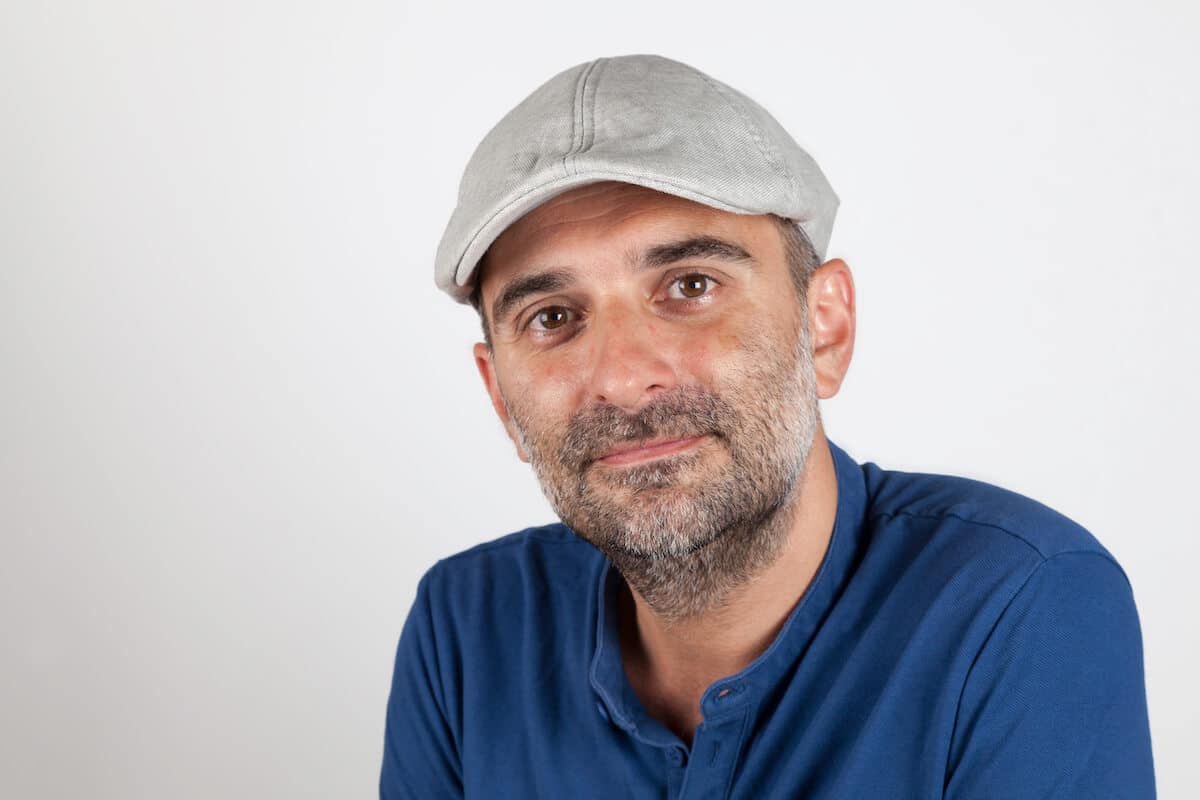
Joan Miquel Oliver: "We were born with the intention of not being a version of anything"

The Mallorcan commemorates the fifteenth birthday of his first solo album with the re-release of the album on vinyl and a celebratory tour that takes him this Thursday to perform at Sala Barts

april 08, 2021 - 22:42
If the world ended today, saying that he has been the best pop music composer in Catalan of all time would not be an exaggeration. Joan Miquel Oliver (Soller, 1974) did not just stick with the enormous catalog of songs with Antònia Font,has been adding a rich and prolific solo work that follows in the footsteps of the excellent Mallorcan group and adding new nuances. Fifteen years after premiering withSurfers in slow motion, Oliver celebrates that first reference with a vinyl reissue of the album and a birthday tour that allows him to perform this week in Barcelona. A good opportunity to get closer to one of the great albums of the last decade and revisit a repertoire that still sounds fresh.---The last time I saw you live was at Heliogàbal and you could barely breathe. What are concerts like in a pandemic world?Very different from that. The musical part is the same, but you don't normally go to a concert just for the music, but to live the experience. It is here where things have changed a lot. Now it's harder for me to get into character, I plan and think about movements that used to come naturally to me.---Are you much of looking at the faces of the audience? Now with the masks you only see people's eyes.In a concert, which can last a couple of hours, you have time for everything. There are moments when you are more concentrated on the music, others when you don't think about anything, and when you even forget that you are on a stage. But there are also times when you observe what is happening in front of you: how people react to what we are doing. If the audience is more attentive or, on the contrary, more in party mode. At today's concerts, it seems like everyone is super concentrated on the repertoire! (laughs)---Was the confinement a time of creation for you?I took advantage of it to play the guitar, to learn. I had been putting it off for years, because even though I've been playing for so long, I had never stopped to study the instrument.I had always done it by ear or improvising, so I took advantage of the confinement to dedicate myself to studying for the first time. I didn't manage to write much and somehow I had to kill time.---Last year you published Aventures de la nota La. If we revisit it fifteen years from now, as we are doing now with Surfistes a càmera lenta, what do you think you will say?I have no idea. It's an album that comes from the desire to experiment and that defends my idea of music, which is not so much a language of icons and figurative, but purely abstract:Adventures of the note Lais the abstract facet of music.---When you released Surfistes a càmera lenta, your first solo album, things were going very well with the band after releasing Taxi. Do you remember that being a particularly happy time?Happy is hard to say, but it's true that with Antònia Font we were at a point of seeing what we wanted to do: after publishingJoywe had the option of continuing to be a pop song group or, on the contrary, going a little further. I had resigned myself to Antònia Font being this, a band of songs and that's it.With this idea, I started writing Taxi, thinking it would be my first solo album. What happened is that the rest of the group loved it when they heard the demos. It was a brutal turn afterJoy, but they liked it so much that it stayed as an Antònia Font album and I had to make another first solo LP (laughs). I've always wanted to think that there's a dichotomy between the experimental point of what I've done with my name and the more conservative, which was with the band. In the end, it's not really like that:one of the most experimental works I have ever done is Vostè és aquí, which was with Antònia Font, and insteadElectra, an album by Joan Miquel Oliver, is an album of songs with no ambition to experiment.---Surfistes appeared the same year as Antònia Font's Batiscafo Katiuscas, which was a somewhat melancholic album and has a certain epic grandiloquence in some songs.It's a work of small icons: the woman who bit a piano, Fitipaldi, a little mountain man... the most pop song there is isPhoto. The rest are like snapshots. It's a headline album. Joan Miquel Oliver recupera su primer disco en solitario
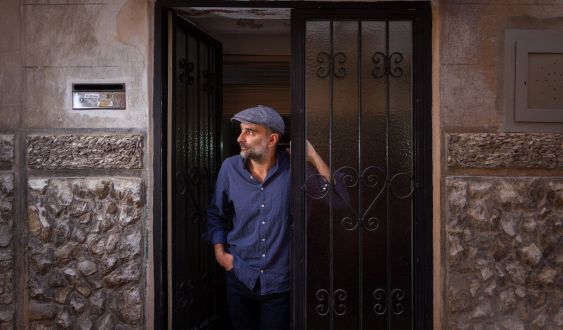
Joan Miquel Oliver recovers his first solo album. ©Pere Joan Oliver

---And how have those icons aged?

---Very well, with the re-release I played the album quite a few times and I can defend it. Surfistes a càmera lenta I like it more now than when I made it, when I wasn't so convinced. The aesthetic proposal is concrete and holds up perfectly. Fifteen years have passed since that album and I wouldn't do it any other way.

---Revisiting it is an act of nostalgia...

---Above all, it's about enjoying that repertoire and doing something special, different from what we've been doing lately. In Surfistes a càmera lenta each song has its peculiarities, unlike my last albums, which are flatter and everything sounds a bit more the same.

---In Antònia Font, Pau Debon was at the center and sang. Was it difficult to take the step to do it yourself?

---It was very hard for me to start singing. When we were recording the album I wasn't sure and until five minutes before the first concert I didn't know if I would be able to do it. The debut was in a very small and familiar place, to try it out. When it started, my partner was in the audience and I looked at her and she made a gesture of "everything's fine". This made me feel calmer.

---Had you always been interested in singing?

---Yes, since I was little I had always sung, I even went to a choir. It was the instrument I carried with me, I always did it and people liked it: when you make music in your imagination, you always sing it.

---You had a time of composing for the band and composing for yourself. How did you do it?

---By projects. A writing stage would open, and those songs were for Antònia Font, and when it was finished, another one would open that was for Joan Miquel Oliver. It wasn't too interchangeable. I thought in terms of albums, in cycles. I don't write songs in the air, but with a calendar and an objective: to make an album on one side or the other.

---You tend to downplay the legacy of your albums, solo and with Antònia Font, and the importance they have had for musicians on the Island. Then you talk to them and everyone, from the first to the last, cites you as a reference.

---When they tell you so much, in the end you think about it. I think the explanation might be that with Antònia Font we found ourselves in very virgin territory, everything was embryonic. Then each group seemed like the Catalan version of something that already existed: those who sounded like the Beatles, or the Rolling Stones, or Metallica, whoever it was. We were born with the intention of not being a version of anything. It doesn't mean that the territory hadn't been explored, in Catalan music there was Sisa and Pau Riba, for example, but at the level of groups in general everything was very classic. We added experimentation, with samba, bossanova, rumba, talking about outer space, adding Mediterranean touches... these were elements that hadn't gone together. Antònia Font was something different with its own discourse.

---María Jaume says that her mother used to play Coser i cantar for her when she was little. Does it make you dizzy to hear that?

---Absolutely. You don't realize it and you're already forty-seven. These new people were little kids when we played at the Liceu.

---There's a very good generation of Mallorcan music: Da Souza, Maria Jaume, Jorra i Gomorra.

---They are very creative and have no complexes or fear of anything, very liberated musicians and each one has their own way of working. You hear them, or proposals like Joan Pons's, with El Petit de Cal Eril, and they are modern with a very high level in composition and concept. I like them, they are very good.

Add The New Barcelona Post as your preferred Google source for free
Stay informed with the latest news.

Activate now

About the author

Jordi Garrigós
View biography
Tags