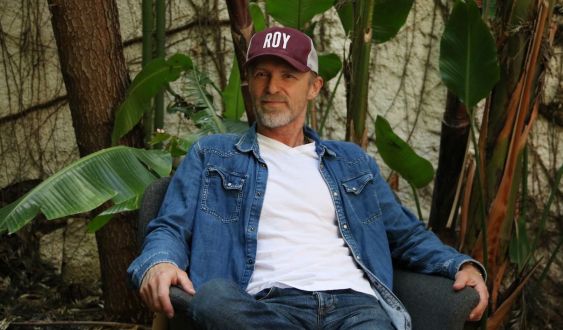
Harry Hole's alcoholic investigations return after four years of absence. Jo Nesbø (Oslo, 1960) returns with Eclipse, published by Reservoir Books (Edicions Proa in Catalan), the thirteenth novel in the saga starring a detective who is allowing himself to feel a little now that he has aged considerably. "He has become more sensitive and emotional with age," explains his creator, who wanted to focus this latest title on trying to discover who is the parasite and who is the host in human relationships. "Between Harry Hole and me, I don't know who is who, we have been linked for a long time," he clarifies.
His interest in parasitic relationships came when, on a climbing trip in Thailand, a friend told him about a type of parasite that deprives fish of their tongue and becomes its substitute, with the same shape, even with eyes. "I've got it, this will be part of the new novel," he thought. "Please, don't think about this the next time you kiss your partner," he now asks. He was also surprised when he discovered that there is a type of parasite that attacks mice, making them attracted to cats, losing their fear and approaching them, who continue to hunt them without remorse.
"Nature is a better horror writer than Stephen King and I," he defends himself, assuring that in Eclipse there isn't as much blood and that, in any case, it's no worse than that exerted by those unknown parasites that roam the world. Perhaps that's why he includes them in the scene while he pursues a gruesome serial killer who again leaves victims in Oslo and collects brains. "Harry Hole's books are becoming less and less violent, I have been criticized for the violence and I don't do it because of the criticism, if the story asks for it and the violence has a purpose, go ahead," he details.
Be that as it may, Nesbø needed a serial killer to bring back Harry Hole, isolated in Los Angeles with the sole objective of drinking himself to death, after losing his wife in the last novel, Knife (Reservoir Books), and having an increasingly long list of dead loved ones, "all those he loves are taken from him." He regains the will to live when he encounters an old Hollywood glory who reminds him of his mother who died when he was 15, "his second chance to save her", getting into trouble with a Mexican cartel and accepting money from a Norwegian billionaire to settle a debt.
He will have to return to Oslo to catch another criminal, allowing him to resume the jokes about the amusement park for elites that his hometown has become, like so many other European capitals, with a special obsession with the recently opened Munch Museum. As a local detail, in his reflections, he mentions Catalan artists such as Antoni Gaudí and Salvador Dalí.
Asked if the end of the saga is approaching, seeing that Harry Hole is no longer afraid to die, Nesbø, always eager to joke, becomes one of his characters: "The quick answer is yes, we are approaching the end. There is no long answer, I would have to shoot you afterwards".
Add The New Barcelona Post as your preferred Google source for free
Stay informed with the latest news.
