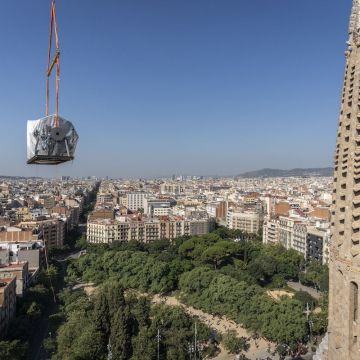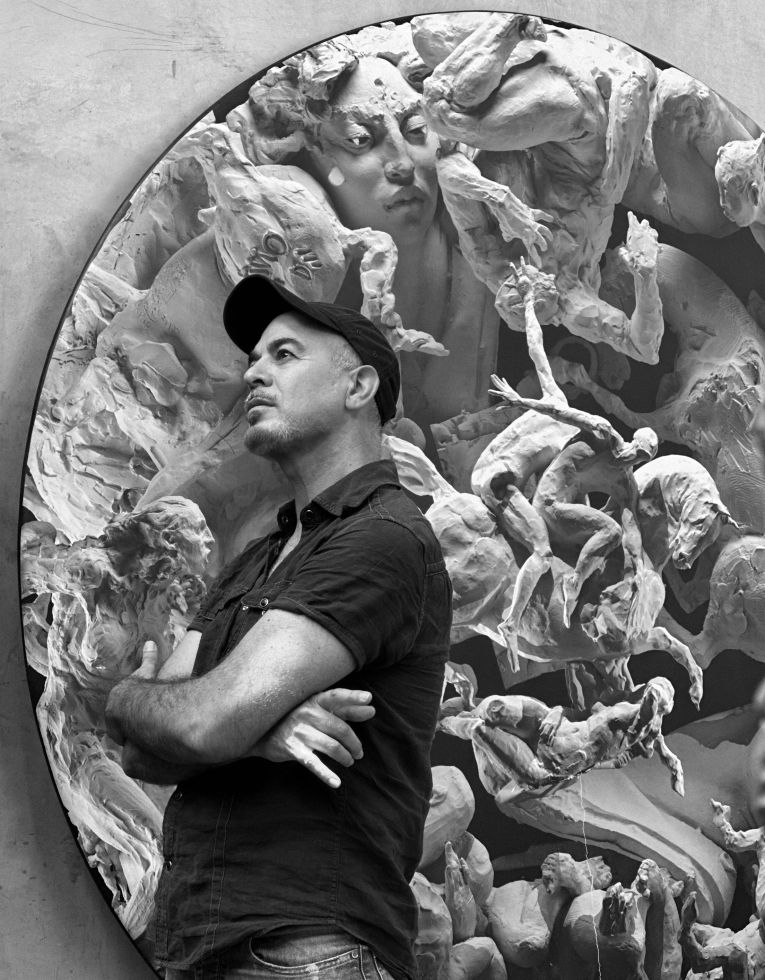
The Sagrada Família is nearing the final stages of construction stretch, but one major question about its eventual appearance remains unanswered: who will shape the Glory façade, the last of the basilica’s great façades to be completed? More than a year ago, a phone call changed the course of Mexican sculptor Javier Marín’s (Uruapan, 1962) plans, presenting him with one of the greatest challenges of his career: imagining how to translate Antoni Gaudí’s artistic universe into the final façade of the temple. The Sagrada Família Construction Board had selected him, alongside Mallorcan artist Miquel Barceló and Basque sculptor Cristina Iglesias, to submit an artistic proposal for this monumental ensemble, conceived to tell the story of humanity from Adam and Eve to the Last Judgment. Rich in symbolism, the façade will help shape the basilica’s final appearance.
With more than three decades of experience and the human body as a central theme in his work, Marín immersed himself in Gaudí’s thinking, studying the façade’s theological symbolism and exploring how to reinterpret it through his own artistic sensibility. Months of research and reflection culminated earlier this year in the submission of his proposal, alongside those of the other two selected artists. The decision, initially expected this autumn, has been postponed, with no new date announced and several possibilities still on the table: the Construction Board could select one of the three artists, commission more than one to work on the project, or reject all three proposals and pursue a different approach. Another major challenge also remains unresolved: the monumental staircase Gaudí planned in front of the Glory façade, whose construction could require the demolition of residential buildings on Carrer de Mallorca.
Strict confidentiality prevents Marín from revealing details of his proposal, but in a conversation with The New Barcelona Post from Mexico, he reflects on how the challenge of envisioning the Glory façade has led him to explore Gaudí’s thinking and reconsider not only his understanding of the Sagrada Família, but also aspects of his own artistic practice and personal convictions. As the only artist from the Americas among the three candidates, Marín approaches Gaudí from a cultural and artistic tradition distinct from Catalonia’s. His perspective offers a glimpse into how Gaudí’s work can be interpreted through a different cultural lens, and how a Mexican sculptor engages with the architect’s legacy and with Barcelona itself.
— How was that first contact with the Sagrada Familia Construction Board?
— It was a surprise and a challenge I never would have imagined. They contacted me directly, when I still had no relationship or connection with the temple, and that surprised me a lot. From there I began to discover all the background of the project. I found it fascinating that they considered commissioning proposals from three artists so different from each other. I would even think it would be a good solution if all three of us could work on such an enormous work as this, precisely because our artistic languages are so distinct. But the decision is solely in the hands of the Construction Board.
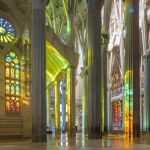
— Before receiving that invitation, what was your relationship with the Sagrada Familia? Did you know it only as a visitor?
— Until then, I only knew the Sagrada Familia as a tourist. But, as a sculptor, I have that professional deformation that leads me to look at buildings and imagine what I could do there if one day I were commissioned an intervention, beyond contemplating its beauty. Furthermore, there was a link with the Sagrada Familia that came from much earlier. When I was a child, in my father's library there was a book about Gaudí's work that fascinated me. It seemed unsettling, very particular, and it stuck in my memory. That's why, when they offered me to participate in the project, I was moved: in a way, it was a work that had accompanied me since childhood, even if I wasn't fully aware of it.
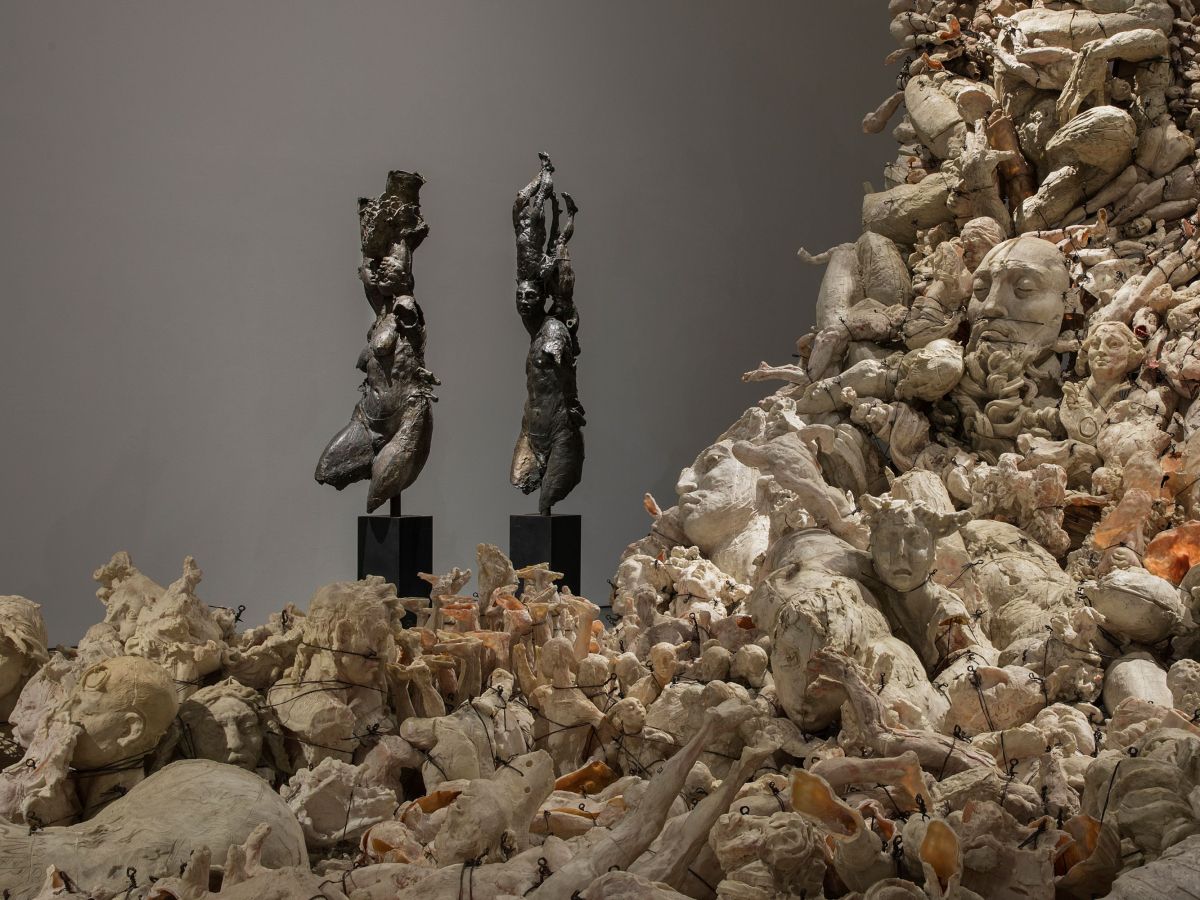
— You've mentioned that your father was also an artist. To what extent did growing up in that environment influence your decision to dedicate yourself to art?
— I grew up in a house where art was part of everyday life. My father was an artist and architect, he had many books on art and even drew directly on the walls. My mother was an accomplice to all of it, so there was a great sense of freedom and creativity at home: if, for example, you wanted to draw on a wall, you drew. And that's how, little by little, I developed my skills.
— At what point did you start to consider that this inclination for art could become a profession? And how did you end up finding your way in sculpture?
— At that time, I didn't even know that you could study to be an artist, nor that you could make a living from it. But when the time came to decide what I wanted to do, I discovered the school of plastic arts and enrolled. At first, I started school painting and exploring different techniques, but then I discovered sculpture and I stayed with it until today.
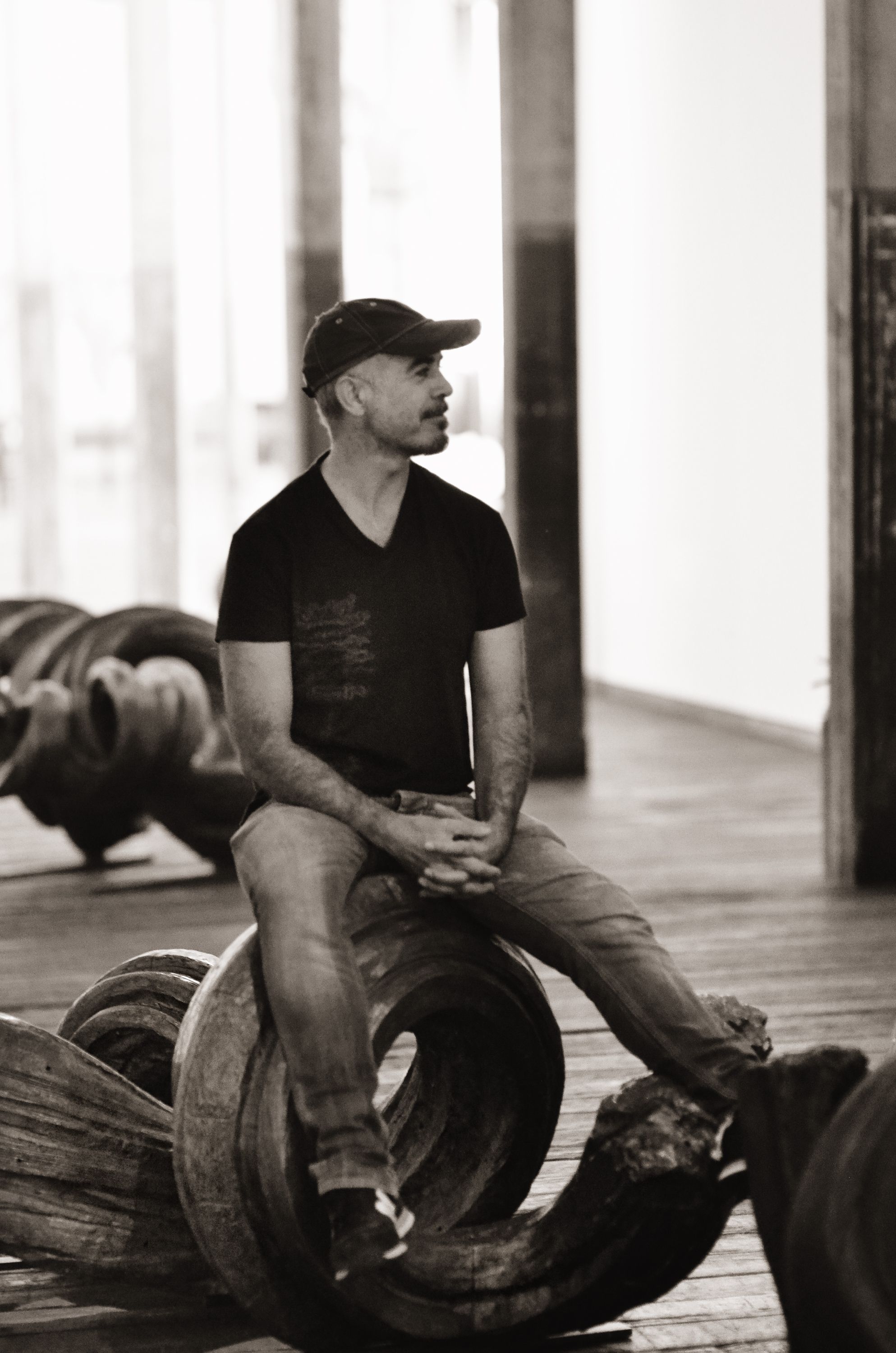
— How did you develop your own sculptural language and how would you define the style you have built over the years?
— I believe my language defined itself. There was a moment in school when I questioned my work so much that I ended up getting blocked. Until I decided to stop overthinking it and start doing what came naturally to me. From then on, I worked with more freedom, without trying to build a style premeditatedly. Over time, you start to recognize certain constants in your work, and that's how a unique language is formed. Throughout the years, my work has been compared to many artistic movements, from classical art and mannerism to pre-Hispanic sculpture. But there's one definition I particularly like, that of the expressionist sculptor.
"From the beginning, I was clear that it was not a commission to do whatever I wanted nor an opportunity to establish myself as an artist. The personal voice must be at the service of the meaning of the work"
— Do you think your sculptural language, which you have built over the years, could also be recognized in a work like the Glory facade, within Gaudí's artistic universe?
— After studying Gaudí's work in depth, I have found several points of connection with my own sculptural language; we also have similar concerns regarding artistic production. I have found common ground especially in the way of understanding the body, the human figure, and organic forms. Even so, translating my language to a project like this entails a great responsibility, both artistic and ethical, and from the beginning, I was aware of the magnitude of the commission. It is not about intervening in just any building, but in a work that has been under construction for more than a century and that responds to a very specific spiritual vision. How to approach the discourse of the Church today? How to translate it into one's own language without betraying its meaning? These questions have led me to a very enriching process of reflection, both personally and professionally.
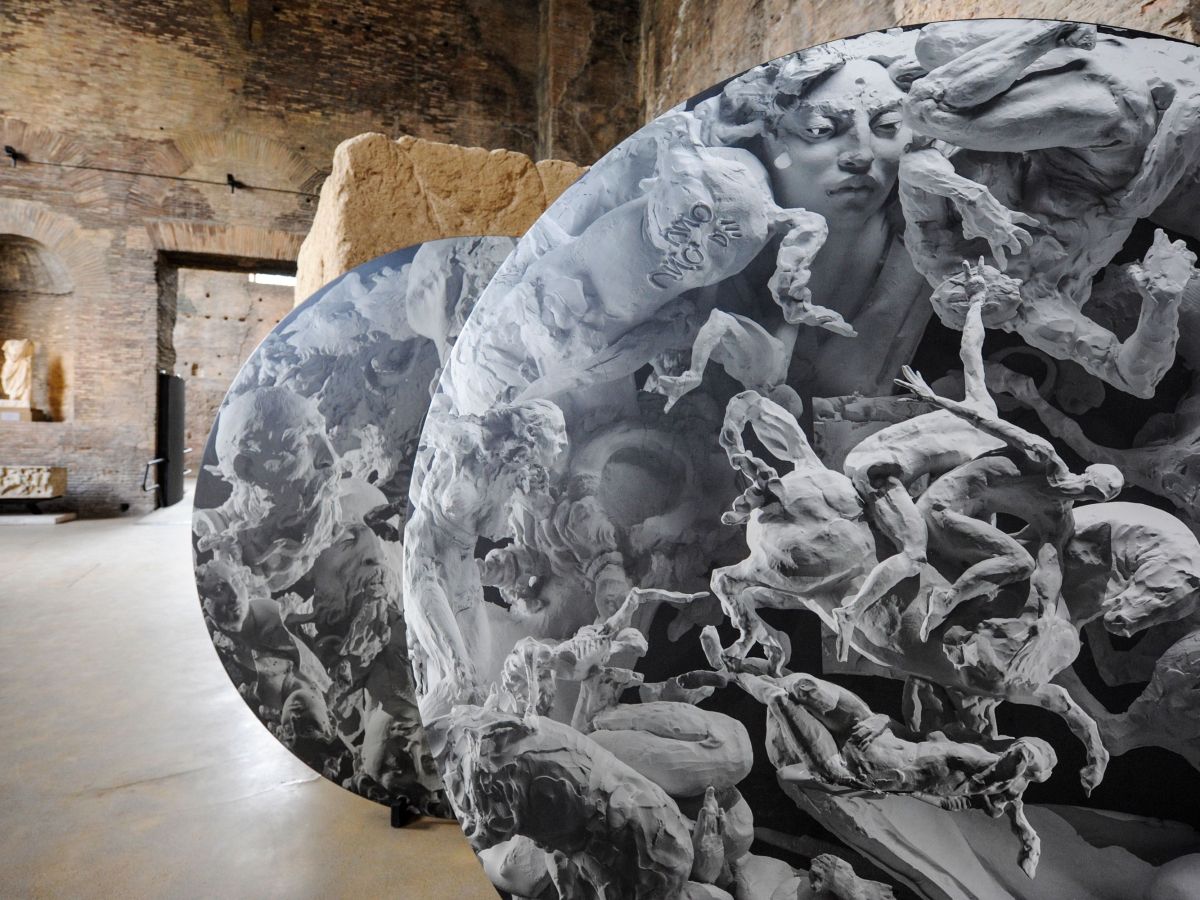
— How have you worked to find that balance between your own vision and Gaudí's universe?
— The challenge is to reinterpret Gaudí without betraying his legacy. His work has developed over more than a century, and that forces us to ask ourselves how to read it today, from a reality and references very different from those of his time. It is about understanding what he wanted to convey and finding a way to express those ideas to the sensibility of our time and with my own artistic language, without losing the spirit he wanted to give to the work.
It is not a simple challenge, because it involves addressing a religious discourse and finding a way to transmit the word of Jesus through art. Working on this project has led me to review my own religious convictions, reconcile with some and question others. This had already happened to me when I made the altarpiece for the Zacatecas Cathedral. I believe that art can also be a way of ordering thought and understanding oneself, and that has been one of the most valuable parts of this experience.
From the beginning, I was clear that it was not a commission to do whatever I wanted or an opportunity to consecrate myself as an artist. It was not a work destined for a museum or a gallery, but to join a project with a defined purpose and a legacy to respect. The personal voice, therefore, must be at the service of the meaning of the work and find its place within a collective vision.
"I am interested in anyone who stands in front of the facade being able to find something that moves them, even if they are unaware of Christian iconography or the characters represented"
— The Glory facade must represent the history of humanity, from Adam and Eve to the Last Judgment. How can such a complex story be represented through sculpture?
— The Sagrada Familia receives visitors from all over the world, with very different cultures and beliefs. I am interested in anyone who stands in front of the facade being able to find something that moves them, even if they are unaware of Christian iconography or the characters represented. For this reason, my approach has consisted of going beyond religious narration and exploring the symbols behind these stories, capable of addressing issues that transcend a specific religious tradition. The challenge is to find a way to express these stories that makes sense today and that allows connecting with people from very diverse backgrounds.
To do this, I have thought about universal values and experiences. Perhaps someone does not know the figure of the Virgin Mary or her meaning within the Christian tradition, but motherhood is a human experience that can be close to many people. I am interested in these types of symbols, which allow concentrating the story on recognizable elements from different cultures and beliefs. It is not about impoverishing the story, but about finding ways to tell it that can connect with a broad audience.
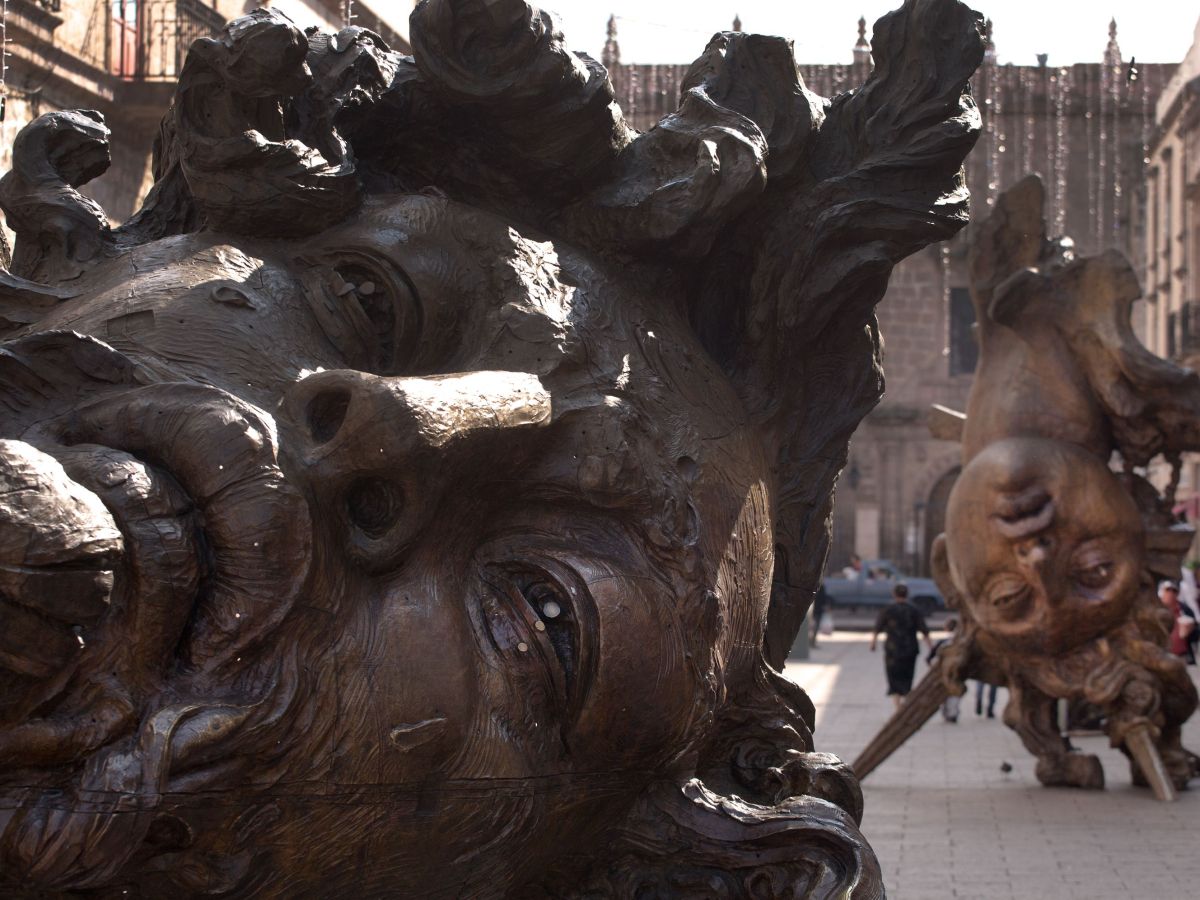
— You are the only Hispanic American artist of the three selected to present a proposal for the Glory facade. Do you think your origin and cultural background lead you to interpret Gaudí's legacy from a different perspective than Barceló and Iglesias?
— I find it significant that three artists with such different languages have been chosen and that a Hispanic American artist has also been included. Mexico shares certain cultural and religious ties with Spain, although it also has its own nuances. Having grown up in that context undoubtedly influences my way of approaching the work. I believe that this experience can provide a particular perspective on the relationship between art, religion and culture, and open new ways of interpreting Gaudí's legacy from another part of the world.
"The Sagrada Familia has transformed me, it has led me to rethink my own possibilities and has allowed me to work from a different perspective of the absolute freedom to which I am accustomed"
— After all the research work and immersion in Gaudí's artistic and theological universe, how do you live with the uncertainty of not knowing what the Constructing Board will finally decide?
— I am very happy with what has happened so far. The Sagrada Familia has transformed me, it has led me to rethink my own possibilities and has allowed me to work from a different perspective of the absolute freedom to which I am accustomed. From the beginning, I understood that a decision of this magnitude depends on many factors, not just my proposal. It makes no sense to try to tip the scales. If I get to participate in the project, so be it; and, if not, I will accept it too. I don't think not being chosen should become a frustration. Nor would I like to be in the place of those who must decide, because whatever the result, it will be under public scrutiny.
The important thing is that the process has already been valuable. Beyond the result, I hope that the decision contributes to completing the Sagrada Familia respecting Gaudí's spirit. It seems extraordinary to me that he dedicated his life to a work guided by such deep faith, and that he entrusted its continuity to future generations, knowing that he would probably not live to see it finished.
Add The New Barcelona Post as your preferred Google source for free
Stay informed with the latest news.