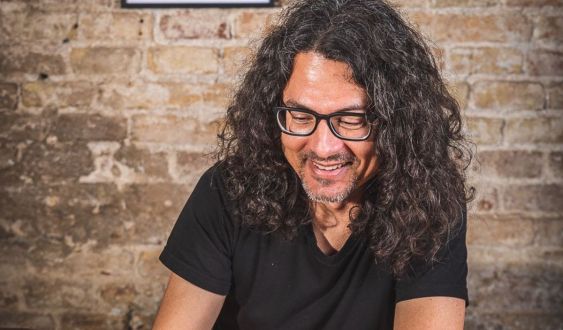
"Drawing saved my childhood, adolescence, and part of my youth." Jaime Martín leans on the bar, while, in the background, with acceptable quality for the regular who prefers not to listen to music rather than having to hear it badly, the notes of Motörhead's Overkill accompany the afternoon at the Bar. He orders a craft beer before continuing. "The act of drawing helped me relate to my environment, to socialize without having to get involved in a series of rituals that weren't for me."
Now, as an adult, the awarded and acclaimed cartoonist from L'Hospitalet de Llobregat continues to enjoy that distance from the world, that entering and exiting from the isolation of someone who spends nine hours a day in his studio, safe from the moral misery of a world "ruled by sons of bitches who impose their policies." At the same time, his comics serve him to express his point of view, his way of living and enduring reality.
At fourteen, his ambition was to become a painter. All technique and realism. "Back then I was already reading comics like Tótem, Creepy, or 1984," but his first transcendental encounter with comics was going to take place when he discovered Carlos Giménez. "When I read his comics, Om, Paracuellos and so many others, I realized that telling stories had a lot of potential and that the possibilities in this field were enormous."
The turning point came when the magazine El Víbora fell into his hands, and that cemented his categorical desire to become a comic author. "That magazine was from my generation, the reality it explained through its panels was what I was living on the street. Furthermore, its influence was more transcendental because it made me realize that, above the drawing, above the form, the story mattered, the substance. That gave a twist to everything I believed then."
Something of an older brother, something of a father, and a complete friend
When he was fifteen, Jaime Martínappeared in the newsroom of Rambla magazine, to speak with one of its founders, the influential cartoonist Josep Maria Beà. "I went with my mother, who wanted to accompany me to see who these comic book guys were. Think that, back then, wanting to dedicate yourself to this was something very Martian," the artist recalls, without suppressing an affectionate smile.The connection with Beà was immediate. "He was the first to believe in me, to see that I had potential. He started sending me homework and, of course, I put myself into it one hundred percent." The friendship between the two remains intact, so many years later. "For me, Josep Maria is like family. He has something of a father, something of an older brother, and something, a lot, everything, of a great friend." And he was not wrong, because a few years later, after his time in magazines like El Víbora or Humor a Tope, Jaime won the award for breakthrough author at the Barcelona Comic Fair in 1990, with the autobiographical Sangre de barrio.
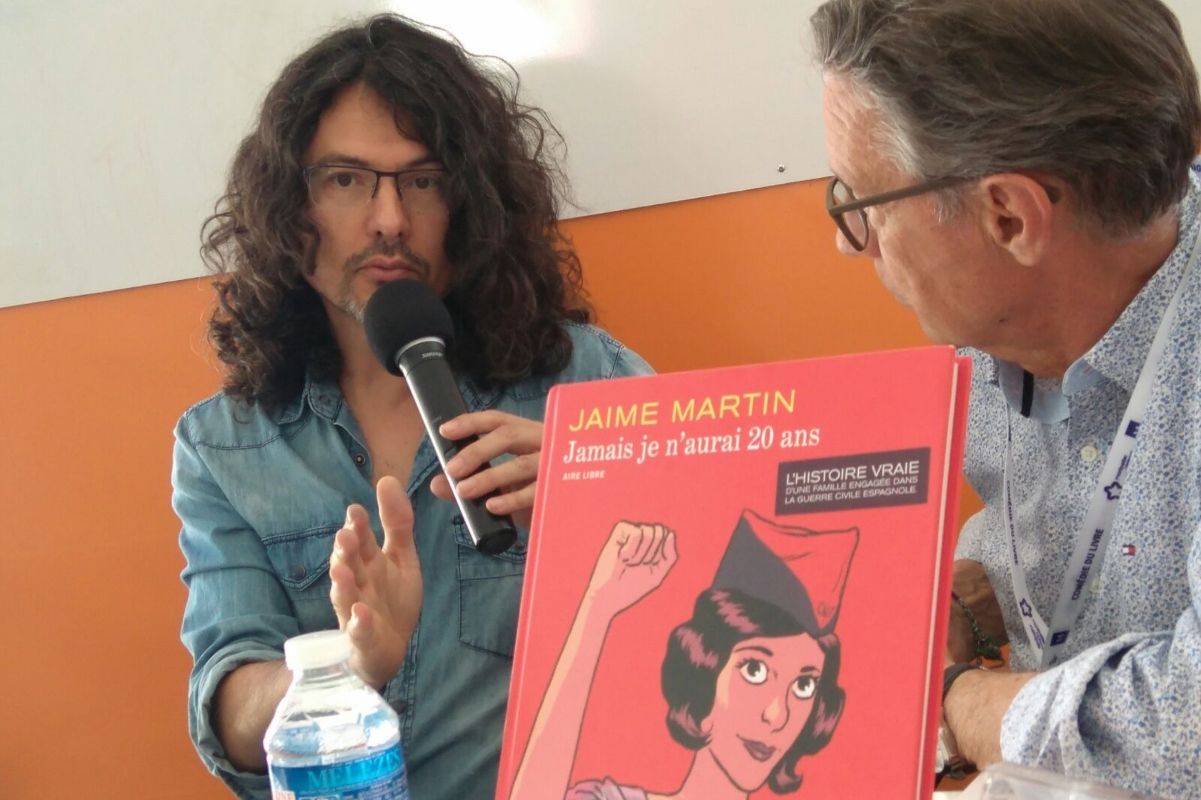
It was the start of a production that includes remembered titles such as Los primos del parque, Infierno or Invisible, and which took a further qualitative leap when, in 2007, he signed with the great Belgian publisher Dupuis. "Since then – he prides himself – I haven't done any work that I didn't want to do."
In any case, he takes it easy. Each work has a lot of effort behind it and, as for so many other things, for comics, haste was almost never a good companion. In these last eighteen years, the cartoonist has produced titles such as Todo el polvo del camino, his recent Un oscuro manto or the trilogy composed of Las guerras silenciosas, Jamás tendré 20 años and Siempre tendremos 20 años. A universe he will approach again with his next work, whose technical script he has just finished and which "will narrate the story of my parents, of their childhood and youth," he announces. Now it's a matter of giving time to time, spending hours in the studio, and keeping the world at a proper distance.
With one foot on each side of the border
The artist lives in Santa Eulàlia,the limit between Barcelona and L'Hospitalet."As a young man, yes, as a boy from L'Hospitalet, I experienced the big city as that great mysterious asphalt jungle that I went down to with friends, but now I live both cities as if they were one. I have the center of L'Hospitalet and that of Barcelona more or less equally far away and I go to both walking or by bike," he explains, hoping that the space dedicated to cars will continue to be reduced even further compared to what pedestrians and cyclists have.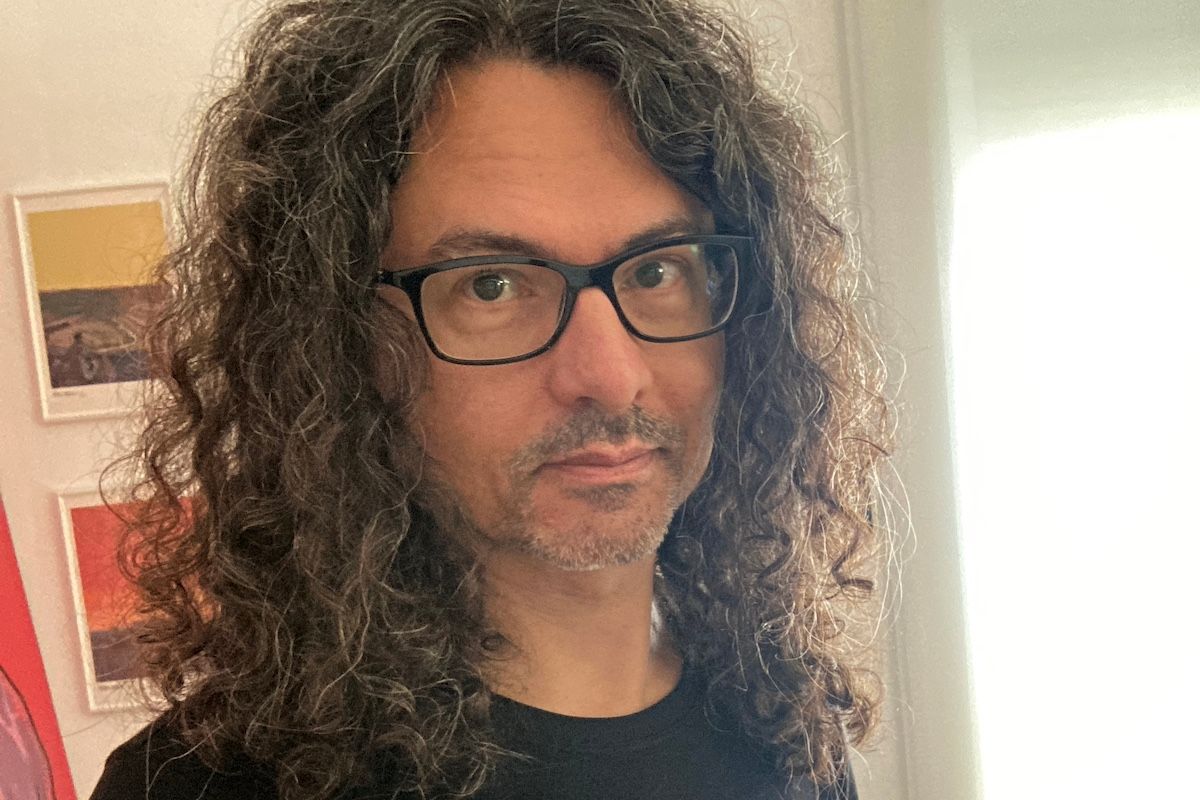
"Barcelona has the right size, it has everything, although it doesn't take more than three hours to cross it on foot." And he finishes his beer before adding, with a grimace of annoyance: "What I don't understand is what this trend responds to, which also affects so many cities, of giving in to the homogenization of franchises and businesses for tourists, when the nice thing about traveling to other places is discovering their peculiarities...".
--- Among the peculiarities here is our exquisite gastronomic offer, in case you want to have dinner. We have a menu, combined dishes, tapas, portions...
Jaime Martín sighs. "The truth is that I eat less and less ---he confesses---, so I'll opt for a portion or a sandwich." And he keeps a few seconds of silence, savoring Lemmy Kilmister's voice in Keep us on the road, before adding: "What I will ask you for is another beer." Craft, of course.
Add The New Barcelona Post as your preferred Google source for free
Stay informed with the latest news.
