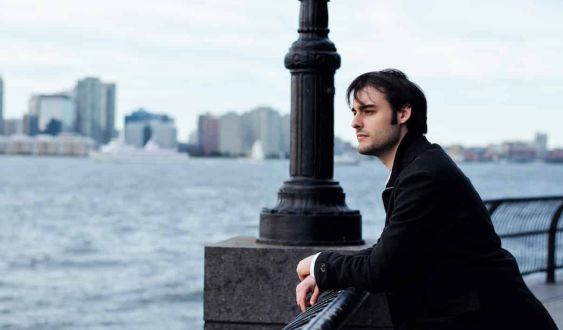
Between New York and Barcelona runs the life of Marc Migó, who acknowledges that he will spend a good part of the summer in Europe, as it is a time with more activity, generally, on this side of the Atlantic. However, shortly after the premiere of The Fox Sisters at the Liceu, the young composer travels to the Cabrillo Festival of Contemporary Music in Santa Cruz (California), where he is to perform another orchestral work for the first time. Commissions are coming in at a dizzying pace, and in the course of our conversation, some of his future and most notable collaborations emerge—though still condemned to be off the record.
What we can reveal, in any case, is the creation of a Catalan Requiem for choir and chamber orchestra, which will undoubtedly not leave listeners indifferent. A very specific musical genre and, nevertheless, of universal scope in its profound emotionality—that of the funeral mass—which, in fact, played a pivotal role in the biography of the Catalan composer.
--- For some, activity doesn't cease in summer, it seems...
--- Well, no, because after Barcelona and California I return to Paris, and then to Madrid, to rehearse with a violinist who will participate in the International Fritz Kreisler Competitionpresenting a sonata of mine. Also, I may travel to Germany this August to prepare a work forensemble baroque. I am more focused on Europe these days, but then in September I will return to New York, to continue my doctoral studies at Juilliard.--- How was your incorporation into the Juilliard School, one of the most prestigious music schools in the world?
--- The first few days I experienced an unforgettable feeling of terror and extreme excitement, at the same time. I was very impressed by the level. I saw the Juilliard orchestra ---made up of students--- play works by Sibelius, under the direction of Esa-Pekka Salonen, and at that moment it seemed to me that it sounded even better than the New York Phil.--- In your resume, in addition to the various awards, premieres and commissions you are taking on lately, winning the annual composition competition at Juilliard stands out.
--- Yes, in fact, I won it twice, already in my first year. And it was very good for me, it allowed me to settle in. In the first case, the work from 2017 ---a Nocturne for violin, strings, harp and piano---, has traveled a lot and received more awards. Precisely, it has been played twice in Barcelona, the last time with the Orquestra del Reial Cercle Artístic. But also in New York, Minnesota, Tbilisi, and it was going to be played in Ukraine…--- When your works are played there, at Juilliard, it's almost the best possible interpretation, due to the level of the musicians and especially their commitment to contemporary repertoire.
--- Exactly, the Juilliard musicians rehearse very well, from the first audition you can perceive that commitment. As for contemporary repertoire, in New York ---and the United States in general--- there is a greater openness, much more awareness of diversity and a desire to listen to and promote local creations, also as a trait of national pride. A patriotic feeling, around what they consider "our repertoire." There is even an orchestra created to perform the works they create and which are well received not only by specialized audiences.
"In the United States, in general, there is a greater openness, more awareness of diversity and a desire to promote local creations, as a trait of national pride"--- Here, on the other hand, the public most interested in this type of compositions ---which are considered complex or even "unintelligible" by the mass of listeners--- is linked to music from within. They are mostly students, who are aware of the social impact of newly created music.
--- Yes, I have perceived a significant contrast with respect to the United States, which leads to fleeing from beauty. A kind of complex that perhaps derives from Theodor W. Adorno's statement, who said that "after Auschwitz there can be no poetry," nor can anything beautiful be created. You don't know the damage that statement has done, many European composers maintain that mentality. They feel there are many things you can't do. You can't allow yourself beauty, it's not original, it sounds sentimental, cheesy... It seems like you have to do things that people don't understand.
--- The question of understanding music, what is understood or tolerated, is still fascinating...
--- It's just that sometimes you still encounter somewhat snobbish audiences who reject what they understand, they feel disappointed. I refer especially to critics and programmers. This derives in a way from the image of Wagner, of the composer as a misunderstood genius. It even happened to my mentor, John Corigliano, with whom I maintain a good friendship. The last time we saw each other, at his house, he told me something very interesting about his opera The Ghosts of Versailles, and the rejection of his works in France due to the ascendancy of Pierre Boulez. From the United States, they do look at everything that is happening here, but it is not reciprocal, it is often believed that everything there is superficial, that beauty is a form of escapism...
--- Well, it's just that "the contemporary" ---in this case, music--- is understood in a still profoundly romantic sense, as something groundbreaking and difficult to follow, that challenges you, questions you, or dares you.
--- In Germany, a programmer ---Corigliano told me--- said to him about one of his works that "the problem is that it's going to be too liked," in a pejorative sense, of course. It's moving, the situation, because in the United States he receives star treatment. Recently, when talking to another established composer about my Violin Sonata, he explained to me that twenty years ago a violinist who also wanted to play one of his works in the Fritz Kreisler Competition, had written him a letter finally rejecting it for being "too beautiful."
--- Well yes, it seems like a strong conditioning, at least in newly created works…
--- With this I don't mean that the music I compose is always beautiful, or seeks beauty for beauty's sake…
--- Perhaps the key, once again, lies in exploring an intermediate path, and not for comfort but precisely the opposite: to perpetuate the tension and interest of musical creation, open to diverse and even contrasting registers.
--- Of course, exactly, what is interesting, as a Ukrainian creator ---Valentin Silvéstrov--- says, the composer is like a painter, who instead of a palette has a case with the tools that each composer has perfected, and you can take the color of Beethoven, of Mozart… You must have all the tools at hand to make the music you want, in the freest way. Why impose conditions on yourself?
"I thought I was going to be a biologist. But when I was 15 or 16 my grandfather gave me a collection from Deutsche Grammophon"--- Well, and although necessarily conditioned by the format, we arrive at this interesting project from the Liceu --ÒH!PERA (Micro-operas of new creation)-- which has allowed the premiere of works by young composers in a single evening, a commission that you have undertaken with an opera inspired by the creators of the "spiritualist" movement.
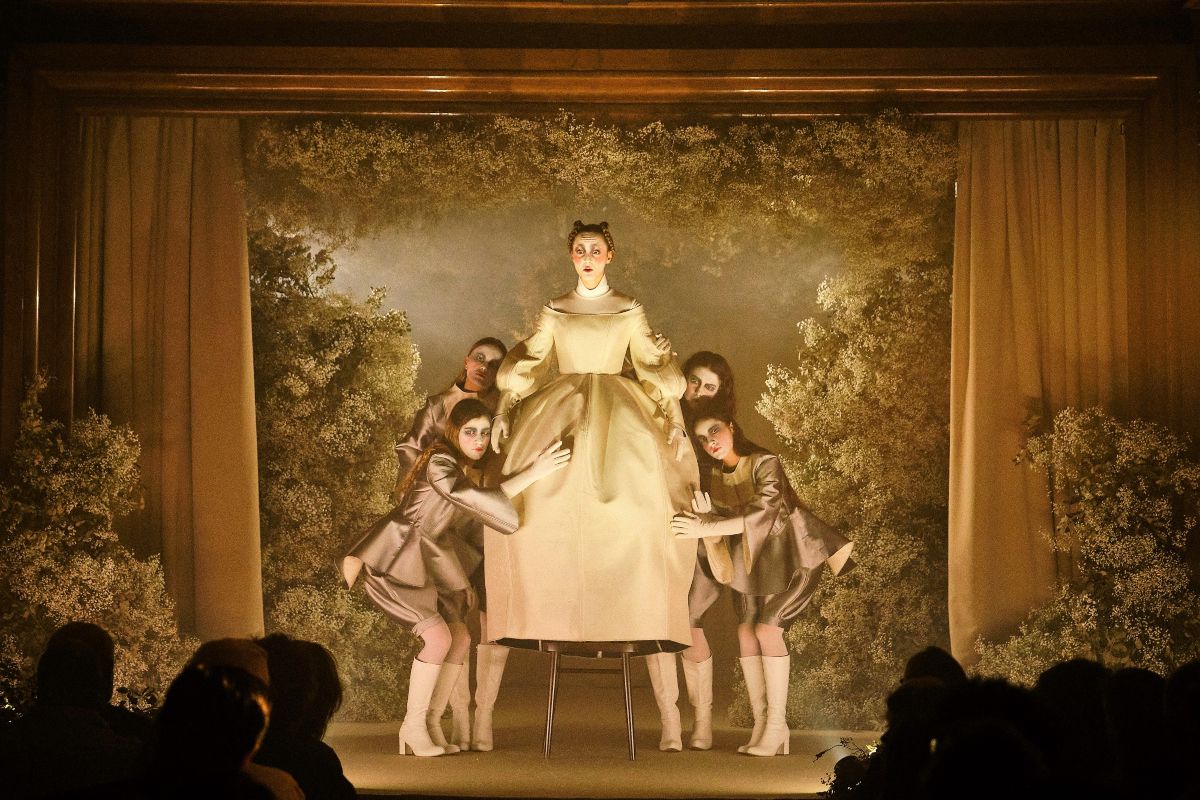
--- Well, yes, there have been two performances on two consecutive days ---July 9 and 10--- with four teams, including a stage director and composer in each case, and various design schools in Barcelona and entities linked to the City Council, to offer chamber operas ---in my case, as you know, The Fox Sisters--- about 30 minutes long in different settings of the Liceu: the foyer, the small theater, and the hall of mirrors.
--- A question, which seems obligatory, has to do with the theme: where does this interest in occultism, in the possibility of invoking spirits, come from?
--- Well, I've always been fascinated by the topic of conspiracies, but lately, seeing how widespread it is ---in the form of fake news, in the context of the post-truth era--- I became interested in the study of magical thinking. And the story of the Fox Sisters is paradigmatic, very representative of the moment we are in. I discovered it by reading a book with a provocative title ---Why Do We Believe in Bullshit?--- in which its author, Jaime Noguera, basically asks how we decide to believe what we believe. He analyzes a lot of cases, and one is that of the Fox Sisters. A very good story, which is also real, even if it doesn't seem so. I told it to John Corigliano and he was impressed. He gave me to understand that the topic deserved an in extenso treatment. But, just then, this commission from the Liceu came up, by chance, and we thought it could be a kind of calling card.
--- And, how do you narrate a plot like this in 30 minutes?
--- What I have done is not a complete biographical portrait, but the capture in medias res of a scene, specifically a medium session, corresponding to when they were young and starting out. The opera is written for soprano, mezzo, baritone, and a particularly dark string trio (violin, cello, and double bass), amplified and connected to a speaker system that surrounds the entire audience in order to create an immersive effect. The drama does not happen only on stage but throughout the space and inevitably reaches the spectator.
--- I wouldn't want to finish without returning to the beginnings ---in a way--- and asking you about your vocation, about how one comes to develop a career in musical creation. How did your passion arise?
--- The story of how I got into music is curious. I thought I was going to be a biologist. But when I was 15 or 16, my grandfather gave me a collection from Deutsche Grammophon, and although at first I didn't connect with all the composers, a work like Mozart's Requiem affected me like nothing has ever affected me in life. And almost every day on the bus, on the way from my house to school, I listened to it. At that moment I wasn't aware that I would end up making music. What I can say is that it's not true that you have to start as a child.
Add The New Barcelona Post as your preferred Google source for free
Stay informed with the latest news.
