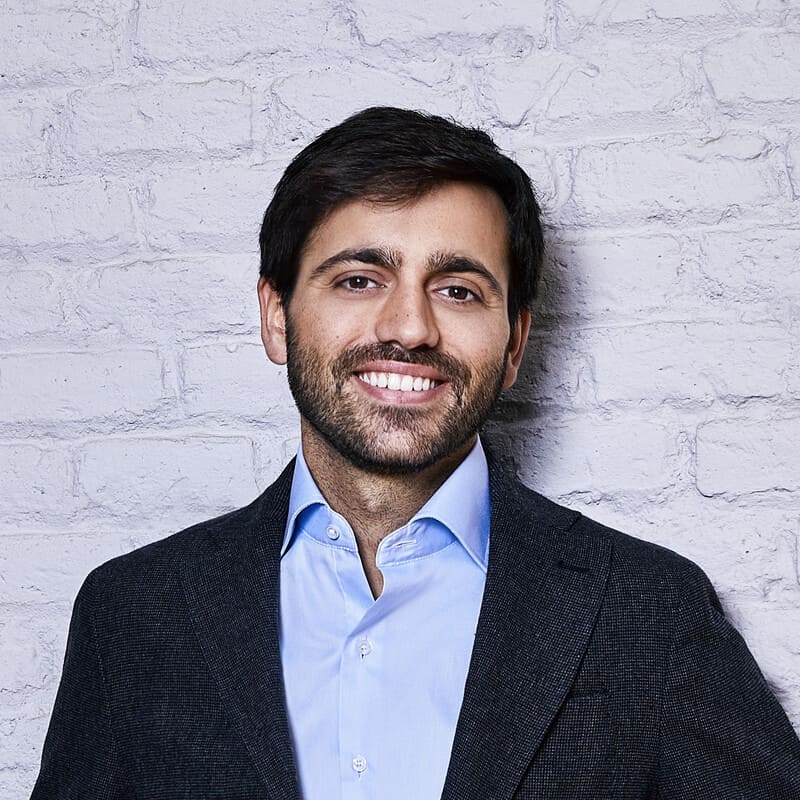
The New Barcelona Post converses this month with Carles Alsina, one of the young executives participating in Barcelona 2040, the leadership and city program taught by Barcelona Global. The objective of this series of interviews is for this new generation of leaders to share their vision for the Barcelona of the future they aspire to, as well as their impactful proposals for the improvement of the city.
--- What do you expect from Barcelona in 2040?
--- Having participated in Barcelona Global's leadership and city program, Barcelona 2040, allowed me to dedicate enough space to think precisely about this question. After several sessions of the program and inspired by John F. Kennedy with his famous phrase "ask not what your country can do for you, ask what you can do for your country," I believe I have understood that the key is to slightly rephrase the question: What does Barcelona expect from you by 2040?
This approach allows us to envision the future of the city from an active and committed perspective towards it. I would like to briefly highlight the four commitments that I consider essential for young people to undertake to build our Barcelona of the future:
-
To love the city: Although with Barcelona it seems an easy task, the best initiatives come from the intersection of reason and emotion. We must be able to transmit that feeling to generate great initiatives.
-
Adaptation and flexibility to change: In most cases, important changes entail a certain resistance. I see it as key to foster a culture of agile adaptation to these changes so that initiatives do not get stuck.
-
Social commitment: There are numerous city initiatives underway that have a very positive impact on our environment. Having our commitment to participate in them is a way to collaborate to build a better Barcelona.
-
Constructive thinking: I believe that criticism, if channeled correctly, conveyed constructively, and stripped of any ideological connotation, can be a powerful engine for change.
--- What city would you compare Barcelona to?
--- Without wanting to fall into clichés, I find it very difficult to compare Barcelona with other cities in the world due to its unique singularity. In fact, it is very complicated to answer this question without alluding to the climate, culture, quality of life, architecture, geographical location or many other parameters that make this city an incredible place. Another way to approach the question would be by comparing Barcelona with other cities based on somewhat more numerical parameters such as GDP per capita, tourism or investment, among others, but that would be reducing the city to a tremendously anodyne sphere.
Therefore, I believe that the best way to compare Barcelona with other cities would be from a very personal perspective of how it makes me feel. Without being able to give a logical explanation and despite its geographical distance, on a trip to Australia, the city where I felt at home was Sydney.
--- What city model do you think Barcelona should resemble?
--- Barcelona should be able to provide the necessary resources to each of the sectors present in the city, to be able to develop without hindrance. To do this, it is essential to take into account that Barcelona, as a cosmopolitan, dynamic and creative city, cannot be focused solely on its inhabitants, to whom it owes, naturally, a very important part, but also to all those who live the city (people who reside in its surroundings, people who temporarily visit the city for work, etc.).
Having said the above, and answering the question, if we want Barcelona to maintain its essence, we cannot rely on unique models. To do this, we must be able to take the best of some already proven models. In this sense, a phrase that I find very inspiring from Antoni Gaudí would be: "Originality consists in returning to the origin; thus, original is that which returns to the simplicity of the first solutions."
--- What is the main challenge that Barcelona must solve in the coming years?
--- Barcelona, like any large city, has important challenges to deal with. However, personally I would highlight what I consider to be one of the main challenges that most cities in the world have, which especially affects new generations and which greatly impacts the quality of life of its inhabitants: accessibility to housing.
Leaving aside circumstances that affect housing availability in Barcelona, such as the geographical limits within which it is located, I believe it is up to all of us to reflect on what we should ask public authorities to minimize a problem that affects us all.
Being aware that there is no magic formula to end housing access problems, from my humble point of view, I believe we should rethink some of the measures being carried out, as they seem to have a contrary effect and what they achieve is to reduce supply and consequently further strain the market.
--- What do you think should be the role of new generations and their involvement in the city's development?
--- I believe that the role of young people is fundamental for the development of the city in any area, but we cannot forget all those generations that represent the voice of experience. They must provide us with invaluable learning to establish the starting point and look to the future.
That said, it is essential to promote proposals to increase the knowledge and attachment of new generations to society as a whole, while integrating young people into the city's decisions. In this context, projects like those developed by Barcelona Global, including specific programs for young people like Barcelona 2040, are, in my opinion, moving in the right direction.
--- Which business sectors do you think Barcelona should bet on?
--- Undoubtedly, the reality of our times is moving towards specialization and the transformation of large cities into business knowledge hubs (e.g., IT, AI, sports, etc.). However, transferring this reality to the city of Barcelona, I wouldn't know how to define its mainstay. Precisely, the value and attractiveness of Barcelona lie in its ability to embrace different business sectors.
I admit that I find it hard to choose between the different dishes on a menu, which is why I love the plan of going for tapas with friends and being able to try a wide variety of extraordinary proposals. However, what makes a good tapas restaurant exceptional is not only the uniqueness of each dish but the balance of the whole. So, could we make Barcelona the best "tapa city"?
Add The New Barcelona Post as your preferred Google source for free
Stay informed with the latest news.