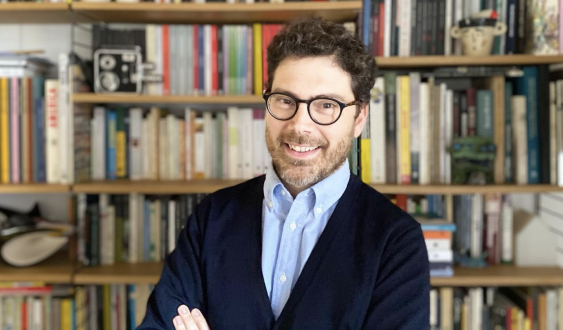
We speak with its artistic coordinator, Jordi Gastó, about the highlights of the program, the role of social media in the dissemination of classical music, and the social work of an orchestra that has made young talent and proximity one of its hallmarks.
— Jordi, you are starting the 15th season at the Palau de la Música Catalana with the motto "Music transforms us." How would you summarize the spirit of this new stage?
— Music transforms us all: both those who sit in the stalls to listen to it and those who go on stage to perform it. It is a universal language that requires no prior knowledge; it is pure feeling and the only thing you have to do is let yourself be carried away.
Music transforms us all: both those who sit in the stalls to listen to it and those who go on stage to perform it.
Many people tell me "I don't understand classical music," but it's a statement I've never quite understood: just as you don't need to be an art historian to be moved by a painting or a literature graduate to enjoy a good book, classical music doesn't have to be "understood" intellectually, it has to be felt.
— This year's program features top-level names and titles. What would you say are the highlights of the season in terms of repertoire, soloists, and guest conductors?
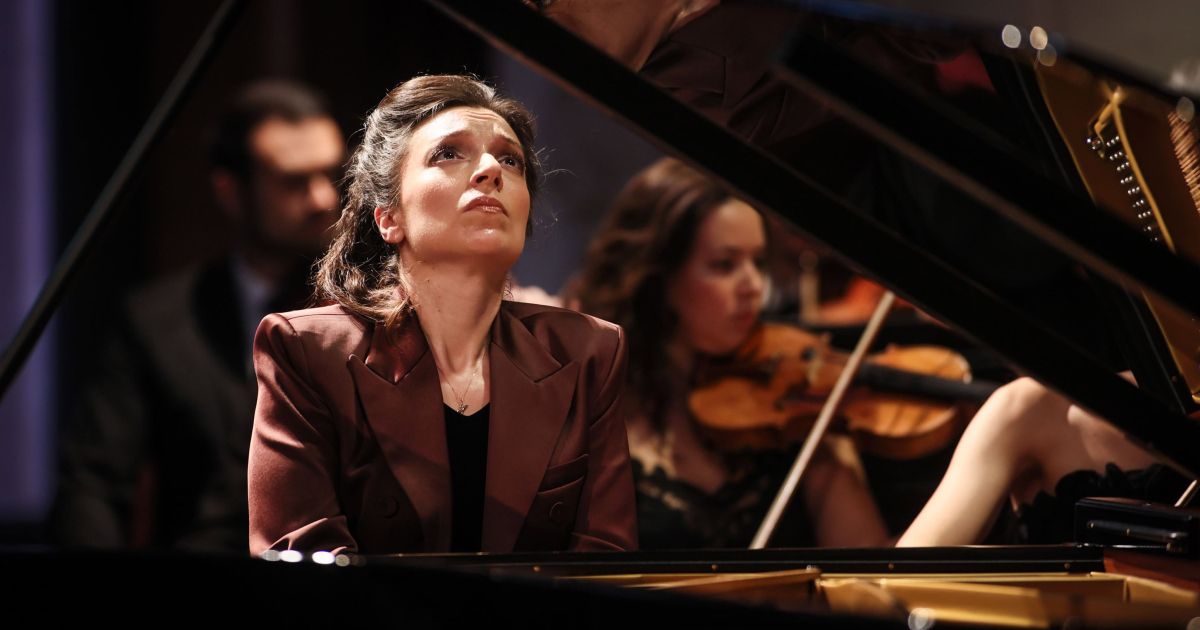
— We have a high-flying season. This very October 2026, we have the return of Yulianna Avdeeva, who triumphed last season, to perform Tchaikovsky's monumental Piano Concerto No. 1. In November, one of our key works: Mozart's Requiem under the direction of Guillermo García Calvo, accompanied by Dvořák's Serenade for Strings, the Cor Madrigal, and an exceptional vocal quartet.

In January 2027, we will have the baton of French conductor Chloé Van Soeterstède and the return of cellist Nadège Rochat with Elgar's Cello Concerto, followed by Dvořák's Symphony No. 9 'From the New World'. In April, our concertmaster, Maria Florea, will take on the violin and direction in a lively reading of Vivaldi's The Four Seasons, along with concertos for two violins and violin and oboe by Bach performed by house soloists such as Miguel Ángel Castillo and Pau Roca.
And in June, another important moment: Stefan Dohr, principal horn of the Berlin Philharmonic, will premiere Benet Casablancas's Horn Concerto No. 2 in Catalonia and will join the debut of young pianist Maxim Lando —awarded at the Cleveland International Piano Competition— with Brahms's Piano Concerto No. 2.
— Besides the great symphonic repertoire, you always have space for different proposals and for new audiences, such as the Star Wars 50th Anniversary concert in May 2027. How do you approach these special productions?
— It is an essential way to reach a wider, younger, and family audience. Works like Vivaldi's The Four Seasons or John Williams's music are the ideal gateway to discover how a symphony orchestra works, which ultimately acts as a single great instrument. In the case of the Star Wars concert, conducted by Lina González-Granados, we will be absolutely faithful to the original John Williams Signature scores. We want to offer an immersive and rhythm-filled experience. It is about bringing great symphonic music closer through icons that are already part of our popular culture.
— You are one of the symphony orchestras with the largest presence of young audiences in Europe. What do you think this phenomenon is due to?
— People who see our stalls for the first time are fascinated. It is due to a combination of factors. First, a varied and accessible program. Second, the fact that our formation is very young: the average age of the orchestra is 35 years old. This allows the young audience to identify with the musicians on stage, seeing that classical music is not a sector restricted to another generation and breaking entry barriers.
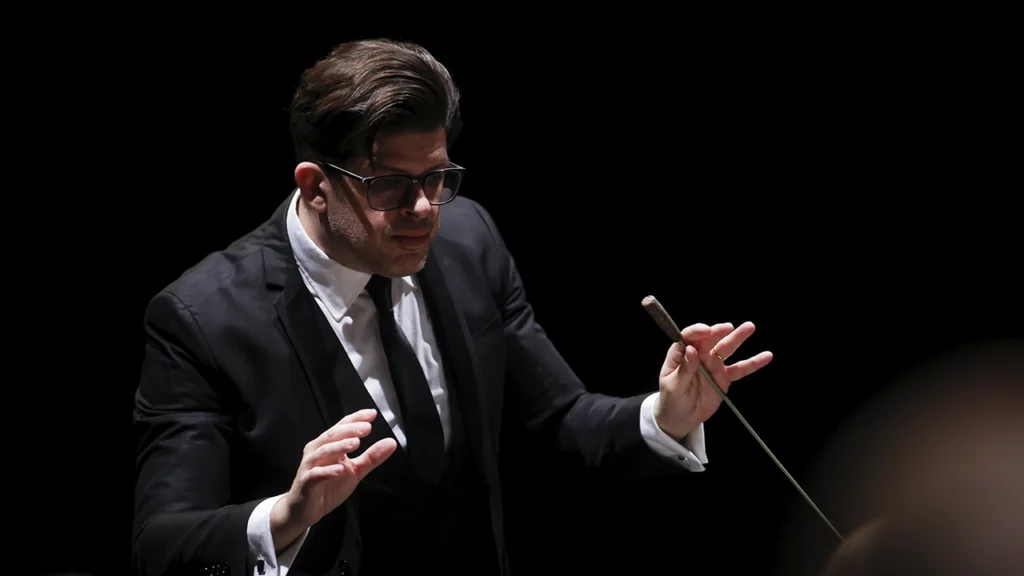
And thirdly, a real economic commitment. None of this would be possible without affordable prices. Through initiatives like Escena 25 or Apropa Cultura, we offer subsidized tickets for those under 25 and vulnerable groups, as well as season tickets with a 50% discount for those under 35. Young people must have the opportunity to come.
Young people must have the opportunity to come.
— We often forget that a symphonic concert is both a visual and auditory experience. How do you ensure that the spectator experiences the concert with all their senses?
— Our orchestra is movement, it is energy and it is passion. Many spectators tell us that the Franz Schubert Filharmonia is hypnotic, that seeing the glances between the performers and the complicity of the music stand is a whole universe. They often tell us that "our orchestra, when it plays, dances", and it is totally true: the musicians let themselves be carried away by the music and emotion. An artistic, human and visually fascinating experience takes place.
They often tell us that "our orchestra, when it plays, dances"
— This season you coexist with large symphonic productions and small-format recitals. What is the challenge when designing such opposing experiences?
— We don't experience it as a challenge, but as a conscious will. We want to offer the power, vibration and nuances of the large symphonic format, but also the intimacy of small formats, where you can almost see the artist's breathing and create a familiar and close connection. Both spheres enrich each other and the public appreciates being able to move through both.
— One of the fundamental pillars of the house is the Academy. How does it work and what does it offer to young musicians?
— We firmly believe in local talent. The Academy was created to provide opportunities for musicians from our country, allowing them to train and play alongside orchestra professionals without having to necessarily go to Europe to professionalize. In addition to orchestral practice, we offer them informative capsules and support in the sector. I like to say, somewhat jokingly, that we would be like Barça's La Masia, but in chamber and symphonic music.
We would be like Barça's La Masia, but in chamber and symphonic music.
— Do social networks help or devalue the classical music sector?
— They undoubtedly help. They are an extraordinary window to show great musical moments in short videos. Maybe someone scrolls without looking, but another person's curiosity is piqued and they end up listening to the entire work. And classical music requires, precisely, having curiosity to cross the threshold.
Furthermore, social networks show young boys and girls enjoying these concerts, which helps to dismantle prejudices and stigmas. In this sense, Rosalía helped classical music a lot with her latest album, as she has done a lot to bring these sonorities, arrangements, and sensibilities to new generations. Social networks contribute to making all of this visible and open windows for everyone to access.
Rosalía helped classical music a lot with her latest album.
— The orchestra itself was born from a youth initiative. Is seeing today's students sharing a stand with professionals closing the circle?
— Absolutely. The Franz Schubert Filharmonia was born years ago from the passion of a group of young people. Today, under the direction of Tomàs Grau, we are a leading symphony orchestra that has performed at Carnegie Hall in New York and the Dubai Opera and has collaborated with figures such as Anne-Sophie Mutter, Maria João Pires, and Joshua Bell. Maintaining regular seasons in Barcelona, Tarragona, and Lleida and seeing how today's young people join this top-level project is the natural continuity of our purpose.
— In your manifesto, you state that music is a tool for social transformation. What specific actions do you undertake from the Foundation?
— We work to open doors to everyone. Through our Foundation, we promote programs such as Un Matí d'Orquestra (An Orchestra Morning), aimed at people with intellectual disabilities, Alzheimer's, or mental health disorders, which includes meetings with musicians, attendance at a private rehearsal, and a music therapy workshop. And on the other hand, we have the Llotja Social (Social Box), where we exclusively reserve a box at the Palau de la Música Catalana throughout the season for vulnerable groups, parity entities, and equal opportunities. Everyone has the right to be moved by music.
— For someone who is reading us and wants to approach the Franz Schubert Filharmonia for the first time, which concert would you recommend as an entry point?
— Without a doubt, the January 2027 concert with Dvořák's New World Symphony and Elgar's Cello Concerto. It is a program of spectacular intensity and symphonic scope.
Classical music is for anyone who is curious and willing to let themselves be carried away by emotion.
And I would like to emphasize a final message: to come to classical music, you don't need to know absolutely anything about it. We like to humanize the sector. The great composers were flesh and blood people who laughed, cried, yawned, and fell in love before writing these works. You can be enthusiastic about football or any other discipline and, at the same time, be moved in the stalls of an auditorium. Classical music is for anyone who is curious and willing to let themselves be carried away by emotion.
Add The New Barcelona Post as your preferred Google source for free
Stay informed with the latest news.