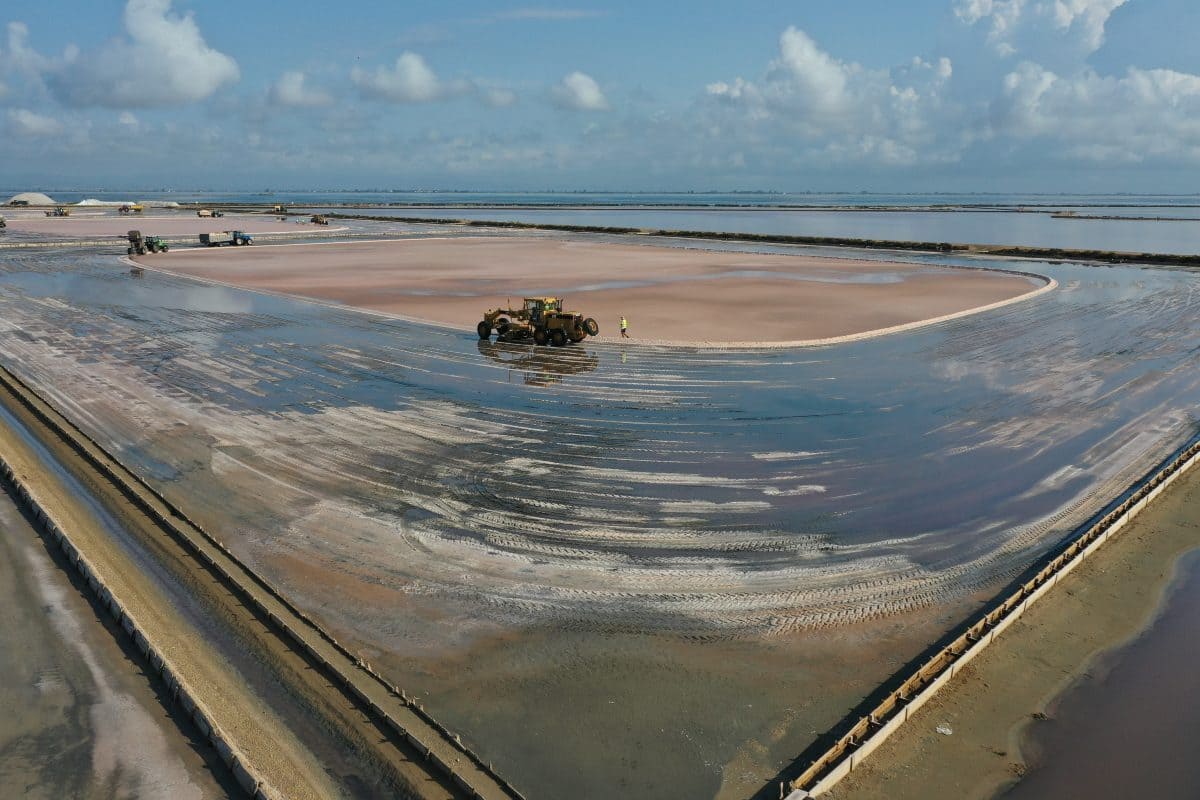
In Catalonia, there is only one company producing sea salt. This is Infosa, a family company that has owned, since 1946, the facilities and the exploitation concession of Les Salines de la Trinitat, located in the Delta del Ebro Natural Park, in La Ràpita (Tarragona). Given this exclusive market position, it would be logical to think that the company has a local focus. However, in Infosa's case, this is not so.
Infosa's geographical location has a direct impact on its productivity, since, due to the way sea salt is produced ---wind and solar radiation play a very important role--- the conditions in the south of the peninsula, where larger companies operate, are more favorable. Faced with this reality, the Delta company set its sights on foreign markets where it could sell its product at a higher price. To carry out this task, in recent years Infosa has had the support of ACCIÓ.
Its first export experience was in France, more than two decades ago. A few years later, the company made a key decision in its internationalization: to enter the US market. Currently, Infosa maintains commercial agreements with distribution giants in that country and produces sea salt for up to thirteen US brands.
This export strategy has yielded good results for the company, to the point that the US market and France represent 52% of its total turnover, which in 2022 was 15 million euros. "We look for countries where there isn't much competition and the market is still to be created; it's the way to avoid entering a price war," says Manel Salvadó, the company's manager. "In the medium term ---Salvadó continues---, we are also considering opening production centers abroad to be closer to our buyers."
Push for internationalization
Infosa began its internationalization process on its own in the late 90s. In recent years, it has also relied on ACCIÓ, the agency for business competitiveness of the Generalitat de Catalunya, as a key partner to expand beyond our borders. One of the services Infosa has relied on is Meet The Buyer, a free program that offers Catalan companies the opportunity to discover business opportunities by connecting them with importers and distributors worldwide. ACCIÓ detects these opportunities through its network of Foreign Trade and Investment Offices and transfers them to Catalan companies. In Infosa's case, these services have been especially useful for connecting with potential clients and penetrating the Israeli market with the help of ACCIÓ.
Similarly, another channel through which ACCIÓ connects Catalan industrial companies with multinationals looking for suppliers is the directory Catalonia Industry Suppliers. Through this platform, international companies have access to information on the activity, products, and services of Catalan industrial and technological companies. Likewise, multinational companies can also count on personalized support from ACCIÓ to identify specific suppliers that meet their concrete needs, through the service Catalonia Suppliers.
Go beyond food
The salt harvest projected for 2023 is around 115,000 tons, very close to the 120,000 tons achieved in 2019, one of the best years in terms of production for Infosa. Of this total amount, 70% is destined either for the food industry or is retailed on supermarket shelves. But where does the remaining 30% go?
"Traditionally, chlorine for swimming pools was produced from chemical products. Now, however, salt is being used more because it is cheaper and its handling and transport are simpler," says Salvadó. For Infosa, this is the third most relevant business line (17% of total sales), behind the food industry (47%) and retail sales (22%), and has led to a seasonal peak in demand for salt during the hottest months of the year.
The salt ecosystem
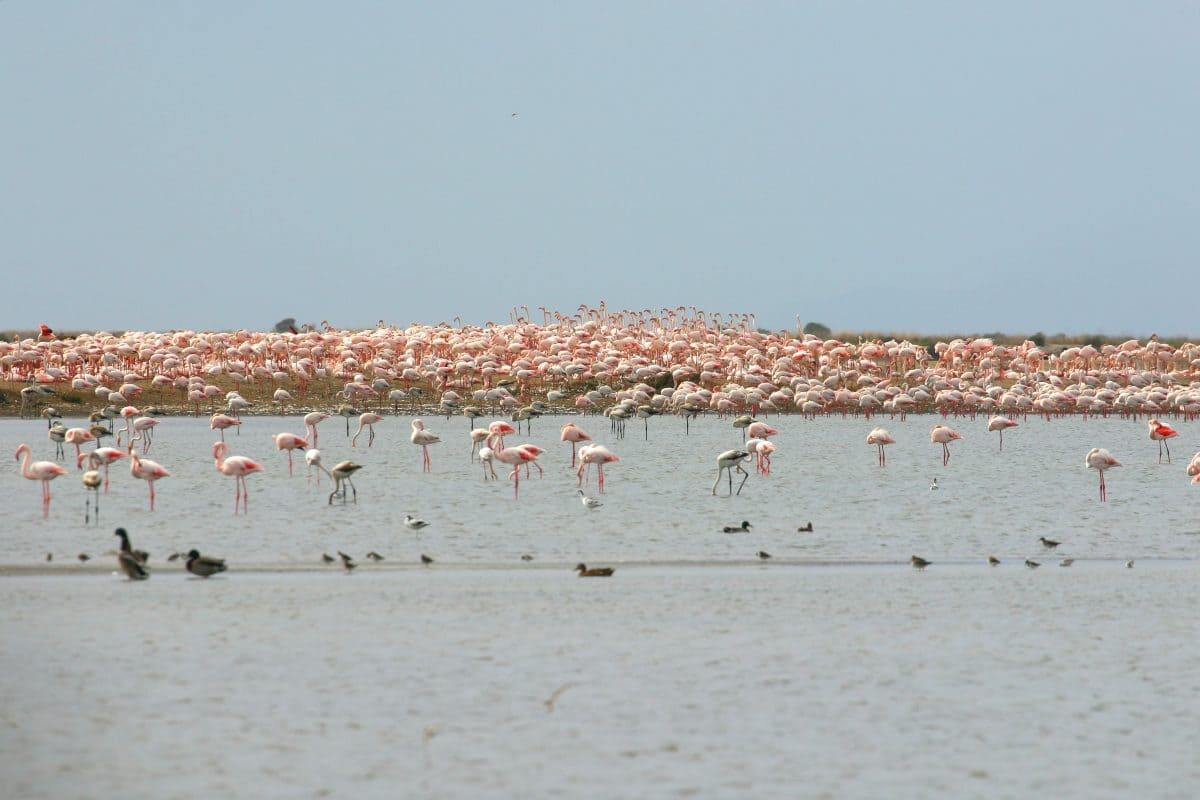
The Infosa salt flats are located in Punta de la Banya, on the Els Alfacs peninsula, in the southwestern tip of the Ebro Delta. The fact that it is a salt-producing area, composed of lagoons and wetlands with different degrees of salinization and microhabitats very rich in nutrients, has a transformative effect on the natural space and creates its own ecosystems. This allows, for example, 85% of the Audouin's gull population --- an endangered species --- to nest in this environment, or for the only colony of flamingos that breed in Catalonia to also inhabit this space.
"Those of us who are in charge of managing this place have a responsibility for the ecosystem. Above salt production are the values and caring for the territory," says Manel Salvadó. In this sense, Infosa, together with other salt producers in the state, promote the Salimar Association to promote sustainability in these areas and maintain the economic viability of the exploitation of these spaces.
Add The New Barcelona Post as your preferred Google source for free
Stay informed with the latest news.