
The sky has darkened and there is a certain air of calm in the Bar, sustained by the notes of Porcupine Tree's Arriving somewhere but not here. "Above all, I am a storyteller. I have been telling them for twenty years: I write them, I narrate them aloud and for a time I even danced them, because we had a dance group with which we tried to create danced stories," says writer and oral storyteller Inés Macpherson, an evening beer in hand.
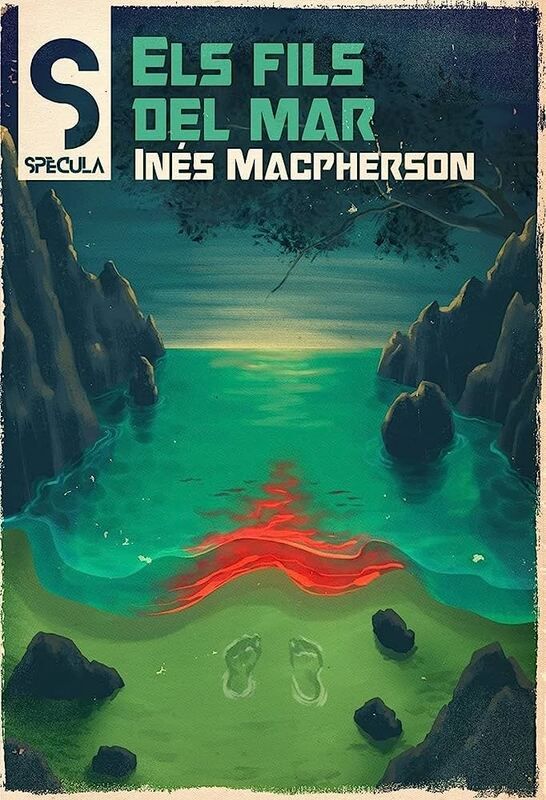
"One of the things I would highlight about my career is the decision to be able to do something to celebrate the type of authors who fascinate me and the literary genre that moves me." Thus, Inés has worked in depth, from many different angles, on the fantasy and science fiction genres, her latest feat being the novel Els fils del mar (Spècula).
"In it I have united some of my passions: the sea, monsters and a reflection on how we construct stories, both fictional and real," explains this passionate and profound connoisseur of the figure of Ray Bradbury, regarding a book that speaks of fears, superstitions, courage and the acceptance of one's own being, questioning the established canon.
Falling in love with storytelling
A Philosophy graduate from the UB, during her first year of university, the storyteller, along with a couple of classmates, came across a brochure announcing oral storytelling courses. "We had no idea what it could be, but we decided to go to the initial talk at La Casa de los Cuentos, run by the magnificent Numancia Rojas." It was love at first sight. "I fell in love with the art of storytelling."
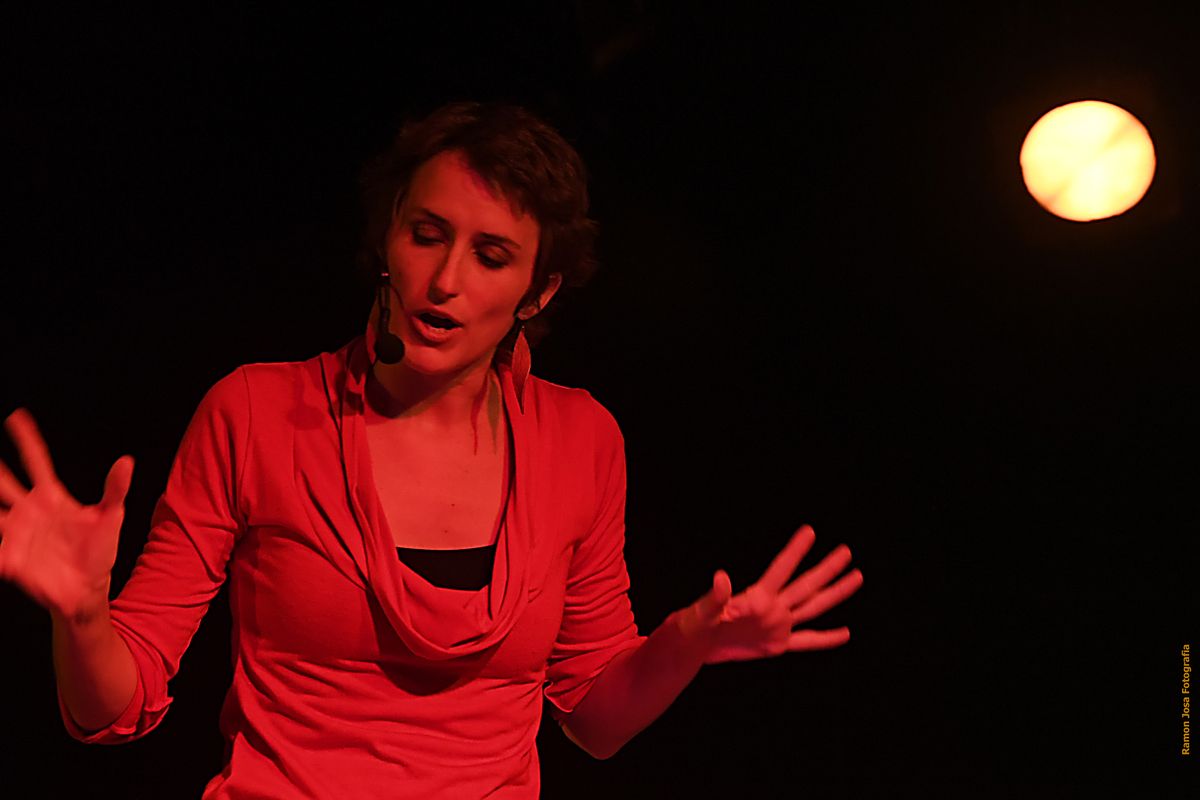
Rojas was the one who took Inés and her friends to L'Astrolabi, a bar on Martínez de la Rosa street in Gracia, now closed, which "was the first place where I could tell stories for adults." And it is that, although the custom is to identify oral narration with children's audiences, the regular defends that "the act of bringing a story to life with the voice, with the hands, with the silences, and sharing it with an adult audience, is a gift."
In parallel, she has worked in literary agencies, has been a copywriter, writes about books in the culture section of La Vanguardia, runs reading clubs, and works as a professor at the Ateneo Barcelonés Writing School. "Everything that allows me to talk about and share my passion for reading and writing moves me, and I try to ensure my work is always related to that."
And it is intense work, as she now announces that she is finishing a new book of short stories and putting together "a course on body stories in fantastic literature and another on mythology and how its stories and characters can help us build stories." Likewise, she does not hide her "eagerness for the 42nd Festival of Fantastic Genres in Barcelona to arrive, because being able to participate in that celebration of non-mimetic literature is always a pleasure."
The city that continues to beat beneath oblivion
The narrator, a Barcelona native born in '82, is fascinated by that part of the city that lives in memory, walled up or underground. Disused urban fragments that once vibrated with life. Places like the Avenida de la Luz. "The hidden, walled-up, or concealed Barcelona. It seems like a very interesting space to me, especially creatively. What we don't see, what has been forgotten by many, can be a great start for a story."
There are also places that emotional memory keeps intact. Disappeared corners of a city that continuously changes. "Every time I pass by Martínez de la Rosa street, for example, I can relive the concerts at L'Astrolabi, the conversations at the corner of Córcega street, and I know that, even if the shops, bars, or neighbors change, it continues to beat within the walls of the buildings."
What hurts her is "seeing how so many people are being expelled from neighborhoods because it is increasingly difficult to live in them due to rental prices. A city needs to be lived in, not just observed, and sometimes Barcelona seems more like a postcard, a set, than a real city. It's not just happening here, it happens in many capitals, but it hurts more when it happens to a place you know well and love," she laments.
---What is not a set is our gastronomic offer. In case you want to stay for dinner, we have everything: tapas, menu, sandwiches, combined dishes… And all delicious!
Inés Macpherson smiles broadly as she considers the offer:
"Whenever I think about having to answer these kinds of questions, when you go out with friends and the dilemma arises about going for tapas, going for a set menu, or even a sandwich, I think of Quim Monzó's story, Amb el cor a la mà", she reflects.
---Aha… So? Do you feel like eating something?
---The truth is it depends on the day and the situation, but I'm usually more of a set menu person!
---Well, say no more!
Add The New Barcelona Post as your preferred Google source for free
Stay informed with the latest news.
