
A specialist in fetal and perinatal medicine, diagnosis, therapy and fetal surgery, for ten years he has directed BCNatal, the internationally renowned clinical and research center in fetal and neonatal medicine affiliated with Hospital Clínic Barcelona and Hospital Sant Joan de Déu. BCNatal integrates the maternal-fetal medicine and obstetrics, gynecology and neonatology departments of these two top-level university hospitals. Eduard Gratacós is also a professor at the University of Barcelona, has supervised more than 40 doctoral theses and has trained more than 400 doctors of different nationalities.
He leads the research groups of Fetal Medicine FRCB-IDIBAPS and CIBERER and has published more than 600 articles in scientific journals with more than 31,500 citations. He has been the principal investigator of more than sixty national and international projects, with funding of 30 million euros in fifteen years. Currently, he leads the Interdisciplinary Program for the Development of an Experimental Prototype of Artificial Placenta and its Clinical Application Evaluation. Dr. Gratacós is the author of 9 meses desde dentro (Columna), a journey to the zero kilometer of our life, through the development of the fetus, week by week.
---In June 1999, at Hospital Vall d'Hebrón, Eduard Gratacós performed the first fetal surgery in Spain. He entered a uterus to correct an anomaly in blood flow (feto-fetal transfusion) between the fetuses of two twin girls who shared a placenta. Saving a life before birth. Where did you learn to do it?
---Strictly speaking, I started in Barcelona, because here we had an animal model. But I quickly had the opportunity to go work in Belgium on a very large European fetal surgery project, at the University of Leuven, which had just been funded by the European Community. I was lucky enough to be selected as coordinator of that project, and from Belgium we developed many of the surgeries that are done today.
---In fact, you came from Leuven to perform that first intrauterine intervention in Spain.
---It was a pioneering stage, in which three or four hospitals in Europe were the only ones doing this, and we were all united in a common project. When I returned to Barcelona, those continued to be pioneering years. Around 2005, that learning began to progressively expand, and today all major hospitals in any country have fetal surgery techniques. I performed the first one in Spain at Hospital Vall d'Hebron, where I worked my first five years when I returned to Spain ---from 2001 to 2005 I was the head of the Fetal Medicine Unit. Afterwards, I moved to Hospital Clínic, where we transferred the fetal surgery program that is still today the largest surgery program in Spain, even though there are other hospitals where it is performed, in Madrid, in Vall d'Hebron, and in other hospitals in Barcelona. Perhaps there are five or six in total, not many, but during the first years, in Vall d'Hebron, besides doing the first one, we were the only ones doing it.
---Since then, what have you learned about pregnancy?
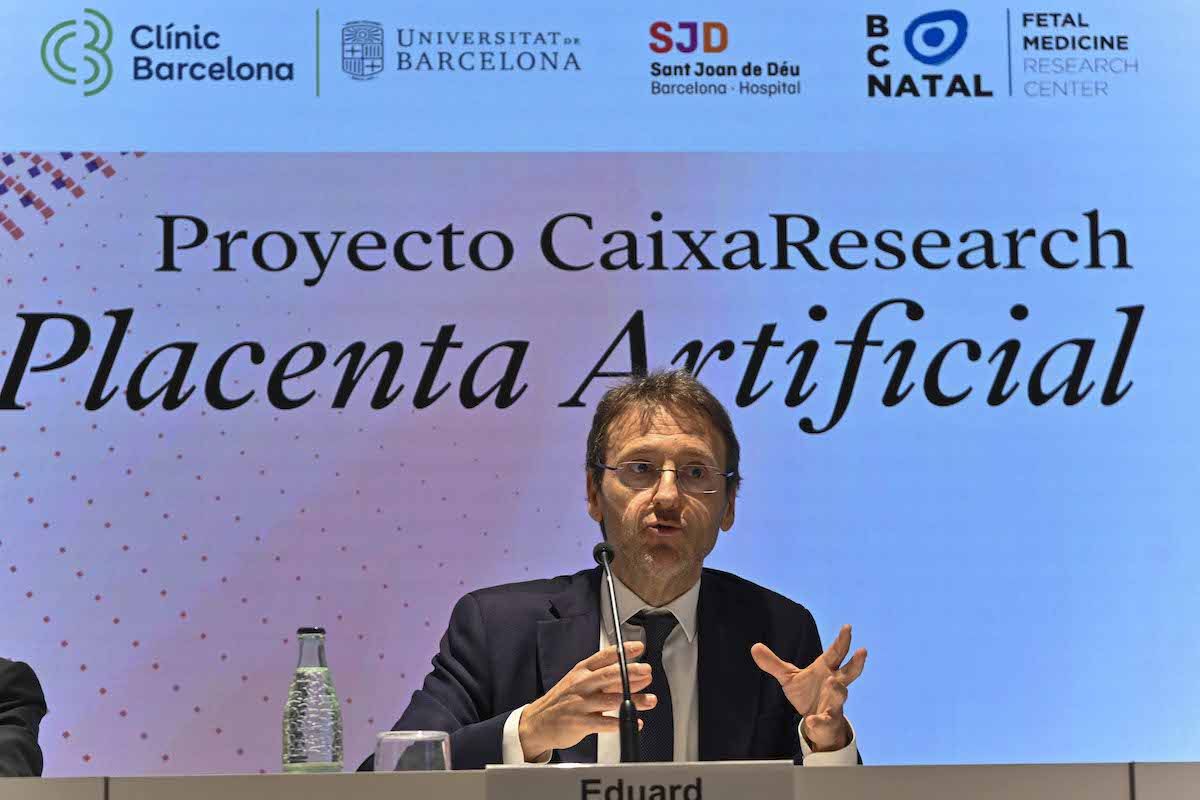
---Research has advanced a lot and a new discipline known as fetal medicine has been created, which has allowed us to diagnose many of the problems that fetuses can present, and to understand how they affect health throughout life. Also in recent years we have made great advances in the treatment of serious diseases affecting women. We have greatly reduced preeclampsia, which is a very important hypertensive disease, but there are still very relevant challenges, such as prematurity and the treatment of some fetal and maternal anomalies. We need to finish developing new tools that allow us to treat the most extreme prematurity, which we still haven't solved. That is why the artificial placenta project we are developing in Barcelona is very important, a system designed to reproduce and prolong the physiological conditions of the maternal uterus to allow the correct growth of the organs of neonates of six months or less. We want to increase the chances of survival ---so far twelve days with good fetal status have been achieved with an animal model--- and minimize the sequelae suffered by many very premature babies.
The artificial placenta will mean a paradigm shift in the treatment of very extreme premature babies---It is the project CaixaResearch Artificial Placenta, unique in Europe. In the United States, Canada, Japan, and Australia, there are four other teams developing experimental placenta models. But in Europe, Barcelona is being a pioneer.
---At this moment, we are one of the few centers in the world that has an artificial placenta project to change the most extreme prematurity with the results we currently have. It is still an experimental project, financed by the "La Caixa" Foundation with many millions of euros ---3.35 million in the first phase and 4.3 million more for a second phase of experimental validation that will allow a final clinical approach---. In this case, we are truly pioneers, because there are only four others in the entire world. And it is one of the most revolutionary and unique research projects that can be carried out today in fetal medicine. Just having an experimental platform like the one we are building will allow parallel investigations of great importance to understand normal and abnormal fetal development. This will expand the capacity to attract investment for R+D+I in Barcelona, in Catalonia and in Spain, and will also bring us a new generation of techniques and procedures that will revolutionize current fetal and neonatal medicine. It will mean a paradigm shift in the treatment of very extreme premature babies.
---At what point is this placenta prototype?
---We are now working on the second phase, which will last until 2026. We hope this 2024 to extend the survival time from the current twelve days to more than three weeks. To achieve this, we will focus our efforts on technological improvement, in collaboration with industry, optimizing the medical devices used, such as cannulas or membranes for oxygenation. In addition, we have to design and describe the necessary protocols for the transition to neonatal life, that is, the birth of the fetus from the artificial placenta to extrauterine life, so that it begins to use its lungs like any newborn. So far we have done it with an ovine animal model, but we will test it with the porcine model, to be able to demonstrate the ability to transfer the system to other species. And once we evaluate the long-term effects on brain, cardiac, pulmonary and metabolic development, we will be able to make all the preparations (ethical and legal) so that a first clinical study can be approved.
---In addition to the artificial placenta, in the field of fetal medicine, what else does Barcelona excel in?
---The research done in Barcelona is cutting-edge compared to what is done in the world, and we work on practically all the issues of concern. Several fetal surgery techniques have been performed for the first time in Barcelona, and what we are very pioneering in is the research into fetal growth restriction, into fetal programming. We have been very pioneering in describing how circumstances in fetal life can produce brain and cardiovascular changes that can last a lifetime, and the opportunities to foresee them. We have also been very pioneering in demonstrating how maternal lifestyle has a very great impact on fetal development and health.
---A clinical trial by your BCNatal team recently showed that the Mediterranean diet and stress reduction during pregnancy improve the neurodevelopment of children in the first two years of life.
---With the research we have done in Barcelona, we have shown that lifestyle interventions have beneficial effects. We have investigated this especially for low birth weight and preeclampsia. We have not investigated it as much for prematurity, although we believe that there is probably a clear effect on it as well, but we have not evaluated it in our study. It will surely benefit equally, because the Mediterranean diet has an anti-inflammatory effect throughout the body, and stress reduction also has a relationship with inflammation. All this is good for health in general, and pregnancy is no exception, because in pregnancy it happens as in the rest of life: the better the lifestyle, the risk of complications plummets.
"Pregnancy sometimes tells us how to avoid diseases for the rest of life, both in the baby and in the mother"---We tend to think that during pregnancy the mother's lifestyle is exemplarily healthy, but there are still pregnant smokers, and not only of tobacco. Even during gestation, cannabis consumption is trivialized.
---It is difficult to know for sure the prevalence of tobacco use in pregnant women, but we believe it would be between 15 and 20%. Neither tobacco nor marijuana smoking is detected, because it is not looked for, but it surely occurs. Tobacco affects a lot because it interferes with fetal growth, with neurological development, this has been demonstrated even with very small amounts of consumption and with passive smokers. Therefore, smoking is very harmful and you should not smoke even a puff, nor be near where people smoke. Regarding marijuana use, I would be concerned because it is a psychotropic, it acts on the brain, and I would be very concerned that the derivatives would pass to the fetus, because they would affect the development of its brain and, therefore, it should be totally prohibited. The mother should be aware that what she takes, the fetus is taking the same amount, with the difference that the fetus's brain is developing. Therefore, very small doses could have very negative effects.
---Tobacco consumption is one of the causes associated with low birth weight in neonates. Is it also associated with prematurity, which is such a concern? Has this increased in recent years?
---It has not increased, but it does not decrease. We are at a prevalence of between 8 and 10% of births, depending on the population and areas of the world, but it is one of the big problems we have today. And as for what the causes are or to what it is attributed, we know that, despite having corrected many of the deficit problems in our societies, we now have the problems of modern society, such as overnutrition, sedentary lifestyle, an unhealthy lifestyle, and stress. All of this clearly contributes to a worsening of the major pathologies of pregnancy. And, therefore, one of the great challenges is how to act on lifestyle, which is one of the most difficult things. In the case of prematurity, we also know that the increase in the age at which women have children, and in Spain and Catalonia it is terrible, at ages that are not ideal, can also be related. Although the most important thing is lifestyle, age can also explain it, because there is more need for help for conception. Not because infertility increases, but because children are had at more advanced ages, and then there is a greater need for help and multiple pregnancies can occur. All of this adds up and means that prematurity rates have not been decreasing for years, and this means more complications and more healthcare spending and one of the great challenges we have.
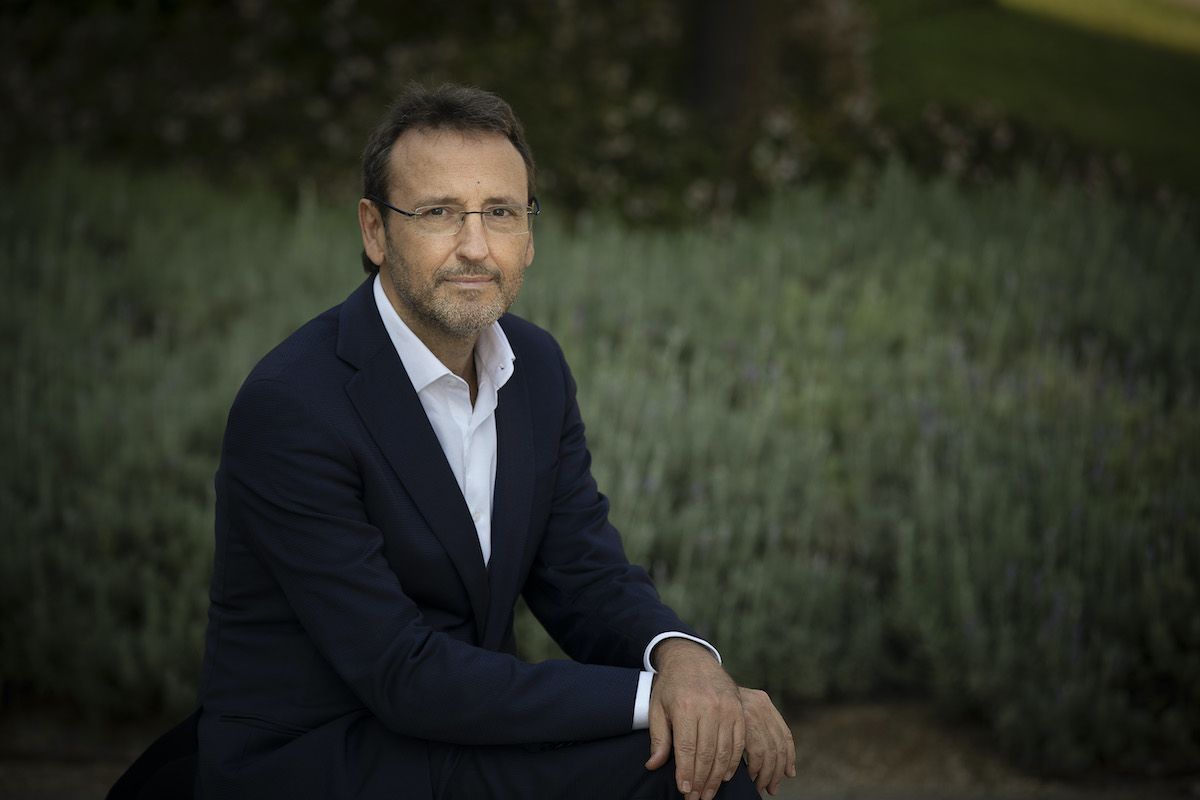
---In the book 9 meses desde dentro (Paidós), the importance of lifestyle during gestation is emphasized.
---Yes, this book explains fetal development, but it also strongly emphasizes the importance of empowering the mother, not to avoid everything, but to greatly reduce the risk of problems, with good information and a good lifestyle. It is a book that not only offers interesting information, but is also very useful. Mothers in general know less about fetal development, but there is also a lot of misinformation about gestation in general. That is why it is so important to invest in informative brochures. Perhaps we should insist especially on those people who have already had a risk, previously, or have it due to age, or due to some other factor that identifies more risk in them. Empowerment is extremely important because we know that, with a strictly well-managed lifestyle, problems can be reduced by half.
---Is there still no alternative test to amniocentesis?
-No. DNA analysis in maternal blood is a screening test that tells us, very reliably, whether the risk of an anomaly is high or low; this has improved a lot. But we don't really have as much information as amniocentesis in maternal blood yet; perhaps in the coming years it will advance, but today it is still not the case, and in some cases it is necessary to perform an amniocentesis or a chorionic villus biopsy, which are the two tests we perform. In any case, the risks of amniocentesis have been greatly reduced and at this moment, in expert hands, the risk of this test is considered to be one in 1,000. When it has to be done, it is really a very safe test.
"The empowerment of the mother does not avoid everything, but it does greatly reduce the risk of problems, with good information and a good lifestyle"---Now many more things must be detected before birth.
---We have managed to detect many malformations that are very serious, even lethal, that give a very poor quality of life to the child, and these anomalies or diseases can be detected prenatally and the couple has the option of interrupting the gestation.
---What are the most common pregnancy pathologies today?
---1 or 2% of pregnancies have some fetal anomaly and the most common have always been cardiac and then, less frequently, but also quite a lot, neurological, and then all the rest. If we talk about pregnancy pathologies, the most prevalent are the major obstetric syndromes, such as prematurity, which we cannot get to decrease in any way, growth restriction and hypertensive disorders, such as preeclampsia. This is a disease that some women can have ---between 2 and 8% of pregnancies--- during the second half of gestation. Women who have it present elevated blood pressure, high amounts of protein in the urine, and swelling that does not go away. And it can also occur in the postpartum period.
---How does preeclampsia develop?
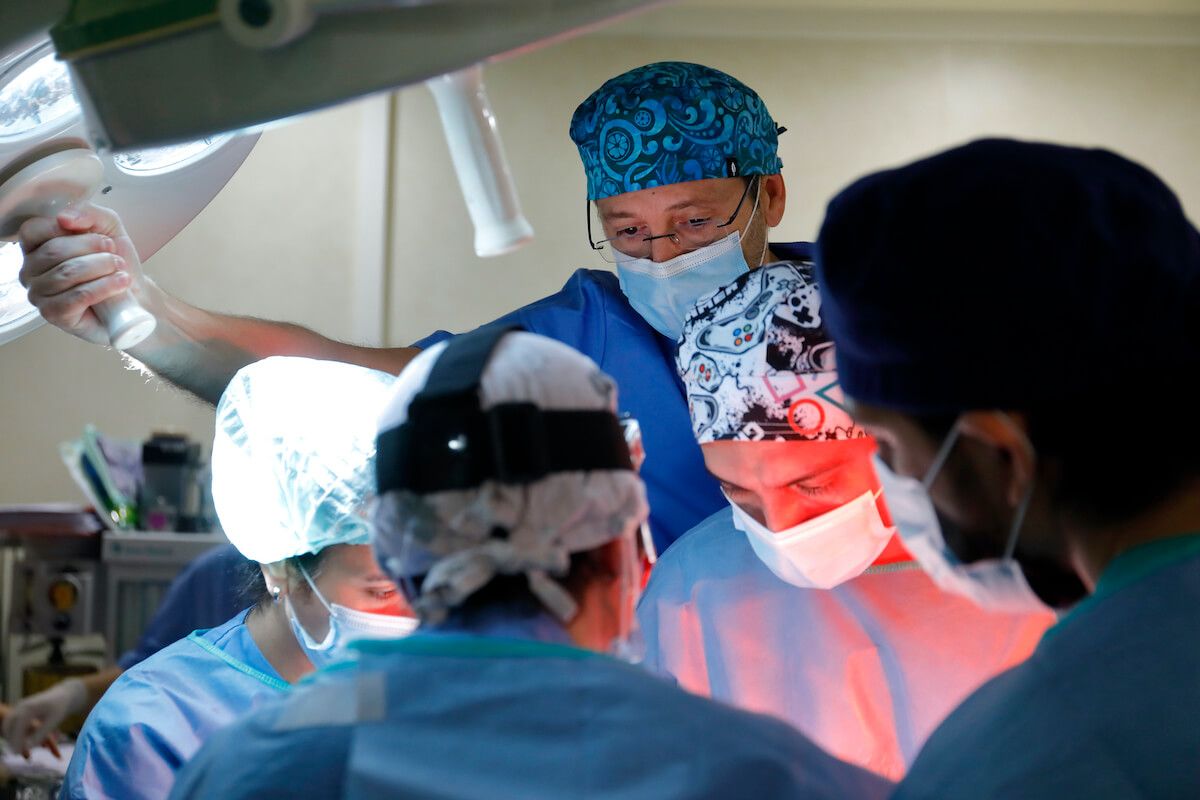
---Preeclampsia can cause the placenta, which provides oxygen and food to the baby, not to get enough blood. If the placenta does not receive enough blood, the baby receives fewer nutrients and may be a low birth weight baby. In addition, there may be a need to give birth immediately and premature babies are at greater risk of serious complications, some of which last a lifetime and require continuous medical care. In severe forms of the disease, there may be liver, kidney, neurological involvement, coagulation disorders and even the appearance of seizures (in these cases it is called eclampsia). In fact, preeclampsia is one of the leading causes of death among women and babies worldwide.
---Do many pregnant women from outside Catalonia come to Barcelona for treatment?
---We receive patients from all over Spain and from other countries. Perhaps from abroad it is less and less common, because there are more and more countries where fetal surgery is performed, but we still attend to many.
"We have managed to detect during pregnancy many malformations that are very serious, even lethal, that give a very poor quality of life to the child"---Do you also travel to operate in other countries?
---I have done it on some occasions, but it is not really an option that we promote; rather, we try to have professionals come to Barcelona for training and then we support them when they return to their country. I believe that what needs to be done is to develop capabilities within the center itself.
---What is expected to have been resolved in the coming years?
---I believe that one of the radical changes we will have will be, first, a certain improvement with personalization; we will be able to detect risk and prevent more and more, and we are already doing this with preeclampsia. Prematurity is the great challenge, and one of the big changes for this that will be very revolutionary will be the artificial placenta, although it might take 5 or 10 years, or perhaps 15, but it will allow us to radically reduce the problem of the most extreme prematurity.
---Are these the main challenges globally in research linked to fetal medicine?
---In research in Barcelona and worldwide, the main objectives are very focused on the prevention of major pregnancy problems, especially preeclampsia and fetal growth problems, and understanding how these problems end up affecting both the baby's life and the mother's. We know that when preeclampsia occurs, there is a higher cardiovascular risk for the rest of life, and now we are trying to understand and stratify this risk. Pregnancy sometimes indicates how to avoid diseases for the rest of life. Both in the baby and in the mother.
Add The New Barcelona Post as your preferred Google source for free
Stay informed with the latest news.
