
--- The last time I came was to see Travy, a bittersweet play based on the Pla-Solina family. When you present shows like that, so "from outside," what is La Perla 29's role?
--- From the beginning, La Perla 29, we didn't want it to be a theater, but rather a creation center. For performing arts. Sometimes to make these "signings" we follow our own criteria, but very often the relationship with the creators makes us change or incorporate new criteria. For example, sometimes we do things with them on stage, we see that it looks good, and that's when you look for a justification. We don't want to be a classical programming theater, but a center. Besides, we can't do everything either. We can't fill the entire calendar ourselves. And, as for Travy, it's the kind of play we would have liked to have made.
--- Oh, really? But you're not from the Pla-Solina family.
--- I know, I know. I'm precisely saying that we don't know how to do this, and therefore, we would have liked to have done it ourselves. It's rhetorical. The audience accustomed to coming comes to discover, and we offer them elements so they can compare and several worlds to open up. Besides, since we don't want to get bored of ourselves either, this way we refresh ourselves. And they make us change things, they modify our points of view!
--- Does this happen often?
--- I remember the exchange of ideas that occurred during the press conference, we had a long conversation about the tradition of street clowns in Catalonia in the 70s, the past with Comediants, Claret… These exchanges are deeply interesting.
--- Now you've done it with the Ludwig Band.
--- Artemi, el cambrer abstemi, yes. It's exploring the theatrical arm of Ludwig Band, it's a musical. Here it's no longer "La Perla 29 presents," which are cases where I can direct or not direct, but rather "La Perla 29 invites," and we rest more. Or the intermediate formula: we make them an economic offer, they look for funding from other sources and then they have the space for three weeks and a month to rehearse. We can intervene with our workshops, or with our staff. It's like a semi-commission, in order to promote a work and make it possible, and then let it go wherever it wants.
--- So, you know how to delegate.
--- I want to delegate, share, collaborate, without losing the DNA of La Perla 29. Or by transmitting it.
--- Interesting. What is that DNA?
--- Uf. Let's see how I tell you. Look, let me tell you one thing: this year we presented Tots Ocells, which addresses the conflict between Israel and Palestine, where the author has a young boy be a student of DNA. One of those scientists who explore the human genome, etcetera. He is interested in knowing what traits of an ethnicity are natural and which are cultural, what part of their social, political, human, legal organization is part of their DNA and which come only from custom. Chromosomes or Universe. How to know?
--- Oriol. The DNA of LaPerla29.
--- Agreed. Let's see. First, the space: the location, the people, the audience. Second, the discourse: the choice of message, of aesthetics, of words, the tone, the way we say it. Third, the selection of works, related to the previous ones. And also the production group: we are a company and a factory. We are simultaneously musicians and a record label, to understand each other. And a label is a brand, a certificate of authenticity, a patina that is noticeable. The team is a structure that is maintained: the design, the space, the actors (who change although some are already family).
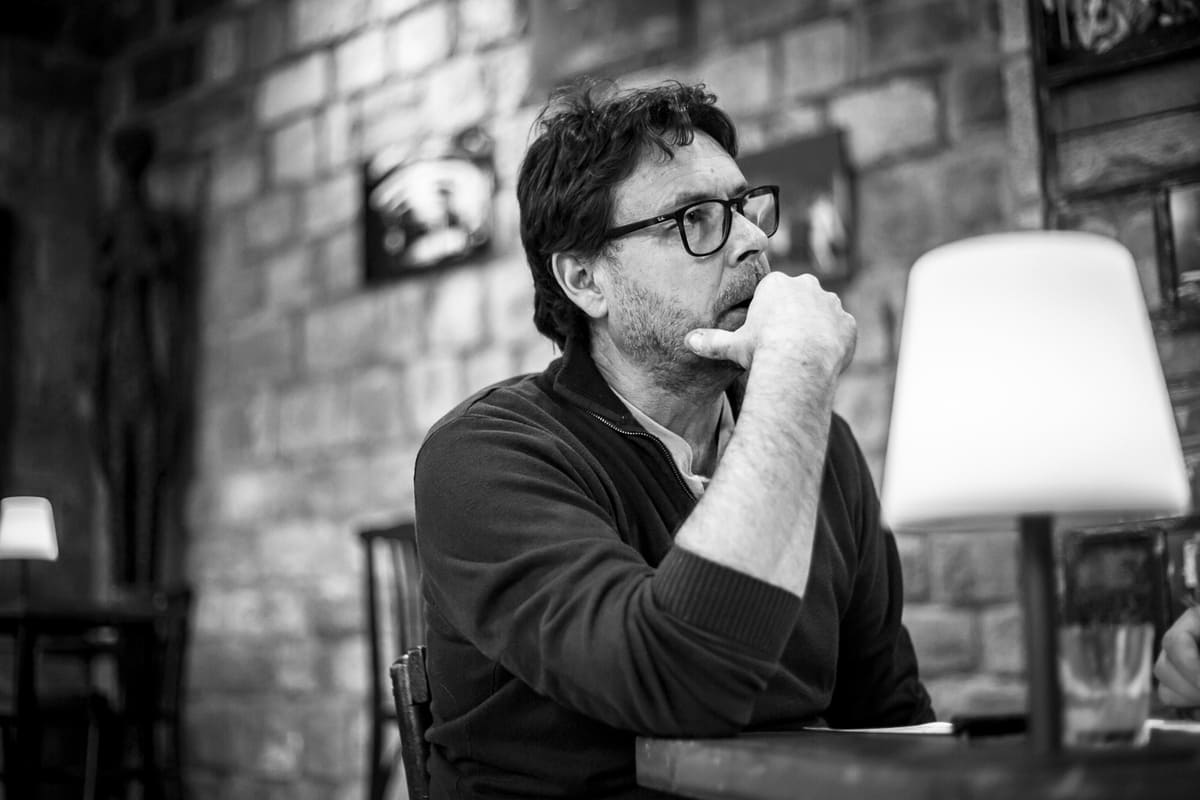
--- And Oriol's DNA, is it there?
--- There are more people who know the theater of the Complicité company than its director. We are a mix of space, team, and myself: an aesthetic, a discourse. For example, I admit that beauty moves me. But what is beauty?
--- Everyone knows what it is, but no one can define it.
--- Exactly. It is a beauty in form but also in substance. A story that is true. If you don't know there is truth, it loses a lot of beauty.
--- Gaudí already said that a way to know the truth is to look for it in beauty.
--- And vice versa, I suppose. Theater is also a mirror of reality, a tool for social cohesion, and beauty gives it meaning. Beauty unites form and substance, and this is my obsession. All the time.
--- The "how".
--- The "how" can also take center stage in the creative process. Like in sexual relationships, right? In sex, the "how" is basic. And it's not planned, generally. Well, in theater it's the same, you can't shy away from the "how". Look at one thing: when we try to capture a faithful image of a play, video usually doesn't work. Photos do, good photos. Snapshots, moments. A video can be approximate, or serve for archival purposes, but what comes closest to a play is a good photo. The photo transmits the emotion of the moment, it shows you the "how", and then you understand the "what".
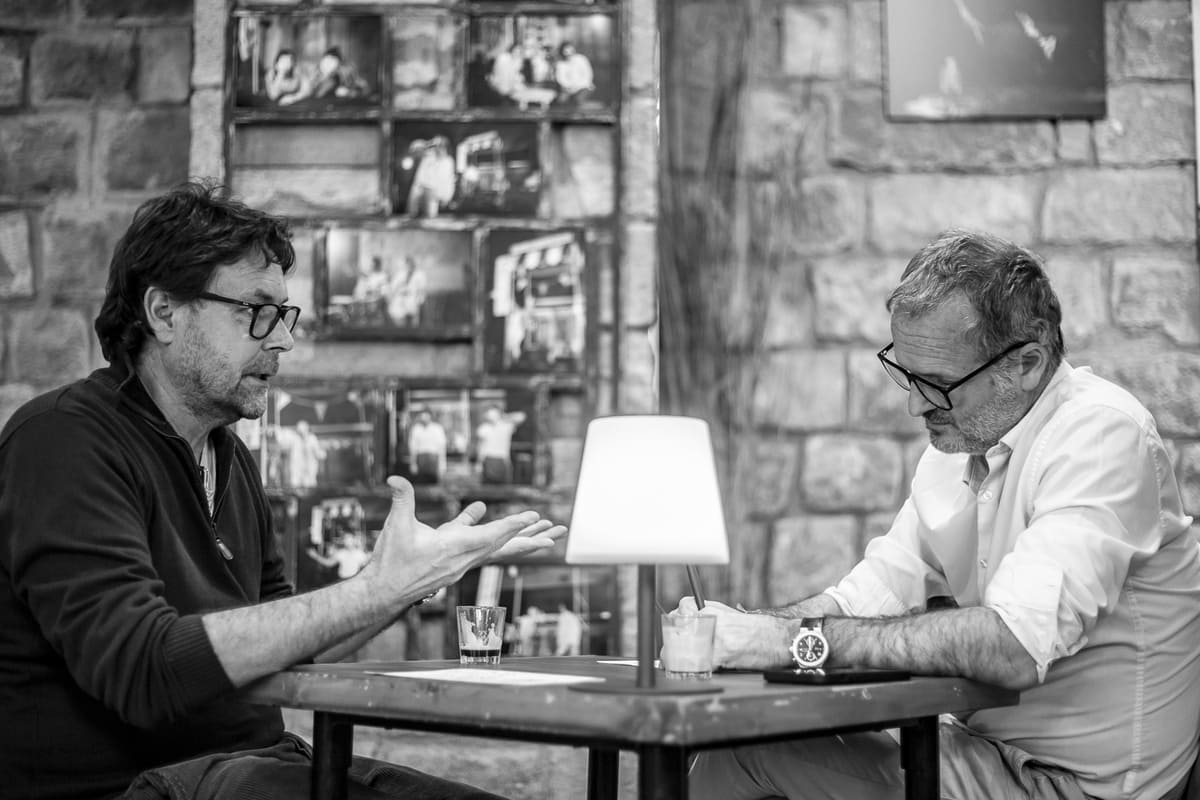
--- In the light?
--- Yes, we placed the herbs just for how the light fell. It gave it an ancient character.
--- I remember a similar sensation in the sand of your Cyrano.
--- More or less. But the herbs of Macbeth.
--- And what was the world like, before the National Library?
--- La Perla 29 already wanted to be a project that didn't spend its energy on each play, that this energy would be maintained and transmitted. To store it, and link it with other ideas. We didn't have our own space and we did everything in various places, but we tried to leave our mark whether it was at the Beckett or the Villarroel or the Romea. And then we wanted to do a Misantrop in a non-theatrical space.
--- And there came the new era.
--- Everyone in theater wants to have a home, a place, "the house I want the sea to see, and fruit trees to celebrate it". That's why here we have shows, a bar, workshops, machines, stage machinery… I really like set design, even if I'm not a set designer. La Perla 29 always wants to be very artisanal. Do you know how Richard Sennett defines craftsmanship?
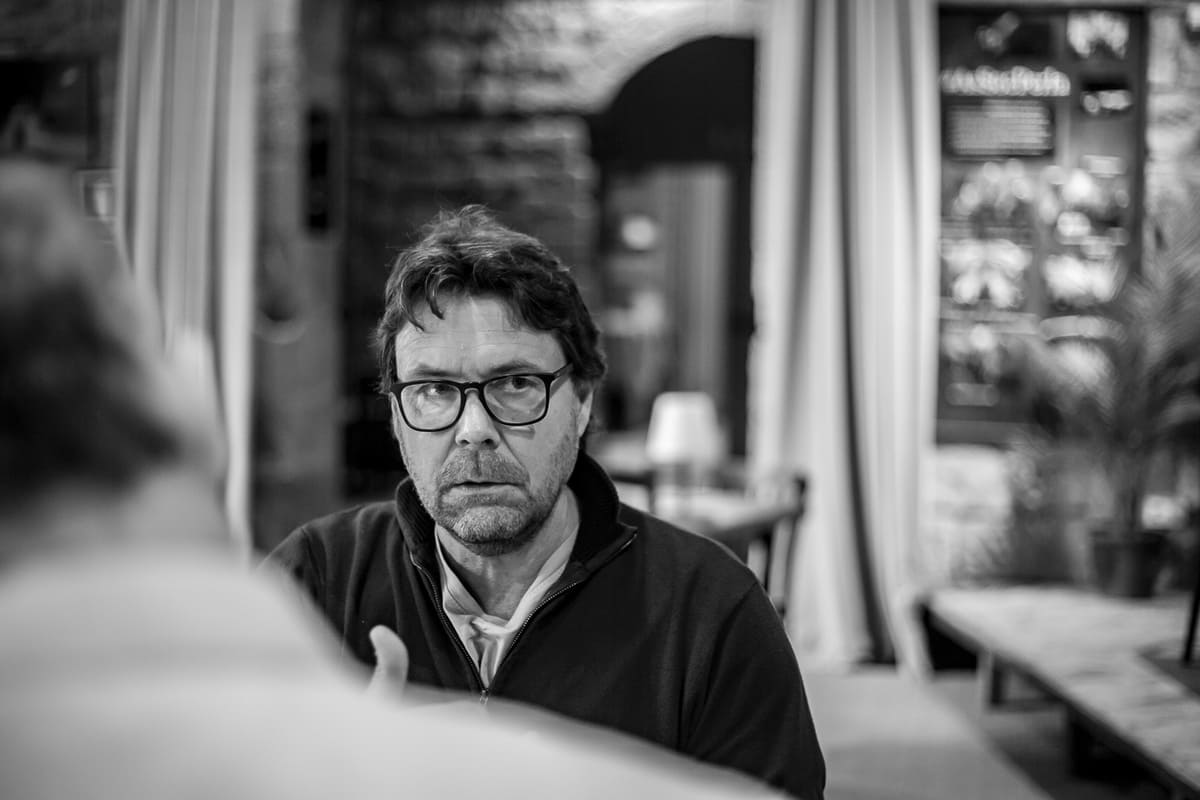
--- Tell me.
--- It's what, when we contemplate it, we can imagine the creation process.
--- Good.
--- We were looking, therefore, for a non-theatrical space to do El Misantrop, and for a year that was the Year of the Book, Mrs. Lamarca, the director of the Library, allowed us to do it on the upper floor. That is, in the library itself, among the books and in the middle of an exhibition about Dalí and another about Cervantes.
--- Right there in the middle?
--- There in the middle. Also, the Misanthrope is an intellectual, someone who breaks the rules, and it suited us well to place him in a library. It was exciting afterwards, when they showed us the space downstairs. You should see it with the windows open. The thing is, I proposed doing an Antigone, and since then we've been here. I am aware that this is not ours, however. Let it be known. This belongs to the citizens, we are just passing through.
--- How do you value the Butaques Plenes initiative that we experienced a few Saturdays ago?
--- Very good, we participated, the structure is very important. The system, that it holds up, that it strengthens. The structure is very important because theater is the only art where actors and spectators must be alive at the same time, and that's why it works so well as a tool for social cohesion. Antonio Monegal said that we must be very permeable to current events, and, therefore, that things organized by the cultural community, both public and private, happen, is important.
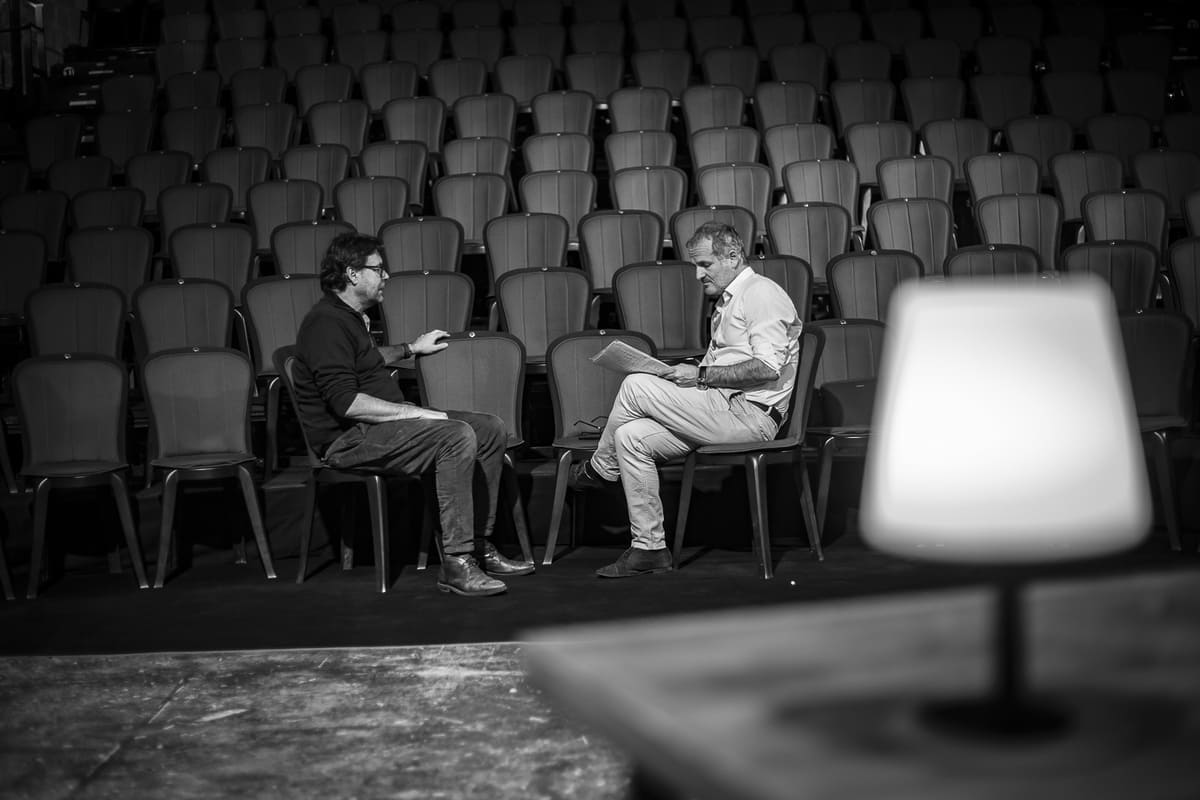
--- The "we".
--- Exactly, the private and public "we". But more than full seats, the important thing is to see that energy has been spent on shaking up the scene. Also, I'll tell you that we notice it a lot when the seats are full. A different electricity is created, between the actors and the company. A "good vibe" that is noticeable on stage.
--- Are we in a good theatrical moment?
--- I always tend to think that we are in a good moment. Always, in life. Theater is always in crisis, it's precarious, it's expensive to make, you have to do it many times for it to pay off... But that's fine, because when it becomes industrialized, the connection with the audience is lost. Criticism also helps us improve, but not criticizing for the sake of criticizing, but critical thinking. But I always think that deep down there is nothing to criticize: it's fine as it is, I wouldn't have done it that way but, so what?
--- Therefore, we are fine.
--- We are fine. A certain euphoria would be missing, as we say so much happens in Madrid. And it would also be missing that we think more long-term, think more about budgets, about stability (within natural instability). Not to get comfortable, but to guarantee a minimum of predictability, a certain solidity. And much less desire to harm each other.
--- On this we agree. And also on the fact that things are always fine deep down.
--- Right? The weather is always good. The sun is very pleasant, but when it rains it's also very beautiful. And the snow. Everything.
Add The New Barcelona Post as your preferred Google source for free
Stay informed with the latest news.
