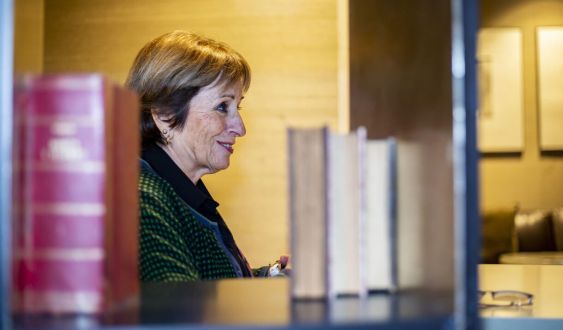
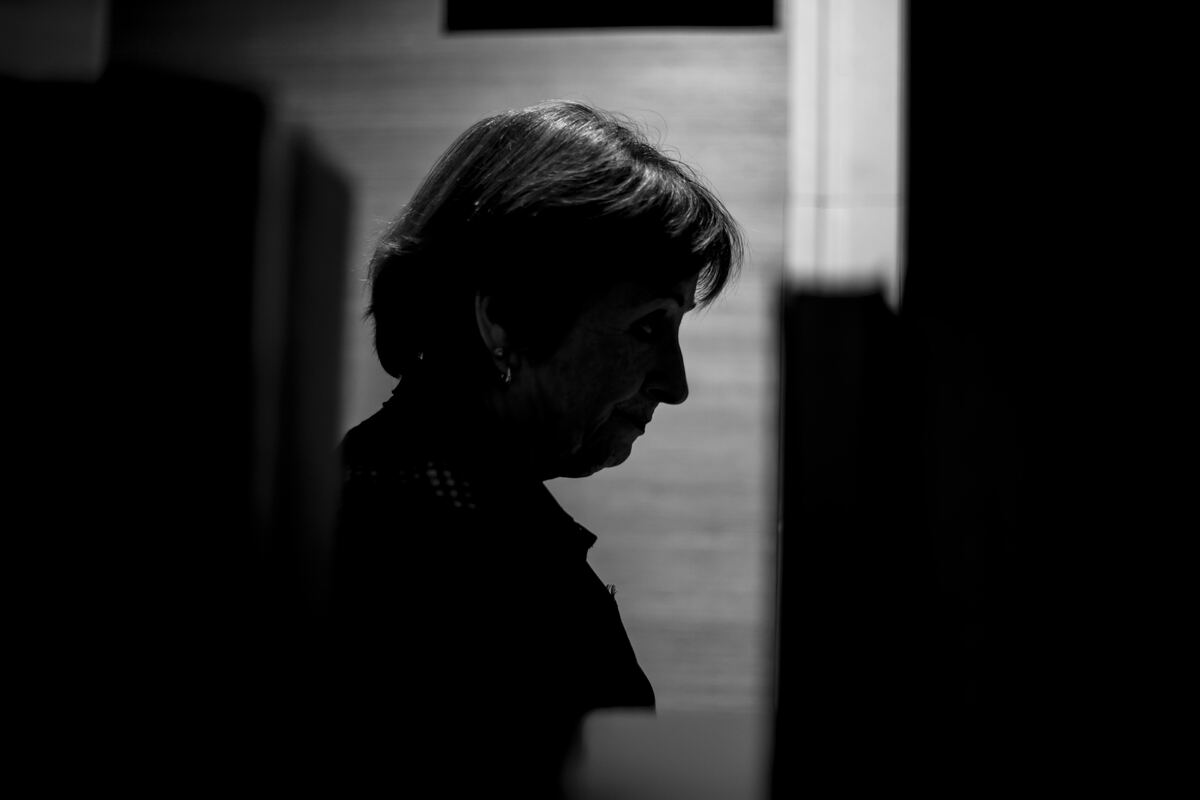
Imma Amat Amigó is an entrepreneur. All her life. From rough stone. She grew up in Sant Just surrounded by business and culture. She has anecdotes from her youth at the Ateneo with Ovidi Montllor, Raimon or Gabriel García Márquez. She was a clandestine member of the PSUC and studied Law. Concepció Amigó decided so. Her mother and her great role model who took charge of the family and the business at only 25 years old. The passion for business comes from her family and the family now lives the passion for business.
Imma Amat Amigó is president of Amat Immobiliaris and is linked and involved with FemCat, Fidem, RACC, Eada, ICO, Egarsat, Grupo 7 or Consolat del Mar, among others. She learned to ski at 40 and likes to close events with a poem by Maria Mercè Marçal: "A l'atzar agraeixo tres dons: haver nascut dona, de clase baixa i nació oprimida. I el tèrbol atzur de ser tres voltes rebel" (To chance I owe three gifts: having been born a woman, of low class and an oppressed nation. And the murky azure of being three times a rebel).
--- She studied Law and was a member of the PSUC.
--- Clandestinely. The first meeting with a member of the PSUC was blind. My husband and I were told to go to a bar in Sant Just with a sleeping bag and the Tele/eXpres. I met a neighbor who went to university with me and was studying Economics.
--- Why did you decide to be an entrepreneur in the real estate world?
--- I didn't decide... [Laughs]. When we were little, they already told us that we should study to continue in the company. I made my First Communion and my mother already told me that I had to study Law. Then, she found me a job in a law firm far from home to learn Law and learn to be commanded.
--- You lost your father to leukemia when you were only two years old.
--- It greatly conditioned our family history. When women of that era married, they had to stop working by law. They married, had children, and were housewives. My father was very entrepreneurial and when he died everything changed.
--- Your mother took the reins of the company.
--- We went back to live with our grandparents. There was a lot of family at home and four children. I learned to fend for myself and manage. Of course, when I went out I had to ask everyone for permission. I have very good memories of that time.
--- A complex time for your mother…
--- My father had 80 clients and my mother lost half of them when she started because she was a woman. She was 25 years old and had to make the first visits accompanied by her brother. She got ahead. I was very young, but I already realized certain things and went with her to collect the rents. I do the same with my grandson who reminds me a lot of myself.
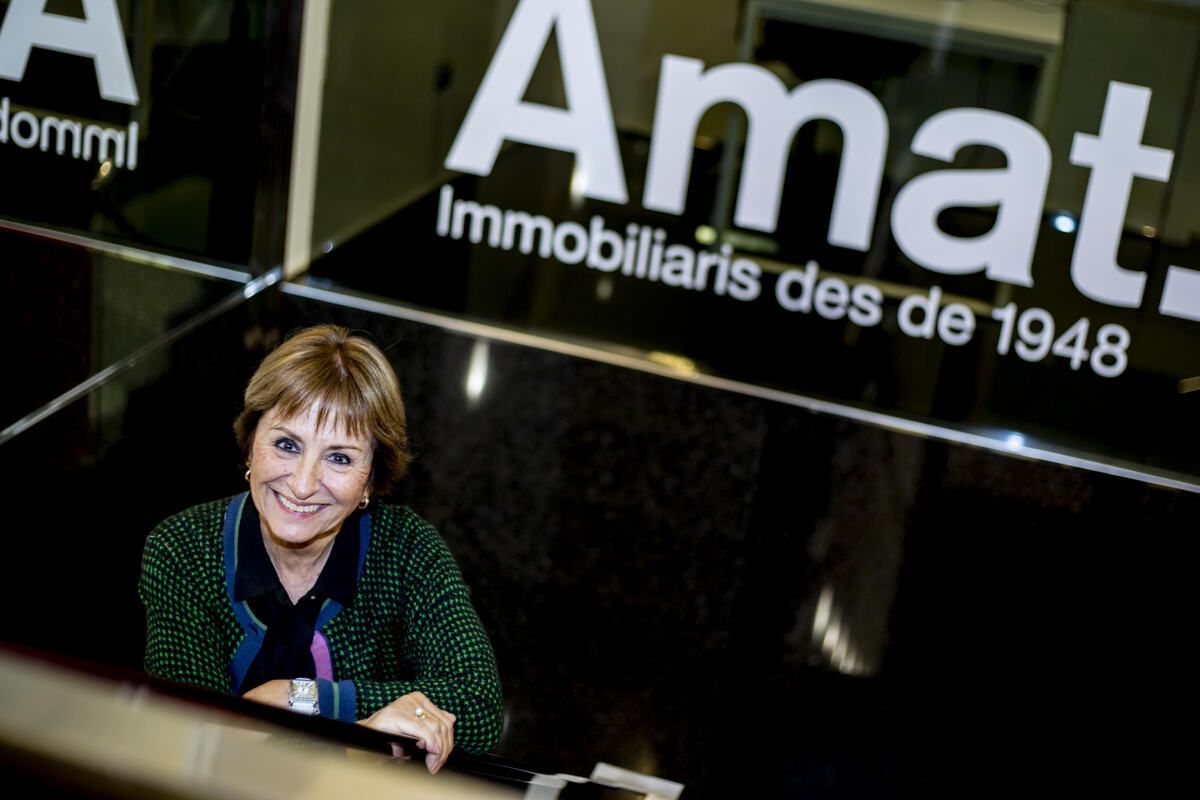
--- The female leadership of the Amat family.
--- The only leadership for many years has been female. May '68, feminist movements, and the first women's congress in Barcelona left their mark on me. When you are young, you think you can change the world, and at that time we had women like Montserrat Roig or Magda Oranich.
May '68, feminist movements, and the first women's congress in Barcelona left their mark on me--- References.
--- They were very brave. In Cerdanya, I still keep a large collection of feminist books. Back then, we didn't talk about being empowered, but about being brave and moving forward.
--- How has feminism evolved?
--- Feminism has an upward trend, but it comes in waves. When things are going very well economically, women regress and let their guard down. That's when we do things we had promised not to do.
Feminism comes in waves, but with an upward trend. When things are going very well economically, women regress and let their guard down--- For example?
--- In 2006, everything was going fantastically well. I know women who had built careers but stopped working because their husbands earned a very good living, even though they had said years before that they would not stop working. This is very dangerous because the economy has setbacks. The same happens with social movements.
--- How do you get the family to serve the company?
---It's not easy… Not everyone in every family is interested in the company. However, when the company is small, everything is experienced more closely, and involvement is greater. You have to see it clearly, be objective, and not ruin the company.
--- Said like that, it even sounds easy, but it's not…
--- You have to be clear about the successor, work on the handover, and not jeopardize family relationships or the family's economic survival. You have to have a shared vision and know where you are going. At Amat, we have a joint reflection every two years to think about where we want the company to go. Now they call it a strategic plan, and my son Guifré does it.
You have to be clear about the successor, work on the handover, and not jeopardize family relationships or the family's economic survival.--- How far does the family go and how far does the company go?
--- We haven't handled it too well, and I even worse than my sister Joana. I've always been very passionate about the company and perhaps I dedicate many more hours than I should. I have found a partner who has been able to understand and share it. When I go to schools, I tell the girls to do a good casting because that also helps.
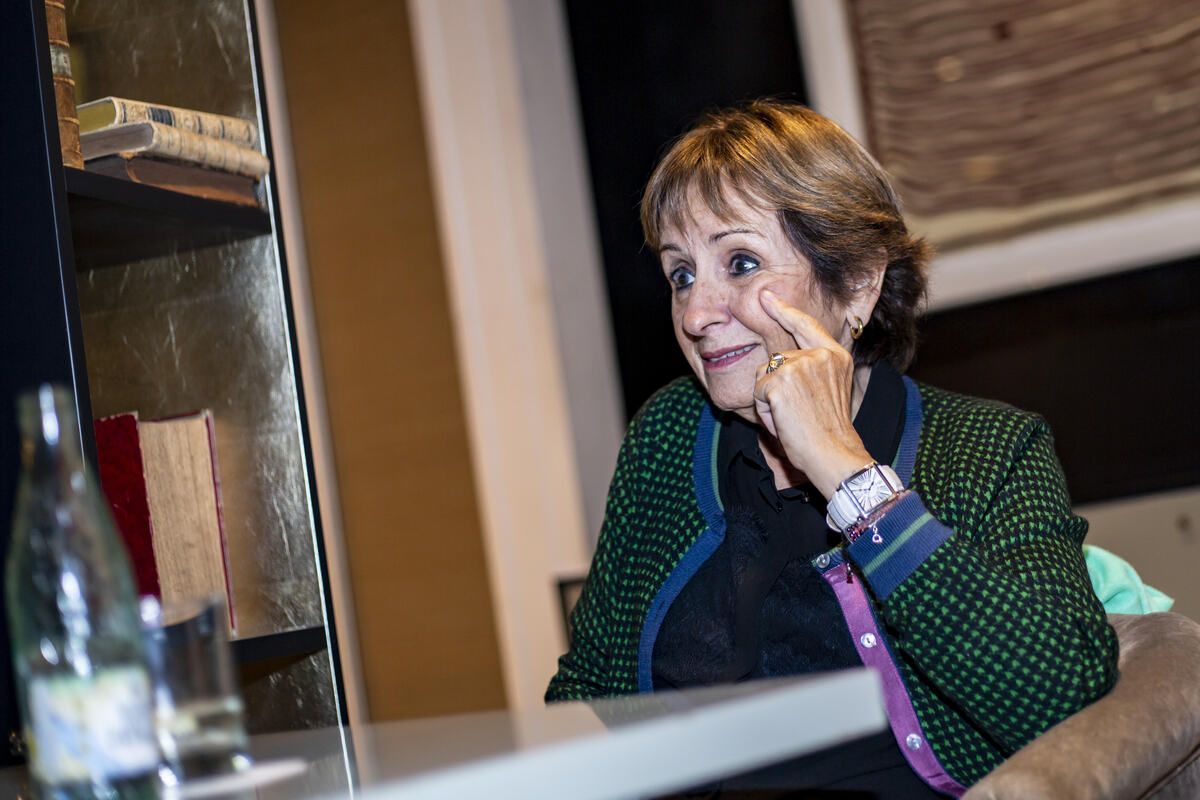
--- At your home, you have always strongly supported culture.
--- We have been very connected to the Ateneu de Sant Just and when we were young, we had a lot of cultural life in the town. Our mother gave us a lot of room to do things and make mistakes. In the Ateneu, more of the same. Once we did a recital with two figures like Manuel Gerena and Ovidi Montllor. Raimon or Serrat also came when they were still very little known.
--- You turned the Ateneu into Macondo.
--- We used to hold cultural talks and they told us to speak with Mario Vargas Llosa. He couldn't come and told us that at his house there was a boy nobody knew, named Gabriel García Márquez.
--- Should business and culture go more hand in hand?
--- Culture ---without resources--- is hardly viable on its own, unless it has a State capable of subsidizing it. The business world must help. In Catalonia, we have an important tradition of patronage, even though taxation doesn't help much.
Culture ---without resources--- is hardly viable on its own, unless it has a State capable of subsidizing it. The business world has to help.--- Does Barcelona have a housing problem?
--- Barcelona has a housing "big problem." We talk a lot about mobility, but the biggest problem Barcelona has is housing. Mobility punishes daily life, but with housing, our lives are at stake. There are young people who have studied, have a job, and earn a salary, but cannot rent an apartment, have a partner, or become independent. It is out of place in the 21st century.
Mobility punishes daily life, but with housing -it's Barcelona's biggest problem- our lives are at stake.--- Offer and/or demand?
--- On offer, there is as much demand as you want. There is another very serious problem, which is the functioning of public administration...
--- Lack of political will?
--- The problem existed before Ada Colau, but building public housing is even more complicated than building private housing. A tender must be held for everything, which also drags on over time. It's not just a matter of money, but of time.
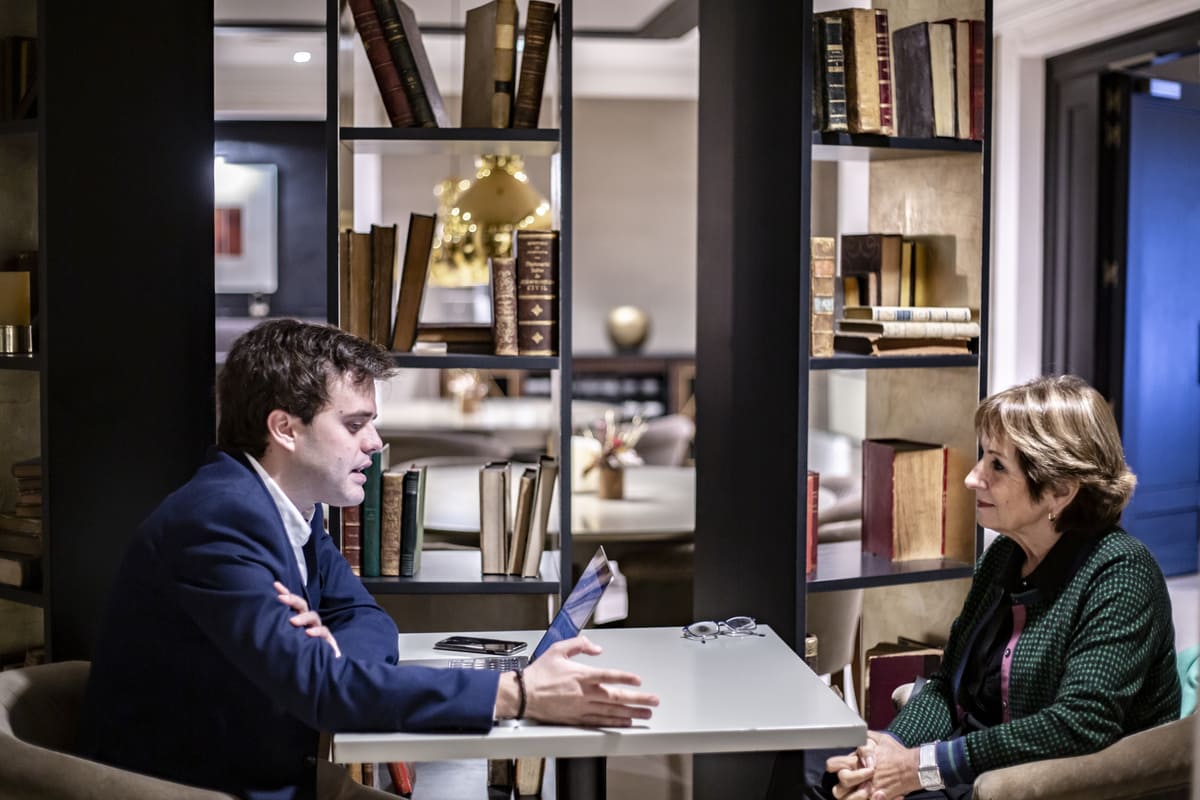
--- And how do we solve it?
--- In many ways! The most important: make it easier. How? By facilitating public-private collaboration. The public and private sectors seem like two enemies, but good foundations must be laid and the pact must be fulfilled. The efficiency of the administration must be resolved. Each new step is more complicated than the previous year. If we combine state, community, and municipal regulations… One must be brave when making decisions.
--- Do we need more and better public-private collaboration?
--- There is a lot of distrust from the public administration towards private companies. Surely private companies have overstepped at times, but people know how to play if there are clear rules of the game. It wasn't that long ago that there were doubts about whether the Hospital de Sant Joan de Déu should receive aid from the private sector, and it has been clearly demonstrated that it is an absolute success story of public-private collaboration.
There is a lot of distrust from the public administration towards private companies, but the Hospital de Sant Joan de Déu is an absolute success story of public-private collaboration--- Is it necessary to claim more and better the figure of the entrepreneur?
--- Politicians have been against businessmen for many years. I still remember Mr. Pla, who was the villain of Super3. The press has also criticized businessmen a lot, but now it has started to change. There are bad businessmen just as there are bad workers.
--- Civil society has taken a step forward.
---Civil society wants to get involved in the management of the country with people and resources. It doesn't want to act as a politician, but to help move forward. If you cause an absolute divorce, it's fatal. It shouldn't be easy to be a politician either, but one thing is to listen and another is to move forward...
--- It's time to build new leaderships.
---We women have developed a more empathetic leadership throughout history. Each generation has its problems, but in our time, female leadership was not easy.
Civil society wants to get involved in the management of the country with people and resources. Raising citizen morale is also political will.--- Where should Barcelona go?
--- In Barcelona we must do an exercise of cleaning and aggiornaménto. Yes, aggiornaménto, as the Italians say. That is, Barcelona must catch up and have, for example, its historic buildings well rehabilitated. If you compare it with French cities, Barcelona is neglected and this makes the citizens also neglect themselves. There is a kind of decadence. Raising the morale of the citizens is also a political will.
--- How to raise citizen morale?
--- Everything is linked. If there is not enough housing, people live in bad conditions. We must give better conditions to citizens.
--- The previous interviewee of Persona a persona, Oriol Amat, asks you the following question: What are your future wishes for the company?
--- Oriol Amat and I are not family, but our families spent the Civil War together in Sant Just. My future wishes are to grow sustainably and never lose the values that have made us original and unique.
--- What are these values?
--- It is very important to be consistent in the professional and personal sphere between what you believe and what you do. To have vision and to take care of relationships with people, whoever they may be. A good entrepreneur can be generous and austere. Being authentic and generous is free and always has a return. Details must be taken care of and one must learn to share. People are too individualistic and there are many things that cost little.
SEVEN OF LIFE
- Role model: My mother.
- Book: The Metamorphosis, by Franz Kafka; The Years, by Annie Erniaux; Once Upon a River, by Bonnie Jo Campbell and all books by Theodor Kallifatides.
- Film: Le souffle au coeur by Luis Maille; Last Tango in Paris, by Bernardo Bertolucci, or A Clockwork Orange, by Stanley Kubrick.
- Song: Classical music, all songs by The Beatles and by Raimon ---especially, Treballaré el teu cos---.
- Favorite spot: The reading nook at home and the high-altitude lakes.
- Life motto: To live with coherence between what you think and what you say and what you say and what you do.
- Dream: To find a cure to help my grandson who has autism.
Add The New Barcelona Post as your preferred Google source for free
Stay informed with the latest news.
