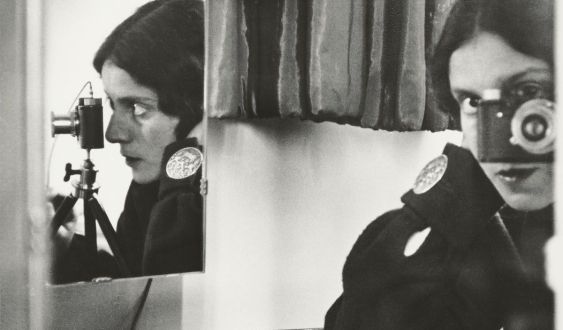
Unclassifiable and largely self-taught, the work of photographer Ilse Bing (1899-1998) began with a passion for art that led her to consider a doctoral thesis focused on the neoclassical architect Friedrich Gilly (1772-1800). A name known only to a handful of specialists, some of whose works are now vandalized (for example, the Mausoleum of the von Hoym family). Even if at first glance it would seem that there are no artistic coincidences in their respective proposals, Ilse Bing appreciated in him, in the words of Juan Vicente Aliaga, "the use of geometric figures in elemental, linear, almost abstract compositions". No less decisive—though totally contrasting—was her encounter, in 1929, with Van Gogh's work during a trip to Winterthur. Bing would discover an art in which two dimensions give rise to a substantial materiality, which fixes reality while embracing the narrative of its unpredictable fluctuations.
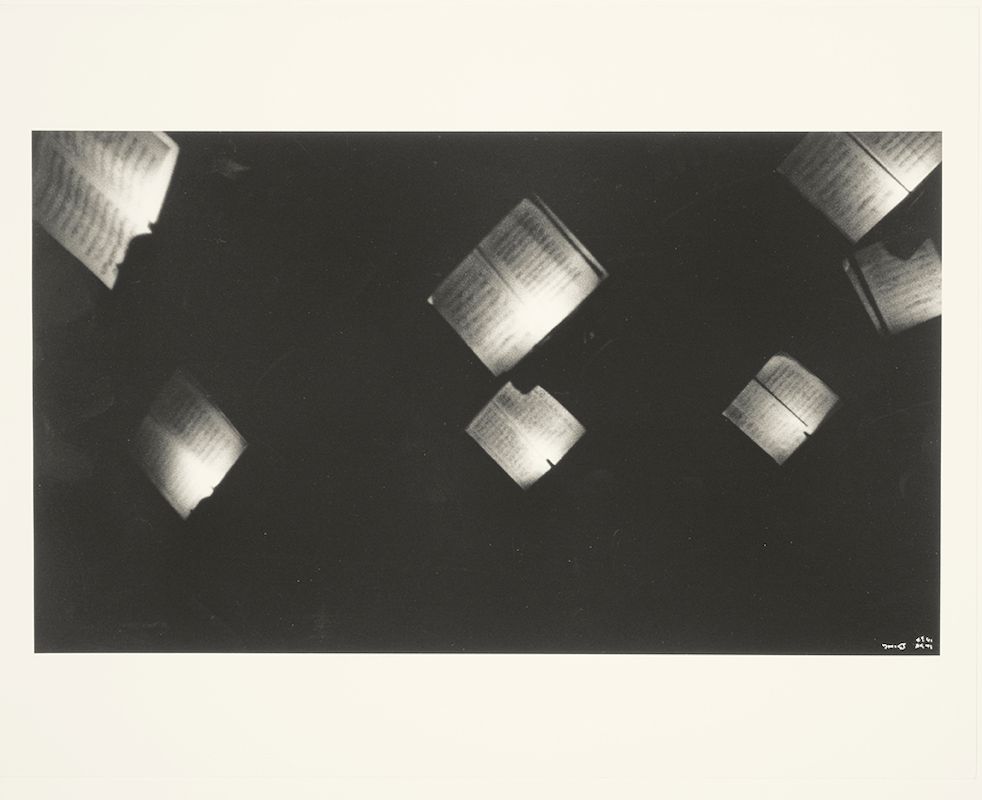
"Ilse Bing also dealt with the study of light and space, of the mathematical and the scientific, fields to which she would return later" (Donna West)By then Ilse Binghe had already acquired his faithful Leica, a versatile and easy-to-carry camera, renowned for the excellence of its lenses, for its luminosity and ability to reveal the textures of objects. The first images exhibited in the exhibition organized by the Kbr Centre of the Mapfre Foundation, from 1929, precisely show attention to everyday objects and situations in her native Frankfurt: perfectly irregular rooftops of buildings, eloquently silent, the enigmatic statism of a mailbox or clothes drying in the sun, shadows projected onto buildings, sheet music gravitating in the darkness of nothingness, or the unstable space between the wagons of a moving train. A discreet magnetism emanates from the objects captured by Ilse Bing, which is also perceived in the representation of the steps of the dancers from the Laban Dance School. In this sense, the title of one of the sections of the exhibition sounds appropriate:"The life of still lifes".
Exploited consciously during the Baroque period ---a period that also interested Bing---, the paradox dictates that the fixation that stops time, in its irreversible and lethal advance ---as can already be seen in Caravaggio's ancient tour de force of the fruit basket, to give just one example--- is at the same time what grants immortal life to the represented objects: what we see no longer is, if anything it only is insofar as it is a representation of a life that does not belong to temporality, being represented. The fleetingness that Impressionism captured in its unsuspected everydayness finds a moment of feedback in Bing's work, which dwells on the observation of falsely regular cobblestones, between whose lines grow plant forms that imagination makes us intuit as green, or in a wrought-iron chair where planes merge, transforming its function. The object cannot offer a seat even if it is clearly identified, following the boutade with which Magritte, just a couple of years earlier, posed the fascinating inadequacy of pictorial discourse and reality. In this sense, a certain influence of surrealism can be noted in Bing's early work, with the eventual presence of dislocated dolls or floating clocks, with and without hands, and, therefore, of dubious precision.
Just as or more decisive, however, could have been the incidence of the "new vision" of photographers like László Moholy-Nagy, linked to the Bauhaus, in turn influenced by Soviet constructivism. Donna West Brett explains that, like the Hungarian photographer, "Bing also dealt with the study of light and space, of the mathematical and the scientific, fields to which she would return later." She refers to the Parisian years as fundamental for the assimilation of a type of creativity ---that of surrealist art--- that opens the doors to the unconscious. The author recalls that Moholy-Nagy "addresses the paradox of capturing reality through a camera that at the same time has the capacity to give expression to the essential reality of the subconscious." The archetypal representation of the double that we are to ourselves, the image that reflects a real and impossible duality, identical and necessarily dissimilar, will also be present in Bing's work, which investigates the indeterminate or indeterminable nature of her nature as a creator. Surreal ---literally, "more-than-real"--- is that representation that reveals itself as an excessive or incomprehensible reflection, never entirely representative ---and for that very reason true---, of what cannot be exhausted in its objective capture.
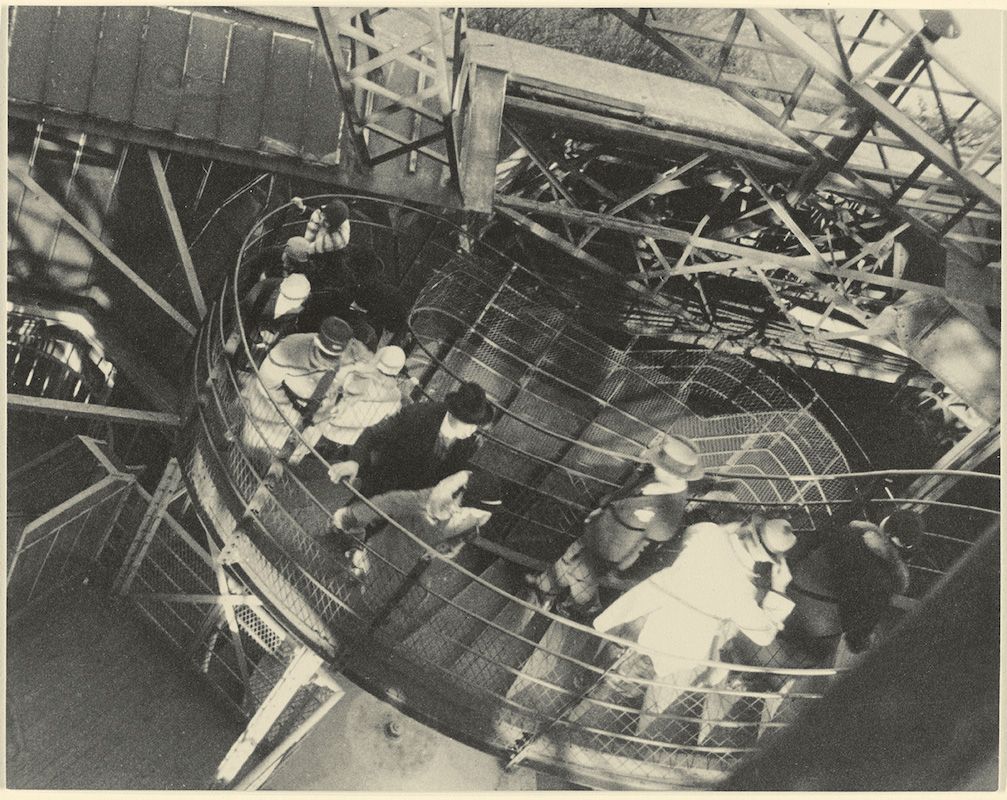
The enigma is present in Ilse Bing's work, although it does not seem to be a predominant note, and even less so, one might think, given the evolution shown in her New York years. And yet, the fascination with the confrontation of lines and volumes, in variable geometries that contrast the silhouettes of buildings and living beings ---already in her images of the Eiffel Tower---, is symptomatic of an artistic will that points to the irreducible dimension of reality; perhaps the most exciting dialectic of the incursions with which photographic art, at the same time, intervenes in its construction. The gaze focuses on an object that comes to exist only insofar as it is seen, through the falsely objective status granted to it by the lens. Thus, the Statue of Liberty looks minuscule through the window of a cabin, in a snapshot ---the one exhibited at the Kbr--- that deliberately has the size of a medieval miniature, inviting the observer to notice the details and, above all, the fact of always observing only a portion of reality. The desolate scenes of the New York docks, where people miserably survive, coexist with the relentless straight lines of the skyscrapers, with flags proudly waving, indolent.
Mirrors and screens: infinite representation
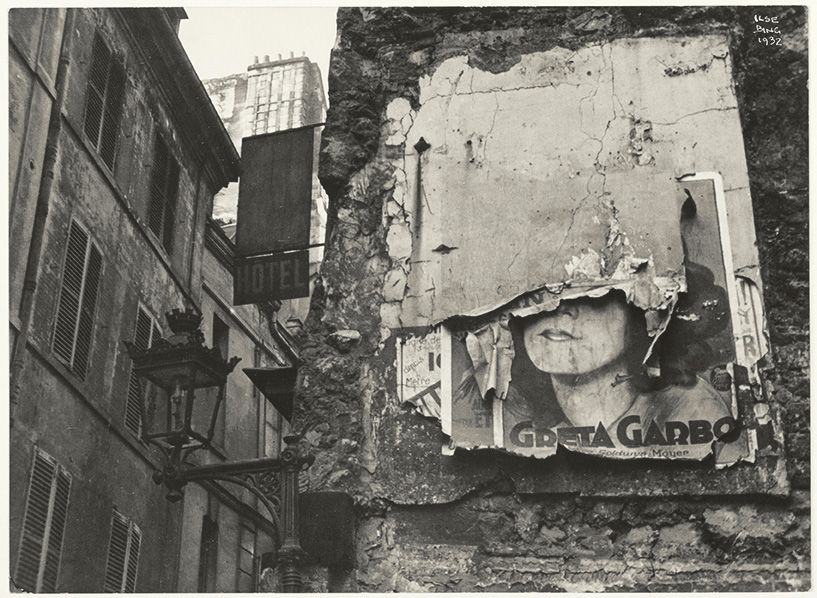
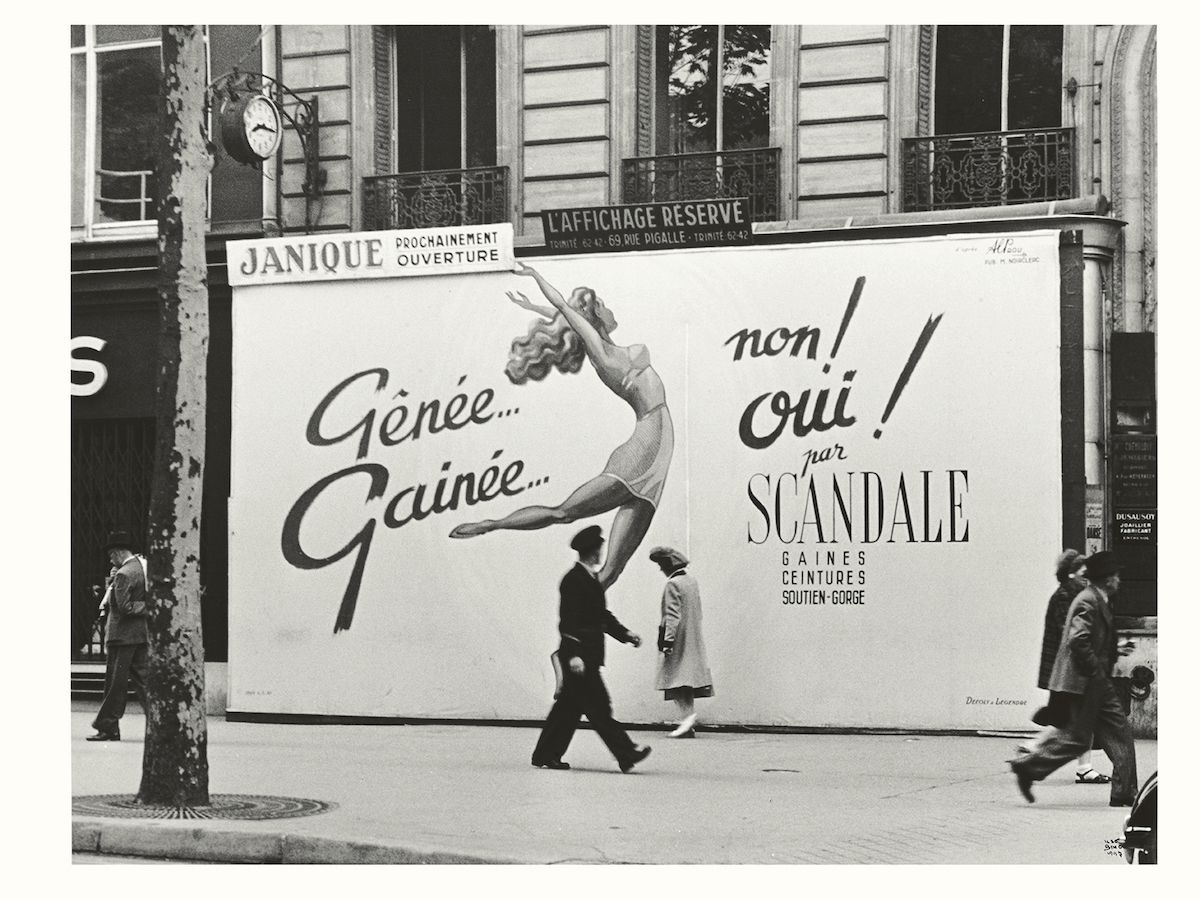
Eventually, social consciousness shines through in Ilse Bing's black and white snapshots, even if she cannot be reduced to the status of a documentarian. The instantaneous record of what happens in the streets of New York, as in the Dutch countryside, speaks again of that interest in all things human, including phenomena such as fashion, or the representation of bodies in motion. The interest in dance, in the physical variation that animates the repetition and innovation of music, is illustrated at different moments of her career, in diverse settings. The photographer's sensibility also thematizes the reflection of her gaze, casually captured in the puddles of a gray city, where outdoor movie star posters are torn to shreds ---Greta Garbo, with her gaze denied by another layer---, allegorically alluding to reality as a palimpsest. The advertising poster, like the film, the mirror or the screen necessarily include the viewer and, in fact, all their previous gazes coexist in their new gaze; in the infinity of self-reflections that are unified by the ability to resurface images with greater or lesser consciousness and allow them to know themselves as individuals, distinct from the rest and apparently equal to themselves.
The exhibition of Ilse Bing coexists temporarily at Kbr with the one dedicated to Anastasia Samoylova, winner of the prize organized by the foundation responsible for the photography center, in which the thematization of the gaze knows highly iconic variations through its many reflections: specular surfaces that, like opposing screens, include each other and reduplicate ad infinitum, with the emphasis placed on consumption strategies that are already scarcely subliminal with regard to eroticism and the exposure of female bodies. Objectification ---which Bing also shows in some Parisian images--- is promoted as the specular reverse of a kind of possession that surrealism and psychoanalysis already suggested as impossible ---see, for example, Luis Buñuel's classic That Obscure Object of Desire---, hence, perhaps, the hysterical proliferation of simulacra. From the other extreme, with a respectful proximity and rehearsing the artifice of transparency, the portraits made by Bing in her mature period with a Rolleiflex will not conceal the utopian character of representation. The beauty of these images lies in the perfection of forms that have never existed, nor ceased to be.
Add The New Barcelona Post as your preferred Google source for free
Stay informed with the latest news.
