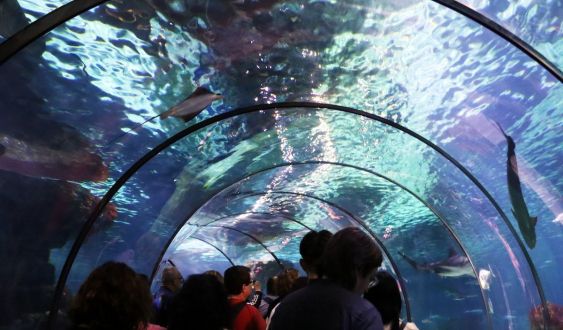
The Barcelona Aquarium is preparing to celebrate its 30th anniversary, and any anniversary is best celebrated by knowing its origins. The Aquarium's story is a surprisingly untold one, known only by those who lived its launch and by those who have heard its stories and anecdotes. Patrici Bultó is one of them. The until now curator and technical director of the Aquarium, he was involved from minute zero in the project, and now dives into its origins to remember them.
Bultó, who has just retired after 30 years at the center, collects anecdotes from its history, starting, as it should be, from the beginning. And that beginning is, at the very least, unexpected. "An amateur rugby team from Barcelona went to play in a tournament in Sydney, and Anicet Ciscar was on that team." Then over 80 years old, he still played rugby, after a career in which he had excelled as a player in various sports and also as a leader of clubs and sports entities.
Ciscar, who passed away in 2002, had not only excelled in the sports field, but also in business: in 1965 he founded the Hesperia hotel chain. With this perspective and arriving in Australia from pre-Olympic Barcelona, Ciscar was impressed during a visit to the recently opened Sydney aquarium, which had opened its doors in 1988. "Upon seeing it, Ciscar told himself: Barcelona, opening up to the sea and with the transformation for the Olympic Games, must have an aquarium."
Back in the Catalan capital after the tournament, Ciscar began to make moves to materialize what emerged as an idea in distant Sydney. "He was inspired by the Australian aquarium and even consulted with staff from the center, and the idea began to take shape," explains Bultó, who coincidentally had an uncle who played on the same rugby team as Ciscar.
After knocking on several doors and after many negotiations, and thanks to Ciscar's influence, everything aligned to move the project forward. With an initial investment of about 3,500 million pesetas, the Aquarium was promoted by the company Mundo Submarino, made up of the Port through the Barcelona Port Authority; by the Caixa Catalunya company Invercartera, and by the MZOV and Cubiertas company and the Entrecanales y Tavora company —which shortly after merged to create Acciona—. As a technological partner, the project had Underwater International, from Singapore.
"The Aquàrium began to be built with the aim of being ready for the 92 Olympics, but it didn't make it in time, and it opened in 95," highlights Bultó, who joined as an assistant in Biology and was in charge of the technical part, which included water collection and filtration. He has another anecdote in this area: to bring seawater to the Aquàrium, they drilled a well in the seabed of Barcelona, following the model used in some fish farms. Suddenly, some fish got sick. After investigating, they discovered that another company had drilled a well a few meters from the Aquàrium's, and had done so deeper, reaching a layer of water with more heavy metals and pollutants. "Then we went to make the collection wells where we have them now, in front of the Club Natació Barcelona, in Barceloneta," from where the water has been conducted to the Aquàrium's facilities for decades, covering about three kilometers.
The beginnings not only required bringing water to the Aquàrium; fish were needed, and also the animal that has become its emblem: sharks. "Nobody had any idea how to bring a shark to Barcelona"; nobody had seen them in the city. The know-how came from Waterworld and from what was the first curator of the center, the Australian Mark Smith: "He was the first one who taught me to know sharks," recalls Bultó, now a recognized expert in the field.
Finally, the Aquàrium opened with two sharks: Isabel and Marc. "Marc, precisely after Mark Smith, and Isabel, after the executive secretary." The story of both sharks was collected in two stories created by the first director of the center, Alfons Aran, who was at the helm of the Aquàrium when it opened its doors on September 8, 1995. "Back then, from the tunnel, you could only see the two sharks and gilthead bream that we had brought from the Ebro Delta in the Oceanarium," explains Bultó.
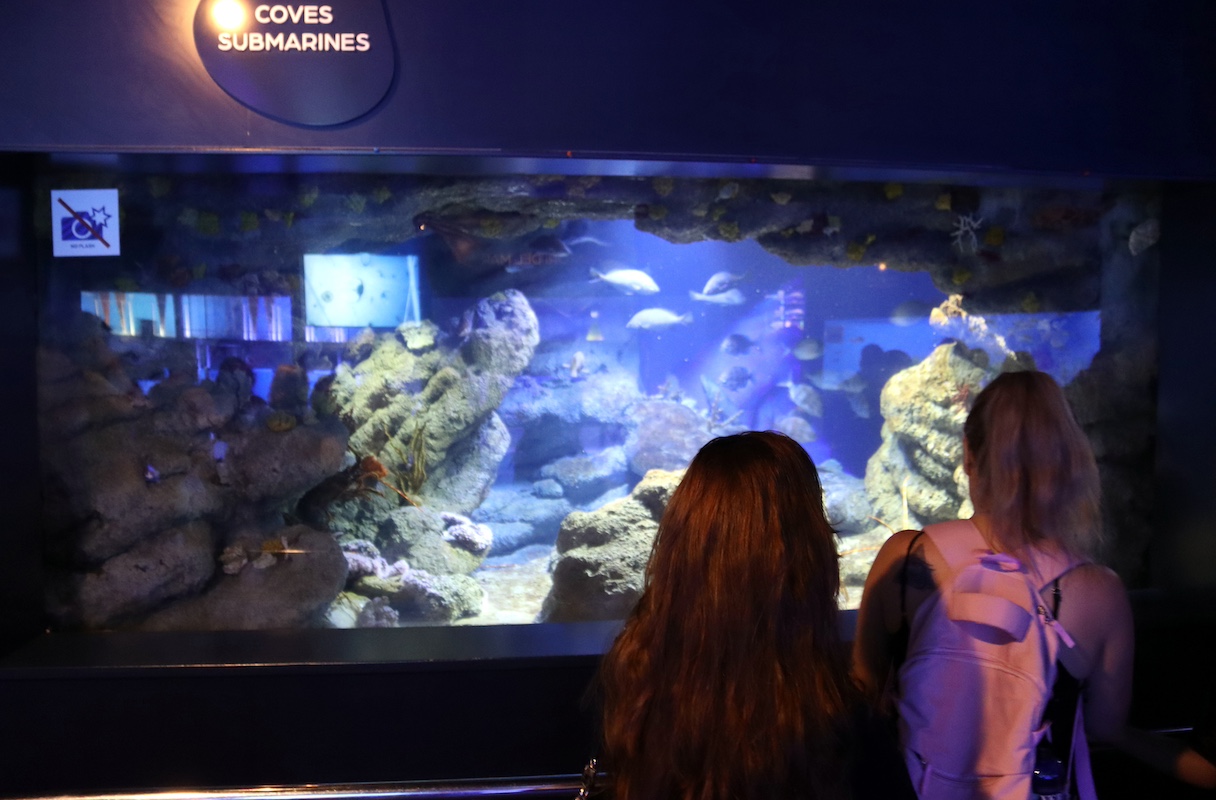
Little by little, more species and animals arrived, up to the more than 11,000 organisms from 600 different species that now inhabit the Aquàrium and whose facilities have been renovated, with an investment of 15 million euros by Aspro Parks, to which the space now belongs.
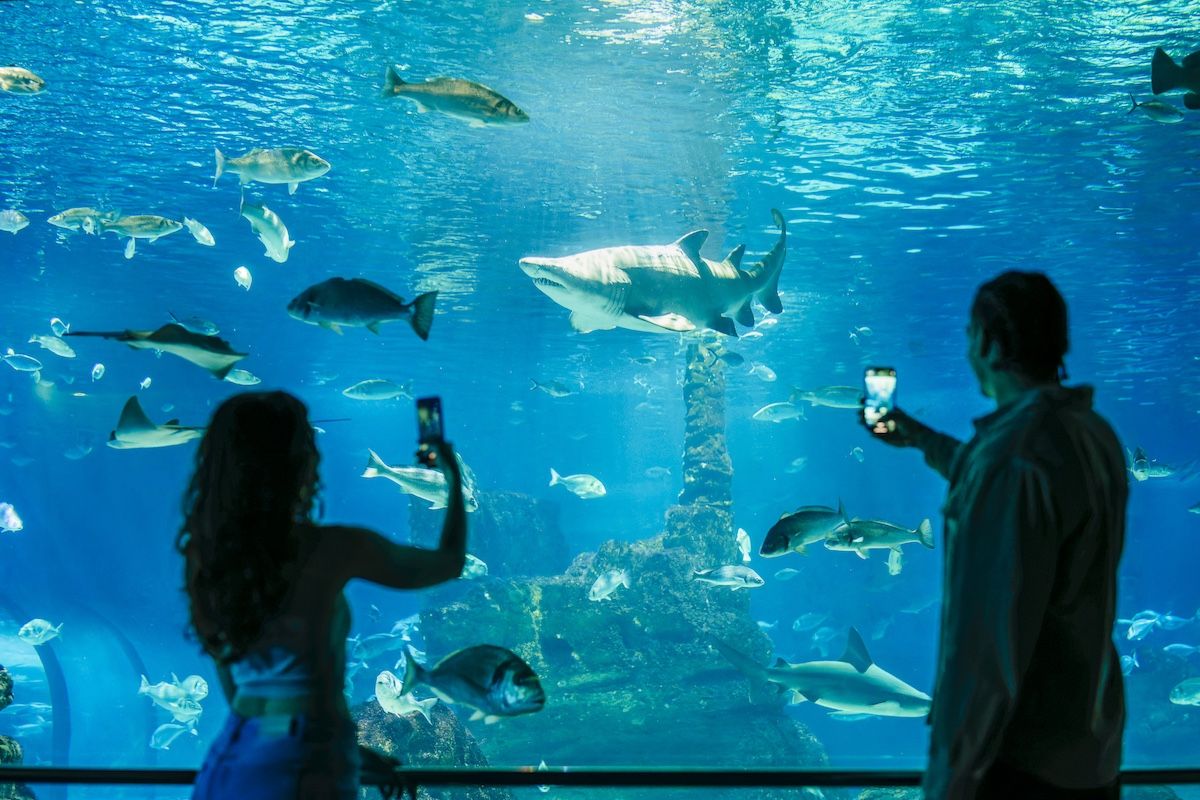
"We have sharks that are over 40 years old, something that has modified the longevity of this type of sharks, because none older than 16 years have been found in the wild." This, in the case of the species of sharks at the Aquàrium: others can live many more years, even centuries: "In the world, there are sharks that are over 400 years old."
The Aquàrium continued to grow until it was acquired in 2001 by Aspro Parks, one of the largest operators in Europe of leisure parks and centers, with 68 parks and centers located in a dozen countries. After the first management by Alfons Aran, Jordi Sabater and Jordi Inglés directed the center, before the arrival ten years ago of the current director, Maria José Peretó.
As she explains, the Aquàrium will commemorate its 30 years of trajectory with events from September 5 to 7, with a cake by Christian Escribà and with activities during the weekend prior to the day the center was inaugurated, September 8, as a result of the vision an entrepreneur and rugby player had in the antipodes of Barcelona.
Add The New Barcelona Post as your preferred Google source for free
Stay informed with the latest news.
