
The Paris 2024 Olympic Games are already history. Two long weeks of competitions in which, in addition to a total of 329 medals being distributed, more than 50 world and Olympic records have been broken.
For a long time, breaking records (of visitors, overnight stays, airport traffic, cruise passengers...) has been the more or less explicit objective of governments of all colors and of the tourism industry here and around the world. Lately, however, more and more voices are being raised that question this vision and demand, depending on the group expressing itself, to control, manage, regulate, limit or decrease in terms of visitor numbers. There are even those who fantasize about being able to choose who should visit us and who should not.
Behind all this, a phenomenon that is not new, but that in recent years has begun to be identified in a more generalized and profound way, such as the symptoms of tourist overcrowding. An overcrowding that has its origin in the saturation of certain places ---what we call "tourist attractions"--- from where a series of direct and indirect impacts are generated beyond the specific place where they are located, that is, in the whole of their city or region.
The magnitude of these impacts is the factor that has led this year to the outbreak of protests in eminently tourist places (such as the islands) or in places with a concentration of tourist attractions (such as many cities). The focus of discontent is mainly on the induced effects on the housing market.
In this article, however, we focus on the initial problem. Can mass tourism be stopped? The answer, I anticipate, is "perhaps yes, but not with the measures we know." These measures generally range from access regulations (as in Barcelona's Park Güell) to capacity limitations (as in the Acropolis of Athens). This is if we talk about specific tourist attractions, where it is certainly easier to reduce influx, although it is not always easy to determine the appropriate volume.
The matter becomes more complicated if we are talking about cities or important parts of them. One of the most commented cases has been the toll that visitors to Venice have to pay if they do not stay overnight. It seems, however, that this toll has not yet been a relieving factor for the pressure received by the most emblematic streets and canals of the Serenissima because, despite the expected complaints, it has been found that no one backs down from getting on the vaporetto of the day for having to pay 5 euros extra.
The focus of discontent is mainly on the induced effects on the housing market.The same logic applies to the vast majority of policies that have been implemented in this regard around the world: protests from the demand side and pressure from the supply side end up relegating these measures to the realm of cosmetics.
And it is that the patience (or perhaps one should say stubbornness) of people who visit saturated places seems to have no limits and defies any postulate of rationality like those that underpin conventional economic theory. Or is it a rational consumer choice to queue for three hours to get on an attraction in a theme park knowing that the same will happen in the next one? Or to dedicate more than half a morning (with luck) to arrive and be able to access a certain cove where the fundamental challenge will be to take a photo without anyone else appearing, despite being occupied to the last centimeter of sand and water? Not to mention the crowds to crown the top of mountains where until recently only people with exceptional conditions and preparation could reach.
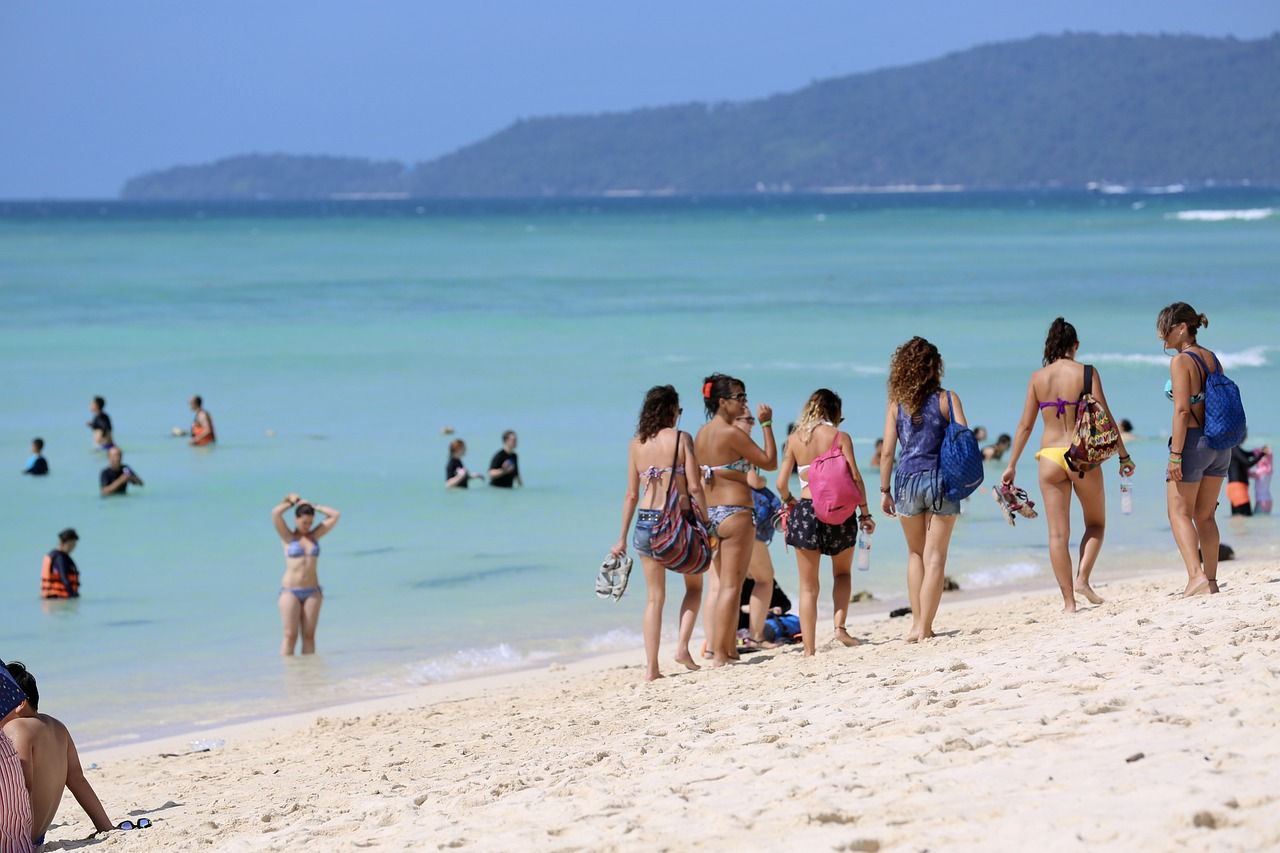
Situations of this style are increasingly frequent and occur in more places. But it is true that there are people everywhere, and from that economic theory it will be said that if people do it, it is because it compensates them. It is not, moreover, about blaming people for trying to fulfill the 100 places you have to visit before you die or taking the obligatory photo simulating holding a leaning tower. The environmental pressing is powerful: today, it is more socially accepted for someone to stay at home in August because they don't have holidays than to admit that they can't or, above all, that they don't want to travel.
Meanwhile, this 2024 we are heading for a record number of tourists at all levels (in the world, in Europe, in Spain, in Catalonia, in Barcelona...). Spain could reach the world top, surpassing France and approaching 100 million visitors. And the trend, due to the incorporation of a significant part of the world's population, especially Asian, into tourist demand, is growing.
This means that spreading tourists to places that are not currently as coveted, one of the star measures of those who talk about managing overcrowding, may be a short-term answer, but one that will ultimately prove equally insufficient.
For example, nowadays it is no longer surprising that someone from our environment travels to a country like Laos, which even the most seasoned traveler would hardly have been able to locate on the map in 2000. And Laos has increased the influx of tourists by more than 220% since the beginning of the century, approaching five million visitors (for a total population of about seven million inhabitants). In this sense, the Philippine islands seem to be the new frontier of exoticism, on a route that at some point began in Thailand (currently around 25 million visitors after having reached 40 before the pandemic) and continued through Vietnam (12 million in 2023 compared to 18 in 2019).
The surrounding pressing is powerful: nowadays, it is more socially accepted for someone to stay at home in August because they don't have holidays than to admit that they can't or, above all, that they don't want to travel.Our planet is very large and, given that the areas more or less frequented by tourism are still a minority compared to those that are not, one might think that there is plenty of room to occupy new uncrowded spaces. However, we know thatthe resulting impacts go far beyond the strict physical presence of people in places and that the environmental, climatic, and biodiversity emergency should be an important persuasive element for not even proposing it.
Mass tourism, then, seems unstoppable. Neither the campaigns to discourage travel to Amsterdam that the city council itself has directed at British youth, nor New York's battle against tourist apartment platforms have resulted in a decrease in the number of tourists on its streets.
Aware of the enormous difficulty in achieving this without literally rebuilding walls around them, cities are looking for alternative formulas: if the number of visitors cannot be limited, at least they should behave. Copenhagen, for example, has created a pilot program to reward with several advantages a series of good practices proposed to tourists regarding sustainability and civility, which has recently closed for evaluation ahead of a possible re-edition next year. While awaiting these results, we can think, in the world of the experience economy in which we find ourselves, that this gamification could almost be a new incentive to spend a few days in the Danish capital.
Mass tourism seems unstoppable: neither the campaigns to discourage travel to Amsterdam nor New York's battle against tourist apartments have resulted in a decrease in touristsAs a more radical measure, the writer Umberto Eco argued in 2007 in an article in theThe New York Times,not without a certain irony, the creation and placement in distant locations from the originals of replicas of major works of art and historical enclaves to satisfy the growing desire to visit them (not necessarily to know them) and thus save the originals from the degradation to which massification subjects them.
Be that as it may, it seems very doubtful that most people would settle for the replica, just as it also seems doubtful that someone coming to Barcelona for the first time, even a second or a third, would not pass by the Sagrada Família even if they then head to the Monastery of Sant Cugat. And even if they didn't, there would be tens of thousands of potential visitors waiting in line for the adoption of the Western lifestyle model, tourism included, with the goal of one day admiring the Nativity Façade in person (and taking the corresponding photo).
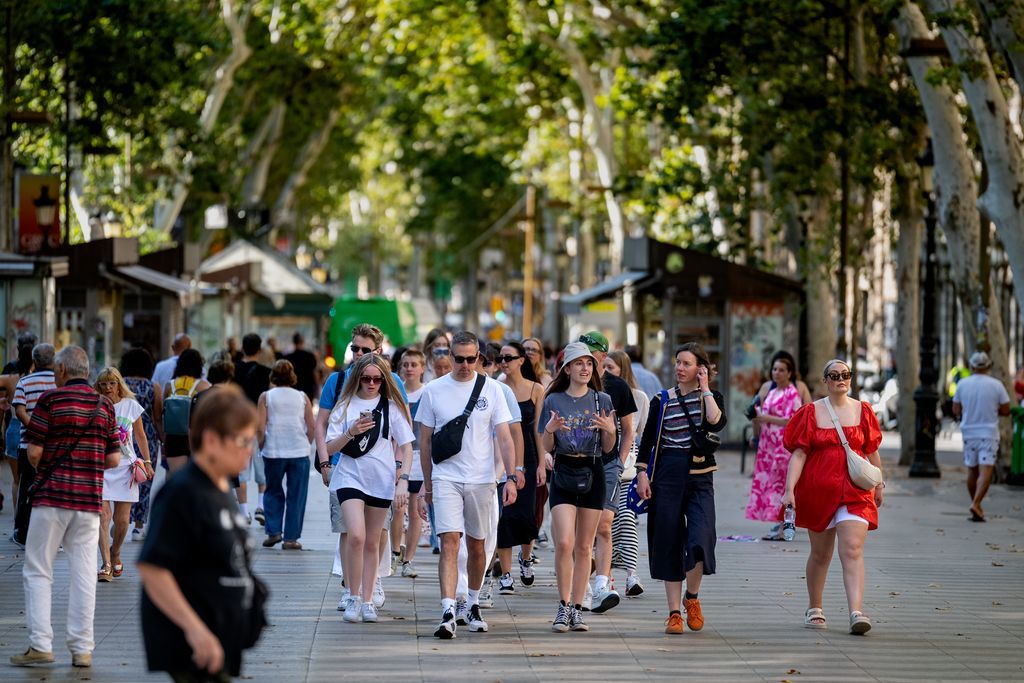
Tourism has an increasingly important weight worldwide and at all levels of the economy from a territorial point of view. That is why degrowing or simply limiting tourism now seems like a circumstance that only a factor external to the destination in question can achieve.
We know, as the pandemic and other crises have shown us, that if something like this happens, we are facing a sector that can be quite volatile. Therefore, even where records are being broken, the fear that flows will take another direction is constant, and although speeches are made against massification, it is difficult to find someone who wants to bell the cat.
Even where records are being broken, the fear that flows will take another direction is constantIn short, although the motto of the Olympic Games is "faster, higher, stronger," the important thing, as Pierre de Coubertin said, is to participate (or so it should be). Applied to tourism, we could say that more than records, the important thing is to have the opportunity to know places, but enjoying the experience and without interfering beyond the inevitable in people's lives and in the functioning of the places that host us
In any case, to make it possible, regions, cities, and the institutions that govern them, along with the sector, have a monumental challenge on the table: reversing the effects of touristification (to which we will dedicate the next article). To this, we will have to apply all the gray matter we can gather. In this sense, the absence of a specific ministry in the new Govern is surprising. Or perhaps it is not so surprising when, despite 54% of world tourism occurring on our continent, this sector does not have a portfolio in the European Commission.
With these premises, if authorities and the sector prove powerless to solve the overtourism equation, perhaps it will ultimately be discomfort that leads a portion of travelers to choose to stay, at least more often, at home. Or perhaps not...
Add The New Barcelona Post as your preferred Google source for free
Stay informed with the latest news.