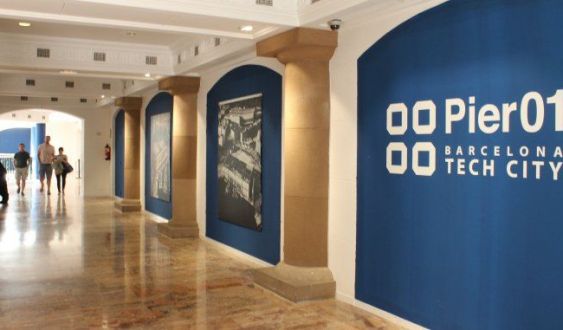
From the Generalitat de Catalunya, the objective is proposed to create a financial cluster in Catalonia and Barcelona, with a multiplier effect on the economy, to develop a financial innovation ecosystem.As already foreseen in the PwC Global Fintech Survey of 2016, these business models are currently mainly based on retail banking and payment systems. That is why the Generalitat de Catalunya proposes the objective of creating a financial cluster in Catalonia and Barcelona. A cluster that would have a multiplier effect on the economy, taking advantage of the opportunity to develop a financial innovation ecosystem, as well as specialization and differentiation inasset management, venture capital, corporate financeand payment systems. In fact, in Catalonia, financial activities generate a gross added value of 7,470 million euros. This represents 3.6% of the Catalan economy, compared to 5.7% in 2009. This decline highlights the new Fintech projects emerging in the capital, such as Pier01-Barcelona Tech City, the establishment of N26 or BCN10, among others. In fact, the Catalan financial ecosystem is made up of 98,000 workers and 450 companies, of which 50 are Fintech. This is how this business model "Barcelona brand" - and increasingly "Catalonia brand" - functions as a lever for the active attraction of companies and international talent. [subscribe_newsletter_esp] Therefore, the Fintech sector in Barcelona is of great relevance, with a constantly growing ecosystem. In fact, according to the European Commission report,Startups City Hubs in Europe-carried out by the Mind the Bridge foundation- there are approximately 50 innovation hubs in the European Union. Barcelona and Madrid are included in the Top StartupsCity Hubs. In the Catalan capital, Fintech companies such as Kantox, Verse, Goin, Coverfy, or NoviCap, among others, stand out, which have large amounts of funding. In the case of Kantox, it has accumulated a total of €21M since its creation, while Verse has raised more than €30M in funding. In addition, in 2018 the firstneobankcreated in the city: BCN10. A 100% digital bank that received more than €1M in funding, and is currently experiencing significant growth. Additionally, Catalonia is carrying out initiatives to attract Fintech companies. For example, Acció signed sponsorship contracts with 7 platforms ofcrowdlending, crowequity e invoice trading, to encourage the use of alternative and complementary financing to that of banks. Thus, in 2017 they increased significantly, specifically by 94% in the case ofcrowdequity, a 42% incrowdlendingand, finally, 32% ininvoice trading
ACCIÓ has carried out initiatives such as the creation of a portal called Barcelona & Catalonia Startup Hub, connecting Fintech companies with great entrepreneurs and investors from all over the world.According to ACCIÓ -the public agency for the competitiveness of Catalan companies- Barcelona is the main hubofstartupsof Southern Europe and the fifth on the continent, and is the fourth city that has received the most investment, behind London, Berlin, and Paris. On the other hand, ACCIÓ has also carried out an initiative to promote this type of company, with the creation of a portal called Barcelona & Catalonia Startup Hub, thus connecting Fintech companies with great entrepreneurs and investors from all over the world. In Barcelona, we also find the non-profit association Barcelona Tech City, formed by local entrepreneurs with more than 800 companies, whose objective is to internationally promote Barcelona's technological brand, attract investors, contribute to the creation of a favorable environment for this type of companies, connect talent with international companies, and collaborate with other organizations to accelerate the technological ecosystem. One of the most important projects of this association, which we mentioned earlier, is PIER01 -considered the most important international technological HUB in Europe- which brings together more than 100 Fintech companies, with the aim of fostering collaboration among them and encouraging innovation. Within PIER01, projects such as the Payment Innovation Hub stand out, a project by CaixaBank, Global Payments Inc., Visa, Samsung, and Arval that promotes research and development in the field of new technologies and payment methods, in order to adapt to new consumer demands. They carry out lines of research that encompass areas such as biometrics, and new technologies such as Blockchain or Machine Learning.

Add The New Barcelona Post as your preferred Google source for free
Stay informed with the latest news.
