At number 5, Sant Sever street, a discreet metal sign announces that the formerly known Casa Vives belongs to the 590 Relais & Châteaux on the planet. Of these, 350 are in Europe, 24 in Spain, four in Catalonia, and only one in Barcelona city: the Hotel Neri, protagonist of the fourth chapter of Hotels with History and Stories of Hotels, a series that The New Barcelona Post publishes every two Fridays.
The association of which the hotel is a member was born in 1941 when Marcel and Nelly Tilloy, former French music-hall artists, bought a rural hotel next to the Rhône river. After the war, they visited seven similar establishments between Paris and Nice and, instead of copying their virtues, they convened them: they created the Route du Bonheur, eight hotels that recommended each other. In 1975 they adopted the name Relais & Châteaux; today they bill 2.2 billion euros and manage 12,800 rooms in 65 countries under three rules: excellent gastronomy, impeccable service, and unique personality.
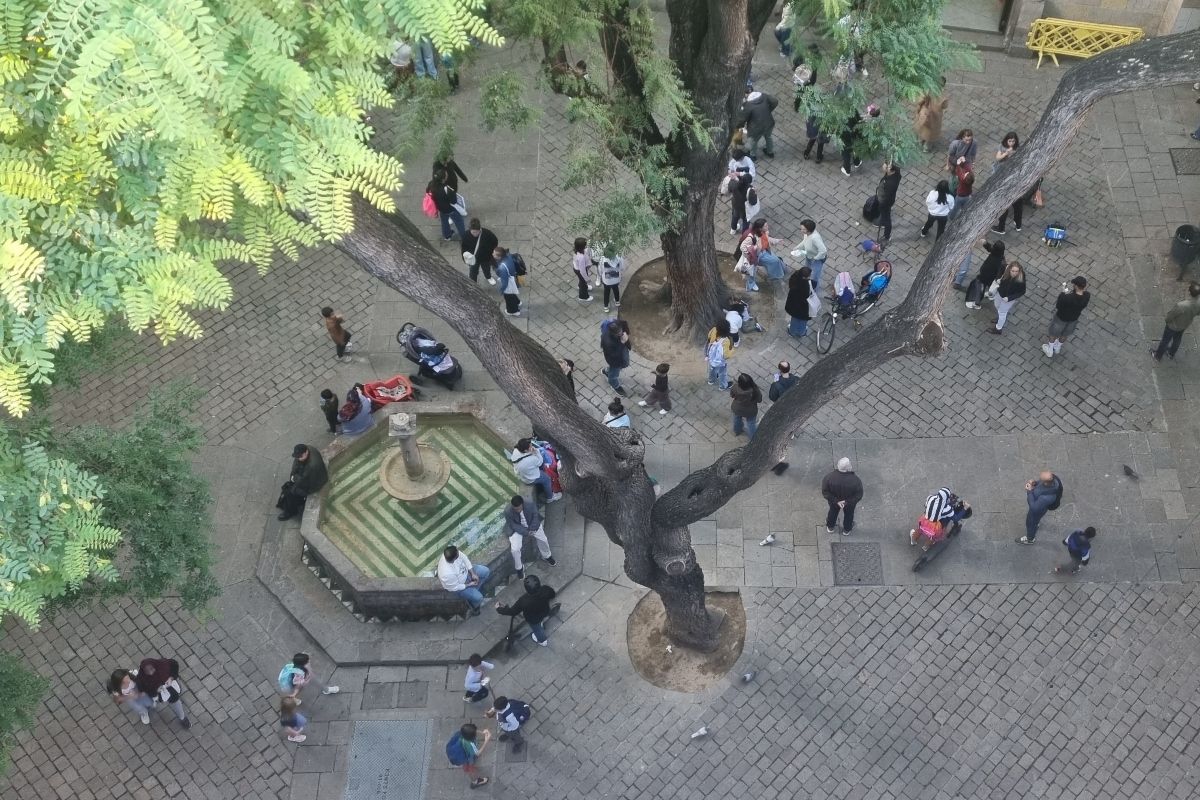
Casa Vives is not a fairytale palace, but a stately building cataloged as a Cultural Asset of Local Interest. It is 40 meters from the Palau de la Generalitat, 25 from the church of Sant Felip Neri, and 60 from the side access to the Cathedral. It has survived royal debts, fascist bombs, and enlightened gatherings to become a 22-room boutique hotel that opens its doors to what is probably the quietest square in the Gothic Quarter.
Two houses and a foreclosure
At the end of the 17th century, the plot housed two modest homes on the edge of theCallJew. In 1728, Maria Gràcia Torres, wife of the Bourbon treasurer Miguel de la Torre, unified them after theNew Plant Decree. His son Marià inherited the position and a financial hole: the Royal Heritage seized the estate. In 1782, the grandson recovered it and sold it to the jurist Raimon Vives. Then,Vives reformed it between 1783 and 1790installed wider balconies, a corner shop, and an overhang towards the square.In 1800, he married Gaietana Gualba for the second time, and upon his death in 1825, the Sant Sever part remained in the hands of his widow and her three daughters, who rented it out for a century. As a curious fact, the tenants paid 1,200 reales annually during the early times.
From enlightened headquarters to refuge after the bombs
In 1925, theSocietat Econòmica Barcelonesa d'Amics del Paísbought the property for 125,000 pesetas and converted it into its headquarters. The main floor hosted debates on agriculture, industry, and the Renaixença. Members arrived on foot from La Rambla, climbed the noble staircase, and discussed whether Barcelona could industrialize without losing its soul.On January 30, 1938, bombs dropped from Savoia-Marchetti planes of the Italian Aviazione Legionaria fell on Plaça de Sant Felip Neri at 9:05 in the morning. 42 people died, 20 of them children from the school that still exists today. Casa Vives received lateral impacts: two balconies were destroyed, significant cracks appeared on the facade, and all the windows on the main floor were broken. The members of the Societat swept away the debris and continued meeting from the week following the bombing.
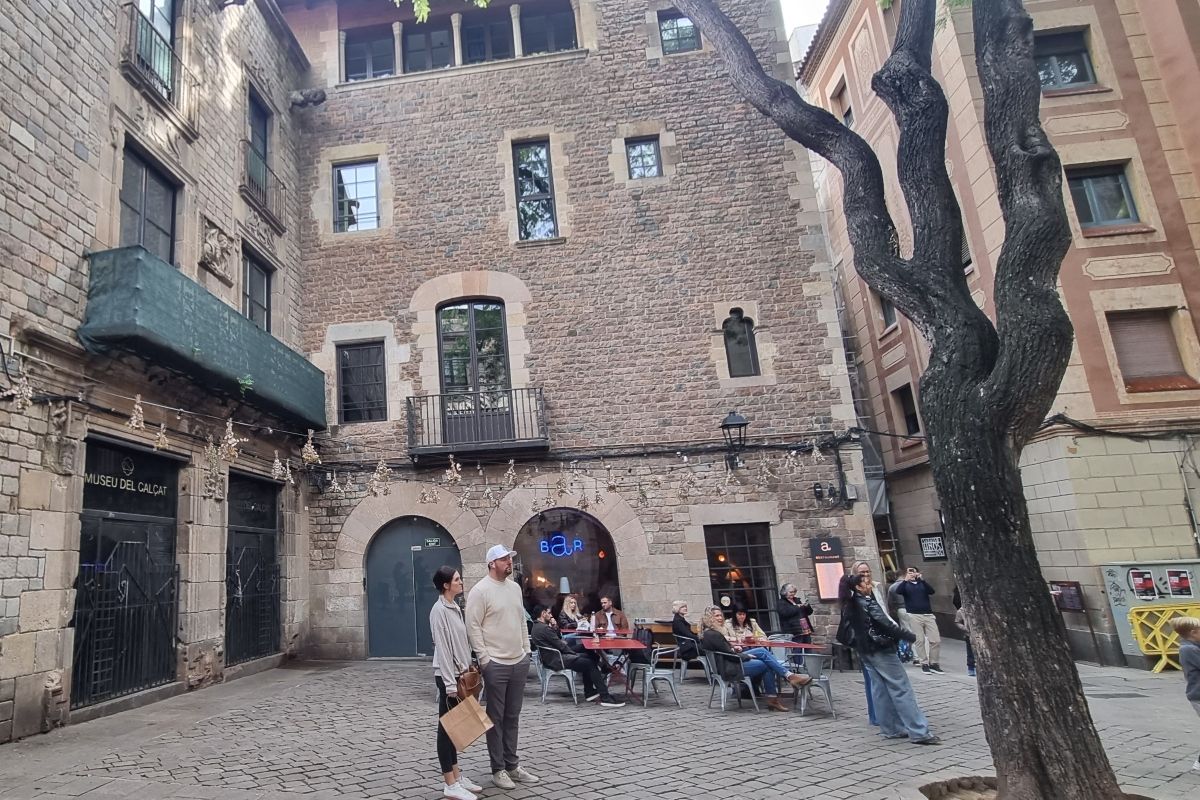
In 1958, Adolf Florensa rebuilt the facade, reusing stone from demolished guilds on Avinyó and Ferran streets. The works, completed in 1964, brought to light 1st-century Roman cisterns, 10th-century medieval silos, and a 9th-century wine press. Despite the poor interior condition, in 1974 the City Council ruled out declaring the property a ruin: the technical report highlighted "structural integrity and historical value."
The Societat moved to another headquarters in 2001. That's when it entered its current phase: Anima Hotels bought the property for 3.2 million euros, renovated it under the direction of Damià Ribas, and opened in July 2003. The project respected 85% of the original structure: a Gothic courtyard with ogival arches, Baroque sgraffito (perhaps the best preserved in the city), and veteran exposed beams.
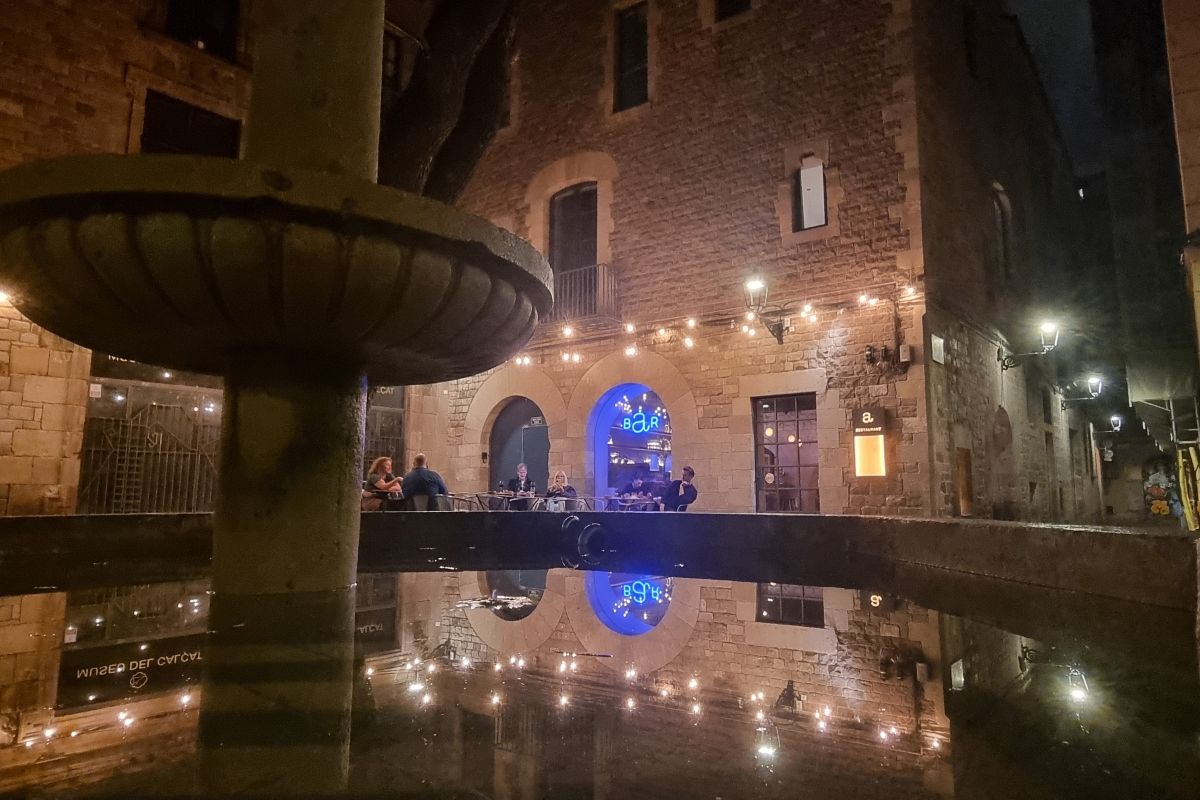
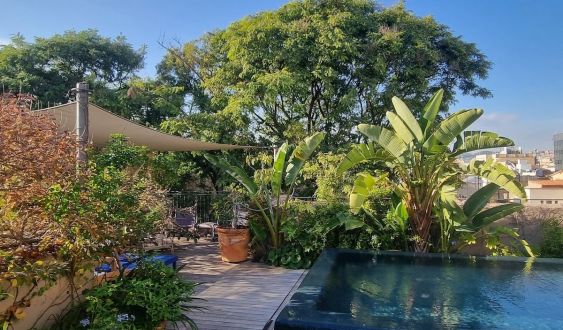
The rooftop has been converted into a rooftop, a charming common space named Roba Estesa, and has a small seasonal pool. On the ground floor there is a library and the "a" restaurant, which serves contemporary Catalan cuisine with local produce and has a terrace on the square to fall in love with this part of Barcelona.
Architectural curiosity: Damià Ribas's thread
For lovers of curiosities who pull the red thread connecting places that apparently have nothing to do with each other, here's a fact: the Hotel Neri shares a common denominator with places as disparate as a speed circuit, a select delicatessen, and a lighthouse. And that is because the main grandstand of the Circuit de Barcelona-Catalunya in Montmeló, the reconversion of the famous Semon delicatessen into a Mercès on Ganduxer street, and the modernization of the Sant Sebastià Lighthouse in Llafranc (which maintains its role as a maritime signal while the lower floors function as a restaurant), are works by the architectDamià Ribas, the same studio that unites speed, commerce and coast with the same hand that restored this corner of the Gòtic.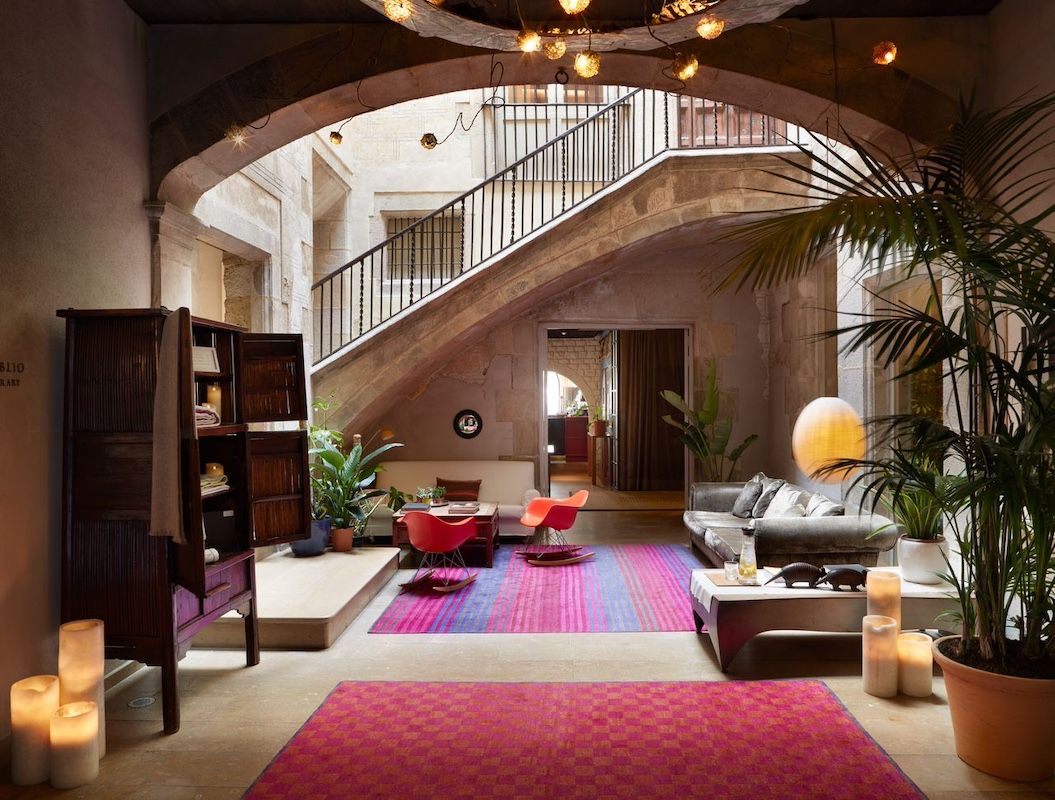
The hotel occupies 1,800 square meters across five floors. The 22 rooms range from 25 to 45 square meters, some with terraces and outdoor bath-showers. A whim in the heart of Ciutat Vella. 70% of guests are repeat visitors and 40% arrive recommended by other Relais & Châteaux. Although it is a very suitable place for getaways for personalities who want to spend a few days in the city, there is no record of verifiable celebrities: discretion is a hallmark of the house, as is its integration into the neighborhood in a deeper way than it might seem at first glance.
Two years ago, this veteran building celebrated 20 years as a hotel. Anima Hotels, its owner, manages other establishments in Barcelona and its surroundings, such as the Wittmore, also in the Gòtic, a speakeasy boutique with a vertical garden and rotating exhibitions, which could deserve its own chapter in this series.
Add The New Barcelona Post as your preferred Google source for free
Stay informed with the latest news.