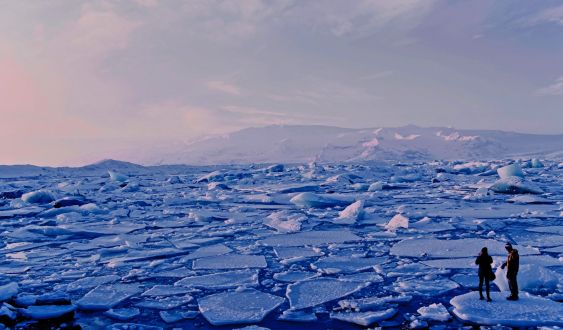
It has happened again, 2017 goes down in history as one of the warmest years on record. 2015, 2016 and 2017 have been confirmed as the three warmest years for which data is available. According to the World Meteorological Organization, it is a sign of the continued long-term climate change caused by the increase in atmospheric concentrations of greenhouse gases. And 2018 is showing promise. In January, several locations recorded their highest temperatures for this month since records began.
To the heat we can add drought. 2017 has been the second driest year in Spain since 1965 according to data from the State Meteorological Agency. The average precipitation was around 474 mm. 27% below the annual average value according to the 1981-2010 reference period.
Examples for hope we have some like that Montreal Protocol that since 1987 marks the way to reduce and eliminate gases that deplete the ozone layer. An example of a response to a clear threat to life on our planet.Fortunately, not everything related to climate is bad news. While some leaders revel in their ignorance of how the climate system works and their contempt for scientific evidence, many more are advancing in agreements that propose lines of work to advance commitments to reduce greenhouse gas emissions.
Examples for hope we have some like that Montreal Protocol that since 1987 marks the way to reduce and eliminate gases that deplete the ozone layer. An example of a response to a clear threat to life on our planet. Thus, despite reasonable doubts, the Paris Agreement lit a small light that allows us to trust that the human species is intelligent enough to avoid its own extinction.
The flagship measure, the commitment made, is to keep the increase in the global average temperature below 2 °C. It is not much, but that global average hides what we are experiencing: an increase in the frequency of extreme episodes. Especially in the upper part of the table: hotter summers, milder winters… drought. And snowstorms, so rare and occasional that they catch us unprepared, turning the inevitable consequence of collective recklessness into a national controversy over the management of a toll highway.
News follows quickly: more heat? more cold? are we condemned to live in an arid desert? are we heading straight for the next ice age? will we be able to cultivate in Siberia or will we be trapped in a large mass of ice?
Warnings of what awaits us keep coming. In the short and medium term, glaciers recede and large ice masses decrease. Large blocks of ice detach from Antarctica, reaching us in the form of headlines about a new record size for the next iceberg. But what is really worrying when part of the Larsen C platform breaks off is not its small contribution to the rise in sea level. It is that it leaves the glaciers that fed it without the barrier that retained ice that will no longer accumulate.
We can still incorporate the United Nations Sustainable Development Goals into our decision-making processes and place them at the center of our companies' business model.In the Arctic, the situation is similar. The ice pack disappears. A complete success for the transit of goods by sea and a great opportunity for those who intend to explore resources protected by ice. A drama for the planet's climate as we know it: less ice, less white surface, less reflected solar radiation... more heat and more fresh water.
Will Barcelona and other coastal cities be flooded? Perhaps geoengineering can provide the Mediterranean with a physical barrier that isolates it from the ocean and that, through a sophisticated pumping system, can prevent the rise in sea level on our coast. Perhaps it is such a costly solution that we cannot afford it.
What does seem to be the case is that changes in salinity due to the input of fresh water from the Arctic melt will affect thermohaline circulation. The wonderful oceanic conveyor belt, which, since the last ice age, distributes the temperature the planet receives and allows for the climate we have known until now.
Have we broken the climate? Not enough yet. We still enjoy four seasons. We can still change our individual behavior to adopt a more sustainable consumption model. We can still incorporate the United Nations Sustainable Development Goals into our decision-making processes and place them at the center of our companies' business model.
We can still stay below the fateful two-degree Celsius increase that would slow down the oceanic conveyor belt, a miracle of nature that brings to our latitudes the heat that the Sun gives us in the Gulf of Mexico. If we continue to look the other way, thinking that winter won't be eaten by the wolf, we will be left without the ally that prevents polar cold from spreading throughout Europe.
No, we haven't broken the climate, but we have shown enough capacity to do so. The question is, are we intelligent enough to adopt in our sphere of responsibility the decisions that allow us to continue enjoying the climate we like? Can we do it without destroying the planet and respecting the dignity of all the people who inhabit it? I trust that we can and that I can share this journey with you.
Add The New Barcelona Post as your preferred Google source for free
Stay informed with the latest news.