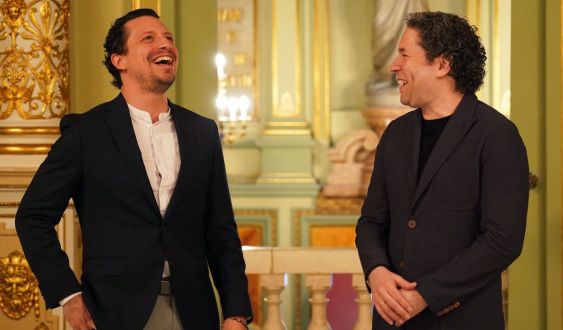
When Gustavo Dudamel was going through adolescence and was a bit depressed, a teacher recommended that he listen to Mozart in the morning to remedy it. Since then, the Austrian musician has accompanied him "every morning, not only on sad or more complex ones." "It produces an emotion and a joy that elevates my spirit," he confessed at the presentation of The Magic Flute, the third work he will conduct at the Gran Teatre del Liceu after the success he had with Otello last season and he will do so with David McVicar's staging. "For me, it is a privilege and a pleasure to return, especially with such an emblematic title," said the musical and artistic director of the Los Angeles Philharmonic and musical director of the Paris National Opera and the Simón Bolívar Symphony Orchestra.
With ten performances on the bill from Monday, June 20 to Saturday, July 2, Dudamel will conduct this Mozartian opera for the first time, an unusual fact for such a relevant title ---and a stroke of luck for the Liceu---, although the Venezuelan musician does not believe he is late to it. "I still feel a little young," he defended, thinking of another of his teachers, the late Claudio Abbado, who waited until the last years of his career to tackle this title. "The times of waiting to do works depend on the vital and artistic path each one takes. I feel that I am not at the end of my life ---he joked---, but I am at a stage of a beginning of maturity," he explained.
Although it is the first time he faces The Magic Flute, the orchestra conductor has felt accompanied by Mozart "since always," not only for having helped him overcome adolescence, but also because one of the first operas he conducted was his, Don Giovanni. It was 2006: "I was a boy, I remember it with great pleasure. Then I have done it more times and the experience took me to other places, but, at the same time, I still kept that impression of having studied it very young."
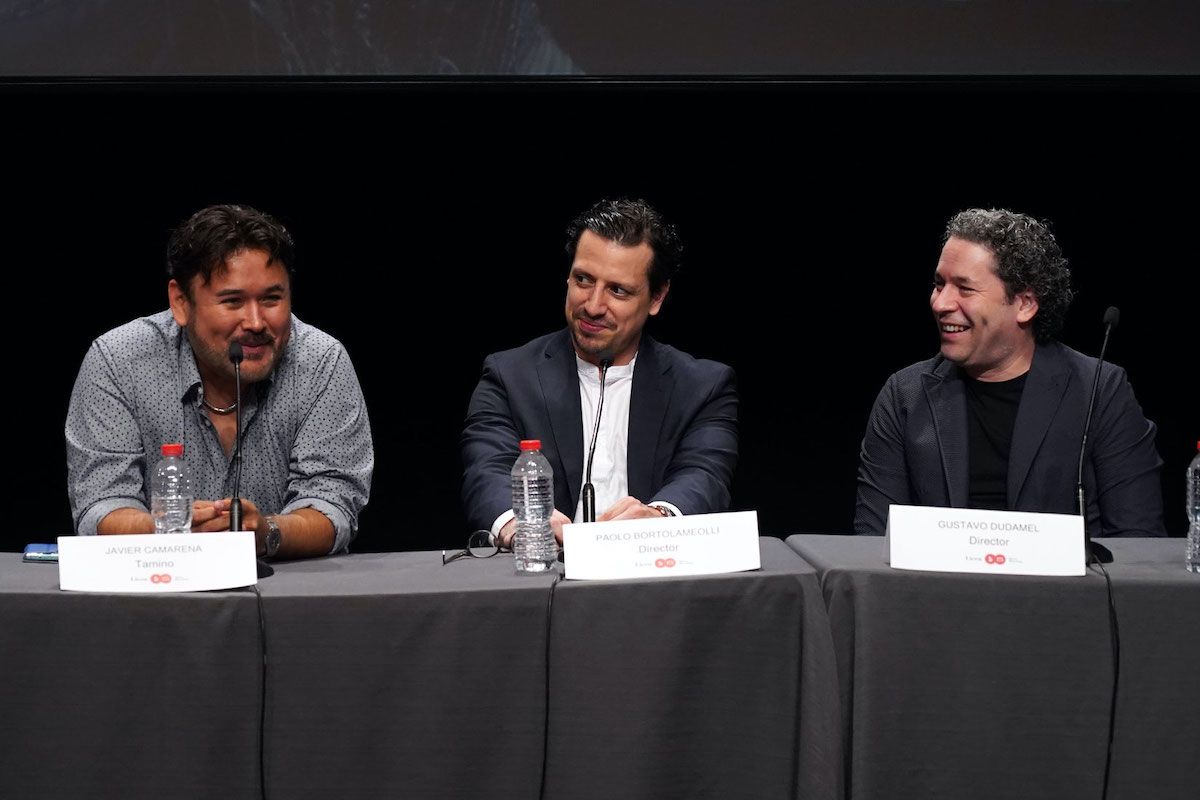
An essential early approach, especially considering the "profound innocence" that Gustavo Dudamel remarks the Austrian musician preserved until the end of his days, which translates into seeking freshness at all times, without forgetting a perfect structure. An innocence that is even more explicit in The Magic Flute, considered by many as a children's story, which makes it the first opera many children see, as in the case of Paolo Bortolameolli, Dudamel's substitute conductor on June 27 and July 1, which will also be his first times at the Liceu. "The Magic Flute reaches children and, in turn, they have a very important role in it, since they are the bearers of wisdom," said Bortolameolli, principal guest conductor of the Santiago Philharmonic Orchestra at the Municipal Theater and associate conductor of the Los Angeles Philharmonic. "Mozart never stopped being a child," he added.
All that innocence is combined with a profound meditation on life and death through archetypal characters full of contradictions, as explained by the artistic director of the Liceu, Victor Garcia de Gomar, which makes it a "tremendously human" title. Without forgetting that Mozart included the concepts of the Enlightenment that were emerging at the time, giving voice, for example, to women and young people. Commissioned by his Masonic brother, the composer also reflected the values of Freemasonry, with the aim of bringing a more popular audience to his theater ---which made the opera comic and in German---. "It has all the ingredients: it makes you laugh, cry and learn," reinforced Garcia de Gomar.
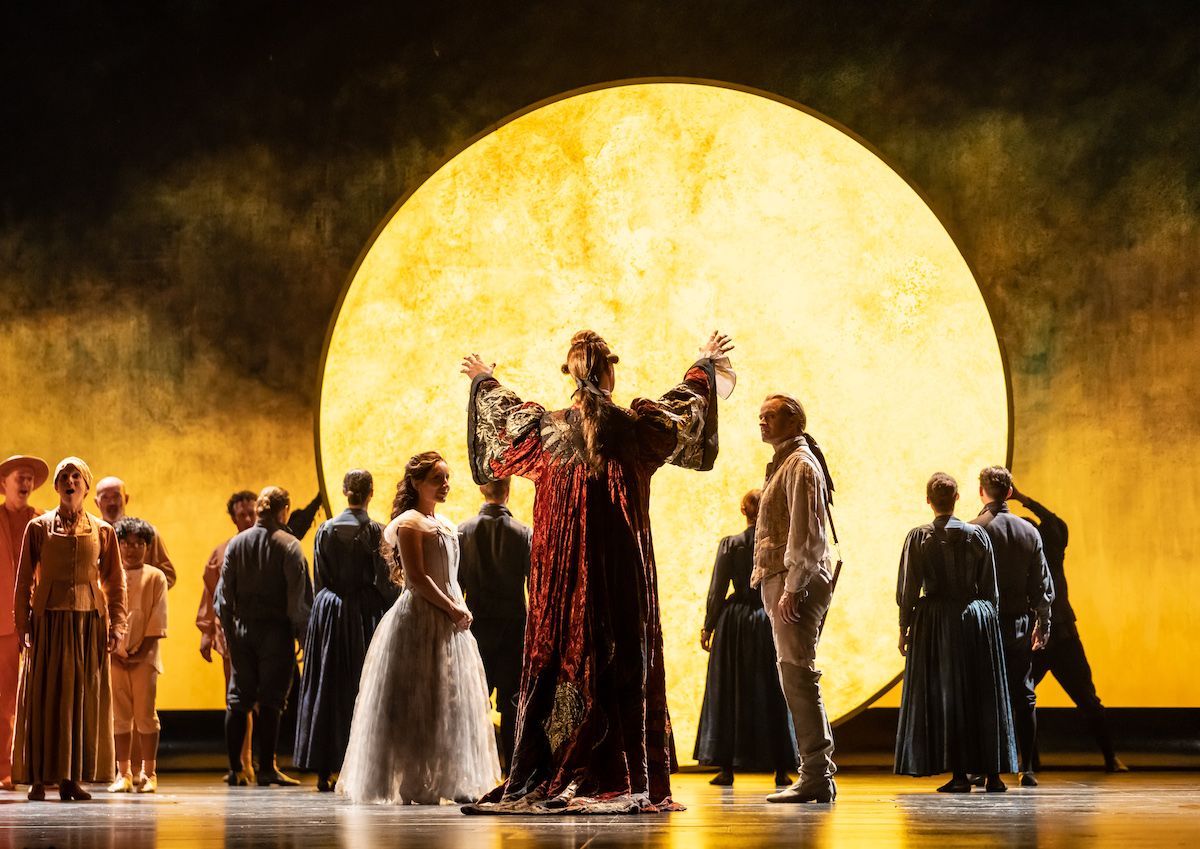
With Javier Camarena and Lucy Crowe
Gustavo Dudamel will be accompanied by the lyric tenor Javier Camarena, who will also debut in the leading role, that of Tamino, a prince who is saved from death thanks to the Queen of the Night. In exchange for this gesture, the Queen of the Night will ask him to save her daughter Pamina, who will be played by soprano Lucy Crowe. Helped by the bird catcher Papageno, Tamino will go in search of his kidnapper, Sarastro, and will discover that not everything is as it seems, with love and truth in between.
The Magic Flute was an opera that Camarena swore he would never take on, given the challenge of the singing style he would have to execute, but he ended up accepting the role without hesitation. "Making the decision was not complicated, learning German, yes," he said. For Crowe, however, Pamina is one of her favorite characters, for her exemplification of good, truth, and purity. "She makes me feel young," she admitted, rejecting that she is a weak character and recalling that Tamino and the action advance when she wants them to.
Add The New Barcelona Post as your preferred Google source for free
Stay informed with the latest news.
