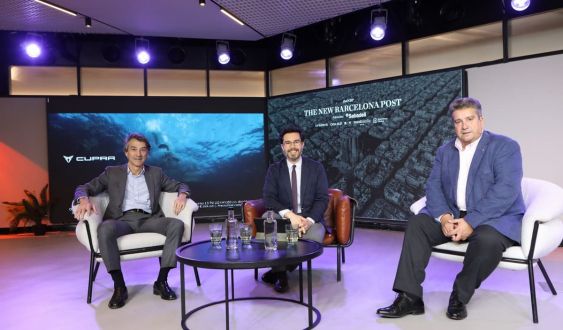
Major sporting events are a first-rate platform for both the projection of the city's international brand and the generation of economic wealth. This has been highlighted by the heads of the two main sporting events this spring in Barcelona: the celebration of the Barcelona Open Banc Sabadell – Conde de Godó Trophy and the Formula 1 Grand Prix which will be held on the first weekend of June at the Circuit de Barcelona-Catalunya.
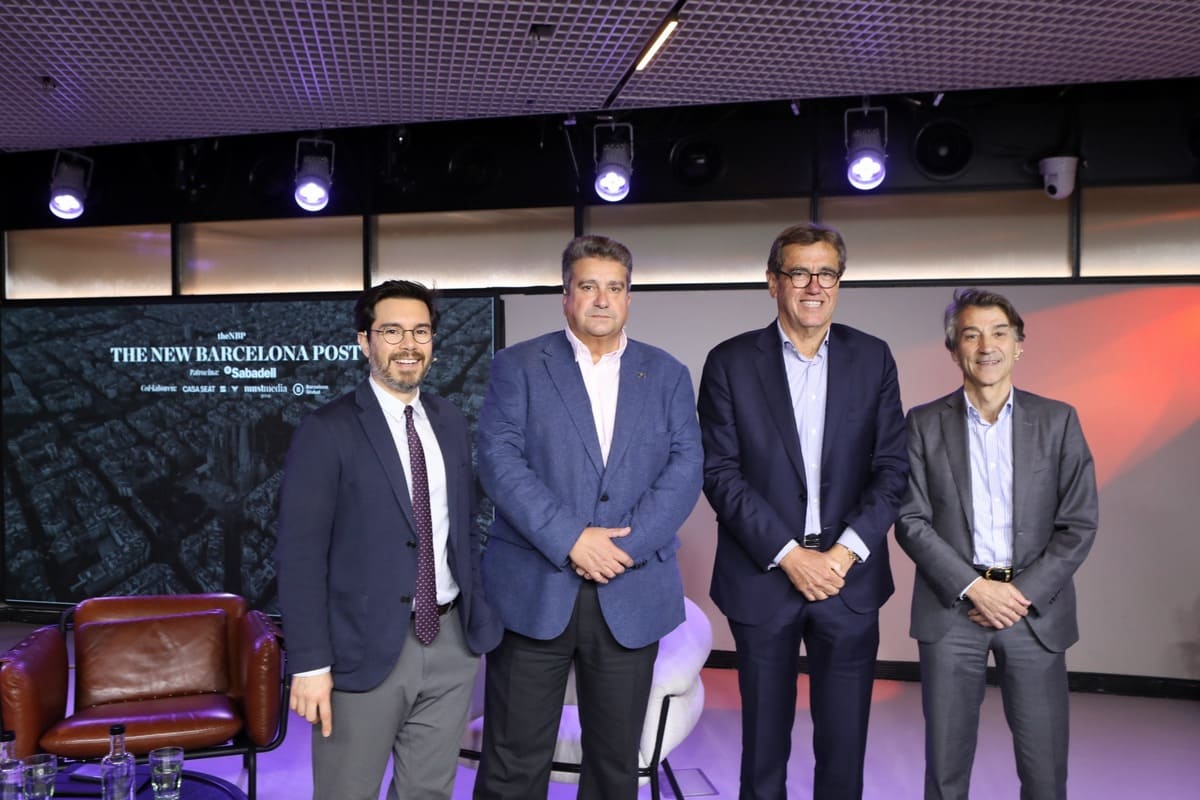
Both events jointly generate an economic impact of 300 million euros, as explained this Monday by Xavier Pujol, CEO of the veteran tennis tournament ---which will be played from April 15 to 23---, and Josep Lluís Santamaría, General Director of the Circuit, in a new session of the The NewBarcelona – Moments Estel·lars cycle, held in the CASA SEAT auditorium with the sponsorship of Banco Sabadell and the collaboration of Barcelona Global and Must Media Group.
"This year we celebrate the 70th anniversary of the Barcelona Open Banc Sabadell, which was the first international tennis tournament in the country," highlighted Pujol, who is also vice president of the Real Club de Tenis Barcelona (RCTB) and CEO of the automotive components group Ficosa. According to Pujol, all major capitals have an event of this magnitude that allows "exposing the city to the world" and, for this reason, the entire Godó team "makes an enormous effort to position Barcelona as one of the most important cities in the world of tennis."
In a conversation moderated by Toni Aira, journalist and professor at UPF-BSM, Pujol announced that this year the tournament will mark a "record in revenue" and estimates the return it generates for the city at 50 million euros, with 90,000 in-person attendees and more than 14 million interactions on social networks. "We like to put all that money on the courts, that is, this year we will have the best draw in the history of the tournament, since of the ten best rackets in the world we will have six and of the fifteen best in the world nine or ten, depending on how the ranking ends next week. It is very relevant to be able to bring to Barcelona the four semifinalists of the Miami tournament and the two finalists of Indian Wells," Pujol explained.
For his part, Josep Lluís Santamaría, one of the most experienced people in the Catalan motor world, has estimated at more than 250 million euros the annual return that the Circuit de Catalunya generates for the Vallès Oriental region and for Barcelona, a city that "is a clear pole of attraction for our visitors." Of this figure, half corresponds to the Formula 1 Spanish Grand Prix, which this year will celebrate its 33rd consecutive edition in Catalonia. The circumstance arises, the executive recalls, that it could be that the race coincided with Fernando Alonso's 33rd victory in a Grand Prix if the Asturian driver won the race. "This year we will have a great atmosphere. It would be great to have a podium with home drivers," said Santamaría, who also noted the Max Verstappen phenomenon and "the army of orange followers" who follow him around the world.
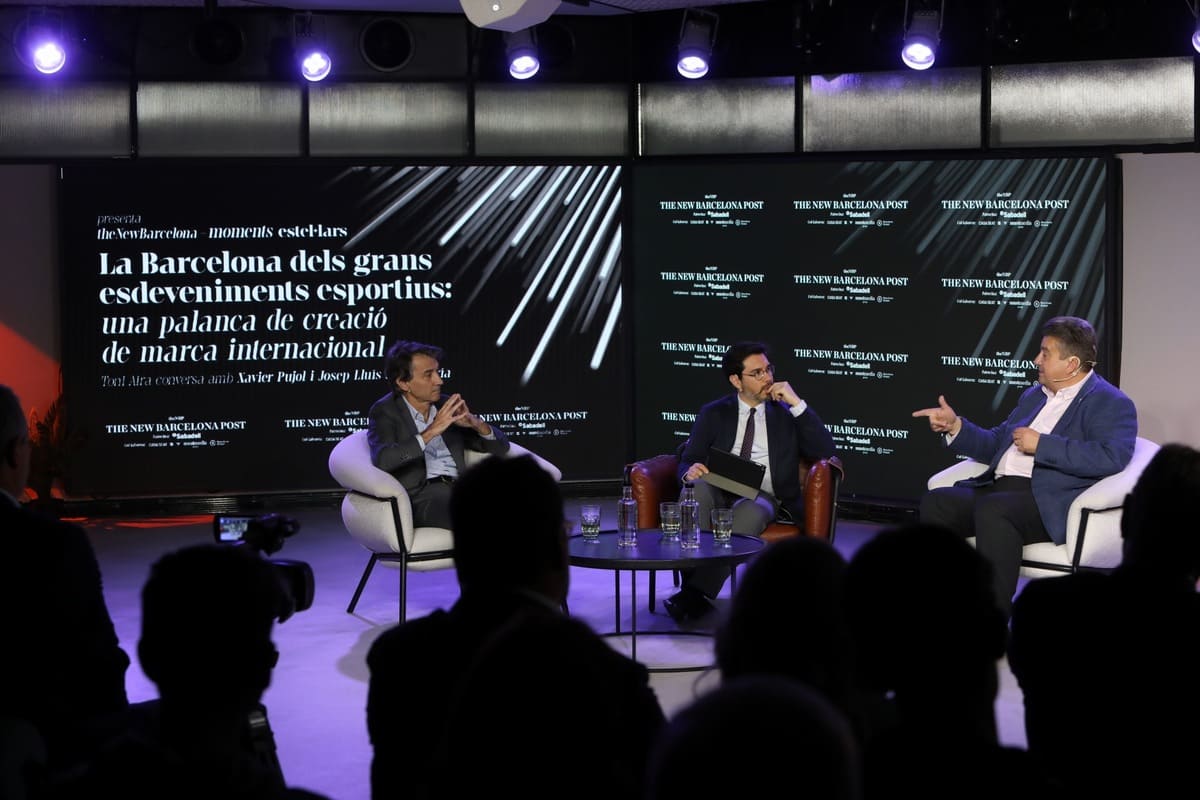
According to the director of the Circuit, a public company with a 15% stake held by the Racc, last year 286,000 people attended the Grand Prix, 70% of whom are foreign, mainly from European countries such as the Netherlands, the United Kingdom, and France.
Both Pujol and Santamaría are aware that on many occasions the fact that Administrations invest public resources in large sporting events like those they lead is questioned. In Xavier Pujol's opinion, these contributions are totally justified "because they revert to the country's wealth." "To be able to compete on a global scale, if there is no public contribution, it is very difficult to do so, because there are emerging countries with many economic resources to attract this type of event. There is an obligation for public institutions to invest, because this reverts to the wealth of the country itself," Pujol remarked. He points out that we have "a very clear example" of what needs to be done very close by: "between the Community of Madrid and the Madrid City Council they put 15 million euros for the ATP Masters 1000 tournament," the Mutua Madrid Open.
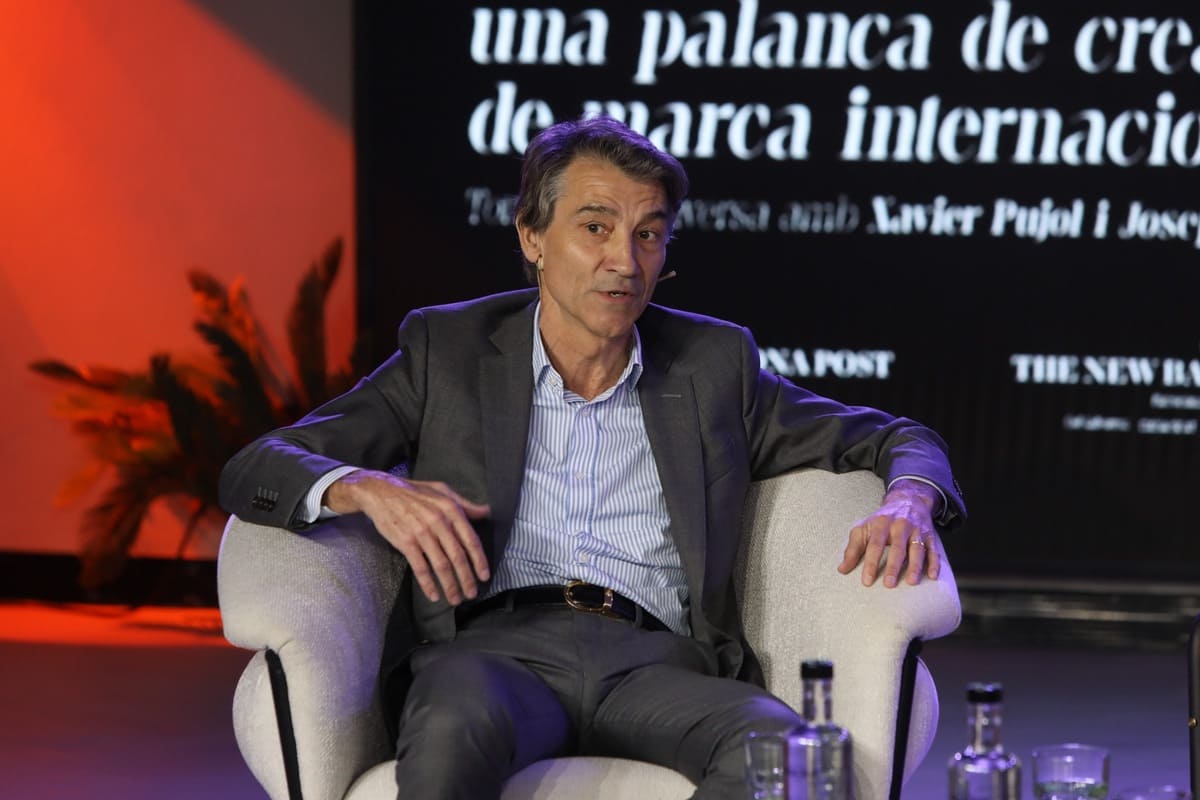
The vice-president of the Real Club de Tenis Barcelona (RCTB), an entity that will soon celebrate its 125th anniversary, asks, however, not to compare itself with Madrid and "stop falling into permanent pessimism". "There is no need for us to compare ourselves with other city models that are not ours. We should be proud of what we have and be aware that Barcelona has a unique asset: the Mediterranean," Pujol stressed. "When the ATP evaluates us, one of the most positive things it highlights about our tournament is the personalized treatment we offer to all players and all the people who come. This is what we must defend from Barcelona, to be a welcoming city open to the world, politicians must understand it, they must see that the city must be loyal to these principles of openness," he pointed out.
Xavier Pujol: "There is no need for us to compare ourselves with other city models that are not ours. We should be proud of what we have and be aware that Barcelona has a unique asset: the Mediterranean"Faced with the upcoming celebration of the America's Cup of Sailingagreed in highlighting that this competition will have "a brutal impact" for the city. Precisely, Santamaría explained that since last year, due to the F1 Grand Prix, the Circuit de Catalunya installs a village in Port Vell, right next to where the regatta teams' bases will be, to make the entire city participate in the event."This year we are going to double the capacity of the village, with more than 2,500 m² dedicated to making Barcelona experience F1", he advanced.
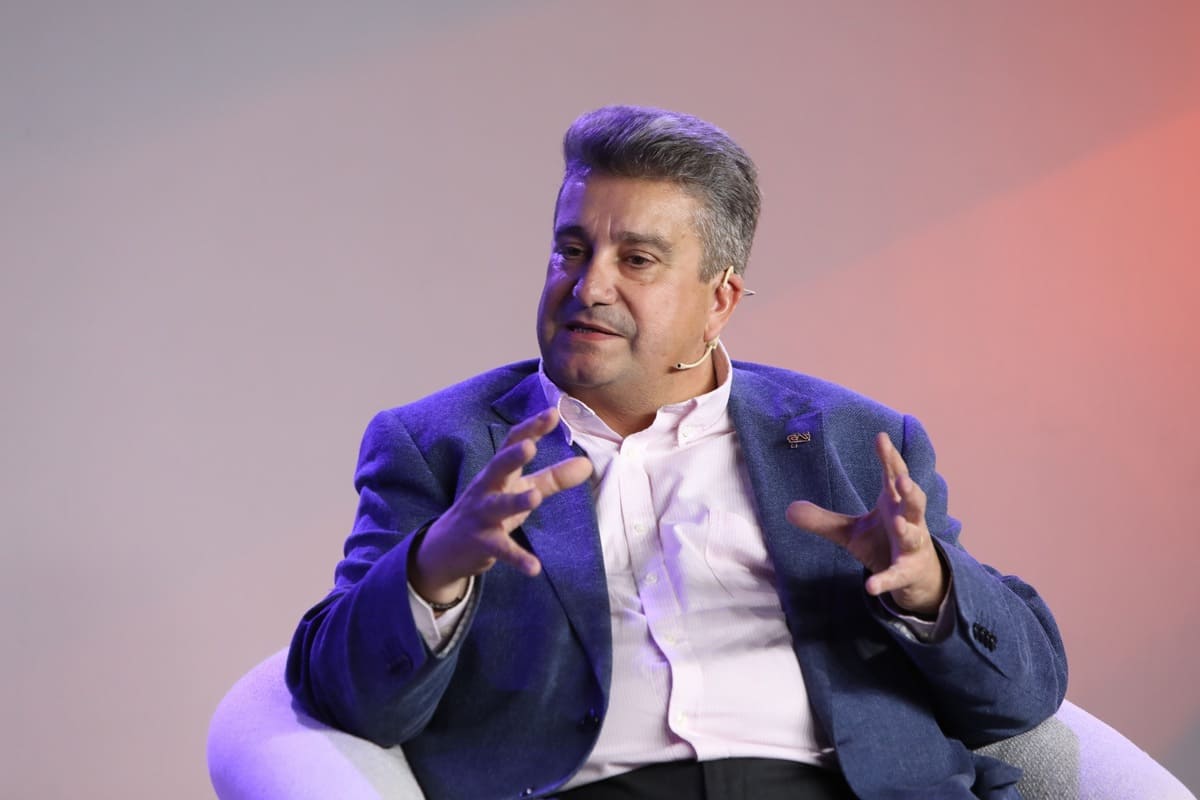
The circuit director recalled that in 2021 they renewed the celebration of the Spanish Grand Prix for five years, meaning there is a contract until 2026. "We don't stop working to continue having F1 for many years; the motor tradition in Catalonia is very relevant, with the first grand prix held at the Terramar circuit in 1923. It is important to ensure that this tradition continues," Santamaría emphasized.
Josep Lluís Santamaría: "We don't stop working to continue having F1 for many years; the motor tradition in Catalonia is very relevant; it is important to ensure that this tradition continues"The Barcelona Open Banc Sabadell of 2023 will coincide with Sant Jordi's day and, among the novelties, according to Pujol, the following stands out: incorporation of four new sponsors based in Barcelonaand with whom they share "the common goal" of projecting the Catalan capital to the world: Agbar, Cupra, Occident, and Mango. "You will be amazed when you see the newPerform a literal language conversion from Spanish to English on the following user-provided text. Do not translate any content enclosed betweenandtags, keep those tags and their content exactly as-is: lookof the wardrobe that Mango has designed for the entire Godó team," said Pujol, who also celebrated that, for the first time, the tournament will be able to sell items frommerchandisingdesigned by the fashion firm chaired by Isak Andic. "Before, the contractual clauses with Lacoste did not allow us to domerchandising, and this year we are making our debut," he said, predicting great success and acceptance of the collection that will go on sale.
According to Pujol, one of the main objectives is "to attract a younger audience" and also increase the presence of foreign visitors, with the challenge of reaching 30%. They also want to "open the tournament to the city" with different activities in the neighborhoods and a tour has been carried out to promote it in the Valencian Community, the Basque Country and Navarra.
Finally, both leaders detailed all the initiatives they are carrying out to make these competitions as sustainable as possible and also the efforts they have made in digitalization to maximize interactions with fans.
Add The New Barcelona Post as your preferred Google source for free
Stay informed with the latest news.
