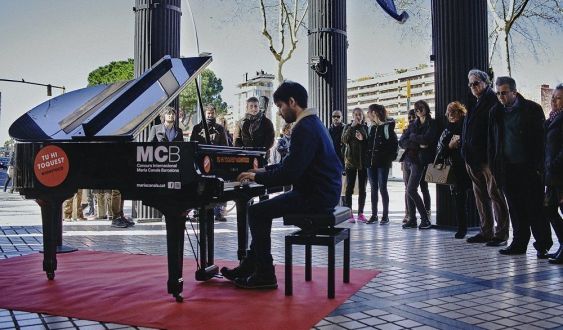
Carles Santos, a recently deceased artist, managed to awaken the perplexity of passers-by in 1971 by dragging a piano up the Rambla and, in 2009, by being dragged down the Rambla, pushed by other people while playing frantically, with a couple in an affectionate attitude and little clothing on the instrument's lid. Without reaching the extreme of performance, the decision to place these same instruments at different points in the urban space to be freely used (from March 3 to 19), with the advice of a musician who acts as a dynamizer, is part of the promotional acts of the Maria Canals International Competition. These installations seek to promote interaction by citizens, taking advantage of the paradox that makes the piano an element as identifiable, by the absolute majority of individuals, as it is strange in terms of use and enjoyment.
Few arts are more universally enjoyable -and with fewer means- than music. Nowadays, possibilities to approach it proliferate for minimal prices (less than a movie ticket) or thanks to the recent implementation of a "reverse box office," which makes each listener responsibly choose, according to their criteria, the price of the concert ticket they have attended.More and more initiatives are trying to make music a truly public heritage, alien to the outdated stereotypes that see in it (in classical, or in any other genre different from the omnipresent pop) a matter for people with special training or sensitivity. This is what the Maria Canals Piano Music Competition proposes in its 64th edition, through a deployment that is not intended to be only promotional of the piano competition. An event aimed at young performers, from 18 to 30 years old, which has a long history and international recognition. In fact, the promotion is directed at the very nature of music, constitutive of aesthetic experiences that add nuances to emotional life, and whose expressive variety allows the listener to broaden their horizons and invites them to discover themselves not only passively, but as a creator of more or less articulated sounds.
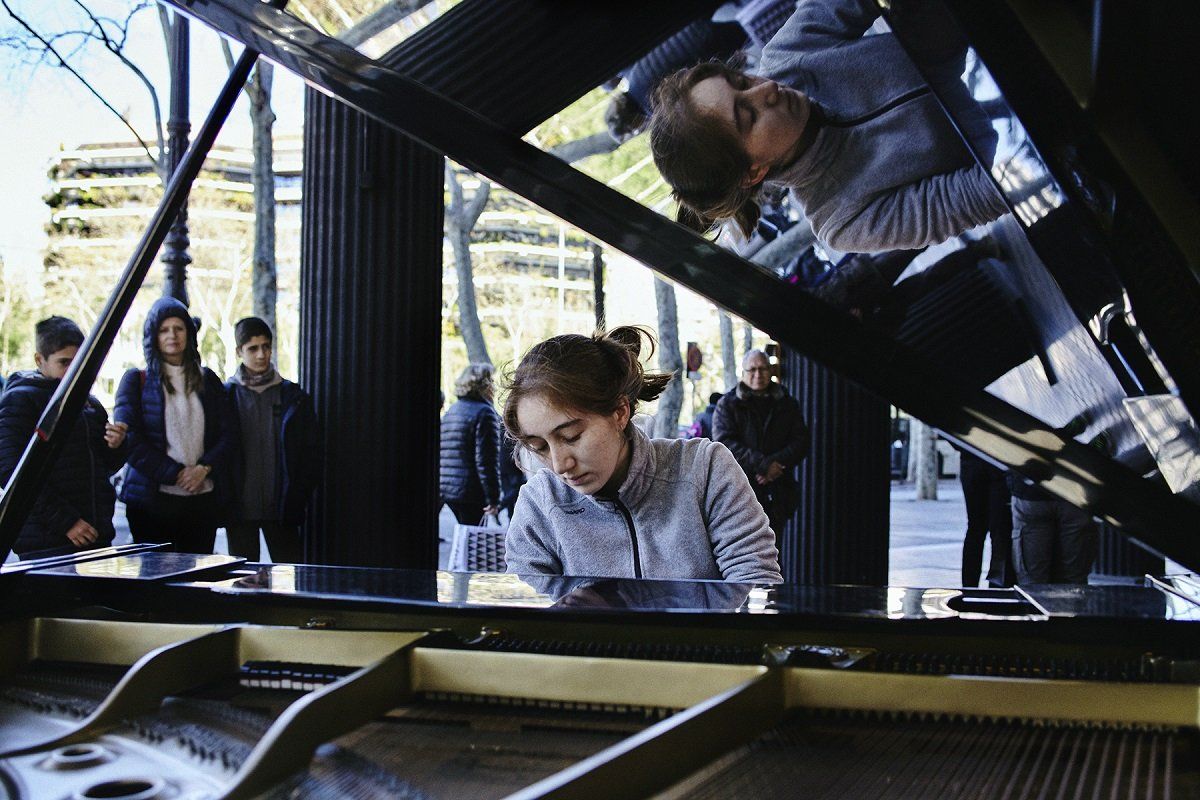
Few arts are more universally enjoyable -and with fewer means- than music. Nowadays, possibilities to approach it proliferate for minimal prices (less than a cinema ticket) or thanks to the recent implementation of a "reverse box office," which makes each listener responsibly choose, according to their criteria, the price of the concert ticket they have attended. Also, through large screens in public spaces, as has been done with opera in cities like Madrid or Barcelona. On the occasion of the Maria Canals competition, in addition to the possible use of the instruments, small recitals will be offered at the end of the days by professional pianists, completely free of charge.
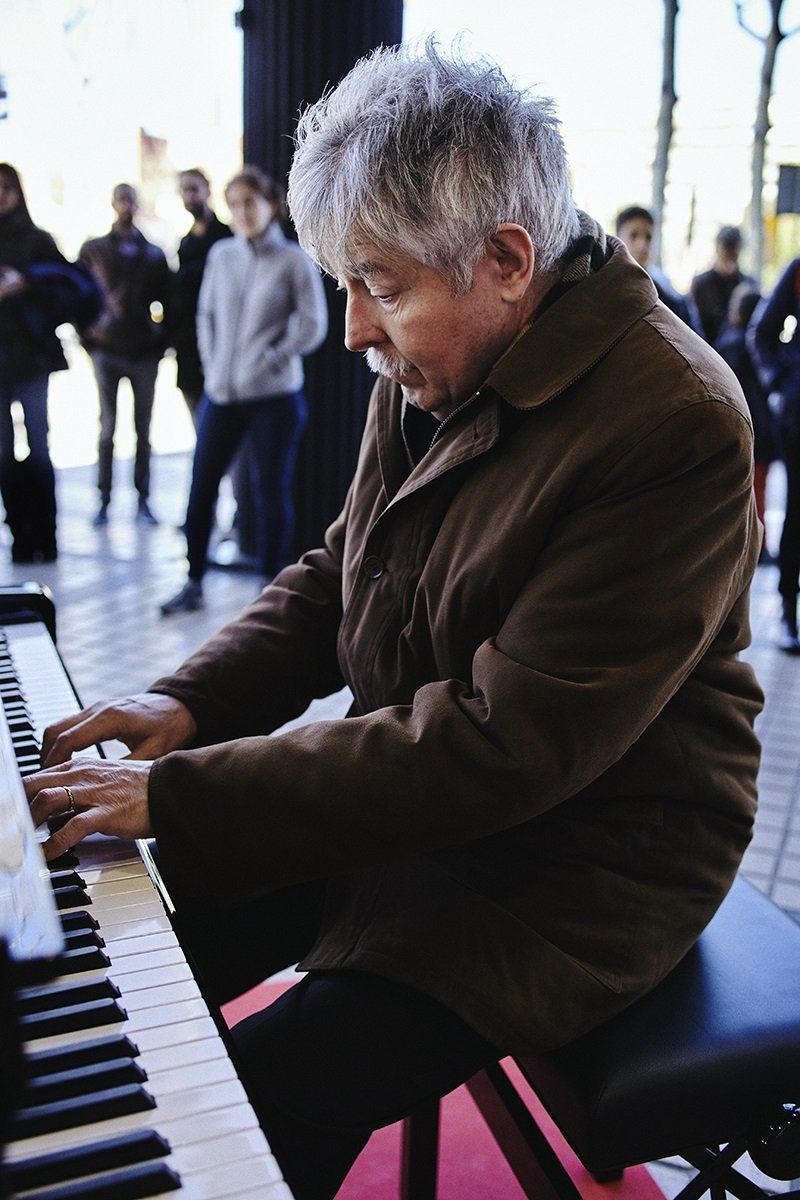
The spontaneous curiosity that all children naturally show towards music, their innate capacity to identify rhythms and be imbued with sound vibrations, is confirmed one more year with the surprising installation of pianos. Something that is also observed in the increasingly frequent concerts for all audiences, or children's audiences (to mention two recent ones, Big Bang Beethoven, at the Palau, or the screening of the film ET with live orchestral accompaniment, at the Auditori). The direct perception of the musical event, created in proximity to the listener and unrepeatable -music performed live, which might seem more ancient- actually gives rise to astonishment.
Those who have always been accustomed to automated reproduction, to an impersonal interpretation, are surprised to discover that music is made by a musician for the occasion. They feel how music addresses them with an unknown language, which they nevertheless understand. Thus, that invasion of pianos not only aims to publicize the Maria Canals Competition, in agreement with the Palau de la Música. Its most important function is to remind us that music belongs to everyone and is for everyone. The pretext of distance or lack of training can become a pre-text: an optimal occasion to discover the originality of a language that, in effect, offers us tools to connect with our origins.
Add The New Barcelona Post as your preferred Google source for free
Stay informed with the latest news.
