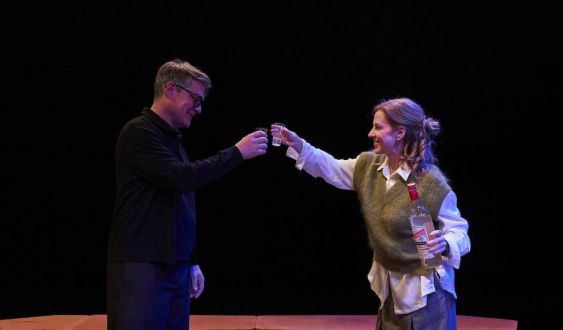
Imagination is a capacity that differentiates humans from the rest of the animals on the planet. Thanks to it, we are capable of dreaming, creating stories, or inventing impossible objects. At the same time, however, this faculty can become our worst enemy: we often live trapped in these stories that we have created only in our minds, but which pursue us like a shadow from which we cannot escape. We constantly review those what ifs that never became reality: the paths we didn't take, the career we didn't start, the people we lost along the way. Even that teenage love that never prospered.
It is precisely in those imagined lives—but never lived—where Göteborg, Jordi Casanovas' latest proposal, currently on display at La Villarroel until next January 31, delves. It does so through a pair of protagonists who, at first glance, seem opposite. He, an analytical and obsessive computer scientist who conceives love as a pathology, a simple chemical alteration of the brain, and who subjects human feelings to logic and reason, as if the formula for love were a simple algebra operation or a business balance sheet with assets and liabilities. She, an impulsive, rebellious, and independent woman, marked by the Swedish theory of love, which argues that a healthy relationship can only exist if it is based on personal independence.
Two opposing ways of understanding relationships, life, and the passage of time that (re)meet with Depeche Mode as a soundtrack: the group that united them in adolescence and whose melodies still resonate in their minds, like a persistent echo of those young versions they once were.
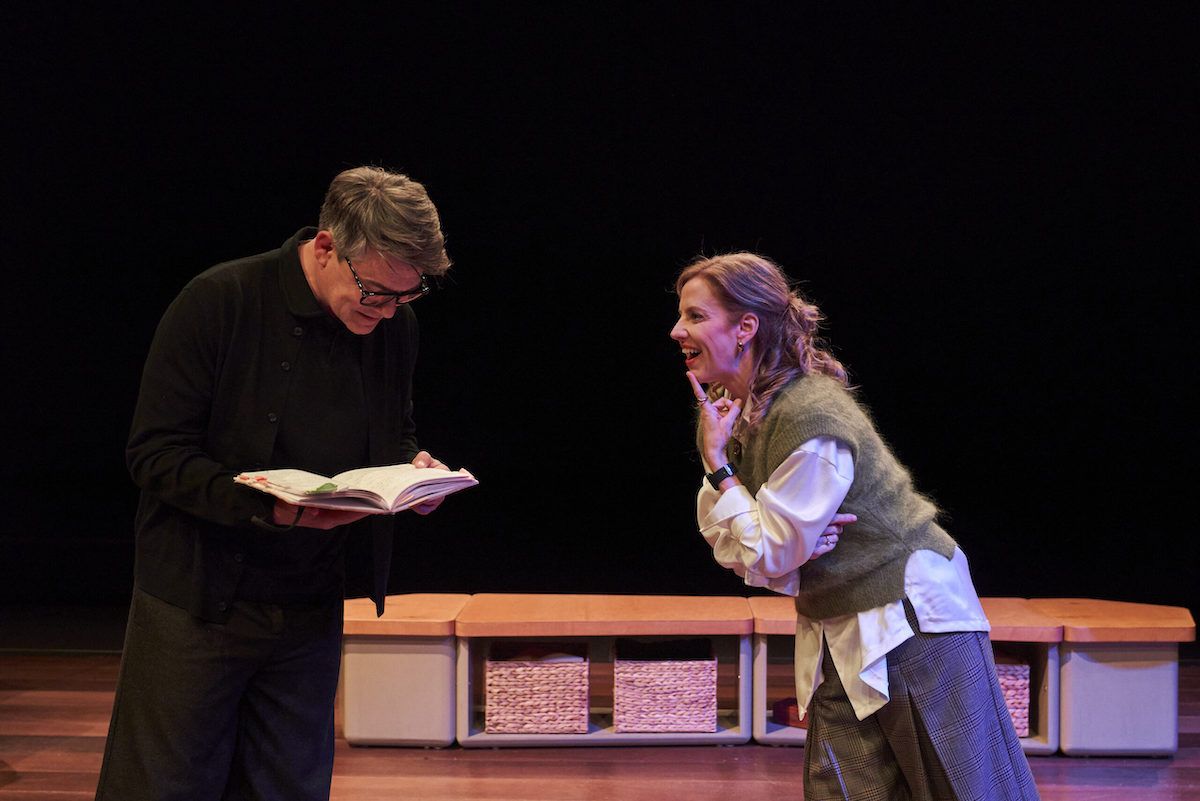
And if Depeche Mode is the soundtrack of this new theatrical show, the challenge that its two protagonists must face is more like a police thriller than a romantic comedy. Together, Sergi (Roger Coma) and Paula (Maria Molins) face the mystery of revisiting that night more than thirty-two years ago when everything broke. Why did they argue at the doors of the Depeche Mode concert during their graduation trip to Gothenburg (Sweden), after three days of a connection as intense as it was unexpected? How did the spark of a love that was barely beginning to beat die out?
All these questions are concentrated in a single night. A night in which the characters revisit painful memories through Paula's teenage diary, a notebook that functions almost as a literal transcription of the facts, but which, curiously, contains no record of that fateful episode in which everything broke. That night when the life they were just beginning to imagine together became a shadow of the past: a possible path that never came to exist and that only lives in their memory.
With this argument as a backdrop, playwright Jordi Casanovas surprises with an unusual register in his career: that of sentimental comedy, without great moments of laughter, but full of fine irony. The author of Jauría, Un menú tancat or Vilafranca places in this latest production, almost for the first time, falling in love at the center of the story. And not just any falling in love, but that of a teenage love, full of nostalgia: an ephemeral feeling, which was just beginning to be born, but which forever marked the lives of the two protagonists. To the point that both chose to flee —not only in a metaphorical sense, but also literal— taking refuge in other parts of the world and resigning themselves to an apparently quiet existence, but lacking deep connections and real emotions.
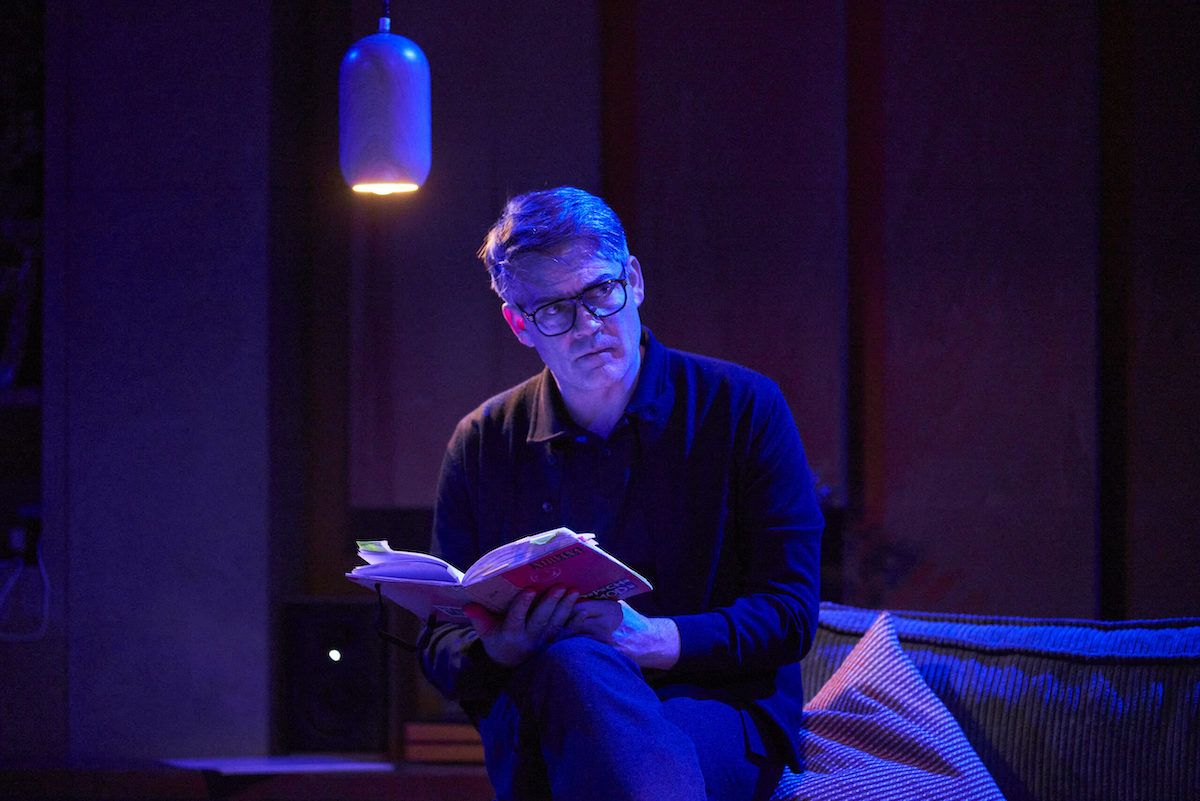
Until one day Paula bursts into Sergi's house in the middle of the night, while he is quietly reading in his pajamas. They haven't heard from each other in decades; they haven't even kept in touch through social media. The reunion then becomes a two-way interrogation to reconstruct the past, with a single premise: they only have one night, an incomplete diary, and fragmented memories —perhaps distorted by too many shots of Schnapps—. And a question that constantly hovers over the stage: what is Paula looking for by visiting Sergi: to definitively close the door to a possible life that never came to exist or to reopen it to stop imagining it and, finally, live it?
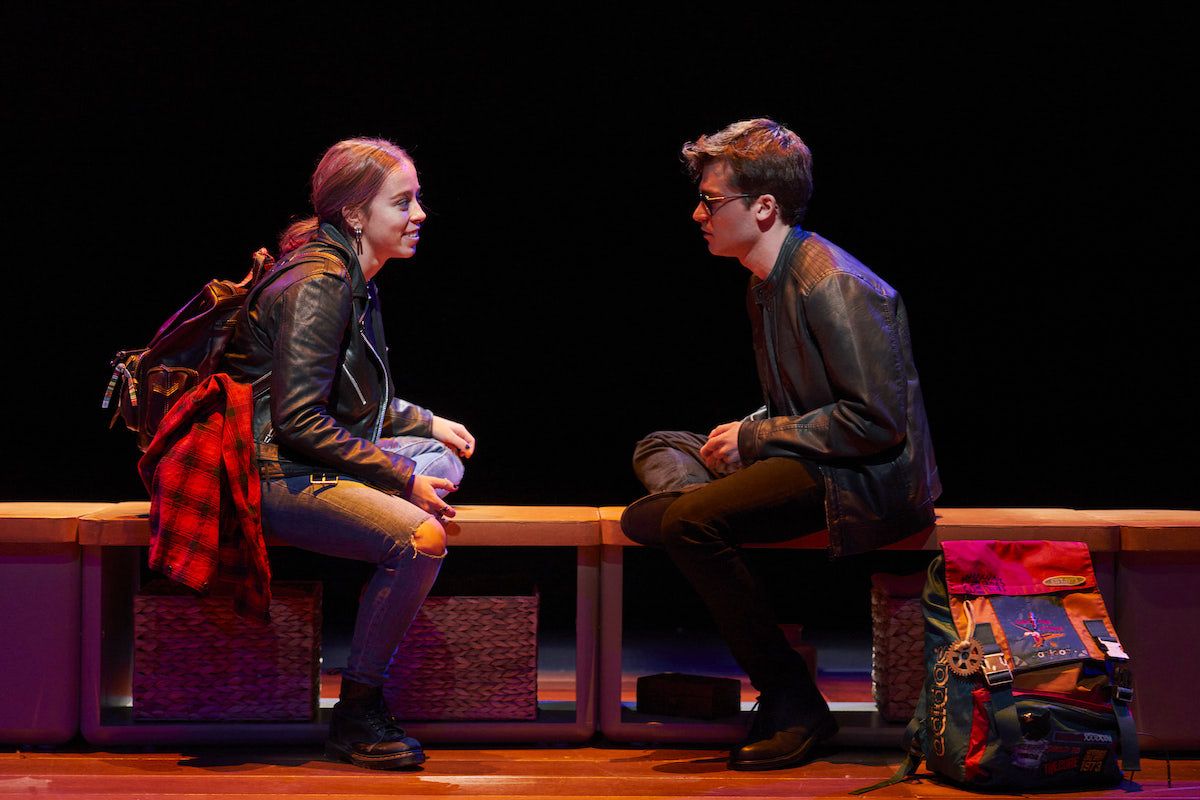
As unexpected allies, on stage Paula and Sergi have their teenage versions —those that only lived in their imagination, but that for one night materialize again—, interpreted by Jan Mediavilla and Berta Rabascall. Characters built from certain teenage clichés —he, the misunderstood geek who has never experienced love; she, the rebellious and impulsive young woman who hides her demons behind a shell—, but who are essential to be able to reconcile with their teenage selves and forgive the mistakes that precipitated the breakup. Because perhaps they cannot modify what happened, but they can modify the memory they keep of that moment.
A romantic comedy that, however, does not renounce Casanovas' usual hallmarks: intelligent, enigmatic characters, full of secrets hidden beneath the surface that are progressively revealed. This emotional journey finds its natural space in La Villarroel, a stage that the playwright knows well and where he seems to feel especially comfortable, after premiering titles there such as Conspiranoia or La dansa de la venjança.
Add The New Barcelona Post as your preferred Google source for free
Stay informed with the latest news.
