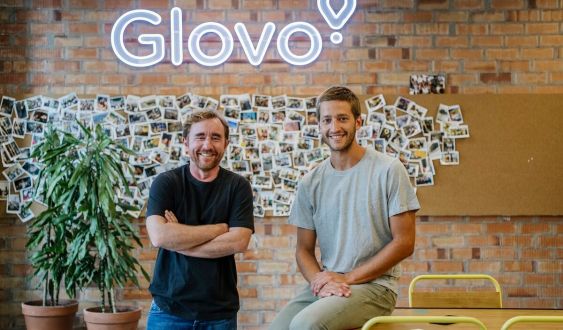
To survive. This has been Glovo's constant for a decade, when Oscar Pierre founded the company with the aim of carrying out digital orders. In these ten years of trajectory, since its foundation in March 2015, the company has had to survive and overcome several attempts at closure, restructurings, and even face several simultaneous legal proceedings, some of which are still open. However, in this decade the company has done more than just survive, and has achieved accomplishments such as becoming the first Catalan start-up considered a unicorn ---a distinction that recognizes companies that reach a valuation of more than 1 billion dollars--- and delivering more than 1 billion orders.
Thus, in these ten years of life, Glovo has managed to evolve from a small company that raised more than 100,000 euros from small investors for its beginnings, including Sacha Michaud who ended up becoming co-founder of the company, to being bought by the German multinational Delivery Hero and operating in 23 countries and 1,800 cities. An exponential evolution that has been especially accentuated in recent years, after the pandemic, with the rise of online commerce but which, for its founder Oscar Pierre, "is only the beginning." Pierre believes that the company still has a long way to go and is confident that it can become one of the ten largest Spanish companies in just a decade.
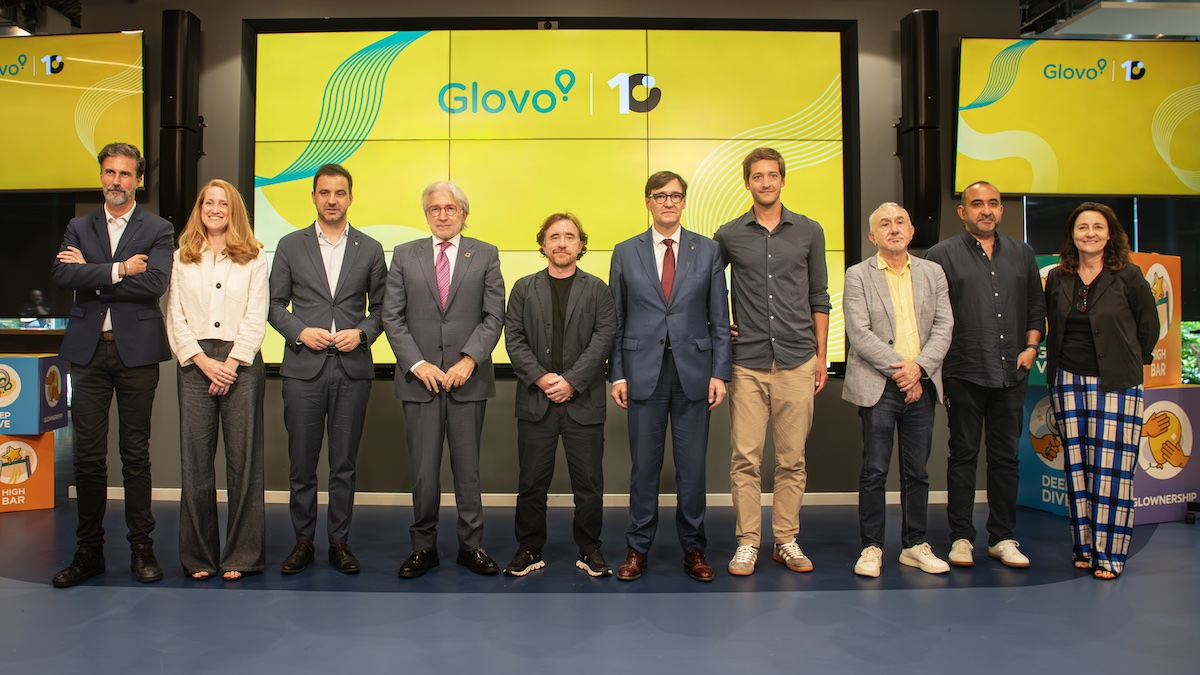
"The evolution in these ten years has not been linear or easy," recalled its co-founder Michaud, who lamented that along the way they have had to "lay off talented people, close business lines and sell countries." However, after years of setbacks, Glovo's current robustness is not only demonstrated in its figures, having delivered products worth more than 20 billion euros and having an average of thirteen orders per second worldwide, but also in the fact that the celebration of its tenth anniversary was attended by institutional and business representatives such as the president of the Generalitat Salvador Illa, or the president of Foment del Treball Josep Sánchez Llibre, as well as union representatives.
An institutional and business representation that responds to the new stage Glovo is undertaking, with a new labor model for its delivery drivers after years of lawsuits and litigation in Spanish courts. After years of legal dispute that not only reached the courts but also Congress, which approved the well-known Rider Law in 2021 for the regularization of these workers, Glovo will end its model of false self-employed workers and will hire all of its delivery drivers, who will become salaried employees on staff. A new labor model that the company announced last December, one day before Pierre was to testify for an alleged crime against workers' rights, but which will be formalized starting July 1 of this year.
President Salvador Illa has congratulated Glovo for this new model, thanking that "with this new stage, the business project can be compatible with workers' rights." Illa also recalled that although Catalonia needs large technology companies, it also needs them to be able to adapt to regulations to be "at the service of the common good," thanking Glovo for this change of model, and in the presence of union representatives such as the general secretary of UGT, Pepe Álvarez, and the former general secretary of CC.OO. of Catalonia, Javier Pacheco.
The co-founder of Glovo has stated that the step the company is taking is an "unprecedented case worldwide," since, according to Pierre, no other home delivery platform has undertaken such a rapid and radical transition in its delivery driver model." A transition it will face with currently 3,000 employees in offices, half of whom work from Glovo's Yellow Park offices in 22@, and more than 245,000 delivery drivers worldwide, in addition to 3,000 more workers in customer and establishment service.
However, with this new model, the company will still not close all its open cases since, in fact, the celebration of its decade of life coincides in dates with the beginning of the lawsuit that Just Eat, which only had its workers hired on staff, filed against Glovo for unfair competition, claiming that the company had saved more than 645 million euros with its model of delivery drivers as false self-employed. Thus, the company is claiming a total of 295 million from its competitor for damages, in a trial that begins this June 17.
In addition to the new labor model, Glovo also faces this new stage with the goal of continuing to grow rapidly, setting the objective of delivering orders worth more than 6 billion euros just for this year. To ensure its growth, the company, without abandoning catering and home food delivery, which remains one of its main markets, expands its focus and looks at retail and quick-commerce, that is, the delivery of clothing products or even supermarkets in a few minutes or hours, a market niche that has grown 40% annually since 2021.
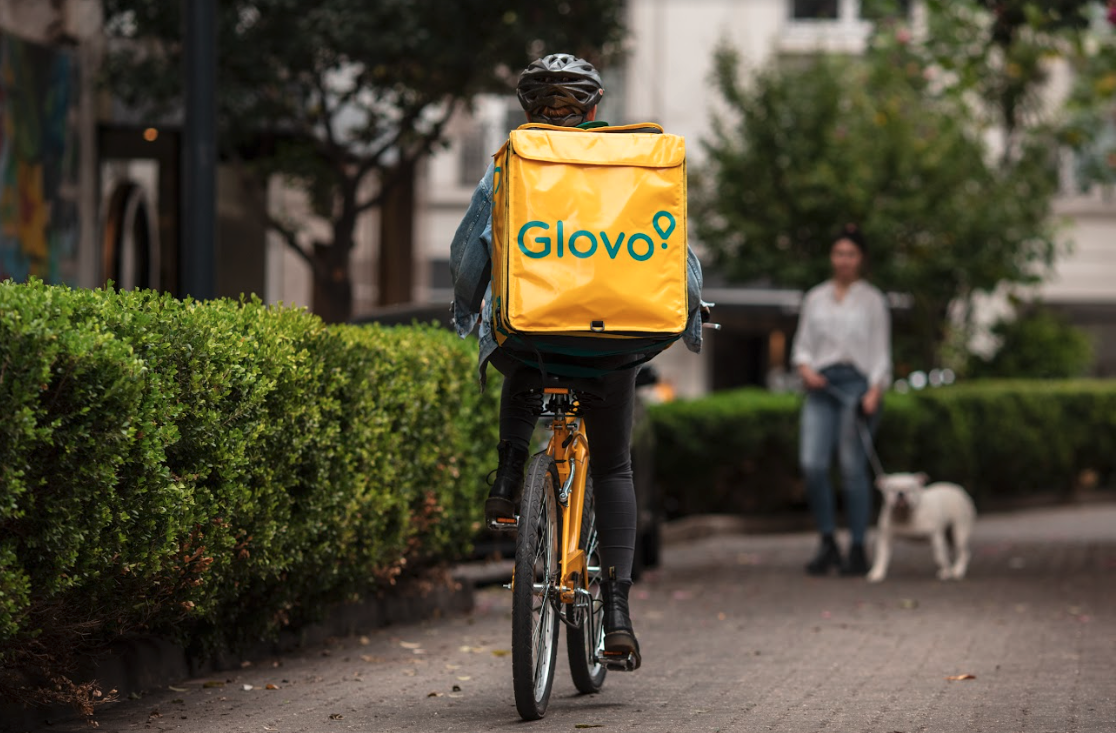
A growth that, although expected to be global, will be significant in areas such as Catalonia, which is "one of the most penetrated regions" by Glovo, and where it is estimated that in the last year alone, 1.5 million people have used this service to place an order from more than 12,000 associated businesses. In this regard, the president of Foment del Treball has also recognized that Glovo represents a "new model of international Catalan business success, very disruptive and resilient, which makes Barcelona capable of competing with economies such as Paris, Berlin or even Silicon Valley."
Add The New Barcelona Post as your preferred Google source for free
Stay informed with the latest news.
