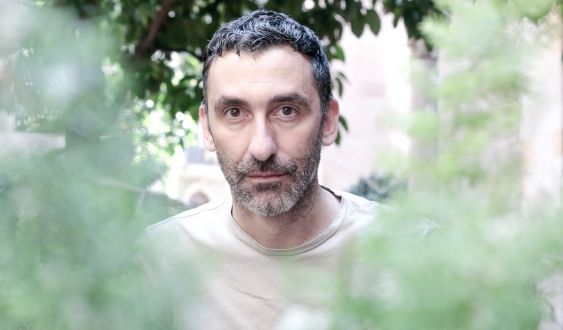
"I like to tell stories, complicate my life, and touch on uncomfortable topics. The first two hobbies have been with me since I was little; the third, that of putting my finger on the sore spot, has developed more over the years, with the progressive anger at so much of what happens and the need to say things as I see them, no matter how much they bother people." The writer and playwright Gerard Guix has left nothing out. A lavish dinner, with meat and a good wine that he now crowns with a Botanic gin and tonic while, in the background, Lluc Casares' big band plays Simple pleasures.
His first memories as a writer go back to childhood, pushing the leaden keys of a worn Olivetti to compose stories. "When I grew up, I wanted to be a film screenwriter and writer, and in fact, later I came from Vic to Barcelona to study Image and Sound." But, in those years, making a film was an extremely expensive process and publishing a novel depended on the approval of some publishing house. "The easiest thing, I realized, was to do theater. You'd get together with actor friends and write a play that you could easily produce, so you could say I started there by elimination!" he laughs.
Little by little, he began to make his way in the world of amateur theater until, in 2005, he took off in a big way. "I published my first novel, La deriva dels continents, and premiered my first professional play, Gènesi 3.0, within the framework of the Mostra de Teatre de Barcelona, at Sala Beckett." That big bang had a ripple effect and, for the following years, Gerard didn't stop. Novels, adult and young adult, such as Dia de caça, Tot el que hauries de saber abans d'estimar-me or El Cementiri; plays such as ARCA or U, due, três; awards, recognitions, travels. A castle built on hard work that, suddenly, was swept away by a dense and destructive wave of silence.
Relighting an extinguished flame
In 2013, Gerard Guix went all in. "I published a novel and, shortly after, premiered a play, but then I stopped everything. I had already been engrossed for five years in a project, that of a great story about Hitler and Chaplin which, under the title Doppelgänger, would unite diverse literary styles, satire, political fiction, and the historical genre." It took him five more years to materialize the book, which he had ready by 2018. Nearly 800 pages, a monumental work of documentation, a work of literary architecture where he left every last breath. "And then, nothing happened. Absolutely nothing."All the publishing houses, one after another, as if it were some kind of conspiracy, rejected his manuscript. Both in Castilian and in Catalan. The reading reports were good, even laudatory, but other criteria weighed more. "I went into crisis, I stopped considering myself a writer, although I continued teaching creative writing at the Ateneu."
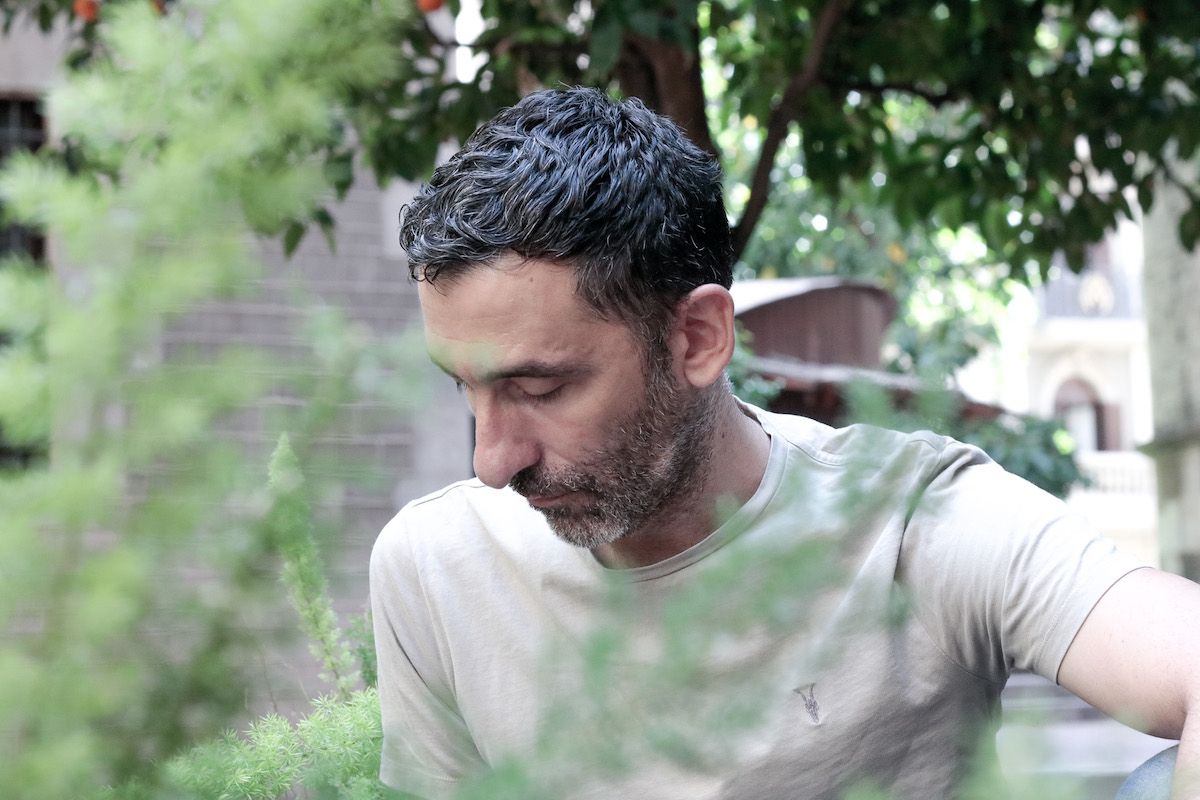
The journey was slow. A long silence that erased his trace from bookstores and stages. And then came a meal that changed everything. "I met with the editor of Aux Forges de Vulcain, the French imprint that translated my works, and I explained to him what the story was about." The French editor was enthusiastic about the project and after being translated, Doppelgänger finally saw the light in the neighboring country in 2025, with overwhelming critical and sales success, and the fact of being one of only two Spanish works –along with Cercas– nominated for the prestigious Médicis prize.
Despite this triumph, no publisher here has yet been interested in publishing what was one of last year's books in France. Even so, the fact that this story had this unexpected happy ending has allowed Gerard to overcome the silence. He has just published La flama apagada del desig (Univers), the first adult novel he has written since that 2018. "An autofiction about creative crisis and the loss of desire, although it is not written with rage or with a therapeutic aim. It is a serene work."

The return has been resounding, because he has also returned to the arena of young adult novels with Un far a la fi del món (Joaquim Ruyra prize) and to theater with the acclaimed Dirrrty boys (winner of six Butaca awards). Proud of this resurgence from the ashes, the parishioner announces that he is already working on two other plays and a new novel "connected with Doppelgänger, which will be released in France." For now, only there. Of course…
Round trip (and relative)
The writer and playwright's relationship with Barcelona is a back-and-forth one. "I came here to study Image and Sound, but when I was 25 I went back to Vic and it wasn't until 2009, when I met my partner, that I moved back here. To the Gràcia neighborhood." But that return is relative, "because we combine life in the city with a more rural one in a house we have in Empordà."A balance that allows him to flee from the aspects he likes less, "the overcrowding, the smell of pee in the streets, the stress and the dirt…" without giving up what he still loves about Barcelona, "its landscape and people," he adds, finishing his gin and tonic.
And, speaking of people, he looks around. The night filtering into the increasingly lively atmosphere of the Bar. Laughter, the clinking of glasses, animated conversations. Life itself.
– If you fancy another, you're invited.
With a wide smile, Gerard Guix nods. "You read my mind," he says.
Add The New Barcelona Post as your preferred Google source for free
Stay informed with the latest news.
