
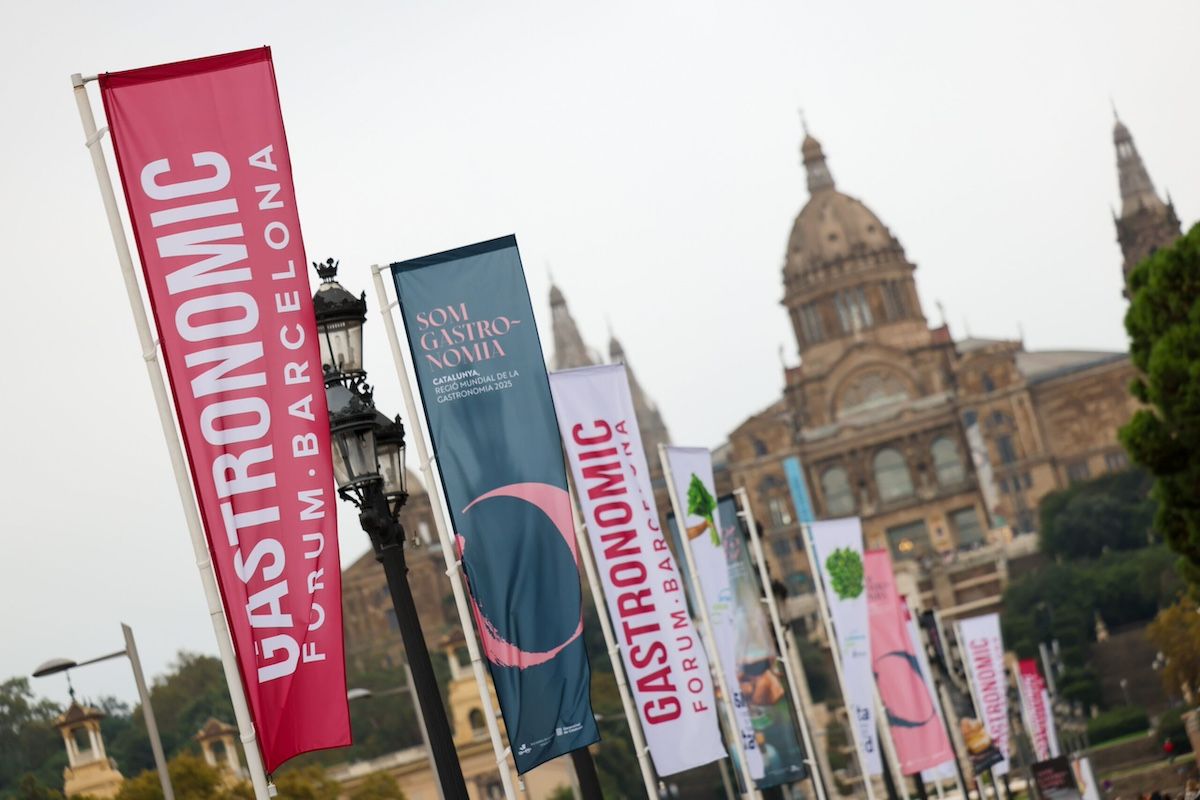
"Do you have a restaurant?" This is the question repeatedly heard at the Gastronomic Forum Barcelona. It's the way in and the keywords to start conversations and networking at the fair, which has transformed Hall 8 of Fira de Barcelona's Montjuïc venue into a large showcase for companies linked to gastronomy and restoration from all its facets, accompanied by presentations, workshops, showcookings and demonstrations that fill the venue from Monday until this Wednesday.
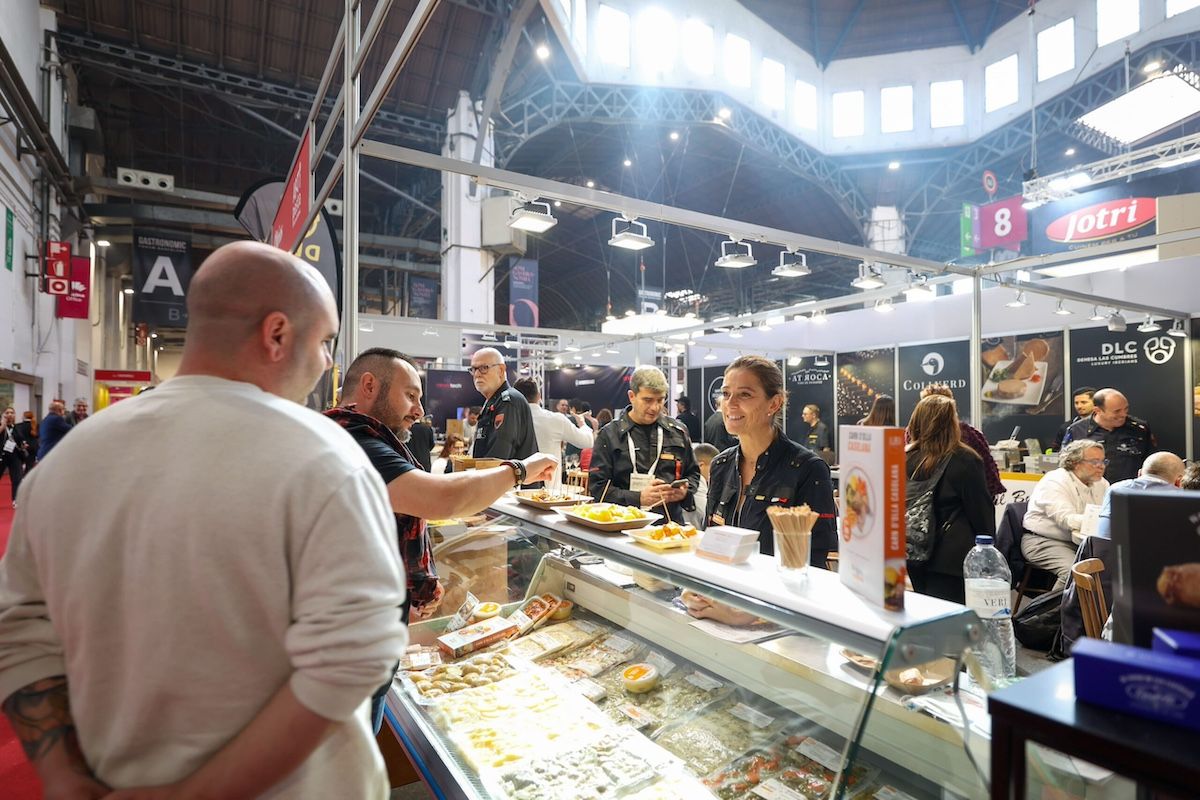
The smells of grills and the multiple gastronomic proposals from the exhibitors welcome visitors to the fair. More than 350 companies are participating in this edition to present their proposals and products, covering all areas and processes of restoration.
Thus, the exhibition space of the fair shows all kinds of food, from meat to snails, as well as machinery and utensils to cook them, without forgetting furniture companies for restaurants and tableware firms, as plating and the environment also condition the diner's experience.
But the exhibitors' proposals go beyond what the diner perceives, and also focus on tools and products that aim to improve restaurant management and facilitate the work of chefs, whether with machinery or various techniques.
These techniques, designed to streamline dish preparation, include both innovative and traditional proposals, such as vacuum packaging and low-temperature cooking from Torrent i Fills. The company, with its origin in a market stall opened in 1939 and now part of the Vall Companys group, is repeating its participation in the fair this year after first participating in the last edition, and it does so to promote its brand and expand its client base. The fair is a great meeting point for the sector and its professionals and companies. Several of them are participating in the event displaying a black ribbon for the victims of the DANA, for whom the fair canceled its inaugural act and the presentation of Catalonia World Region of Gastronomy 2025.
Towards a more responsible cuisine
Through exhibitors and presentations, workshops, and showcookings by more than 130 chefs and experts, the fair addresses the trends that will mark the cuisine of the future, which focuses on technology and on addressing the challenges of gastronomy with a view of social responsibility.
This perspective has been established in the sector for the benefit of both diners and professionals, as well as sustainability and the different elements of the value chain. These trends take shape in the hall through projects such as Green in Blue. Located in Maresme, it is "the first aquaponic farm in Catalonia": it cultivates lettuces and aromatic herbs without chemicals or fertilizers and with water consumption ten times lower than that of conventional cultivation, as one of its representatives explains in the hall.
Water is also the protagonist of other companies participating in the event, such as Culligan Premium Water, which offers water filtration systems for a hospitality industry free of single-use bottles. "Barcelona is at the forefront in the implementation of solutions like this," highlights one of the company's employees, based in the United States and present in 74 countries. In the Catalan capital, it serves 1,500 establishments, including restaurants and hotels; the goal is to grow 20% annually, but in recent years they have exceeded 40%.
Sustainability and waste reduction are also promoted in the hall through initiatives such as that of the Rezero foundation, which is articulating a network of establishments in Barcelona where take away does not imply generating waste. The entity proposes doing so with reusable containers for both coffees and food, and wants to reach thirty establishments by the end of this year, in order to promote more sustainable catering.
The initiatives and products to advance in this direction are multiple at the event, and also include organic food production and more efficient machines, such as the smokeless grills from the Portuguese Gresilva, which attends the fair for the second consecutive year. The adoption of more sustainable techniques and materials is transversally making its way into the sector, and has even reached uniforms. With 20 years of experience, the CSTY company designs and produces corporate clothing in Catalonia with a factory of 23 people and 20 external workshops, prioritizing innovation and sustainability.
In addition to moving towards sustainability, another trend marking the sector is digitalization. As a reflection of these trends, the fair hosts various technology companies, such as Gourmeats, which has devised a digital menu with video for restaurants to display their proposals in a more attractive way than with a PDF, as explained by one of its promoters, José Francisco Santos Fernández. The product, which Santos launched two years ago with his partner and cousin, Jorge Fernández Alonso, now has nine employees and 200 clients.
Companies put technology at the service of restoration to improve the conditions of the sectorAlso companies like Prezo have developed a softwarewith a focus on restoration. This tool, which automates processes and management such as delivery notes and invoices through AI,allows saving time, money, and possible errors in orders.With the same objective, Square offers a tool that allows taking notes, charging, and managing inventory and accounting from the same device. Driven by Twitter co-founder Jack Dorsey, thefintechCalifornian participates in the fair to continue growing in Barcelona and in the state market.
Technology to facilitate the management and daily life of restaurants does not only come from software. Mimcook's high-precision paella makers, by chef Sergi Escolà, allow paellas to be cooked to their perfect point through a computer that automates the process and controls the fire, temperature and time, which allows standardizing quality regardless of who cooks the paella. Escolà devised the system while working in his restaurant: with 30 conventional paellas, he was forced to constantly bend down to check the fire level, and the result was not always the same.
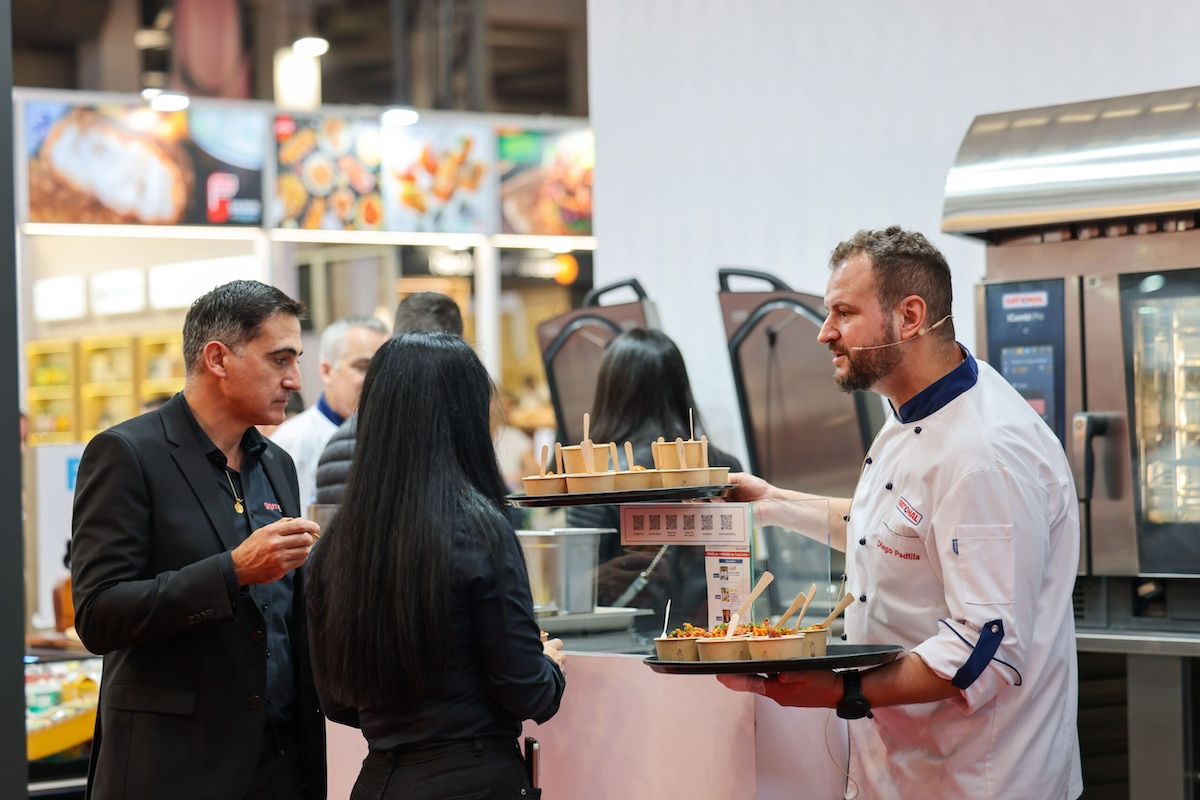
As Escolà assures, along with Mimcook's project manager, Enric Cuadrada, the system not only allows perfecting paellas, but also reducing pressure and stress on cooks. "The level of demand in kitchens has been extraordinary, above usual standards, with a lot of pressure and long hours. All this has to change, and technology has to help," Escolà claims. From the same point of view, the company Hi Cream has launched the first packaged and UHT Catalan cream on the market, developed over 18 months with cooks and experts to address "the lack of professional hands in kitchens" and facilitate the preparation of dishes. All in favor of improving workers' conditions and work-life balance, which stems from this responsible approach to gastronomy. This approach is also materialized in initiatives such as Tetérum, which works with a hundred people with severe autism to make their tea and infusion sachets, as explained by the owner of the social project, Eulàlia Lora.
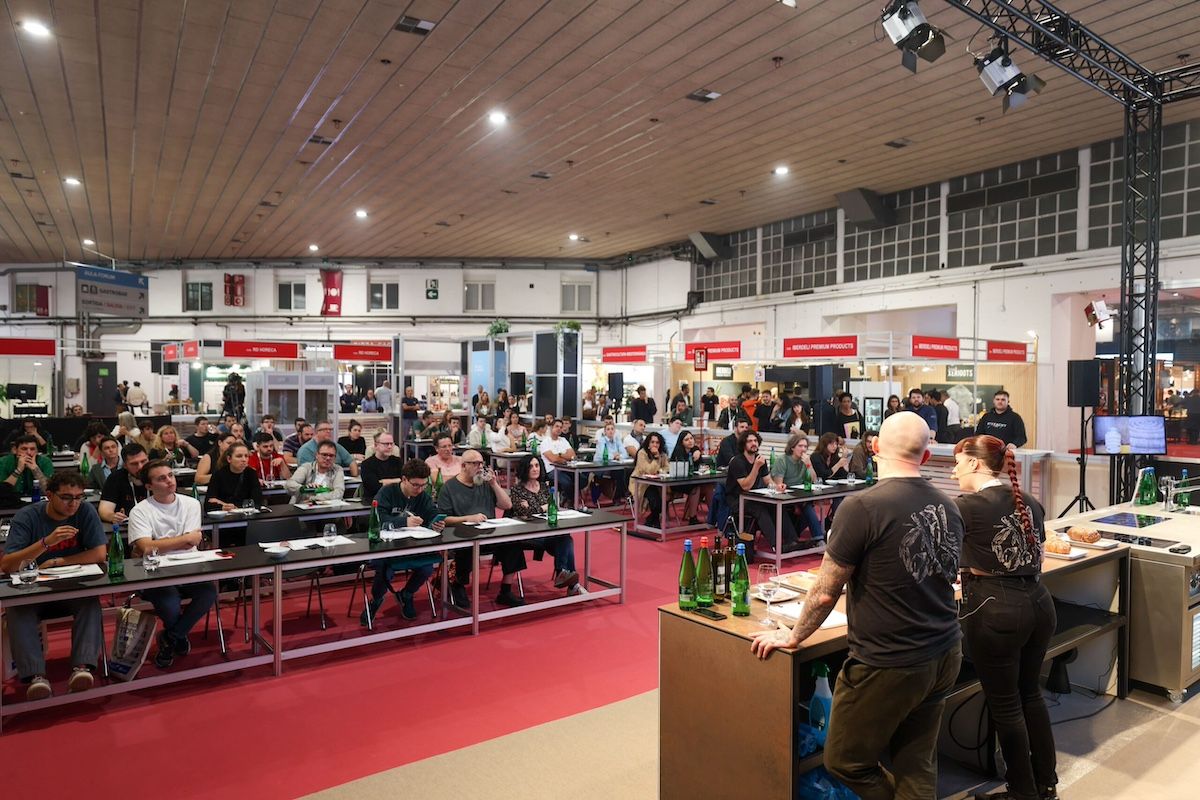
These new trends towards a more responsible, sustainable and technological restoration have also been discussed at the fair through an extensive program of activities such as presentations, conferences and workshops with chefs and experts, such as those led by Artur Martínez, Nandu Jubany, Joan Juncà, Albert Raurich, Takeshi Somekawa, Marc Gascons, Borja Sierra, Joel Castañé, María Ángeles Chiriboga, Víctor Quintillà and Mar Gómez. The fair's program includes other essential names in the gastronomic scene, such as Carme Ruscalleda, Oriol Castro Eduard Xatruch, Maria Nicolau and Jordi Vilà, among many others.
The presentations and workshops have also been accompanied by activities such as the Pizza por Pasión contest and the Estrella Damm beer pouring contest. In its third edition, the contest has seen the participation of professionals from 650 establishments, among whom Íngrid Turró, from La Fraternal de Roses, emerged as the winner, with a prize of 2,000 euros. The second and third prizes, with 1,000 and 500 euros, went to Heidy Gabriela Novoa, from Bar Embassy in Santa Perpètua de Mogoda, and Marcos Guil, from Roho House in Terrassa.
The various spaces and stages of the salon also host an infinity of showcookings, tastings and presentations of products and even books, such as those from the gastronomic publisher Montagud. All of this in an edition that has also given a voice to new generations of chefs, who look at the sector collecting and creating the trends of the future.
Add The New Barcelona Post as your preferred Google source for free
Stay informed with the latest news.
