January 6 is not just another date on the calendar. This day is, in fact, one of the most anticipated and significant days, lived with emotion and excitement. After a magical night in which Their Majesties the Kings of the East have passed, discreetly and mysteriously, through the different homes of the city, young and old wake up with nerves in their stomachs and the expectation of opening the gifts found under the tree. However, gifts and colored papers are not the only protagonists of this magical date. On the table, the roscón de Reyes continues to be crowned as the star element.
Loaded with tradition and symbolism, the roscón is the icing on the cake of a Christmas season where sweets and desserts become allies to gather friends and family around the table. After neulas, turrones or panettones, comes this typical sweet of Three Kings' Day, with its characteristic traditional flavor and the challenge it proposes: if you find the bean, you must pay for the sweet, while if you are the lucky one who gets the figurine, you will be crowned as the king of this celebration.
A sweet and a traditional legend that, far from disappearing, renews and reinvents itself every year, with innovative proposals among the different bakeries in the city, ranging from chocolate, to pistachio or tangerine —and even some confectioneries that fuse this sweet with other desserts, such as the croissant or the panettone—, although the marzipan and candied fruit one remains the favorite among consumers. With this great variety, the Gremi de Pastisseria de Barcelona predicts that in all of Catalonia more than a million artisanal roscones will be sold, that is, between 400 and 500 roscones on average in each bakery.
Sales forecasts that match last year's and consolidate this day as one of the most intense for bakers and pastry chefs, since, as the Gremi de Pastisseria de Barcelona reminds us, it is a sweet that must be baked a few hours before consumption, because it contains natural and perishable ingredients, such as fresh eggs, butter or milk. For this reason, although preparation begins days in advance, since this sweet requires between six and eight hours of work, it is not until the night of Three Kings' Day or the morning of the 6th itself that the roscones begin to be baked, designed to be practically freshly made at the time of consumption.
Thus, while Their Majesties strive to deliver all gifts to the different homes in the city, Barcelona's pastry chefs open their shutters and turn on their ovens to sweeten this magical day. Although most consumers prefer to order them days in advance, today many bakeries still offer the option of taking home the Roscón de Reyes without a reservation.
Those who go to buy the roscón in the city's pastry shops and confectioneries will observe that the price of this sweet has increased slightly, by around 3% —in accordance with the CPI increase—, with prices ranging between 25 and 50 euros. In large supermarkets, prices will show an even more notable increase, up to 33% in the case of Carrefour's roscón; although it will be generally noticed: with a rise of 27% in Eroski, 9.5% in Mercadona or 4.7% in El Corte Inglés, according to FITStore, an e-commerce of healthy products.
A sweet with Roman origins
But where does the tradition of eating roscón on this day come from? It is believed that its origin is even older than the Adoration of the Kings from the East: during the winter solstice festivals of the Roman era —the so-called Saturnalia, in honor of the god Saturn, a deity to whom the Romans attributed the introduction of agriculture— cakes with figs, dates, and honey were eaten. It was not until the 3rd century AD that the bean was introduced, at that time understood as a symbol of prosperity and fertility.
With the introduction of Christianity, this sweet was soon associated with the celebration of the Kings from the East. This is recounted by the chronicler Joan Amades in his Costumari Català (1952), which documents how the presence of the bean inside the Roscón de Reyes was associated with the possibility of attending the Adoration of the Magi and Jesus. Since not everyone could attend this religious service, families had to choose a member to attend as a representative, and this choice was made precisely through this sweet. Whoever found the dried bean inside the roscón was chosen king, and, in addition to representing the family by attending the service in the Church, enjoyed other privileges during the festive meal.
Although it is unknown when the broad bean acquired the opposite meaning, considering unlucky whoever found it inside the roscón, it is believed that it was in 18th century France when the idea of the King's figurine emerged. There, a cook from the court of King Louis XV of France wanted to surprise the monarch and incorporated a gold coin into the galette des Rois —origin of the Roscón de Reyes currently consumed in Catalonia, although slightly different, as it is a puff pastry typically filled with frangipane and, furthermore, does not have a hole in the center—. Over time, this gold coin would eventually lead to the traditional king figurine.
Of marzipan and candied fruit, as tradition dictates
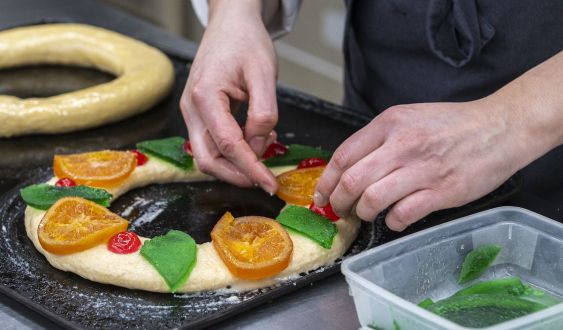
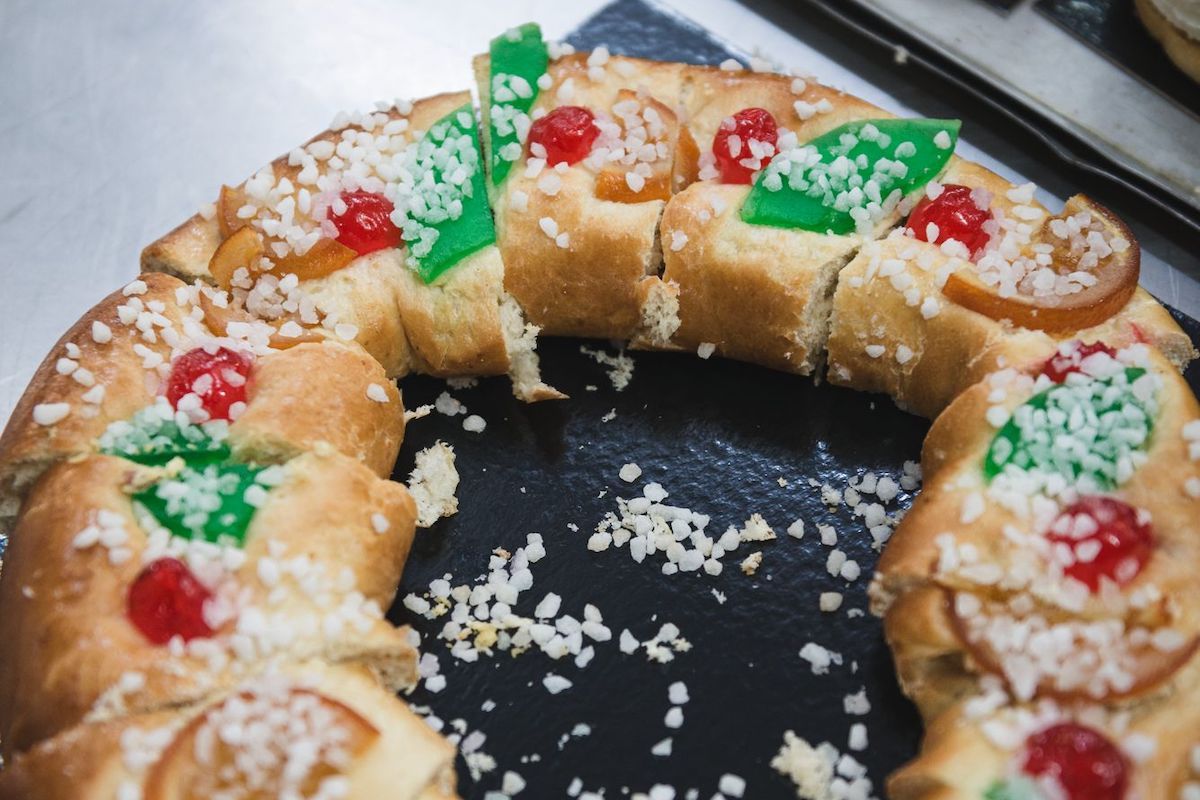
Today there are roscones of all types and flavors, but the classic roscón is the brioche with marzipan and candied fruit on top, which remains the favorite among consumers, although closely followed by the cream-filled one. Fruit is one of the elements that can help differentiate an artisanal roscón from one that is not. For this sweet, orange, cherries, and melon slices should be used, which are candied by cooking them in water and sugar. "If it is of quality and artisanally made, the fruit integrates into the roscón, remains tender and with its juice; in industrial cakes, however, often pumpkin is used instead of fruit, because it is cheaper," point out from the Gremi de Pastisseria.
To find the best Roscón de Reyes in Catalonia, you have to travel to Aiguafreda, to Forn Can Girabent —with establishments also in Figaró, Centelles, and Hostalets de Balenyà—, where pastry chef Eduard Girabent, third generation at the helm of this bakery with more than 40 years of history, signs the winning sweet for the best Classic Roscón. This is certified by the competition organized, for the sixth consecutive year, by the Obra Social Ernest Verdaguer de Panàtics, with a jury that has evaluated up to 51 Roscón de Reyes.
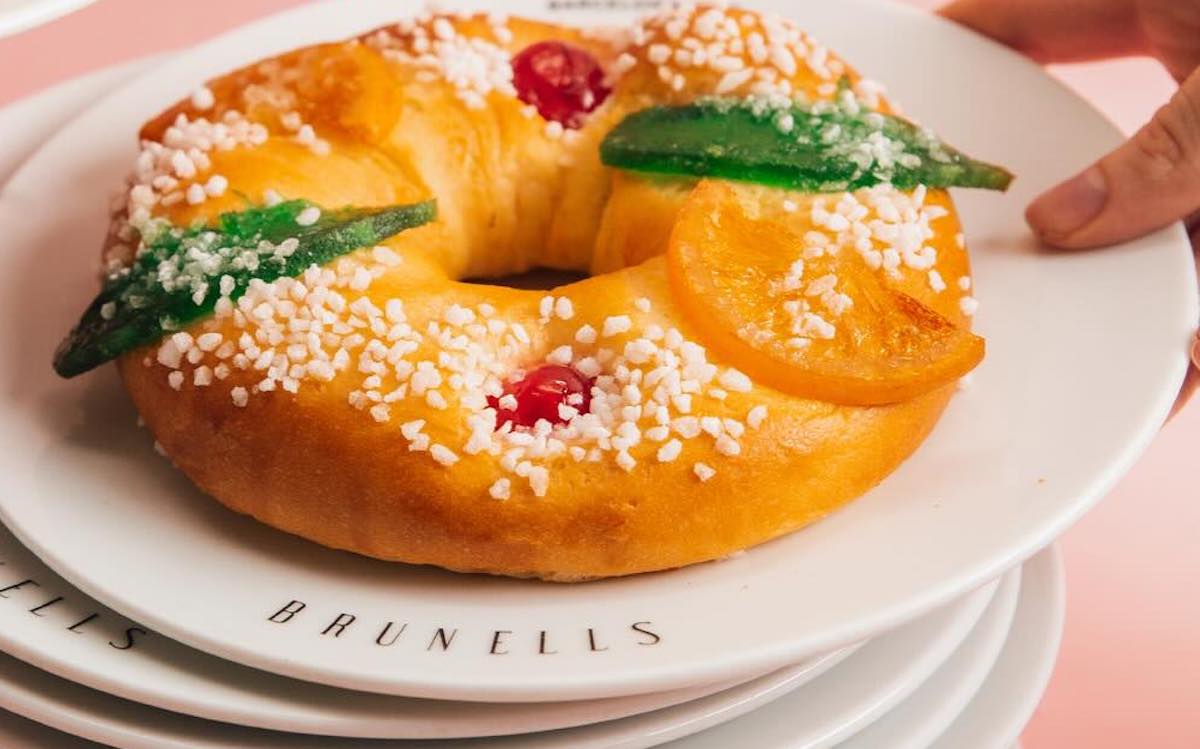
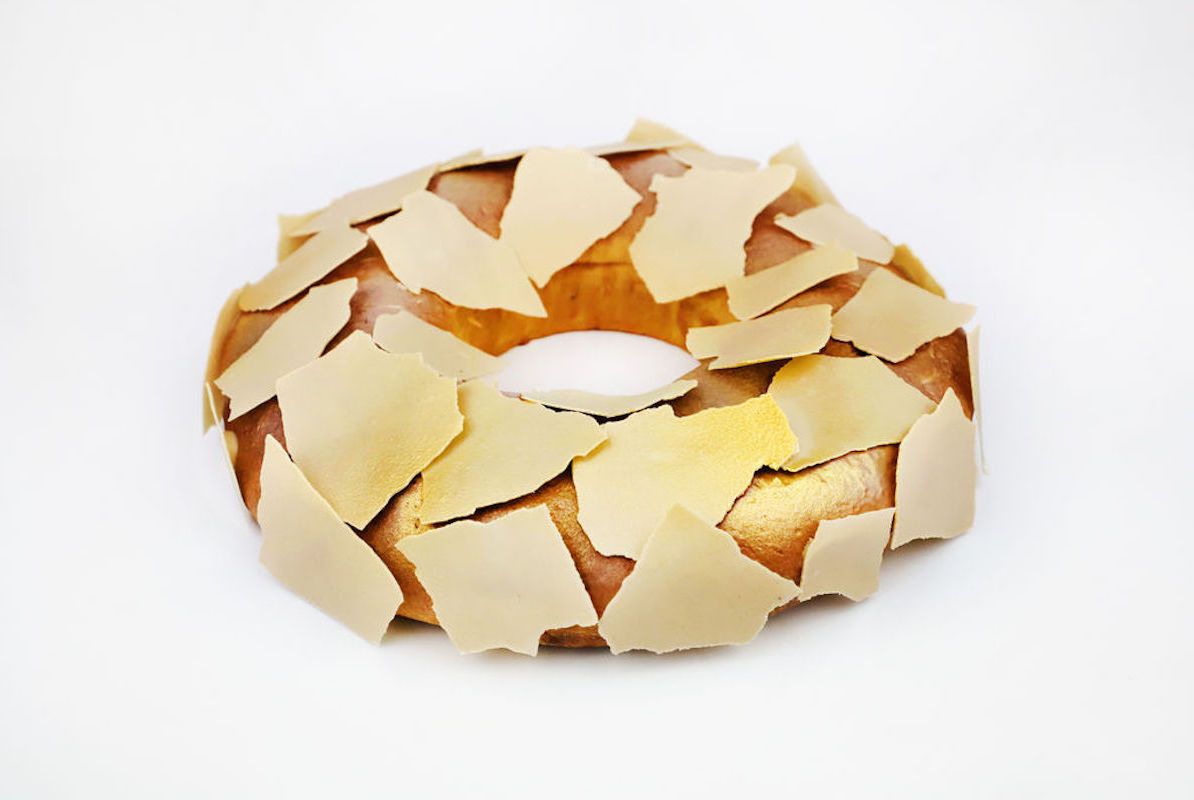
However, it is not necessary to travel to Aiguafreda to find quality artisan roscones, made by bakeries that accumulate years of history and passion for the craft. As finalists of this contest, two establishments in the city stand out: Brunells (Princesa street, 22) —a pastry shop located on the same corner since 1852, which this year also offers the possibility of taking this sweet in individual format— and L'Atelier (Doctor Fleming street, 16). This workshop-school, directed by Ximena Pastor and Enric Ortuño, has been perfecting the recipe for the marzipan roscón year after year, while also betting on innovative versions of this dessert, such as the Trencadís roscón —winner of the best creative roscón for two consecutive years: 2023 and 2024—, with a soft pandoro-style dough, limoncello glaze in the shape of trencadís, and mascarpone cream filling.
In the city, roscones can also be bought that, beyond the classics, are charitable, through the campaign Enguany paga el Rei, created by the Gremi de Pastisseria de Barcelona. The participating establishments will allocate part of the sales to the Villavecchia Foundation to build the Victory Pavilion of the Hospital de Sant Pau for children with terminal illnesses, so that they can receive palliative care. Among these establishments are emblematic places such as La Colmena —one of the oldest pastry shops in the city, since Rosendo Abella founded Ca l'Abella in 1849— or the Escribà pastry shop, with the tireless Christian Escribà at the helm.
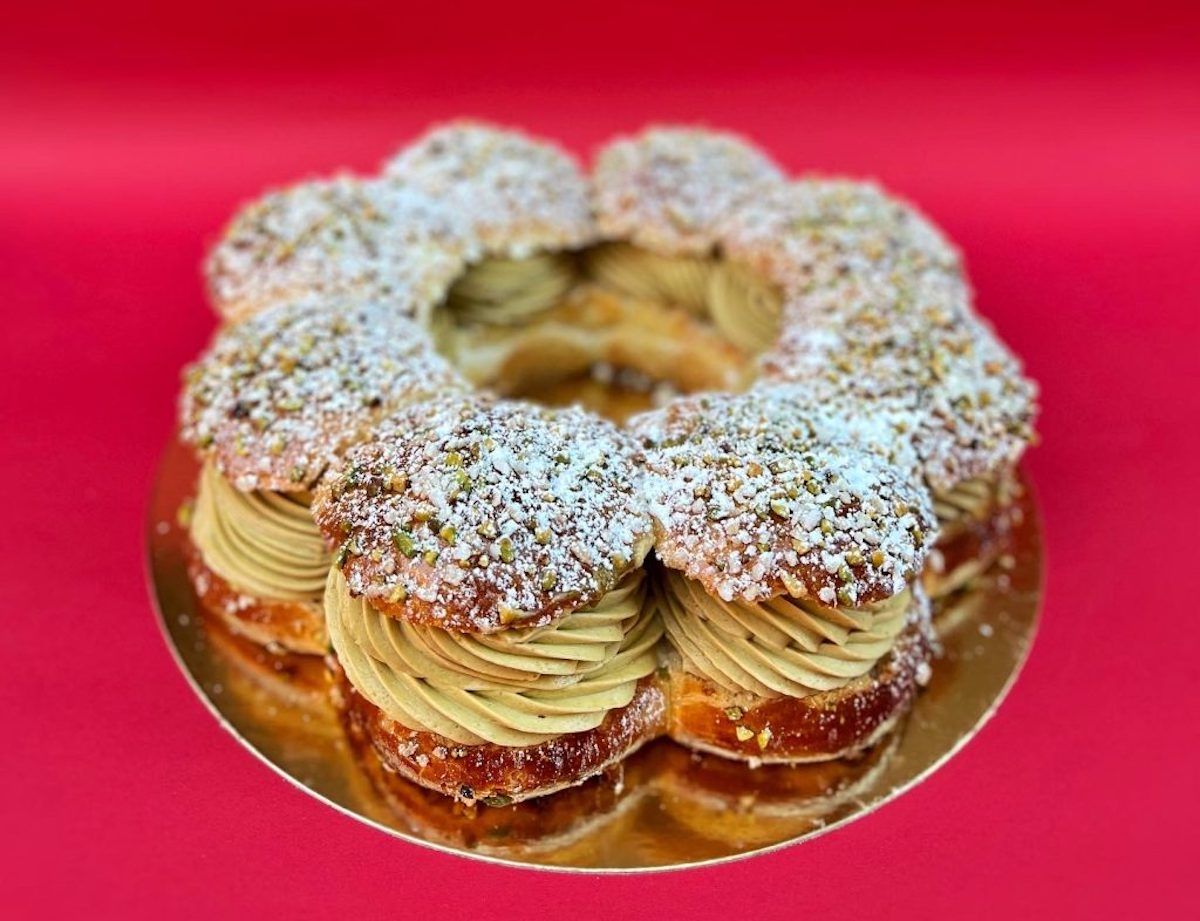
Although among the filled roscones, the cream one remains the favorite among consumers, there are other flavors that are beginning to assert themselves in the different workshops of the city. If today there is a star ingredient among desserts, it is pistachio, and at La Dramerie (Cornet i Mas street, 53) they know how to elevate this Sicilian nut to make it shine in all kinds of sweets —from cheesecakes to roscones like the one they present this year—.
Japanese roscones, but also with croissant or panettone
But beyond the fillings with peculiar flavors, the city's bakeries also offer innovative proposals from the very elaboration of the dough, designed to surprise different palates, preserving the tradition of the roscón legend while betting on innovation and fusion cuisine. A fusion with other cultures, as is the case of Japanese gastronomy, with the matcha and yuzu roscón, a surprising sweet presented by Takashi Ochiai (Comte d'Urgell street, 110).
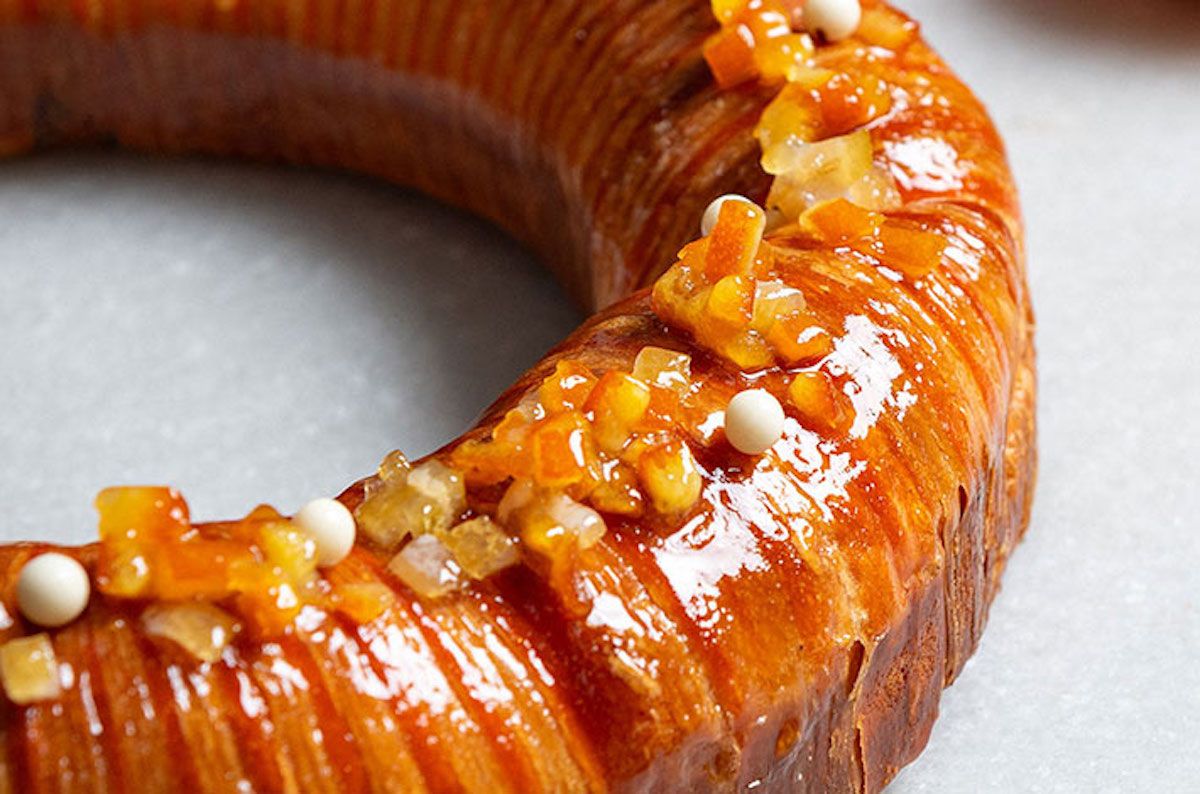
A fusion that, however, not only occurs with other gastronomies or cultures, but also with other desserts and sweets. This is demonstrated by the best creative roscón in Catalonia, made by Claudio Sandino from Pastelería Natcha (avinguda Sarrià, 45), inspired by winter and Mediterranean flavors and created from a thin croissant dough filled with ricotta cream with Tahitian vanilla, orange and lemon zest, and a creamy mandarin, bringing freshness and subtlety to the whole. The award culminates a year of recognitions for this pastry shop in Les Corts, which was also distinguished with the best creative coca de Sant Joan, demonstrating that it is possible to innovate while respecting centuries-old traditions.
At Suca'l (carrer Rosselló, 112) they bet on fusing two typical sweets of these celebrations: the panettone —a dessert in which they are experts, since in 2024 they were crowned as the best traditional panettone in the world— with the roscón, creating the Roscottone, available in its cream-filled and chocolate-filled truffle versions. At Funky Bakers (paseo del Born, 10), on the other hand, the roscón becomes a festive chocolate babka crown. With all these varieties and recipes, the roscón de Reyes manages to consolidate itself as more than just a sweet: a living tradition that reinvents itself every year, sweetening tables and celebrations throughout Catalonia.
Add The New Barcelona Post as your preferred Google source for free
Stay informed with the latest news.
