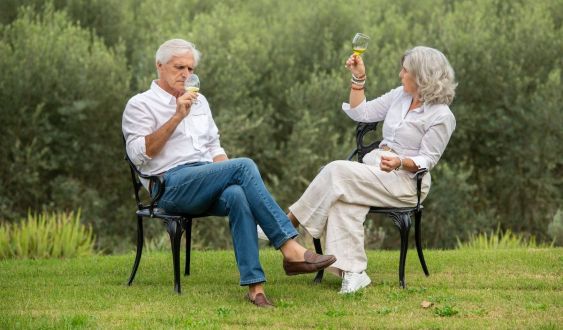
In the regions of Barcelona, olive oil is experiencing a new phase. Ancient varieties that had been forgotten are being recovered, and their uniqueness is being reclaimed in a globalized market that often standardizes tastes and processes. This rebirth not only responds to the desire to preserve agricultural heritage but also to the wish to offer consumers products with more identity and roots in the territory.
In parallel, oleotourism has grown as an experience that goes beyond tasting good oil: it means sleeping in a farmhouse surrounded by fields, learning the secrets of production, delving into a comparative oil tasting, and discovering pairings with local products. A set of proposals that turn oil into a common thread for experiencing, understanding, and enjoying the rural world.
From family legacy to avant-garde project
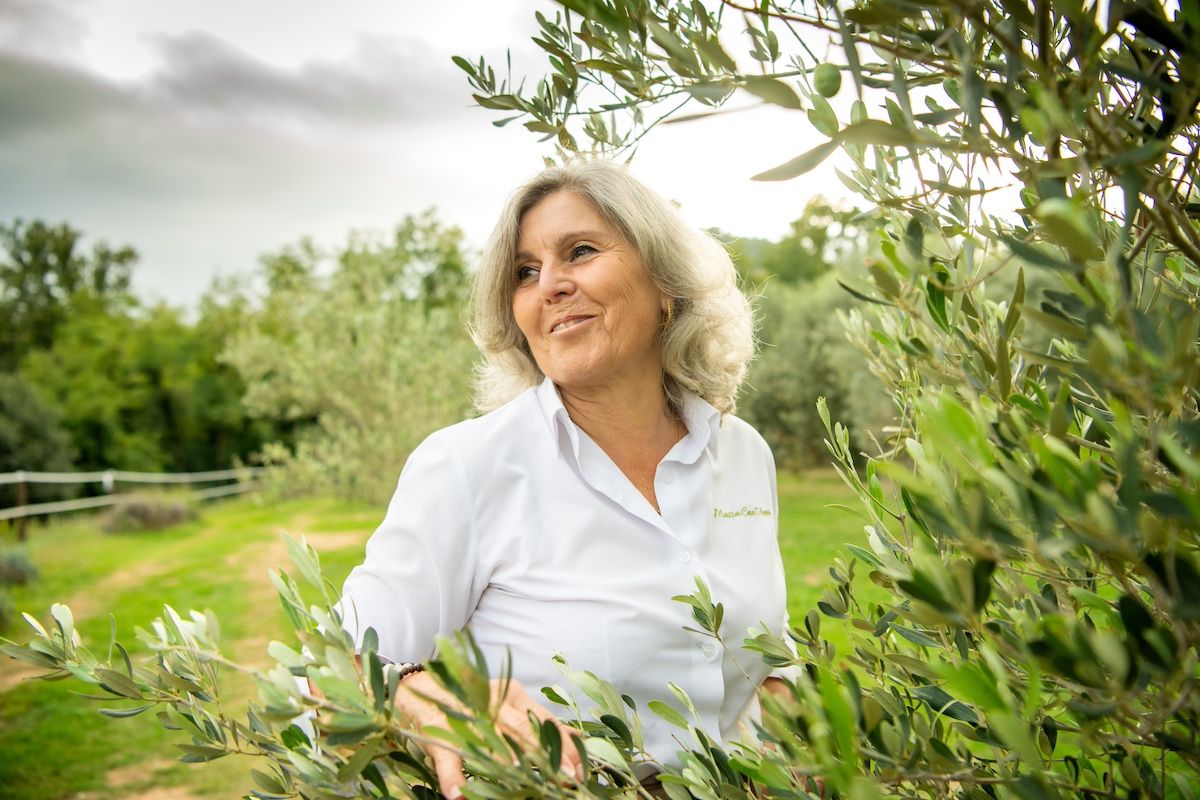
In this context, the Masía Can Viver, located in Bigues i Riells, is one of the most significant examples. From this historic estate,Rosa María Pérezand her husband have managed to transform the family agricultural legacy into a project that connects landscape, product, and culture. With a perspective that combines knowledge, sensitivity, and commitment to the territory, they represent a new way of understanding the world of olive oil: from respect for the land to the shared experience with the visitor.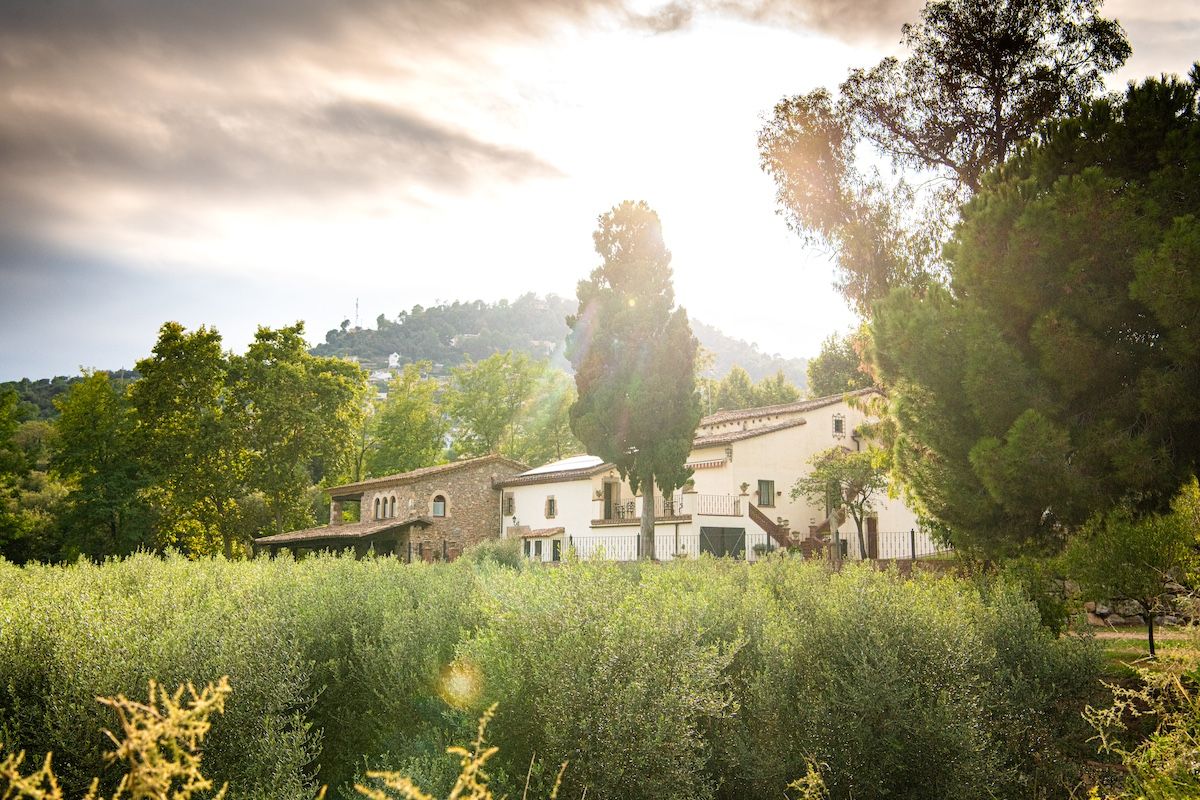
The origin of the initiative dates back to 2004, when the couple decided to relaunch the family farmhouse, documented since the 12th century. First, they restored the house and planted olive trees to reactivate agricultural activity and give it a new projection. "After four years, we were already making oil in the village mill and selling the first bottles," they recall. Continuous training —in Catalonia, Madrid, and even Tuscany— and contact with other olive oil tourism models led them to rethink the project.
"We realized that it wasn't enough to make good oil: we had to tell the story behind it well. First, achieve excellent oil; then, design a visit so that people understood what they were buying and consuming." In October 2016, they took the decisive step: they bought their own small mill. "Without it, we would never achieve oil of that caliber." A year later, in 2017, they won their first award at the ITQI in Brussels.
Tasting as a tool for knowledge
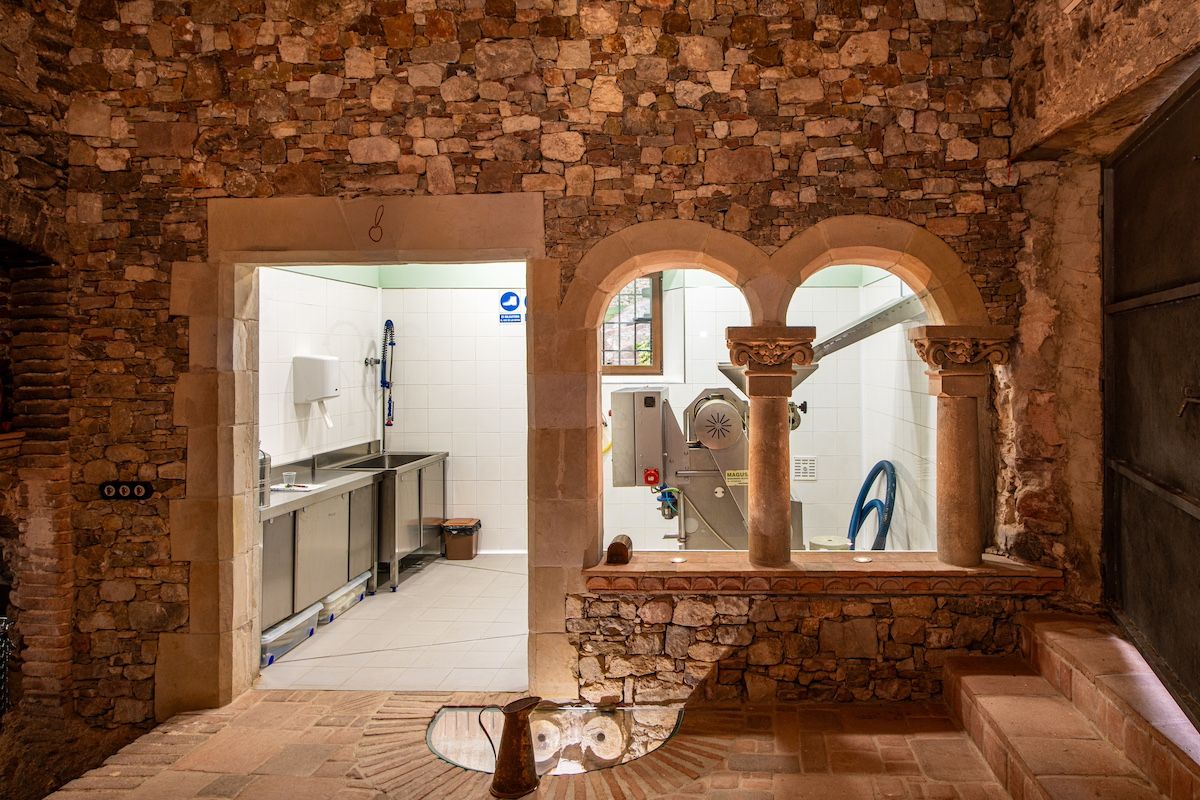
With the desire to share everything they had learned, they began to receive visitors and design an experience that went beyond theory. "People have the right to know what olive oil is, what virgin or olive pomace oil is, what it means to be premium or what it implies to be extra virgin… All of this is not explained." For this reason, they created a proposal that combines knowledge, tasting, and acritical gazeabout what is really on the market.The visit begins in the fields, where cultivation and harvesting are discussed, continues in the mill—a key piece to ensure quality—and culminates with a guided tasting of four oils. Pérez emphasizes the importance of having the mill on the farm itself: "If you want an extra virgin, you have to mill the olives in less than 24 hours. At home, I'm already milling within two hours." This control allows them to preserve the properties of the oil and prioritize quality over quantity. "Industrial mills operate at high volume; I don't seek quantity, I seek quality," he notes.
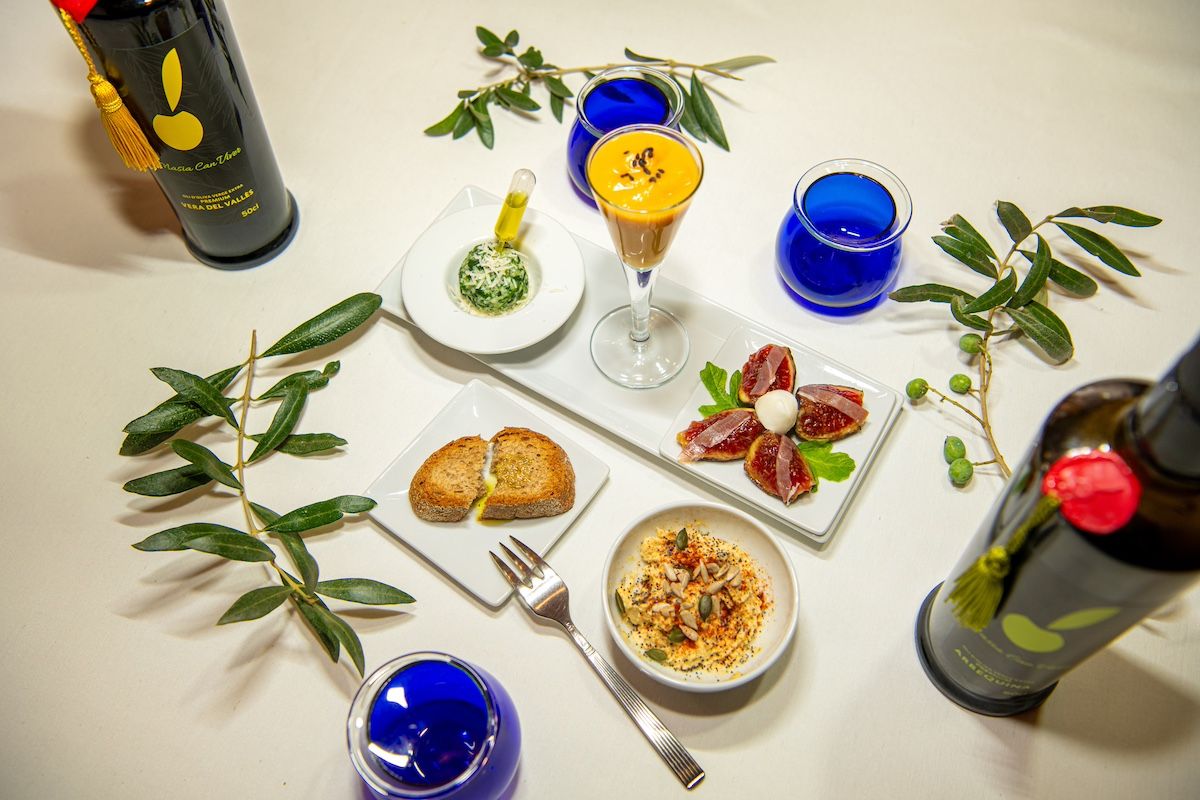
One of the moments that most impacts visitors occurs during the comparative tasting. "We ask which of the oils is most similar to the one they have at home. And almost everyone points to the same one: olive oil. But that is not an olive juice, but a refined oil that, originally, was not fit for consumption." This awareness is one of the central objectives of the project: to show that the difference between oils is not only in taste, but also in quality and nutritional value.
The true variety: spicy, bitter, and authentic
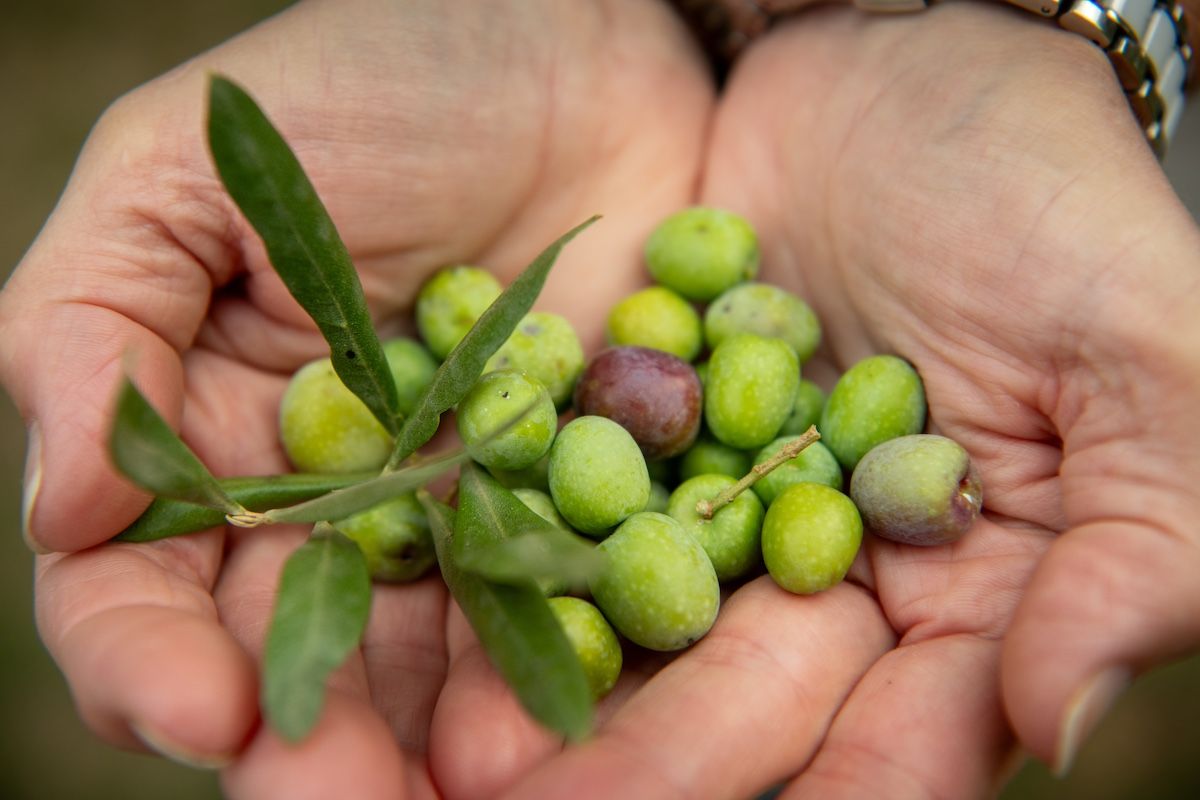
One of the features that differentiates Can Viver is its commitment tothe vera variety, typical of Vallès. The region celebrates in the second half of January theBigues i Riells Oil Fair, precisely with the vera variety as the protagonist.Pérez explains that working with this variety implies a great commitment: "To achieve the quality we seek, we sacrifice up to 50% of the harvest." His pioneering work has contributed to recovering and valuing this variety. "It is spectacular, with a bitter and spicy note that used to be disguised by mixing it with arbequina. We work it as it is, because that character makes it richer in antioxidants and anti-inflammatory properties."
The tasting is also accompanied by local products. The goal is for people to learn and have a good time, but above all to take away an unforgettable memory. "What you taste, what you feel, and how a place makes you feel is what stays in your memory." In fact, many visitors end up establishing a more personal bond than might be expected from a simple visit. "They stop being clients to become someone more. Many have become friends."
More proposals in l'Anoia, Bages, Baix Llobregat and Vallès Occidental
Beyond Vallès Oriental, the regions of Barcelona offer numerous olive oil tourism proposals that combine nature, heritage and gastronomy. In l'Anoia, theMolí d'Oli Can Gibert—centennial mill located in theParc Agrari de la Conca d'Òdena— cultivates the native variety vera del Montserratí. In Bages, corbella and vera del Montserratí oils are produced; in addition, you can sleep among olive trees at Celler Migjorn or explore vineyards and dry stone huts in a 4x4 at Oller del Mas, completing the experience with wine and oil tastings.In Vallès Occidental, Can Morral del Molí cultivates the native becaruda variety; and in Baix Llobregat, the Olesa de Montserrat oil stands out, produced in a mill that opens its doors during the harvest season. In June, Olesa de Montserrat celebrates the Fira de l'oli, l'artesania i el comerç.
All these experiences share a common thread: the desire to rediscover oil as an expression of the territory. From walking among olive trees and breathing the aroma of the countryside to seeing the mill in operation or participating in a comparative tasting, each gesture allows for a better understanding of the relationship between landscape, culture, and product. Extra virgin olive oil thus becomes much more than a food: it is a living legacy that explains a way of life and understanding the land.
More information at:
https://www.barcelonaesmoltmes.cat/es/gastronomiahttps://www.barcelonaesmoltmes.cat/es/-/oleoturisme-paisatges-i-experiencies-uniques-a-traves-oli
Add The New Barcelona Post as your preferred Google source for free
Stay informed with the latest news.