From the great comic exhibition to the new Moco Museum store
CaixaFòrum exhibits one of the year's major shows in Barcelona and the new museum on Montcada street opens a concept store, but not to sell souvenirs, but products that exceed one thousand euros
I would like to highlight in this column two cultural events in Barcelona that have taken place in recent weeks. There are more, perhaps with equal or greater relevance, but one reaches as far as one can, and in this matter of selecting, individual tastes also count. So, these days I have traveled, first, to CaixaFòrum to visit the great exhibition on comics, and a few days later I went to Montcada street to attend the opening of the Concept Store, the new store offering from the Moco Museum, which these days will celebrate its first year in the Catalan capital.
More than 300 originals offer a journey through just over a century of history of what is called the eighth art, starting with a page from Yellow Kid, the character created by Richard F. Outcault and published as a strip at the end of the 19th century in the American press. With Yellow Kid, the journey of the comic is considered to begin. Among other merits, he was the first to use balloons or speech bubbles for dialogues between characters. Likewise, he gave the name to the so-called yellow press, appearing simultaneously in theNew York Word, by Joseph Pulitzer, and theNew York Journal, of RandolphHearst.
Starting with Yellow Kid, the pages of other pioneers unfold, such as Little Nemo and Krazy Kat. The exhibition is divided into eight main sections. After the origins, the exhibition delves into the golden age of American comics, with legendary characters such as Popeye, Dick Tracy, Tarzan, and Flash Gordon. We continue with superheroes embodied by myths such as Superman, Batman, and Captain America, among others, to then take a look at comics in Spain, from Opisso, El Capitán Trueno, and the underground of Nazario and Gallardo.
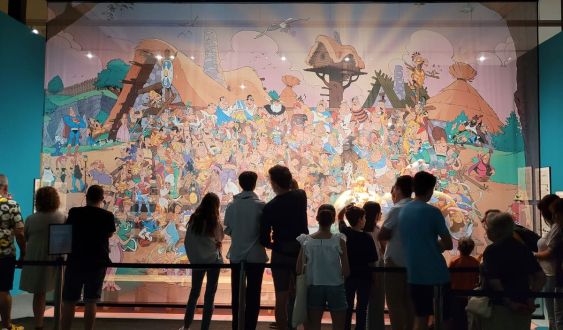
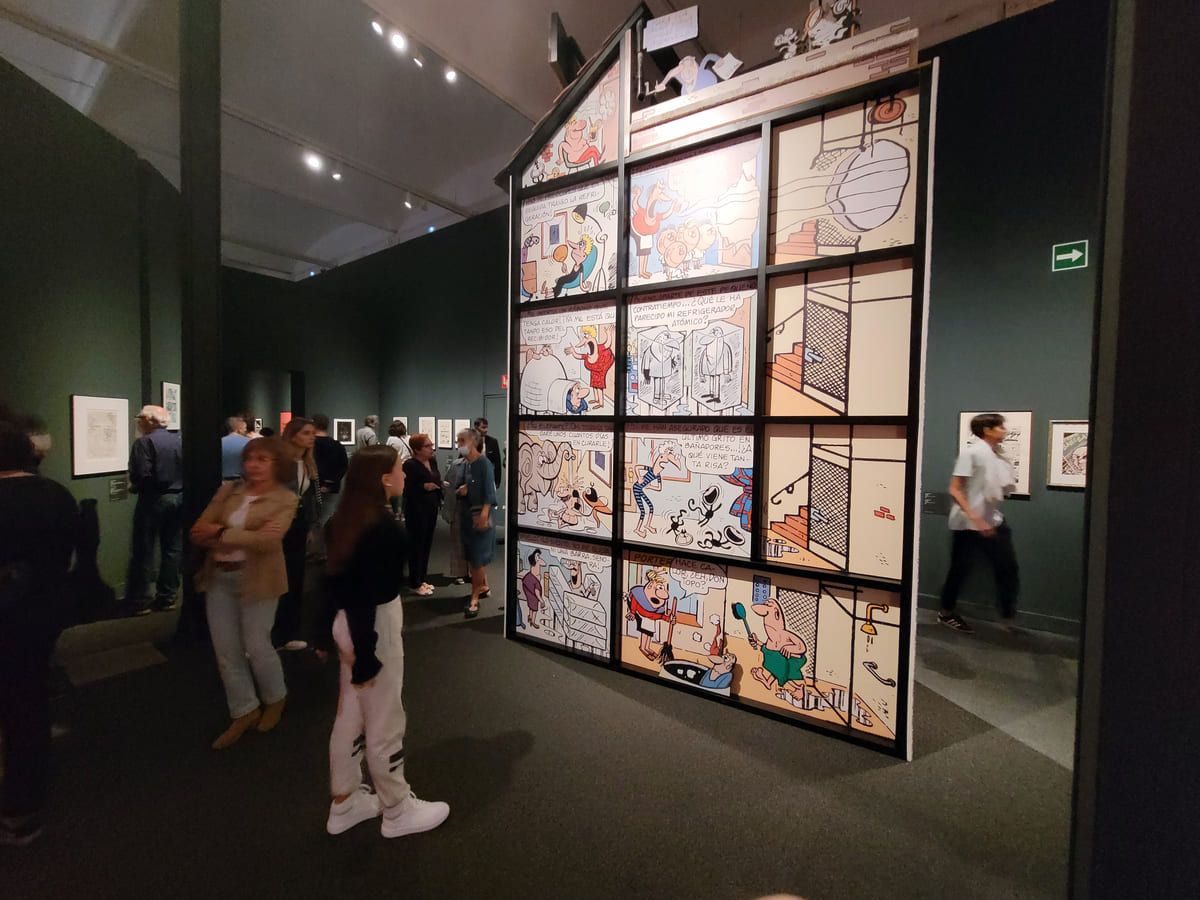
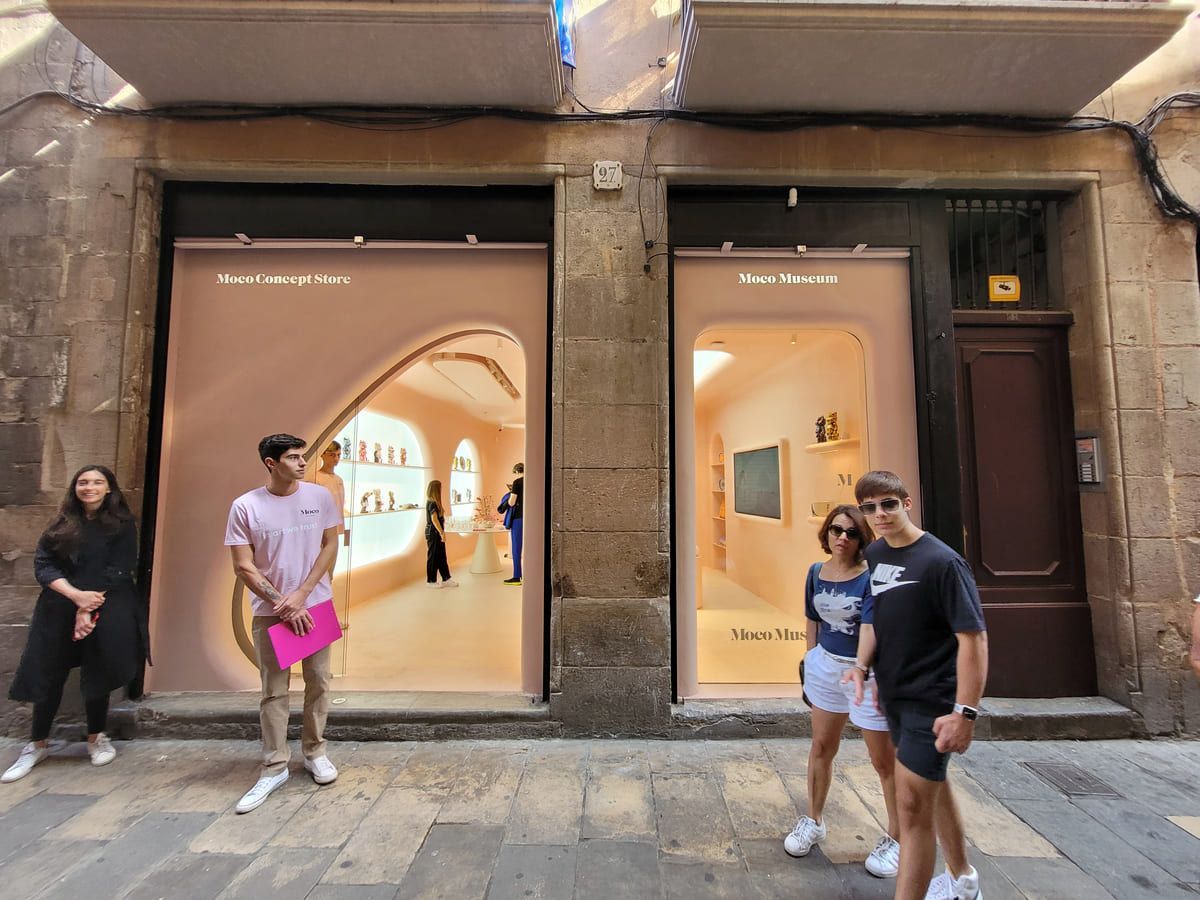
Model of the comic strip 13 Rue del percebe, created by Francisco Ibáñez. The Franco-Belgian comics of Tintin, the Smurfs, Asterix, and Blueberry also play a major role. Also the so-called Italy-Argentina axis, with Hugo Pratt's Corto Maltese, along with adventures born from the brushes of Milo Manara and Quino. The fantasy and science fiction of Moebius, Corben, and Loisel occupy another of the thematic spaces, which conclude with the emergence of the graphic novel. The exhibition leaves aside manga and other oriental genres, so it actually narrates the history of Western comics.The exhibition is completed with some scenarios so that the public can immortalize the visit with photographs. Among them are a reproduction of Little Nemo's elevated bed, a model of the delirious block of 13 Rue del Percebe and, as a great highlight, being able to pose between Asterix and Obelix with the rest of the characters from Uderzo and Goscinny's Gallic and Roman universe behind them. One leaves the CaixaFòrum with the feeling of having witnessed one of the great exhibitions of the year in Barcelona.The Moco Museum opened its doors almost a year ago in the former premises of the Maeght gallery on Montcada street, in a format imported from Amsterdam by the married couple Kim Prins and Lional Logchies. After one year, they have decided to evolve and to include in its offer a unique store, in which most of the products for sale exceed one thousand euros. It is not a store for visitors to acquire a museum souvenir, but rather it is intended for an art collector audience.The Moco Museum is an interesting offer that came with the label of success from the Dutch capital. Time will tell if the latest museum venture on Montcada street also consolidates itself in Barcelona. Meanwhile, it must be recognized that a visit to the rooms leaves no one indifferent. Some of the works are impactful, with signatures from icons like Banksy and a new type of ephemeral and constantly changing artwork born from the digital revolution. Moco brings new concepts to the museum such as immersive art, in which the viewer is immersed in the work, and NFT art (non fungible token). Entrance of the new store opened by Moco Museum.
Both create controversy and debate. There is a work in one of the rooms that continuously generates a video, so that the images the viewer sees are never the same. It is estimated that for an image to repeat, at least 600 years would have to pass.
But beyond controversies, it cannot be denied that what the Moco Museum does is no small feat. I'm sorry, I couldn't resist. I also recommend the visit.
Add The New Barcelona Post as your preferred Google source for free